

Sometimes you just don’t have the budget for expensive cameras, but don’t let that stop you. Nowadays you’ll get decent cameras for filmmaking for under $1,000.
If you play your cards right, light a scene and exposure correctly, you can make these cameras go a long way and project the image on theater screens. People do this all the time.
Let’s look at five great cameras for filmmaking under $1000, body only. Watch the video:

This is only a fun comparison of the specs of the available cameras under $1000 price range. Please treat it as such. There are many variables that come into play.
Here are the cameras in this comparison:
- Sony ZV-E10 (Amazon, B&H)
- Fujifilm X-E4 (Amazon, B&H)
- Fujifilm X-S10 (Amazon, B&H)
- Nikon Z 50 (Amazon, B&H)
- Canon EOS RP (Amazon, B&H)
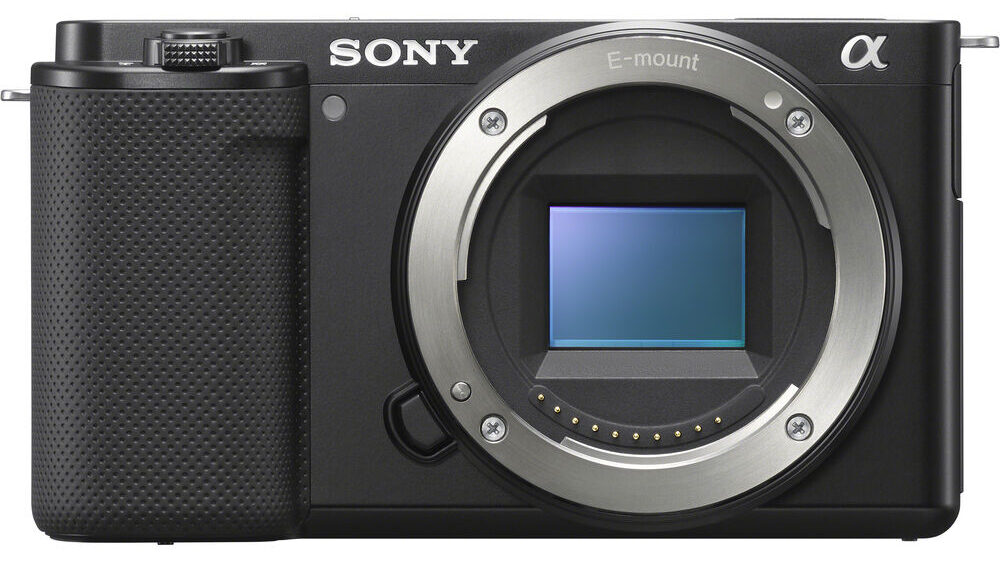
Sony Alpha a6400
Sensor size
The Sony ZV-E10 (Amazon, B&H) has an APS-C (23.5 x 15.6 mm) sensor, which is close enough to Super 35mm.
Resolution and frame rates
The Sony ZV-E10 (Amazon, B&H) can shoot in 4K (3840 x 2160) UHD at 30p in 8 bit 4:2:0. It does not shoot RAW but you can shoot in S-Log2 and S-Log3.
The best codec available to record in is XAVC S 4K. Maximum fps in 4K is 30 fps. You get 120 fps in 1080p.
The data rates range from 60 Mbps to 100 Mbps.
ISO range for video
The Sony Alpha a6400 has an ISO range of 100 to 32,000 for video. Low light shoots should be fine, except for the toughest situations.
HDMI output
To record 4K (3840 x 2160) UHD at 30p with 8-bit 4:2:2 you will need an external recorder like the Atomos Ninja V and an HDMI Type D to Type A cable.
Lens mount
The Sony ZV-E10 (Amazon, B&H) has an E-Mount. It is compatible with every E-mount lens out there. There’s one for every party!
Memory Card
Sony suggests a Class 10 or higher SDXC card for XAVC S 4K. UHS-II or higher is required for 100 Mbps recording.
Recording time limit
None! This is impressive for this price range. You can record in 4K until the battery dies or the card fills up.
Image stabilization
None! You will depend on the OSS in the lens or use other stabilizing gear, such as a gimbal or a tripod. This might be problematic for some beginners.
Audio
The Sony ZV-E10 (Amazon, B&H) comes with an in-built 3.5mm headphone and microphone jack. You can buy an audio kit that is sold separately. It will help you record sound professionally.
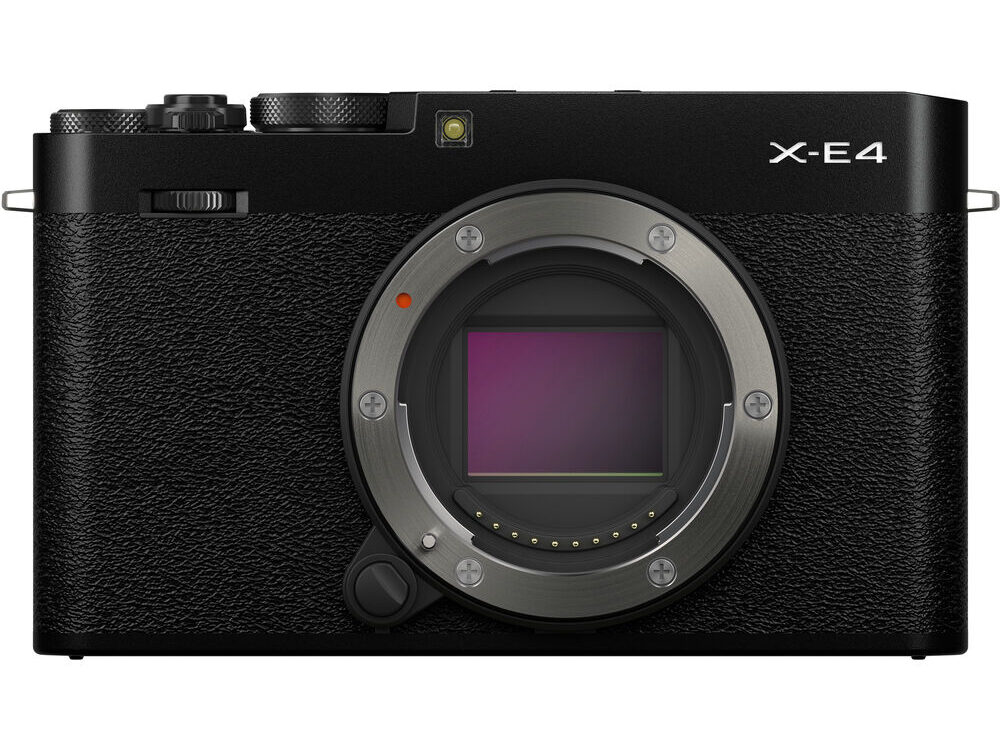
Fujifilm X-T30
Sensor size
The Fujifilm X-E4 (Amazon, B&H) has an APS-C (23.5 x 15.6 mm) sensor. This is close enough to Super 35mm.
Resolution and frame rates
The Fujifilm X-E4 (Amazon, B&H) can shoot in DCI 4K (4096×2160) at 30p in 8-bit 4:2:0. It does not shoot RAW but you can shoot in F-Log.
Maximum fps in 4K is 30 fps. You get 120 fps in HD. The data rates range from 50 Mbps to 200 Mbps.
HDMI output
The external output is 10-bit with 4:2:2 color space up to DCI 4K 29.97 fps.
ISO range for video
The Fujifilm X-E4 (Amazon, B&H) has an ISO range of 160 to 12,800 for video. Low light shoots should not be a problem, but it won’t be as good as the Sony.
Lens mount
The Fujifilm X-E4 (Amazon, B&H) has an X-Mount. X-mount lenses have enough versatility to suit your needs.
Memory card
Fujifilm suggests a Class 10 or higher SDXC card for 4K movie recording. UHS-II or higher is required for 200 Mbps recording.
Recording time limit
Recording is limited to 30 minutes. Enough for most filmmakers.
Image stabilization
None! You will depend on the image stabilization in the lens or use other stabilizing means, such as a gimbal or a tripod. This can be problematic for many beginners.
Audio
The Fujifilm X-E4 (Amazon, B&H) comes with an in-built 3.5mm microphone jack. Par for the course.
Film simulation
One of the many reasons why Fujifilm X-E4 (Amazon, B&H) has such a strong following, despite its shortcomings, is the ability to recreate their old film looks. Fujifilm and Kodak were the two major companies making film (for both stills and cinema).
Fujifilm’s colors are renowned across the globe and many people choose Fujifilm just for their color science. The ETERNA look has been used notably in many films and loved by avid Fujifilm users all over the world.
This, and the great color science and data rate, is why the image quality on the Fujifilm X-E4 (Amazon, B&H) is to be taken seriously.
The next camera on our list is even better!
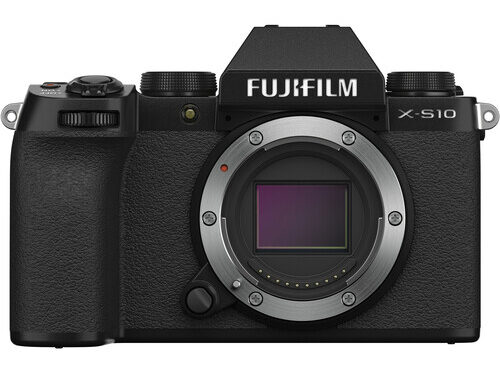
Fujifilm X-S10
Sensor size
The Fujifilm X-S10 (Amazon, B&H) has an APS-C type (23.5 x 15.6 mm) sensor, close enough to Super 35mm.
Resolution and Frame Rates
The Fujifilm X-S10 (Amazon, B&H) can shoot in DCI 4K (4096×2160) at 30p in 8-bit 4:2:0. It does not shoot RAW but you can shoot in F-Log.
Maximum fps in 4K is 30 fps. You can go up to 240 fps in HD. This is one area it has a leg up over the rest.
The data rates range from 50 Mbps to 200 Mbps.
ISO range for video
The Fujifilm X-S10 has an ISO range of 160 to 12,800 for video. Low light shoots aren’t going to be as good as a Sony or other cameras on this list, though with careful planning you should be able to shoot in most situations.
HDMI output
The external output is 10-bit 4:2:2 up to DCI 4K 29.97 fps.
Lens mount
The Fujifilm X-S10 (Amazon, B&H) has an X-Mount. It is compatible with every X-mount lens out there.
Memory card
Fujifilm suggests a Class 10 or higher SDXC card for 4K movie recording. UHS-II or higher is required for 200 Mbps recording.
Recording time limit
The Fujifilm X-S10 will record up to 30 mins of footage continuously at 4K 30 fps. At 120 fps you only get 6 mins of continuous recording. At 240 fps, you only get 3 mins of continuous recording.
Image Stabilization
The Fujifilm X-S10 (Amazon, B&H) has a 5-axis in built image stabilization system. Fujifilm claims that this provides 6-stops of image stabilization.
This is a useful addition for filmmakers who want to do run and gun shoots. This is one area where the X-S10 outshines the X-E4.
Audio
The Fujifilm X-S10 comes with an in-built 3.5mm microphone jack.
Film simulation
You get all the Fuji colors as with the X-T30. Here are some examples:
- Provia
- Velvia
- Astia
- Eterna
- Eterna Bleach Bypass
- Acros (B&W)
- and more.
A Grain Effect mode is also available to replicate the look of old film photos with an organic textured appearance.
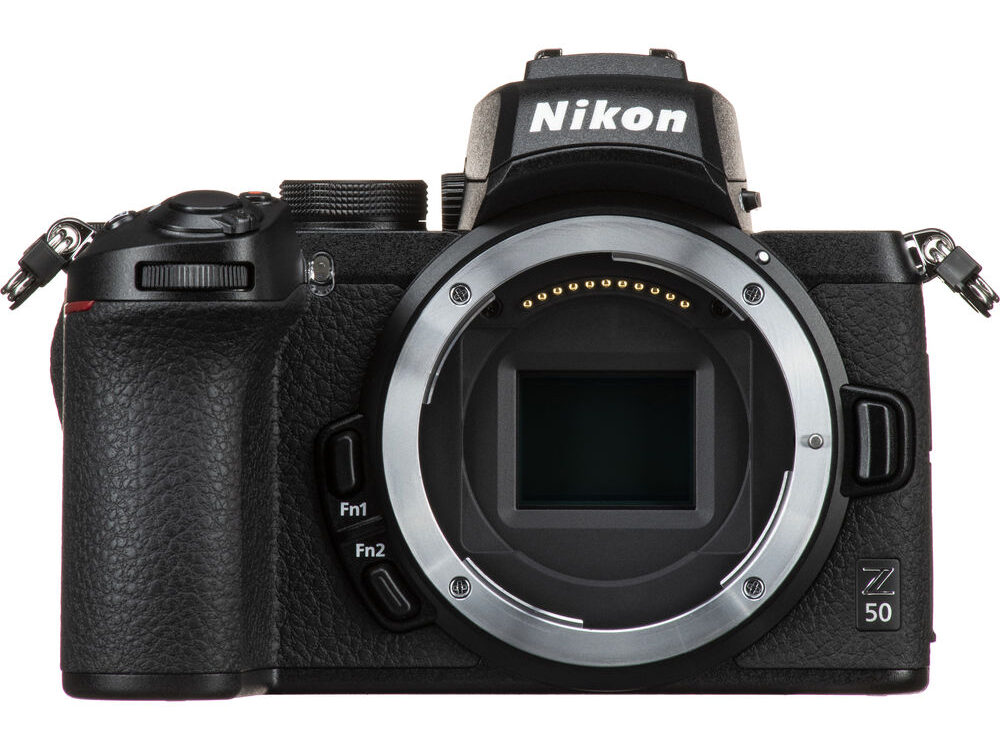
Nikon Z 50
Sensor size
The Nikon Z 50 (Amazon, B&H) has an APS-C sized sensor.
Resolution and Frame Rates
The Nikon Z 50 (Amazon, B&H) can shoot in 3840 x 2160 (4K UHD) at 30p in 8-bit 4:2:0.
Maximum fps in 4K is 30fps. You get 120 fps in 1080p. The data rates range from 50 Mbps to 144 Mbps.
ISO range for video
The Nikon Z 50 (Amazon, B&H) has an ISO range of 100 to 51,200 for video. Low light shoots should not be a problem with this camera.
HDMI output
The Nikon Z 50 (Amazon, B&H) gets you 10-bit 4:2:2.
Lens mount
The Nikon Z 50 (Amazon, B&H) has a Z-Mount. It is compatible with every Z-mount lens out there.
To read more about Z-mount and its lenses, we suggest you read the following article.
Memory card
The Nikon Z 50 (Amazon, B&H) has an SD card slot. Nikon recommends a UHS-II compliant SDHC for 4K recording.
Recording time limit
You can only record up to 30 mins of footage continuously.
Image stabilization
The Nikon Z 50 (Amazon, B&H) does not have built-in image stabilization.
Audio
The Nikon Z 50 (Amazon, B&H) comes with a standard 3.5mm jack.
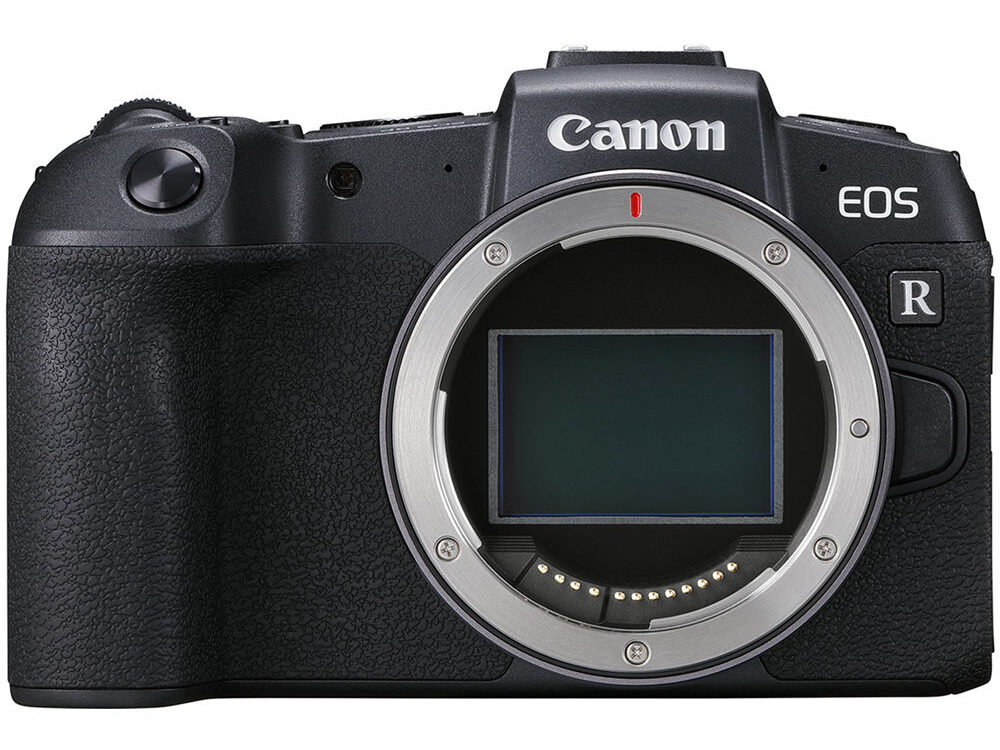
Canon EOS RP
Sensor size
The Canon EOS RP (Amazon, B&H) has a full frame sensor (35.9 x 24.0 mm). It is one of the few cameras in this price range that has a full frame sensor.
Resolution and frame Rates
The Canon EOS RP (Amazon, B&H) can shoot in 4K UHD (3840 x 2160) at 24p in 8-bit 4:2:0.
Maximum fps in 4K is 24fps. You only get 60 fps in 1080p. The data rates range from 26 Mbps to 120 Mbps.
HDMI output
The external output is 8-bit 4:2:2 up to 4K UHD 23.97 fps.
ISO range for video
The Canon EOS RP has an ISO range of 100 to 12,800 for video. Low light shoots should not be a problem. A full frame sensor helps out a lot here.
Lens mount
The Canon EOS RP (Amazon, B&H) has an RF-Mount. It is compatible with every RF-mount lens out there.
To learn and find your RF lens, we suggest you read the following article:
Memory card
Canon suggests a UHS-I or UHS-II for 4K movie recording.
Recording time limit
At 4K UHD 24 fps you will be able to only record up to 30 mins of footage continuously.
Image stabilization
None! You will depend on the image stabilization in the lens or use other stabilizing means, such as a gimbal or a tripod. This can be problematic for many beginners.
Audio Specs
The Canon EOS RP (Amazon, B&H) comes with an in-built 3.5mm microphone jack. While this can help you can record better audio than a scratch mic, you will still be missing the professional level of audio recording.
Which camera to pick?
Here’s a quick matrix that will help you arrive at a decision:
| Feature | Camera |
| Low light | Nikon Z 50 (Amazon, B&H) |
| Autofocus | Canon EOS RP (Amazon, B&H) |
| Image Stabilization | Fujifilm X-S10 (Amazon, B&H) |
| Shallow DOF/Full Frame | Canon EOS RP (Amazon, B&H) |
If I had to pick one winner, I’d pick the Canon EOS RP (Amazon, B&H). Great colors, very important shallow DOF and autofocus, compatibility with almost any lens, and does great in low light as well. That’s what I’d pick!
That’s it! If you want to know what cameras and lenses we recommend, check out our recommended gear page:

Thanks, Sareesh, a kind of fun topic.
I know Canon has great color–but to me it often looks uninteresting— kind of blah, like the mid-western accent of news casters here in America.
In contrast, Fuji is flat out unique. I love Astia, the BW simulations, and Eterna. My X-T4 has an easily gradable Log, a decent range of lenses, but where it shines to me is how beautiful the image is–clean, and clear, excellent dynamic range for an APS-C sensor, and the state of the art—best peaking features of any mirrorless I’ve ever used—-tremendously important to me because I normally shoot fully manual focus and I rely a lot on the peaking—which I’ve found to be easy to read on the LCD or EVF, and very accurate. No one else has peaking that can approximate it. Another favorite feature gives you the ability to move your focus box while recording, punch in on an object, perform a perfect focus pull—every time. In addition the X-t4 also has an AWB-focus lock—program it on a button, use it for run and gun, toggle the button off and on and you have an immediate fresh white balance in less than a second. No one I know of offers these features for hand held run and gun shooting—and they work so well.
Make the IBIS better, improve the autofocus for the “Point and shoot” crowd, and you have a high bit rate run and gun super 35 camera that simulates a true cinematic approach.
Large sensors—okay, they’re alluring. But all these features I just mentioned and more are hard to give up.
Right now I’m waiting for the X-H2. IMO these are under rated cameras—with a unique look. I left Sony after shooting nothing but Sony for 10 years. The colors finally made me crazy—I think I’m still allergic to magenta. My experience with Sony makes it hard for me to consider their new cameras—but I never say never.
Hi Sareesh. Always enjoy your views on filmmaking and films. Just a fyi, the download link for the free guide isn’t working. Cheers. – George
Thank you. I just checked it, seems to work fine. Try this page: https://wolfcrow.com/blueprint/