

Like all microphones Condenser microphones use a diaphragm. The larger the diaphragm, the better the low level sounds. The smaller the diaphragm, the louder you can go.

In a studio environment, you must have total control over room tone, noise, reverb, etc. Ideally you need a ‘dead’ environment.
Sometimes, you might need to record music instruments or foley. There are two ways to deal with this: Either have only one microphone doing double duty, or have different microphones for different jobs.
The two kinds of microphones used in studio are:
- Condenser microphones
- Dynamic microphones
There are no rules regarding the choices of condenser vs dynamic microphones but here are some rules of thumb:
- Condenser microphones have more ‘depth’ for recording human voices
- Dynamic microphones can withstand moisture and abuse, which make them ideal for stage recordings or foley
- Musical instruments vary greatly, and each kind of instrument might need a matching ‘mate’ when it comes to a studio microphone. This is highly subjective.
In this article we focus on the five best large diaphragm condenser microphone that will do a decent job for a small studio; in ascending order of price.
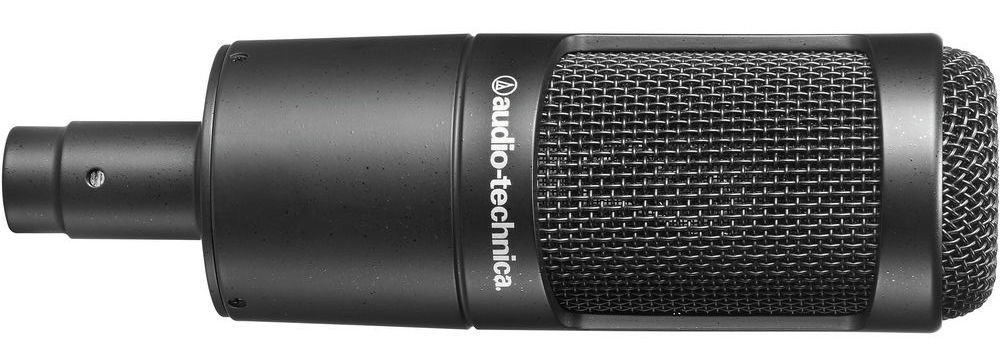
1 Audio-Technica AT2035
The Audio-Technica AT2035 (Amazon, B&H) is the first microphone on our list. Here are the specs:
| Features | Audio-Technica AT2035 |
| Frequency Range | 20 Hz to 20 kHz |
| Impedance | 120 Ohms |
| Dynamic Range | 136 dB |
| Maximum SPL | 148 dB SPL 158 dB SPL with 10 dB pad (nominal) |
| Sensitivity | -33 dB (22.4 mV) re 1V at 1 Pa |
| Signal-to-Noise Ratio | 82 dB (1 kHz) |
| Equivalent Noise Level | 12 dB SPL A-Weighted |
| Power | 11-52V |
The Audio-Technica AT2035 (Amazon, B&H) is a condenser microphone that is designed for vocalists, bands, recording artists, podcasters, voice over professionals and online content makers.
It is made of metal, so you can expect it to last decades. It has a custom shock mount which provides decent isolation from vibration, noise or rumble.
It has a cardioid polar pattern with a 120 degree range. This reduces pickup of sounds from the sides and rear, thus improving signal to noise ratio.

2 AKG C214
The AKG C214 (Amazon, B&H) has the same capsule as the AKG C414 XLII but with a single diaphragm. It has an integrated suspension to reduce mechanical noise and vibration. Here are the specs:
| Features | AKG C214 |
| Frequency Range | 20 Hz to 20 kHz |
| Impedance | 200 Ohms |
| Dynamic Range | 123 dB (without Pad) 143 dB (with Pad) |
| Maximum SPL | 136 dB SPL 156 dB SPL (with Pad) |
| Sensitivity | 20 mV/Pa |
| Signal-to-Noise Ratio | 81 dB A-Weighted |
| Equivalent Noise Level | 12 dB A-Weighted |
| Power | 12 to 52 V |
It is made of all-metal die-cast body with a shock and scratch resistant finish. It also features a double-mesh grille that protects the capsule and ensures efficient rejection of RF interference without harming the acoustics.
The AKG C214 (Amazon, B&H) is a decent budget microphone that can be used for both studio as well as stage performances. It is well suited for close-miking applications as well as overhead placements.
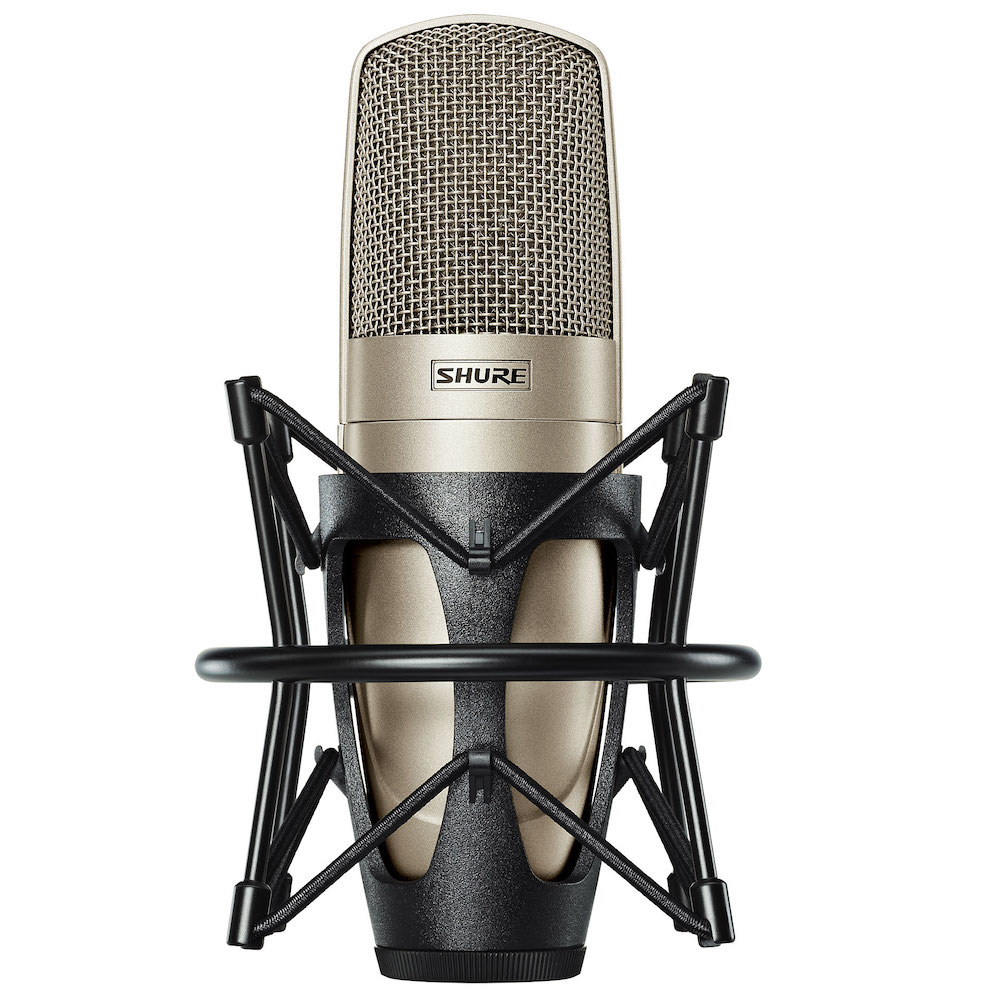
3 Shure KSM32/SL
The Shure KSM32/SL (Amazon, B&H) has a high-compliance diaphragm which provides extended low-frequency response. Here are the specs:
| Features | Shure KSM32/SL |
| Frequency Range | 20 Hz to 20 kHz |
| Impedance | 150 Ohms |
| Dynamic Range | 126 dB (1 kHz, 2.5-Kilohms Load) 119 dB (1 kHz, 1-Kilohm Load) |
| Maximum SPL | 154 dB SPL (2.5-Kilohm Load, with Pad) 139 dB SPL (2.5-Kilohm Load) 148 dB SPL (1-Kilohm Load, with Pad) 133 dB SPL (1-Kilohm Load) |
| Sensitivity | -36 dBV/Pa |
| Signal-to-Noise Ratio | 81 dB A-Weighted |
| Equivalent Noise Level | 13 dB SPL A-Weighted |
| Power | 11 to 52 V |
The Shure KSM32/SL (Amazon, B&H) features transparent Class-A circuitry which is a transformer-less preamplifier circuitry that eliminates cross-over distortion for improved linearity across the full frequency range.
The low-cut filter of the Shure KSM32/SL (Amazon, B&H) is switchable and it provides greater flexibility in reducing background noise or in counteracting the proximity effect. It has an internal shock-mount that isolates the microphone from vibration and rumble noises.

4 Neumann TLM 102 BK
The Neumann TLM 102 BK (Amazon, B&H) is a legendary condenser studio microphone. Here are the specs:
| Features | Neumann TLM 102 BK |
| Frequency Range | 20 Hz to 20 kHz |
| Impedance | 50 Ohms |
| Load Impedence | 1000 Ohms |
| Dynamic Range | 132 dB |
| Maximum SPL | 144 dB SPL |
| Sensitivity | 11 mV/Pa |
| Signal-to-Noise Ratio | 73 dB CCIR 82 dB A-Weighted |
| Equivalent Noise Level | 21 dB CCIR 12 dB A-Weighted |
| Power | 48 V ± 4 V |
The Neumann TLM 102 BK (Amazon, B&H) can handle sound pressure and process extreme volume up to 144 dB without distortion. It has a built-in pop shield which reduces vocal plosives. Neumann also claims that it has gentle treble lift for silky highs.
The microphone has a self-noise of 12 dBA, which is lower than the noise in a typical quiet room. It is a microphone especially designed for vocal recordings in studio spaces.
The microphone is equipped with a transformer-less output stage which can hold powerful bass, even at the highest signal levels, and a very direct sound without transmission losses.
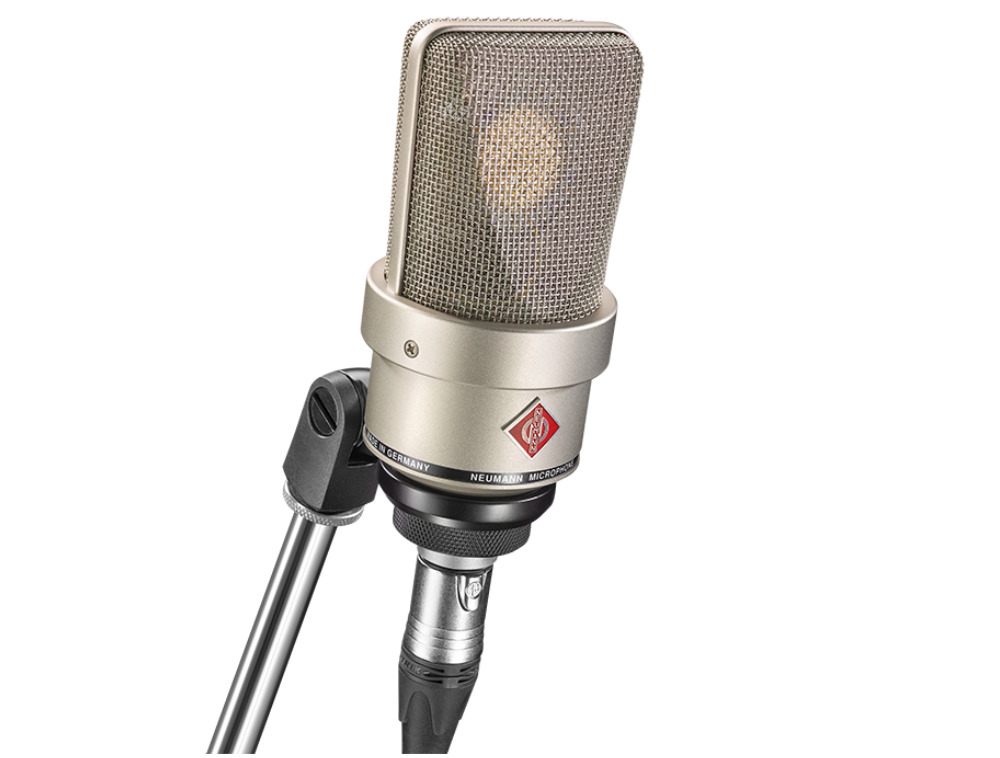
5 Neumann TLM 103
The Neumann TLM 103 (Amazon, B&H) was released as an alternative to the legendary Neumann U 87 (Amazon, B&H). Here are the specs:
| Features | Neumann TLM 103 |
| Frequency Range | 20 Hz to 20 kHz |
| Impedance | 50 Ohms |
| Load Impedence | 1000 Ohms |
| Dynamic Range | 131 dB |
| Maximum SPL | 138 dB SPL |
| Sensitivity | -32.5 dBV |
| Signal-to-Noise Ratio | 76.5 dB CCIR 87 dB A-Weighted |
| Equivalent Noise Level | 7 dB A-Weighted 17.5 dB CCIR |
| Power | 48 V ± 4 V |
It might seem that the Neumann TLM 103 (Amazon, B&H) is similar to the TLM 102 but it is bigger and heavier.
The Neumann TLM 103 is considered the industry standard since its release in 1997. It has a more modern voicing with a wide presence boost for frequencies above 5 kHz making it ideal for vocals and solo instruments.
The low self noise of 7 dBA is said to be one of the quietest microphone in the market, thereby increasing its signal to noise ratio.
I’ve barely scratched the surface here. This list is only intended as a ‘point-of-entry’ information piece. You need to use these microphones in the real-world according to your specific use case. That’s the only want to know which one’s work for you.
