

Audio is subjective. What sounds good to me might not sound good to you. If you have the means, you should test all the lavalier microphones at your disposal before you invest in one.
The problem is, they all look alike! But they don’t sound alike, and, unfortunately, it’s your job to find the microphone that best suits the kind of sounds you want to record. However, that’s easier said than done.
The only way to know for sure which mic sounds ‘good’ is to ask your own ears. You owe it to yourself to test various options before you buy. The problem for most of us, though, is that there aren’t many shops where one can do that.
Even if you had the microphones available, without the relevant experience, you wouldn’t know what to look for, or listen for.
If you’re starting out, start cheap and then slowly work your way up. Just remember one thing, as a rank beginner: As long as you buy a microphone from a reputable brand, there’s no good or bad, only different.
This article looks at five budget wired lavalier microphone options for production sound.

What is a lavalier microphone?
A lavalier microphone (also known as a lav, lapel mic, clip mic, body mic, collar mic, neck mic or personal mic) is a small microphone used for television, theater, and public speaking applications to allow hands-free operation.
They are most commonly provided with small clips for attaching to collars, ties, or other clothing. The cord may be hidden by clothes and either run to a recorder (wired) or radio frequency transmitter (wireless).
I won’t be going into details of wired and wireless systems here. There are advantages and disadvantages to both.
In this article I’ll only look at cheap but good-enough wired lavalier microphones.
Lavalier microphones come with different polar patterns. You can choose a microphone with a cardioid pattern similar to shotgun mics or go with an omni-directional microphone.
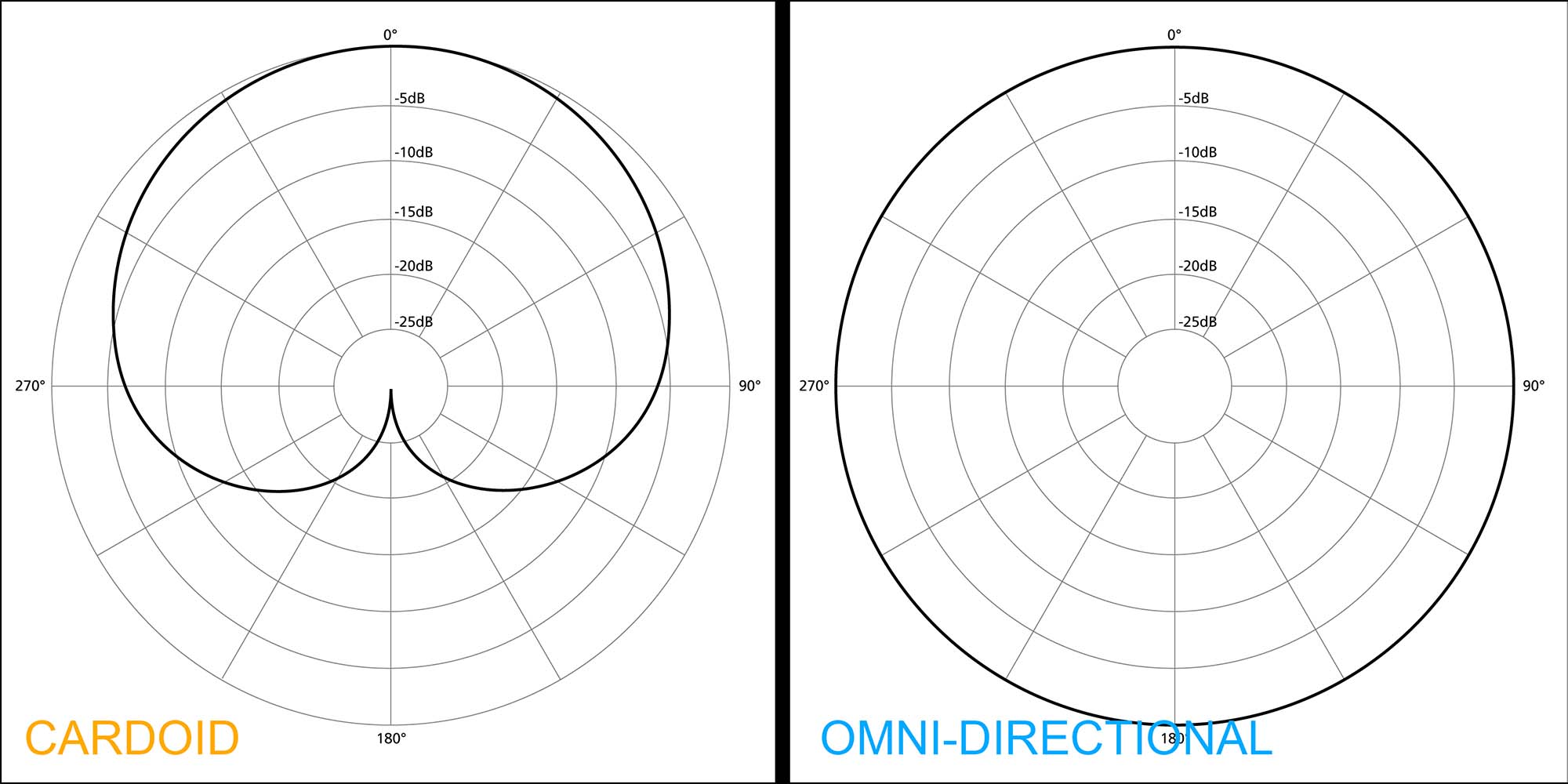
Most cheap lavalier microphones like the ones we’re discussing here are omni-directional microphones.
The cardioid differs in the way it tries to eliminate ambient noise. If you’re in a noisy situation, a cardioid will definitely suit you better than an omni-directional microphone. In drastic cases, a shotgun microphone with a super-cardioid pattern would be more preferable.
Obviously, the correct method would be to invest in both kinds, and use the one that matches the situation.
When to use a lavalier microphone?
Typically one uses lavalier mics in these situations:
- Subject moves around and you want to keep the sound constant and directional.
- Subject moves head around and you want to keep the sound directional.
- You can’t frame for a shotgun microphone, or don’t have a boom operator or stand.
- You want to kill room tone or ‘space’, somewhat similar to what you might get in a sound studio.
For these reasons, one uses a lavalier microphone mostly to capture human speech or dialogue. For many on low budgets, these are the only options.
Glossary
Here is a list of terms that you will encounter below –
- Cable Length – The total length of the microphone’s cable.
- Weight – Weight of the microphone.
- Capsule – The capsule is the part responsible for the conversion of sound waves into mic signals. They are of two main transducer types, Condenser and Dynamic. Dynamic microphones have been preferred for live use and capturing powerful vocals while condenser microphones are highly useful for delicate vocals and in-studio use.
- Analog Output – The output cables and capabilities that the mic has.
- Polar Pattern – The pattern in which the microphone is capturing sound.
- Frequency Range – The frequency response of a microphone describes its output level across the frequency spectrum.
- Sensitivity – It is a measurement of a microphone’s efficiency as a transducer. A microphone’s sensitivity rating is determined by its output voltage (audio signal strength) relative to the sound pressure level it is subjected to.
- Maximum SPL – Max SPL, or maximum sound pressure level, means the highest sound level a microphone can handle before distorting.
- Signal to Noise Ratio – It is the measurement of the level of the desired signal against the level of background noise.
- Impedance – Impedance is the “AC resistance” of audio signal voltages. It controls the flow of the audio signal.
- Dynamic Range – The dynamic range of a microphone is a measure of the difference between the loudest and quietest SPLs to which the microphone responds linearly.
- Mounting – The clipping style/technique of a microphone.
- Power Requirements – The power that the microphone needs to work and its source.
5 budget wired lavalier microphones for less than $100
Each mic has its own unique signature, and manufacturers can design microphones with a mixture of patterns for its own unique blend, e.g. the Sanken COS-22.
Only an experienced mixer will really know whether the sound is worthy of fitting correctly in the final mix. If you want to be that person, be prepared to do a lot of listening.
Here are my top picks:

Audio-Technica ATR3350XiS
The Audio-Technica ATR3350XiS (Amazon, B&H) is a legend for its price. If you’re in a cash crunch but want really good voice recordings on the go, look no further.
Here are the specs:
| Cable Length | 6.10m |
| Weight | 6g |
| Capsule | Condenser |
| Analog Output | 1 x 1/8″ / 3.5 mm TRS Male 1 x 1/8″ / 3.5 mm TRRS Male (with Included Adapter) |
| Polar Pattern | Omnidirectional |
| Frequency Range | 50 Hz to 18 kHz |
| Sensitivity | -54 dB |
| Maximum SPL | N/A |
| Signal to Noise Ratio | N/A |
| Impedance | 1000 Ohms |
| Dynamic Range | N/A |
| Mounting | Lapel Pin / Dracula Mount |
| Power Requirements | 1 x 1.5 V (LR44 Battery) |
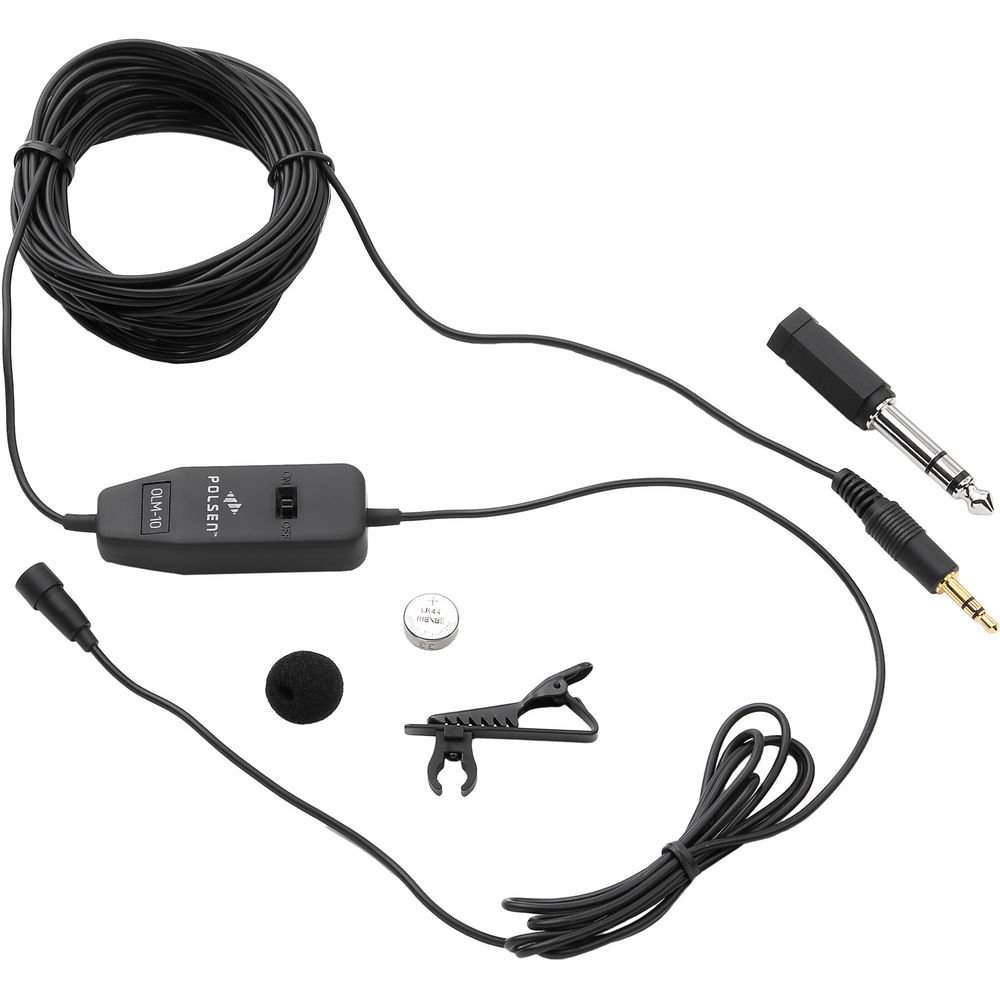
Polsen OLM-10
The Polsen OLM-10 (Amazon, B&H) is an equally popular alternative to the Audio-Technica mentioned above.
Here are the specs:
| Cable Length | 6m |
| Weight | N/A |
| Capsule | Electret Condenser |
| Analog Output | N/A |
| Polar Pattern | Omnidirectional |
| Frequency Range | 50 Hz to 18 kHz |
| Sensitivity | -65 dB |
| Maximum SPL | N/A |
| Signal to Noise Ratio | N/A |
| Impedance | 1000 Ohms |
| Dynamic Range | N/A |
| Mounting | N/A |
| Power Requirements | 1-10 V (DC) (LR44 Battery) |
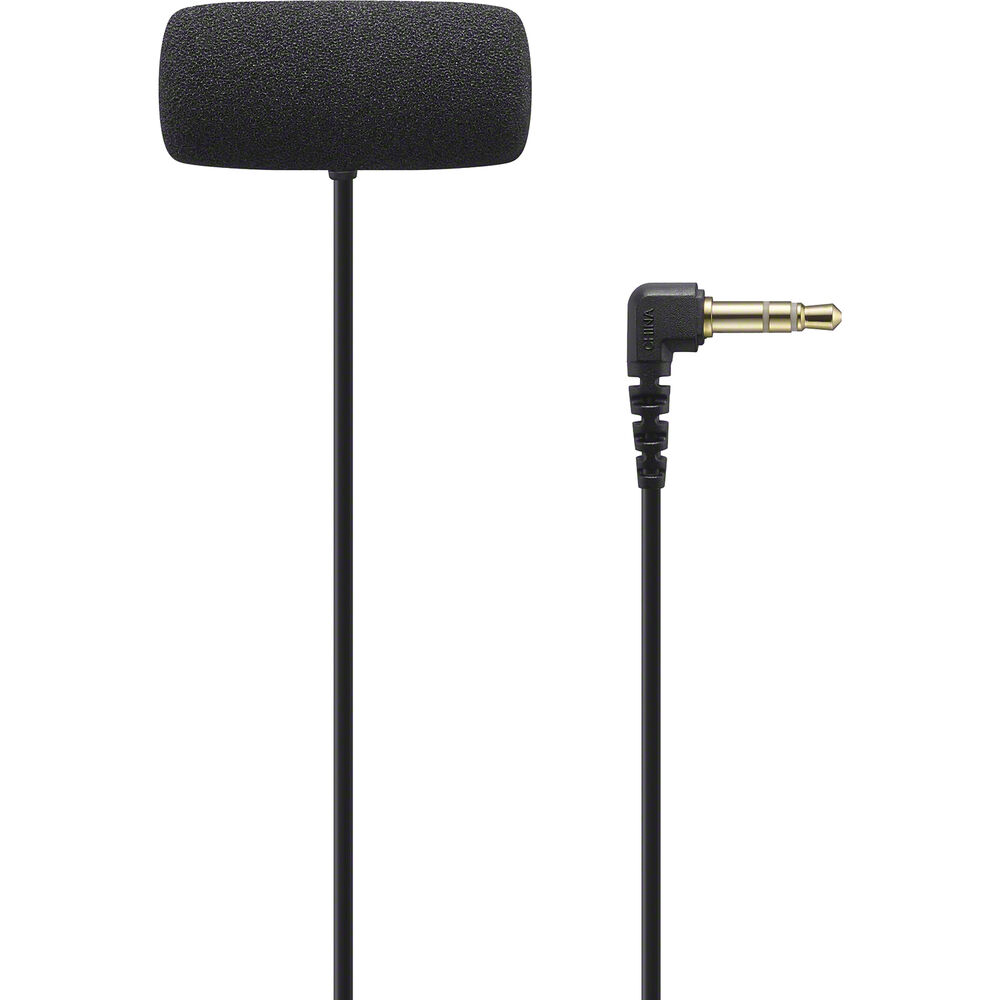
Sony ECM-LV1
The Sony ECM-LV1 (Amazon, B&H) records stereo audio, probably the best you can get at this price.
Here are the specs:
| Cable Length | 1m |
| Weight | 12g |
| Capsule | 2 x Electret Condenser |
| Analog Output | 1 x 1/8″ / 3.5 mm TRS Male |
| Polar Pattern | Omnidirectional |
| Frequency Range | 50 Hz to 15 kHz |
| Sensitivity | -38 dB |
| Maximum SPL | N/A |
| Signal to Noise Ratio | N/A |
| Impedance | N/A |
| Dynamic Range | N/A |
| Mounting | Alligator Clip |
| Power Requirements | N/A (Plug-In) |

Shure MOTIV MVL
The Shure MOTIV MVL (Amazon, B&H) is one of the best lavalier microphones you can buy in this price range.
Here are the specs:
| Cable Length | 1.32m |
| Weight | 8g |
| Capsule | MEMS |
| Analog Output | 1 x 1/8″ / 3.5 mm TRRS Male |
| Polar Pattern | Omnidirectional |
| Frequency Range | 45 Hz to 20 khz |
| Sensitivity | -44 dB |
| Maximum SPL | 124 dB |
| Signal to Noise Ratio | 65 dB |
| Impedance | 350 Ohms |
| Dynamic Range | 95 dB |
| Mounting | Alligator Clip |
| Power Requirements | 2.7 V (Plug-In) |
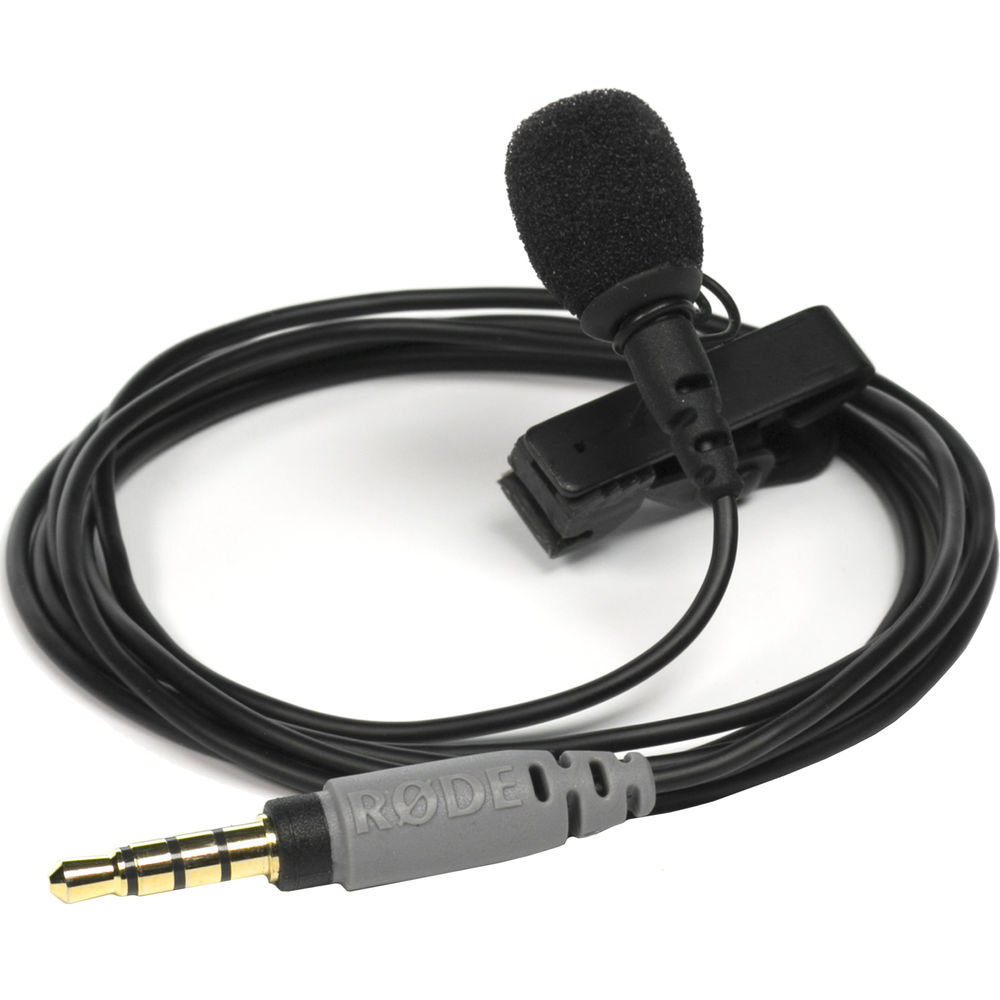
Rode SmartLav+ for Smartphones
The Rode SmartLav+ (Amazon, B&H) is made specifically for smartphones, and can be used with the Rode app. I use this myself from time to time, and if works fine.
Here are the specs:
| Cable Length | 1.18m |
| Weight | 6g |
| Capsule | Electret Condenser |
| Analog Output | 1 x 1/8″ / 3.5 mm TRRS Male |
| Polar Pattern | Omnidirectional |
| Frequency Range | 20 Hz to 20 kHz |
| Sensitivity | -35 dB |
| Maximum SPL | 110 dB |
| Signal to Noise Ratio | 67 dB |
| Impedance | 3000 Ohms |
| Dynamic Range | 83 dB |
| Mounting | Alligator Clip |
| Power Requirements | 2.7 V (Plug-In), powered by the smartphone |
Personally, my all-time favorite wired lavalier microphone is the Sanken COS-11D, a legend. If I had to pick one from this list, I’d go with the Audio-Technica ATR3350XiS (Amazon, B&H) for these reasons:
- Better sensitivity
- Low price
- Can be powered by batteries
- Long cable length
Remember, there’s no good or bad here, only ‘different‘. Go find yours.
If you’re looking for shotgun microphones check out this article:
