

I like CFexpress Type B, I’ll be honest. The cards are big enough to not fall out of your hands all the time, thick enough to feel tough, and are at a great price point.
CFexpress Type B is the current sweet spot because it uses a PCIe 3.0 ×2 lane and the NVMe protocol, with sustained throughput that 4K and 8K filmmaking demands – especially if you’re recording RAW.
In this article we’ll go over five of the best deals. All five options below are professional-grade, sold in multiple capacities, and backed by specs.
What should we look for? Here are some important considerations:
- The minimum sustained write speed. Camera buffers dump at a constant rate; peak numbers are marketing gloss. This is critical for high data rate recording.
- Capacity. RAW burns through cards fast. You don’t have to change cards often (though I recommend you do for better efficiency and redundancy). However, the real reason is, the higher the capacity, the better the sustained read and write speeds, and better the thermal performance.
- Cross-camera compatibility. This protects you from having to buy new cards and readers as you upgrade camera bodies.
- Future-proofing. CFexpress 4.0 offers significantly faster speeds compared to CFexpress 2.0 by utilizing the PCIe Gen4 standard, effectively doubling the theoretical throughput. his translates to theoretical maximum speeds of up to 4000 MB/s! CFexpress 4.0 cards are also backward compatible with CFexpress 2.0 devices. CFexpress 4.0 cards are identifiable by a prominent “4” next to the CFexpress logo, while CFexpress 2.0 cards do not have any number markings.
- VPG-400 rating. The Video Performance Guarantee is a rating that guarantees a minimum sustained write speed of 400MB/s. This ensures the card can handle high-bitrate video recording without dropping frames.
Let’s get started.

1 Angelbird AV Pro XT MK2
Look for the best deals on Amazon or B&H.
The XT MK2 targets cinema workflows up to 12K. Here are the numbers:
- Max. read speed: 1785 MB/s
- Max. write speed: 1600 MB/s
- Sustained read speed: 1785 MB/s
- Sustained write speed: 1480 MB/s
Capacities currently available are 660 GB and 1.32 TB.
These cards are probably compatible with any camera, but the downside is they’re expensive – $1.3/GB! And, they are Type B 2.0 so are not that future proof. To check compatibility, check out the official website.

2. ProGrade Digital Iridium
Look for the best deals on Amazon or B&H.
Iridium is ProGrade’s flagship is a Type 4.0 card and has a VPG-400 rating. However, these cards don’t hit the full speeds required for the 4.0 standard (neither do cameras). Here are the numbers:
- Max Read Speed: 3550 MB/s
- Max Write Speed: 3000 MB/s
- Sustained Write Speed: 1500 MB/s
- Min Sustained Write Speed: 400 MB/s
They come in three capacities – 400 GB, 800 GB and 1.6 TB. Cost comes to about $0.45/GB.
ProGrade publishes broad validation for most cameras, and publishes a compatibility chart you can check out.

Lexar Professional DIAMOND Series
Look for the best deals on Amazon or B&H.
This is also a Type 4.0 card with a VPG-400 rating. Here are the numbers:
- Max. Read Speed: 3700 MB/s
- Max. Write Speed: 3400 MB/s
- Sustained Write Speed: 3200 MB/s
- Minimum Write Speed: 400 MB/s
The Diamond series s also designed to be temperature-proof, vibration-resistant, dust-proof (IP5X), 16.4′ drop-proof, shock-resistant, and bend-resistant.
Capacities ship at 128 GB to 1 TB. Cost works out to be about $1/GB.
Lexar does publish an FAQ with compatibility, but I’m not sure if it’s updated.
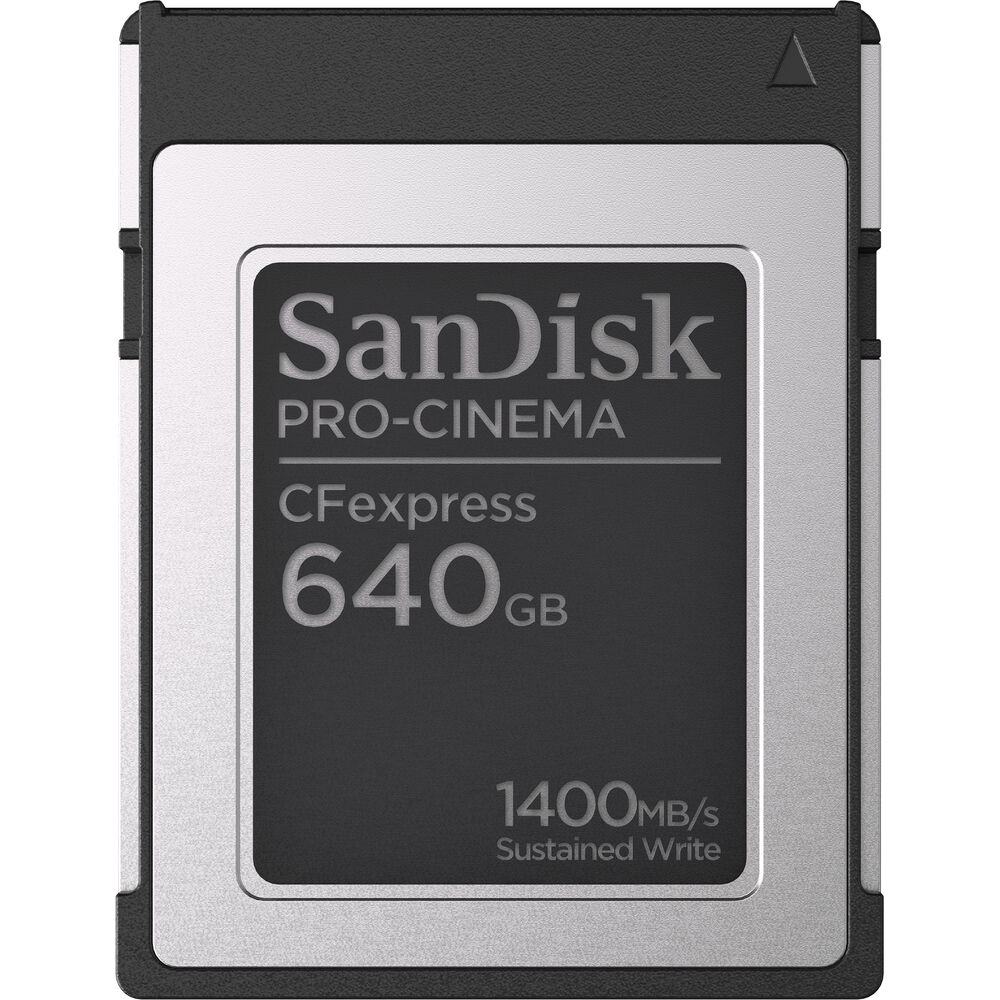
SanDisk PRO-CINEMA
Look for the best deals on Amazon or B&H.
I’ve owned and used the original CFexpress Type B Extreme Pro series. I also have two Sandisk CFexpress Type B readers and they are fine as well. I’m pretty sure these updated cards are great too. Here are the numbers:
- Max. Read Speed: 1700 MB/s
- Max. Write Speed: 1500 MB/s
- Minimum Sustained Write Speed: 1400MB/s
The capacities are only 320 GB and 640 GB, and there is a 256 GB VPG-400 variant as well. The cost is the cheapest yet, at about $0.3/GB.
The Extreme Pro series is still decent, and I’ve used the 512 GB version for great performance in 8K RAW without issues.
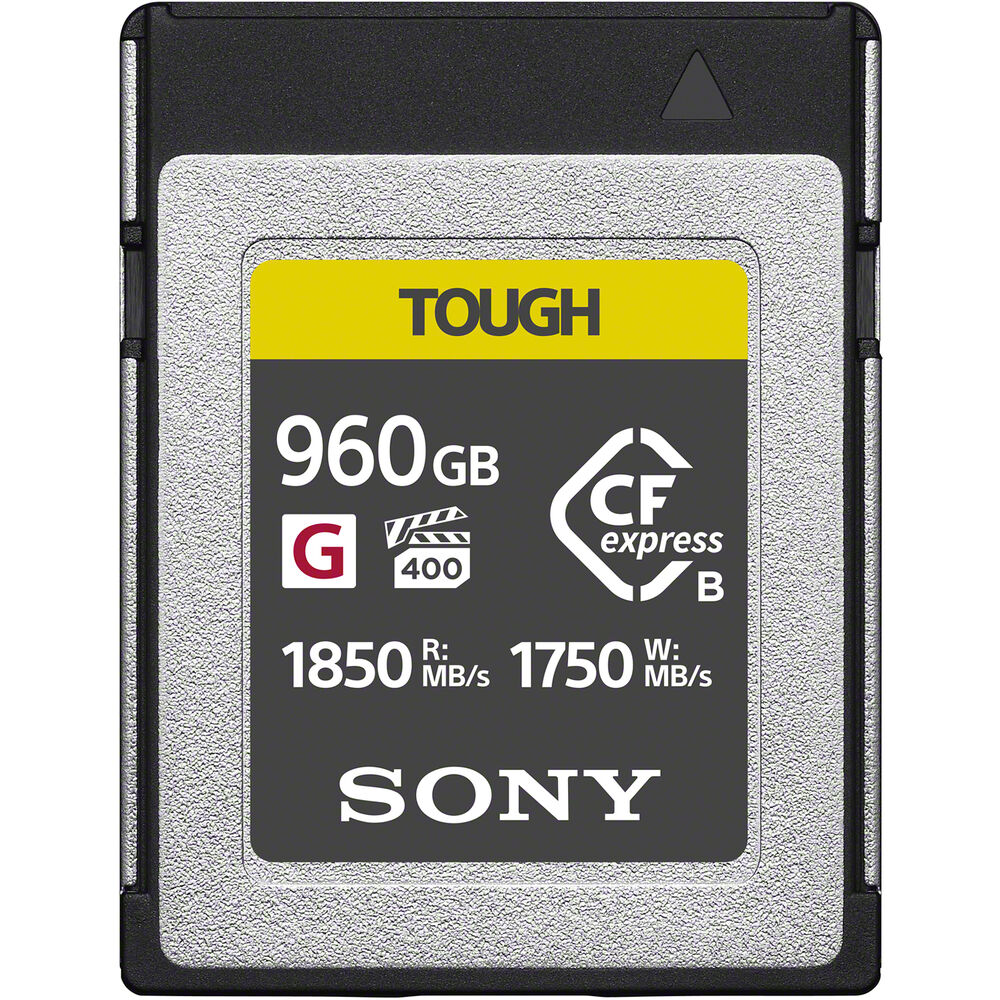
Sony TOUGH
Look for the best deals on Amazon or B&H.
This is also a VPG-400 rated card.
- Max. Read Speed: 1850 MB/s
- Max. Write Speed: 1750 MB/s
- Minimum Write Speed: 400 MB/s
It’s probably the toughest card in this lineup. It is designed to withstand pressures up to 70 N. That’s approximately three times stronger than the CFexpress Type B card standard, protecting from damage caused by frequent insertion and removal of cards when shooting, and from shocks incurred through dropping, etc. It is also resistant to extreme temperatures, X-rays, static electricity, and UV rays.
Capacities are 240 GB, 480 GB, 960 GB, and 1.92 TB. The cost works out to be about $0.5/GB
Which Card Fits Me?
If I had to pick today, I’d pick the Sony TOUGH CFexpress Type B series (Amazon, B&H). It has the best value for money proposition, checks all the boxes we need and is a tough card to beat.
Overall, the SanDisk Extreme Pro wins on retail availability. You can grab replacements in almost any market. I’m talking about worldwide here. However, these cards are not that future proof.
Always check the official compatibility charts to see if your camera is compatible with the cards you need. A single dropped frame can sink a scene.
The more future proof you make your setup, the better it is in the long run. Hope this helps!
