

A lens is a lens, right? Of course not.
Not all lenses are the same. Cinema lenses or cine lenses are designed specifically for movies. They aren’t like the lenses used for photography – they don’t even look the same most of the time.
Most lenses have some common features – focal length, T-stop, weight, etc. These features have their place, but they don’t tell you the whole story. It’s like judging how good a doctor or a lawyer is by looking at their business card or the location of their office.
This means, there are some features of lenses that are beyond the obvious.
In this article, we’ll explore what makes cine lenses so special and why filmmakers love using them. We’ll also see why a cinema lens must be different from a photo lens.

What is a cine lens?
Let’s get the definition out of the way first.
A cine lens or a cinema lens is a lens made specifically for the demands of cinema production.
Is image quality a differentiating factor between cinema lenses and photography lenses?
No! Both can have similar or better or worse image quality.
Regardless of price or brand name.
Image quality is a given. That’s not why cinema lenses are cinema lenses and photography lenses are photography lenses. Get that out of your mind forever.
You’ll find optics in many forms – cinema and photography lenses, telescopes, microscopes, eyeglasses and so on. When is bad optical quality ever acceptable?
Sometimes you get cheap plastic sunglasses, or toy telescopes, but that’s not what we’re talking about here. We’re talking about professional quality lenses made for professional use. And, in that realm – image quality is already a given.
All right, what’s next?
Obviously cinema production forces a set of demands on a lens that photography doesn’t. That’s what we should be focusing on.
But, let me get something out of the way first.
What is a “pseudo cine” lens?
This is not a fair or mainstream term. I made it up.
I intend no negative connotation to the term ‘pseudo’.
A pseudo lens is a lens that appears to have some of the characteristics of a cine lens but not all of them. The characteristics missing or of subpar quality are often the most important.
There are manufacturers who slap on a few ‘easy’ features to make a lens look like a cine lens. They’re cheap and fool newbie filmmakers into thinking they’re filming with the real thing.
Pseudo cine lenses are to cine lenses as decaf is to coffee. It’s what they don’t do that makes the difference.
Whether the missing or subpar features are important to your production, only you can judge. After all, in film production, people use all three types – photo lenses, cine lenses and pseudo cine lenses. They all have their place.
I have a simple rule of thumb. Use it if you feel like it:
Tip:
If you have no money for a true cinema lens, but really need uncompromising image quality, stick to a photography lens, and work around its limitations.
A pseudo cine will be just as expensive without the image quality and without the full feature set of a cinema lens.
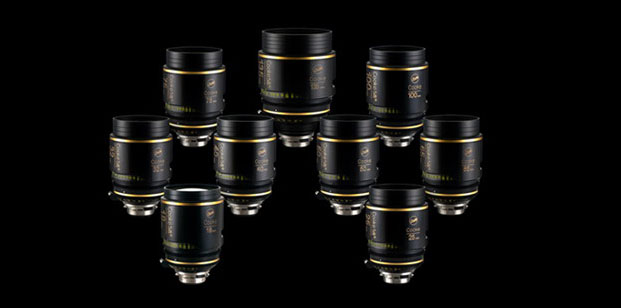
Now to the features. This is what a cinema lens looks like:
Why must a cine lens be different from a photo lens?
Cinema lenses have a lot of additional responsibilities to fulfill. Let’s divide these responsibilities to three main categories:
- Construction
- Usage
- Optical abilities
1. Construction
Remember, we’re comparing professional lenses intended for serious use.
There is a good reason why cine lenses are large and heavy. Here are the comparisons:
| Feature | Cheap Photo Lens | Professional Photo Lens | True Cine lens |
| Weather sealing | Mostly never | Sometimes | Always |
| Solid, rugged construction to ensure performance across demanding situations, including rental knocks | Unlikely | They are tough, but definitely not for rental knocks** | Always |
| Protruding front or back element or barrel when focusing or zooming | Almost always | Sometimes | Never |
| Standard housing | Never | Most of the time | Always |
| Consistent physical lengths | Hardly | Hardly | Always |
| Easy third-party service? | No | No* | Yes |
| Consistent weight | Never | Rarely | Almost |
| Made for extreme temperatures | Never | Sometimes | Always |
** A professional photo lens is owned by one person, but a cine lens is usually rented. They are like spoons and forks, and they must be standard sizes so everyone can use them in the same way.
Cheap photo lenses are designed with affordability in mind. Usually plastic. They lack weather sealing, making them unsuitable for extreme conditions. Their construction is light and not rugged, with elements that protrude during focus or zoom, limiting precision.

These lenses aren’t designed for long-term use. Older lenses were made of metal and can last for decades with care. Cheaper modern lenses rely on electronic control and firmware updates. Many of them don’t come with aperture rings. If the electronics stop working, the lenses are pretty much useless.
Modern cheap lenses have no options for easy third-party repairs, and they perform poorly in extreme temperatures, especially the cold.
Professional photo lenses offer better durability and performance. Some models feature weather sealing and tougher builds. However, they are not designed for the rough handling of rental environments.
While they provide better optical performance than consumer lenses, they still vary in weight and length, requiring frequent adjustments when switching lenses. Again, the trend is for modern lenses to rely too much on electronics.
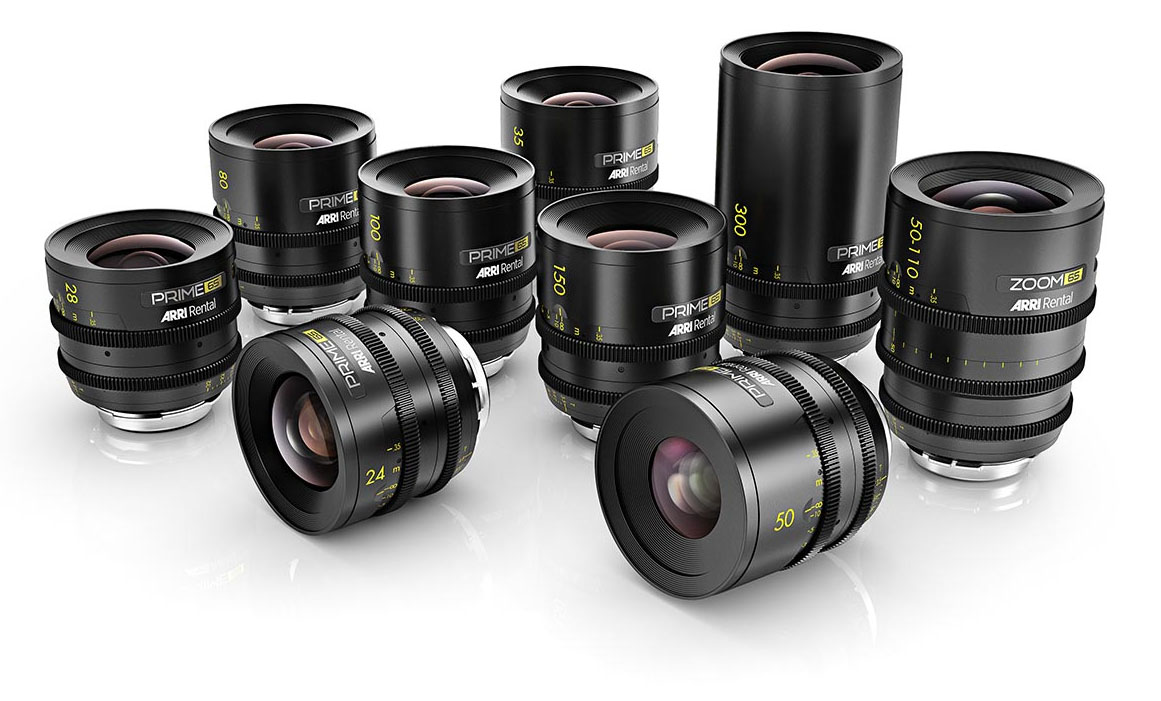
True cine lenses stand out for their rugged construction, consistent performance, and precise handling. They are always weather-sealed and almost always maintain the same physical length and weight across focal lengths. You’ll find deviations at the most wide and most telephoto ends of a range, but in the sweet spot (about 24mm to 85mm) they should look like clones!
Cine lenses are also built to handle harsh conditions, including extreme temperatures, and can be easily repaired by third-party services. You’ll find some electronics, but if that dies you can still use the lens.
Why do you need a consistent size and weight for cinema lenses?
If your lenses are of different sizes and weights, every time you change them you’ll need to rebalance your tripod fluid head, gimbal or Steadicam. On a film set, time is precious.
If you’re filming a $100,000 movie over 24 days, every day costs $4,166. If it’s an 8-hour day, every minute costs about $9. If it takes five minutes to change a lens, and you need to do that four times in a day, you’ll be wasting $180. At that point, it’s already cheaper to rent a cine lens!
And that’s just one feature.
Why do you need an extreme temperature range for cinema lenses?
This should be more self-explanatory. When you’re making a movie you might be filming in the rain or snow, or in a desert, or in a dusty environment. You might have to film in extremely cold weather, or hot weather.
You need a set of lenses that can give you the same performance no matter what the climate or weather or conditions – day after day, year after year.
And there’s more!
2. Usage
Let’s start with an analogy:
A cheap consumer-grade lens is like a like a drone – not so durable, with less control, requiring careful handling, limited in range and easily affected by the elements.
A cine lens is like a commercial airliner – built to take off, land and fly every single day for decades. It needs to guarantee precision and performance every time it flies.
A professional photo lens is like a commercial helicopter. A totally different kind of flying beast. It’s great for what its made for. Maybe in a pinch it can take you from A to B. But, can it replace a commercial airliner? No way.
Now let’s look at the typical usage differences between lenses:
| Feature | Low-end photo lens | Professional Photo Lens | True Cine lens |
|---|---|---|---|
| Reliable markings | Unlikely | Not necessary mostly | Always |
| Uniform filter threads and front diameters | Almost never | Rarely | Always |
| Solid lens mount that can take the weight | No | No | Always |
| Electronic lens data, like those required for VFX work | n/a | n/a | Sometimes |
| Focus throw | Jerky and short throw, and fly-by-wire or focus-by-wire | Smoother, but mostly short throw and fly-by-wire or focus-by-wire | Long throw and Butter smooth |
| Breathing | Uncontrolled | Uncontrolled | Minimal to None* |
| Parfocal | No | Very Rarely | Mostly* |
| Aperture Ring with Teeth | Never | Never | Mandatory |
| Smooth (de-clicked) aperture ring | Hardly | Rarely | Yes |
| Extremely smooth zoom movement | Never | Hardly | Always |
| Focus gears with teeth | Yeah, like baby teeth | Yeah, like toddler teeth | Mandatory |
| Standard gear ratios and distances | n/a | n/a | Yes |
Low-end photo lenses lack reliable markings or any markings. They’re also not designed for consistent filter sizes. Their manual focus mechanism is jerky, with short throws and electronic focus systems like fly-by-wire. Photography lens mounts can’t support much weight and is not designed for situations where the camera is subject to large G-forces.
Professional photo lenses might have smoother focus than entry-level lenses, but they’re also trending in a direction that makes them almost unusable for cinema use. They rarely feature parfocal capability, standardized gear distances, toothed aperture rings, and so on.
Let’s look at these features and why they’re important for filmmaking.
Reliable markings: A focus puller needs to use the same movement to get repeatable focus pulls, and the markings have to be accurate. If it says 2 feet, it has to be exactly 2 feet, not 2 feet and half an inch. In that case, you’re already out of focus at T2.
Uniform front diameters: Cinema lenses usually don’t come with filter threads because the filters would be too heavy and screwing them on is not practical. It’s also slower than dropping filters into a matte box. The uniform front diameter ensures the matte box fits snugly and the whole contraption doesn’t wiggle around whenyou move the camera.
Solid lens mount that can take the weight: Cinema lenses are heavy, but even so, the camera comes with many accessories and if you’re moving the camera through heavy G-forces, the mount can come undone. Even if has a few millimeters worth of play, your lens will already throw the shot out of focus.
Electronic lens data, like those required for VFX work: This is not mandatory, but is useful when you want lens data in your footage to make visual effects work easier and faster.
Long Focus throw: Cinema lenses have longer focal throws so you can get extremely precise manual focus pulls.
Breathing: Cinema lenses have minimal breathing. When you pull focus from one actor to another, you don’t want the frame size to change – which is what breathing is. Photography lenses breathe a lot, cinema lenses can’t afford to.
Parfocal and smooth zooms: These are for cinema zoom lenses. When you zoom in or out, you don’t want the focus to shift. Read this for more information.
Aperture, zoom and Focus rings with teeth: The teeth help to latch on to gears for follow focus, zoom and iris motors. This helps someone control all these parameters remotely.
Smooth (de-clicked) aperture ring: This is self-explanatory. You don’t want bumps in your focus pulls!
Standard gear ratios and distances: This is important because you don’t have to change the motors or the distances when you change lenses. It also helps focus pullers and first ACs develop critical muscle memory to save time on set.
True cine lenses are purpose-built for filmmaking, offering unparalleled precision, durability, and smooth operation, designed to meet the exacting demands of professional filmmaking.
Still lenses just don’t need these features.
And we’re still not done yet!

3. Optical abilities
You will find image quality comparisons between cine and photo lenses on the Internet. But, they’ll usually miss out on these critical factors:
| Feature | Low-end photo lens | Professional Photo Lens | Cine lens |
|---|---|---|---|
| A full range of focal lengths – from wide to telephoto – all available as a single purchase | Yes | Yes | Yes |
| Uniform and calibrated T-stop values | Never | Sometimes | Always |
| Matching image characteristics so you can match shots without worrying | Never | Hardly | Always |
| Uncompromising optical performance | Maybe | Most of the time | Most of the time |
| Anamorphic choices? | No | No | Yes |
How many photo prime lenses share the exact same f-stop or T-stop?
Let’s say you shot a 50mm and then changed to a 35mm and then an 85mm with a photo lens. Will all three lenses have similar optical qualities? Never.
Cine lenses are designed to ensure shots taken days or weeks apart must match, regardless of the focal length, exposure, weather, etc. You need to match sharpness, color, distortions and so on. With photo lenses you have color shifts. These color shifts are not problematic when you shoot RAW stills that can be corrected. But cinema color grading doesn’t work as easily, or cheaply.
Imagine how challenging it must be for a lens designer to not only make an optically perfect lens, but also ensure the design fits in the same sized box? Now you know why a top of the line Arri Signature Prime or Cooke S8/i costs about $30,000 per lens.
Let me give you a quick example. Leica M lenses are legendary in the photography world. The focal lengths are not as wide, and the aperture ranges from f/1 to f/2. On the other hand, Arri Signature Primes are T1.8 across the board, and the focal length range is an insane 12mm to 150mm at that T-stop.
You’ll find similar differences in photo lenses from most brands compared to true cinema lenses.
Pseudo-cine lenses look like a true cinema lens on first glance, but if you look at the features as I’ve outlined them above, you’ll see they’re missing critical features. Only you know if the missing features are worth the price.
Sometimes all you need is a photo lens with a de-clicked aperture, or cine-modded, or with toothed gears, which you can buy separately. In that case spend on the best photo lens you can get, and spend your money elsewhere. Don’t use a cinema lens just because you want to look cool.
I hope this article has highlighted the important features one must consider when opting for a cine lens, and why they’re different from photography lenses.
There’s a reason why the exist, whey they’re so expensive, and why professional filmmakers have been using them for over fifty years.
Let me know what you think in the comments below.

Thanks for a thorough and useful article
I would like to see more information regarding the following
“If you want to change the aperture, focal length or focus while the shot is being recorded, without drawing attention to the fact, then you need certain features. Still lenses don’t need these features”
I’m thinking follow focus systems, so I shall check out more of your articles
If you’re a film producer studying a film script, you should know what this article teaches. So you can control the cost of design of viewer’s experience, targeting the narrative. Within a prescribed budget!
very useful article. thank you
Wow! Thank you for useful explanation. I left the webpage after reading intro lines.. When I came back to check it again I found your compare tables most useful.
Samyang cine lenses lens are ‘pseudo-cine’?
ThierryDauga Is it?
Samyang cine lenses lens are ‘pseudo-cine’?