

Sangam, where the river Zanskar meets the river IndusThis article chronicles my trip to Srinagar-Ladakh in September 2015, and the videos and stills I shot there with the Sony a7R II. If you are interested in knowing or visiting Ladakh for photography or videography, my article could be of some assistance. However, Ladakh is a huge place, and it would take several trips just to begin knowing all of its terrain – so I don’t claim to know the half of it.
But that’s the point. Ladakh calls on you to go back. Not many places can do that.
[show_if has_one=”Wolfcrow Membership Perks”]Download Production Notes – Tech information as well as my script[/show_if]
The place
For those of you who don’t know, Ladakh falls in the Jammu and Kashmir state of India, and it is known for its gorgeous, surreal and breathtaking landscapes, lakes and most of all, people. It is also virtually crime-free, still relatively pristine and dirt cheap to travel to.
Here’s a video I put together of my personal trip:
This video wasn’t planned, as I was going to use my trip for a documentary shoot. That plan changed soon enough.
The plan (that changed)
Let’s start with my map route, for reference (click to enlarge):

There are three ways to travel into Leh, the capital of Ladakh:
- By air
- By road
- By foot
Most people opt for the first, though you are landing at about 11,500 feet so you need a day or two to acclimatize to the altitude. I decided to utilize those two days to travel by road via Srinagar. Because you start from about 5,000 feet, and stop for a night at Kargil, you should, theoretically, acclimatize along the way. And the route is gorgeous and exciting.
Here’s how I planned it:
- Fly to Srinagar
- Visit Pahalgam
- Travel to Kargil and stay there for a night
- Detour to Zanskar (shown in yellow). This is the most pristine and beautiful place in Ladakh (it does not technically fall in Ladakh but in Kargil). My plan was to look for documentary subjects and to do some light trekking in Padum.
- Return and spend the night at Lamayuru or Alchi, one of the monastries
- Move to Leh
- Travel to Pangong Tso and Tso Moriri, and visit the Changthang region for documentary subjects.
- The goal was to stay back, send my wife home, call my assistant in, and shoot the documentary once the subjects were in place.
The vacation part was a total of 21 days. I don’t recommend any trip that’s less than 14 days.

Before we even started for Leh, while in Pahalgam itself, I fell while hiking down a steep hill; and suffered these consequences:
- One broken rib.
- Major stitches on two fingers on my left hand because I fell holding my Samyang 14mm lens.
- One stitch on the forehead (I fell head first)
- Injuries and scratches all over.
Thankfully, my wife, and Shaban Lone, who was our guide during the trip, brought me back to my senses. He called Ishfaq, the owner of Lidder Resort (where we were staying; a beautiful place on the banks of the Lidder river), who raced to us in his car and took me to a hospital so I could get patched up. Here’s a photo with Shaban a couple of days after the incident:

I’m fine now, and thankful it wasn’t more serious. We did consider canceling the trip and returning home, but I didn’t want to. So we stayed back and took it one day at a time.
Because I had to recuperate for almost a week (and had to get my dressing changed every other day), we had to cancel the Zanskar part of the tour. The rough roads would be too much for my rib.
Slowly but steadily I gained more strength and became more confident of continuing on, though I seriously doubted I could get any video work done.
Consequences of the fall to my gear:
- The battery compartment of the a7R II will no longer lock, but it works.
- Lots of sensor dust that I can’t get out
- Hood of the Samyang 14mm cine broke off (and became knives), front element scratched.
Overall, I’d say the a7R II is a tough camera!

Sightseeing
I hate tour packages and traveling with groups. I like to wing it on trips like this, but had planned for such “eventualities”. There’s tons of touristy stuff to see in Leh, and I was hoping to skip all of them, but it wasn’t to be!
First, you can’t ignore the monasteries. You saw a bit in the video, and you’ll find many details about them online. I’ll just leave you with some details:


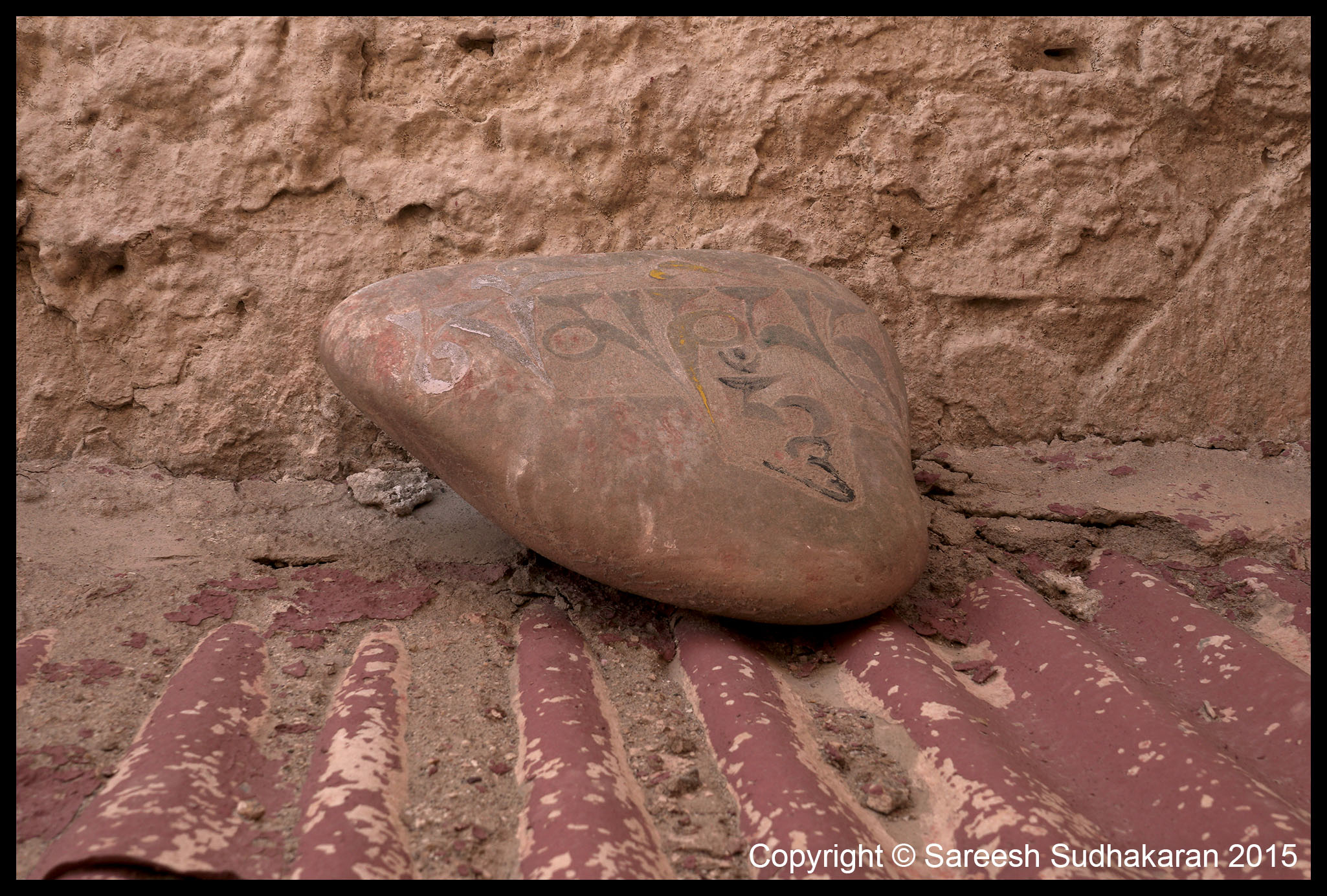
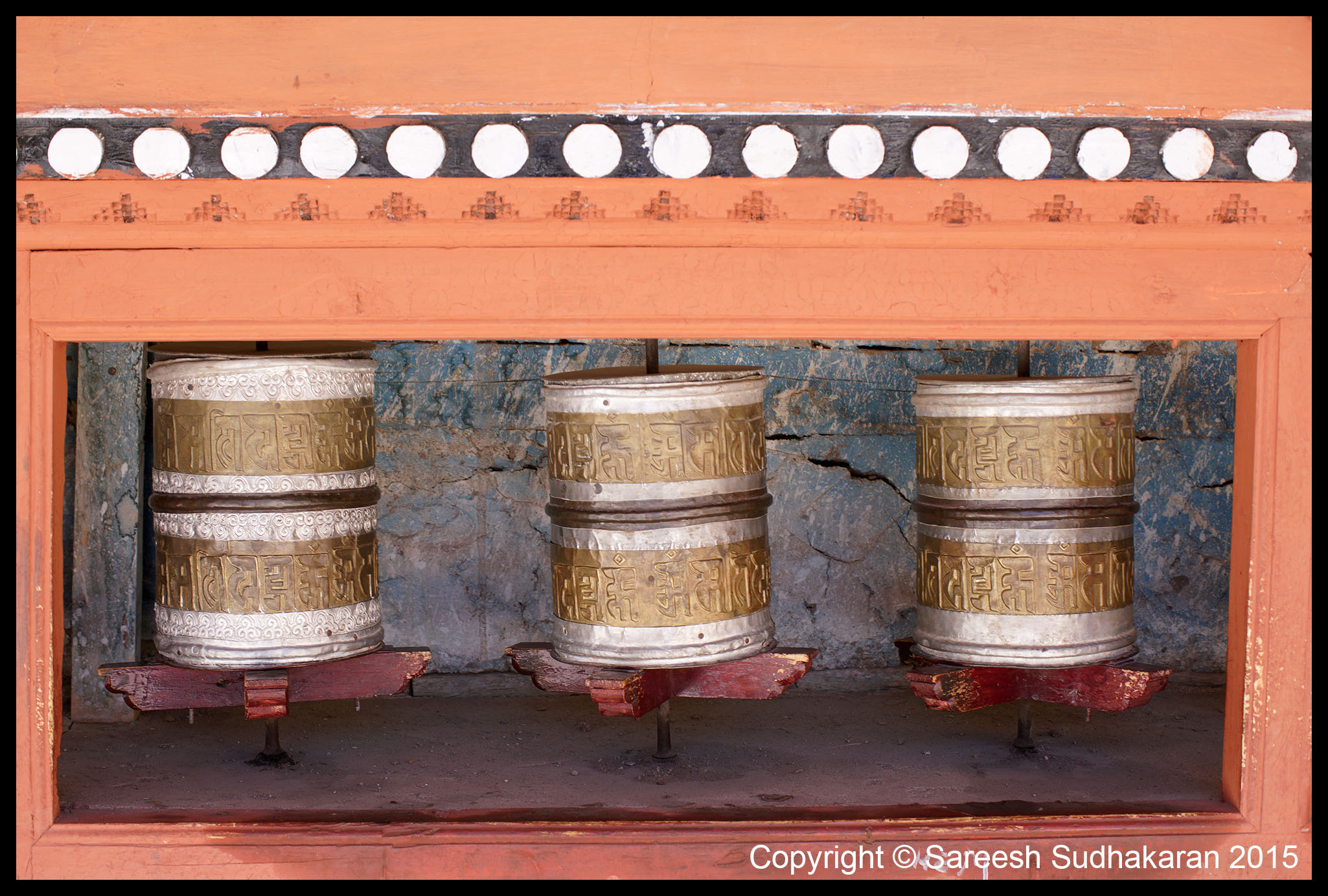


Here are the places I visited and my quick thoughts (from a photography/video perspective):
- Leh palace – don’t bother going inside (until it is 100% rennovated, that is), but the view from outside is worth it.
- Shey palace – There’s a Buddha statue here, and that’s it. I’d have skipped it, but I needed B-roll for my second video.
- Stok palace – This is where the royal family still resides, and the small museum is maintained well. I think it’s worth it. Nearby, there’s a giant Buddha statue with a great view.
- Hall of fame – Army’s museum, and possibly the best place for a quick overview of everything Ladakh offers, and the various wars fought in Kargil/Dras. Also, I found the cheapest Pashmina here (more on Pashmina later).
- Hemis monastery – The first of the “big three”, definitely worth visiting for its gorgeous details.
- Thiksey monastery – The second, possibly the richest (courtesy of the Dalai Lama) and most well-maintained. It has some really good statues inside so that makes it worth it. Don’t bother eating in the restaurant at the foot of the monastery (it’s run by them).
- The third is Lamayuru, but I had to skip it.
- Shanti Stupa – Nice view, but otherwise I’d skip it.
Generally, if you’re getting your ‘views’ of Leh from other places, I’d skip most of them. The thing is, your photographs will look like everyone else’s. But you do get some great panoramas!

Traveling and staying
While in Leh, there are three ways you can travel (distances are not that far on the map, though it takes hours to get anywhere due to poor road conditions):
- By car
- By motorbike
- By foot
There are advantages and disadvantages to every mode. We were on a laid back three week trip; but still, we wouldn’t have covered half as much without a car:

The car gets you places faster even when it’s chilly, like at night. Temperatures at Leh in September are about 15ºC during the day and about 0ºC at night. In Ladakh it tends to drop to about 0 to -5ºC. You can’t beat a car for comfort or for traveling in groups either. I recommend the Innova for most comfort.
Bikes are extremely popular. Most people arrive in Leh and rent bikes (usually an Enfield 500cc model, for about Rs. 1,500/day). The problem with bikes are the small fuel tanks. You have to carry extra fuel, and you have to take frequent breaks due to overheating (and the physical discomfort). Yet, nothing beats strapping a Go Pro to your helmet on a road trip.
My personal opinion is that Ladakh is best experienced on foot, as the thousands of trekking videos on Youtube will tell you. This is what I missed most during this trip, but I’ll make up for it next time! The disadvantage to trekking is most of the good treks are at least 7 days long, so it eats up a good chunk of your time.
Ladakh is not the place to rush around in, take selfies and fly out (though thousands do this every year). Luckily, these lost souls aren’t in sufficient quantity to spoil it for everyone else.
Ladakh in 8K (just a test, nothing fancy. It might crash your browser though):
As for staying, you could stay in very comfortable hotels (Leh has everything you need: ATMs, Wi-Fi, alcohol, food, love…) but to really experience Ladakh you should stay in homestays (stay in somebody else’s home, for a fee). We were lucky enough to stay for a night in Sakti village with Sonam and her family:

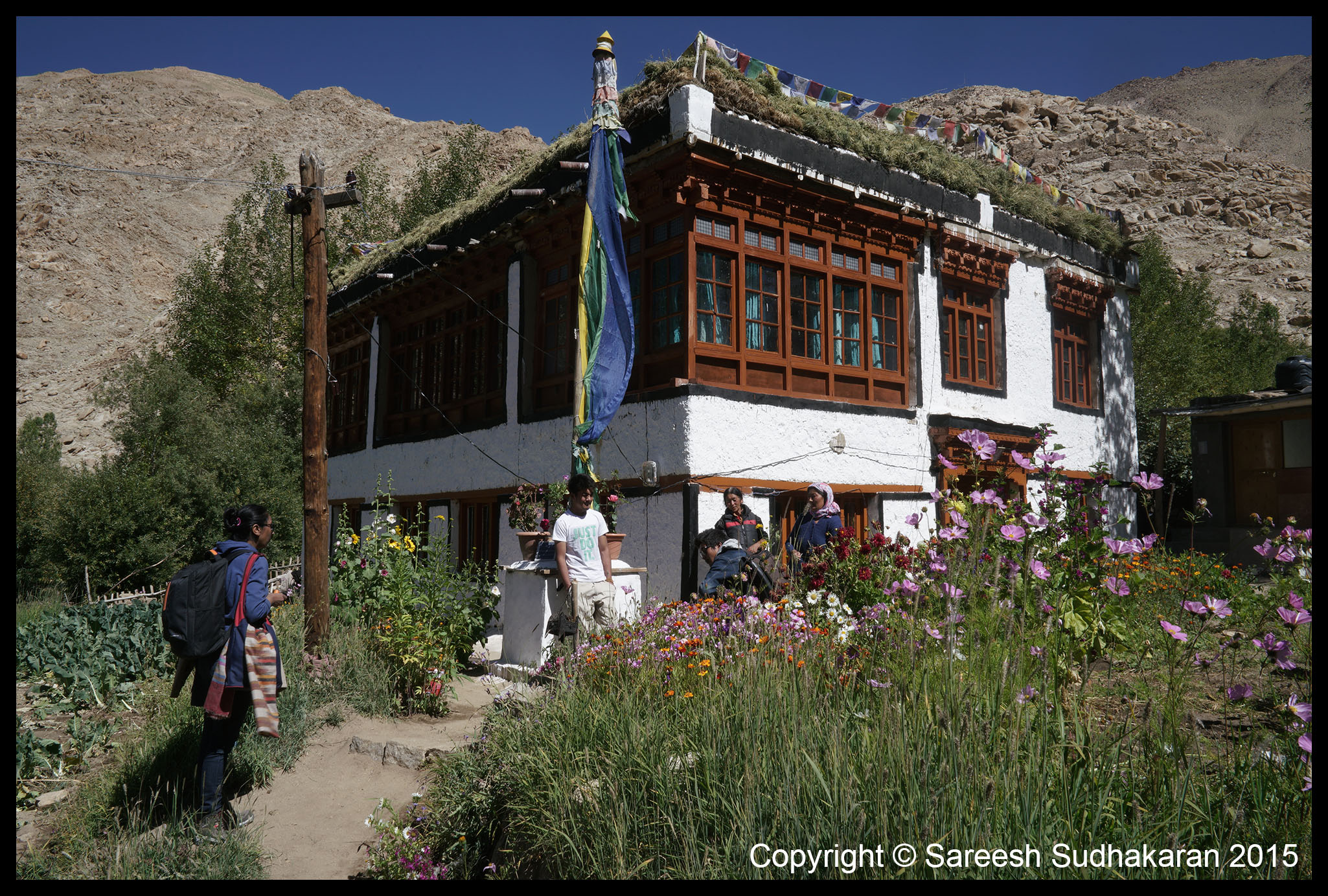
At some places, you can also camp (though you can camp just about anywhere if you have the equipment) in tents:

Our tour guide for this leg of the trip was Sonam Wangchuk, who runs Rural Tourism, who’s been in this business for 14 years. Not only is he an excellent human being (you’ll find many of those in this part!) he is extremely honest in his pricing and suggestions:

Rural Tourism specializes in treks, homestays, rural sightseeing and seriously, the general well-being of Ladakh. Thanks to him, I was able to shoot two small videos even in my condition. He also handles permissions for shoots and any other logistical need you might have for a project.
The women of Superb Ladakh
Sonam told me about a group of women who made pashmina and woollen clothes. For those of you who don’t know, Pashmina is the finest cashmere wool, which comes from Changthangi Kashmir goats. In the international market shawls sell for thousands of dollars, yet the shephards who breed these animals make peanuts.
We visited the factory and met the owner, Sonam Chorol (“Sonam” is probably the most popular name in Ladakh!). Thankfully, she took a few minutes (which turned out to be three hours) off to let me interview her (you can read how I interview here) and shoot around her factory. Here’s my humble result:
General notes:
- Unfortunately, my lav mic died and all I had was the in-camera audio. I did the best I could, but apologies.
- The Superb Ladakh Weaving Unit makes clothes from not just Pashmina, but also wool and Yak’s fur (wool?).
- Half the time she makes local dresses (Pattu). However, the majority of revenue is from distributors who supply to the international market. Buyers from as far as France visit her, so you might just see something at a runway sometime!
- Most of the pashmina you get are either adulterated with other kinds of wool, or are from similar goats from other regions (China, Nepal, etc.). When I say Pashmina, I mean Ladakhi Pashmina Goats. It’s almost impossible to know if something is real Pashmina or not unless you are an expert. Mrs. Sonam Chorol makes her living on this, so I guess it is safe to trust her instincts. However, I make no representation or endorsement on her products. You are on your own here.
- Where do you find the cheapest finished Pashmina shawls? Two places – the Army Hall of Fame museum, and the Leh Tourism Center. Prices are half or less than what you’ll find elsewhere, including Superb Ladakh, though I don’t know about the authenticity.
Camera and gear:
I used the Sony a7R II and the 28-70mm f/3.5-5.6 OSS “kit” lens for this shoot. The 5-axis stabilization helped. I recorded to the internal 100 Mbps 4K codec in the Cine1 profile, though I desperately wished I had the Atomos Shogun. The other thing I sorely missed was my tripod. I really hate handheld shaky-cam footage, but that’s all you’ll see in this article, so go figure.
If I had to choose between the Sony a7S and Sony a7R II for video, I’d choose the former. It would have helped me better in the low light at a wider aperture (I carried all my lenses, and thankfully the Samyang 14mm still worked even though the hood now resembles shark’s teeth).
All data was backed up on a 2TB external hard drive and then double-backed up to my laptop. I organized my stills and clips so I wouldn’t go crazy later.
Post production
It was edited and mixed in Adobe Premiere Pro 2015. Some slight audio clean up (a little too much, I’m afraid!) was done in Audition. The Lumetri panel was used to grade. I didn’t change most of the clips, only brought up the exposure or slightly corrected for skin tone (there are a couple of big mistakes, see if you can find them).
When I shot it, I didn’t have much idea which direction the edit would go. Eventually, I decided it would help the women most if it resembled a corporate video, so to speak. I hope it does. If you’re in Ladakh, you know where to get original Pashmina! We purchased a couple of shawls ourselves.
The old metal workers from Chilling
The second video was shot first. We undertook a long journey to Chilling, a popular waypoint for trekkers, but not frequented much by the regular tourists. There, I tried to interview the last three remaining metal workers who are descendants from a long line of artisans who created most of the intricate metal statues, instruments and utensils in the monasteries around Ladakh.
Unfortunately, one of the metal workers didn’t want to conduct an interview, but I got lucky with the second. The third was back in Leh, whom we interviewed the next day.
First, a stop at a tea shop when you enter Chilling:

Unfortunately, my lav mic died on the very first interview, and all the audio was recorded on the onboard camera microphone. I tried what I could in post, but the results are less than stellar. Still, you be the judge:
I’m happy how it turned out considering I went in without a clue as to what to expect. Also, I really wish I had a tripod and shotgun mic. But it is what it is. How this was shot:

Which lake do I prefer, timelapses and the rest of my gear
There are three major lakes. Actually one really big one and two smaller ones:
- Pangong Tso
- Tso Moriri
- Tso Kar
Tso means lake. I didn’t visit the third one due to lack of time. Of the other two, I’d say my favorite is Tso Moriri:
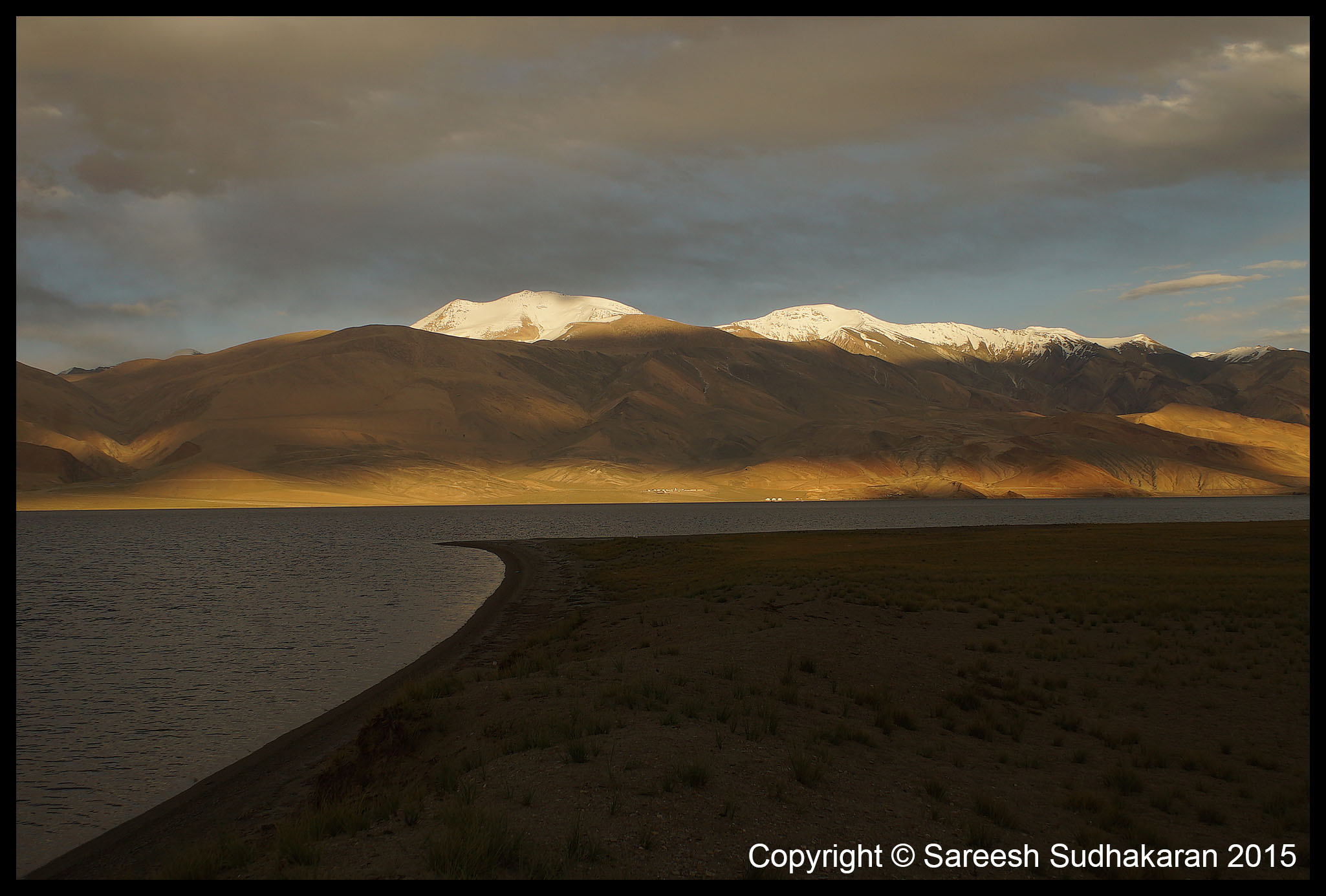
Though there’s no way you should miss Pangong Tso:


However, my absolute favorite is a small lake just before Tso Moriri, called “Tso Chum Karu” by Rigzin, our driver, though others call it Thadsang Karu:

As you might have guessed by now, Ladakh is fantastic for timelapses. I used both the a7S and a7R II. For tripod, I had my Pedco Ultrapod II with me and it did great. Here’s my review of it:
This is the intervalometer I used:
Most of the timelapses were taken at 10-30 second intervals. I tried to keep the shutter at 1/50 whenever possible (hard to do because the sun’s so strong!). They were mostly RAW files, processed in ACR via After Effects. I exported Prores HQ videos from AE and then finished in Premiere Pro (graded in Lumetri). The night timelapse was done at T3.5, 3.2″ shutter at ISO 6400. It wasn’t the right season for the best shots of the Milky way.
Finally, don’t forget a sensor blower and lots of lens wipes. It gets very windy and dusty out there. Even with the sensor cleaning mode and a blower, I couldn’t get rid of the dust spots, and the camera needs to go back to Sony for cleaning. Unfortunately, the sensor in the a7R II is sensitive and should be handled with care. One more strike against it because the sensor is practically outside the camera and it’s too easy for it to collect dust spots.
The best time to visit Ladakh (according to the tourists) is June-August, though in my humble opinion, if you’re into photography or video, nothing beats September. Not only are most places less crowded, you also get cheaper rooms, souvenirs, and finally, beautiful skies with clouds. The rains usually stay away this month (but climate change wrecks havoc sometimes) and the roads are safer.
The season sort of ends with the Ladakh festival (20th September in 2015). A lot of people visit in the winter to undertake the Chadar trek (on the frozen Zanskar river). Maybe I’ll do that someday.
Some miscellaneous things I carried:
- I carried by trusty Osprey Talon 44 backpack, and it survived carry-on, checked luggage and a lot of hotel porters. It went everywhere except on my back.
- Luckily, I wore my tough Oakley glasses, and they survived the fall. To be honest I never believed the hype. I have many stitches on my face from multiple falls over the years, and this is the only one that didn’t break.
- I’ve become a fan of Columbia gear. I’m glad I bought their ball cap, convertible pants and Peakfreak XCRSN Mid hiking shoes. They are not cheap, but offer excellent quality. The shoes have a tremendous grip and are super comfortable. No shoe bites from day one, and totally waterproof.

Well, that’s it. I could tell you a whole lot more, but nothing replaces the real thing. I hope you have found my travelogue interesting enough to plan a visit of your own. If you have any questions, let me know in the comments section below.

AndrewNewby Thanks for the tips! I’ll look into it and get back to you if I have any questions.
Sareesh Sudhakaran AndrewNewby Yes. very expensive. Perhaps you should investigate the possibilities of the isiMangaliso Park (a World Heritage Site) that takes in the Kosi Bay Lake System. You would be right on the southern Mocambique border and could do a safari into that area into the Maputo Elephant Park. Quite wild and certainly pristine. Good elephants and seascapes. The infrastructure on the South African side is quite good and you would find it much cheaper because the rand is not good against the dollar at the moment. Namibia is also good. If you need more details or pointing in the right direction, I would be happy to assist. Regards.
anvas69 Thank you for the kind words. Glad you liked them!
AndrewNewby Thank you! I’m looking at a Masai Mara or Serengeti trip next, though I can’t believe how expensive it is.
Thanks for this piece: your video and your comments about the trip and your equipment. It brought back memories because I did the road trip from Srinagar to http://www.amazon.com/Ladakh-Culture-People-%2522Little-Tibet%2522/dp/0764342819 by car three years ago with my wife and daughter. You are correct – this part of the world calls a person back! We are in Cape Town, South Africa, and I feel privileged to have videoed and taken stills of that landscape. I like your video.
Great stuff as usual from you, love your informative and detailed explanations and gorgeous images!