
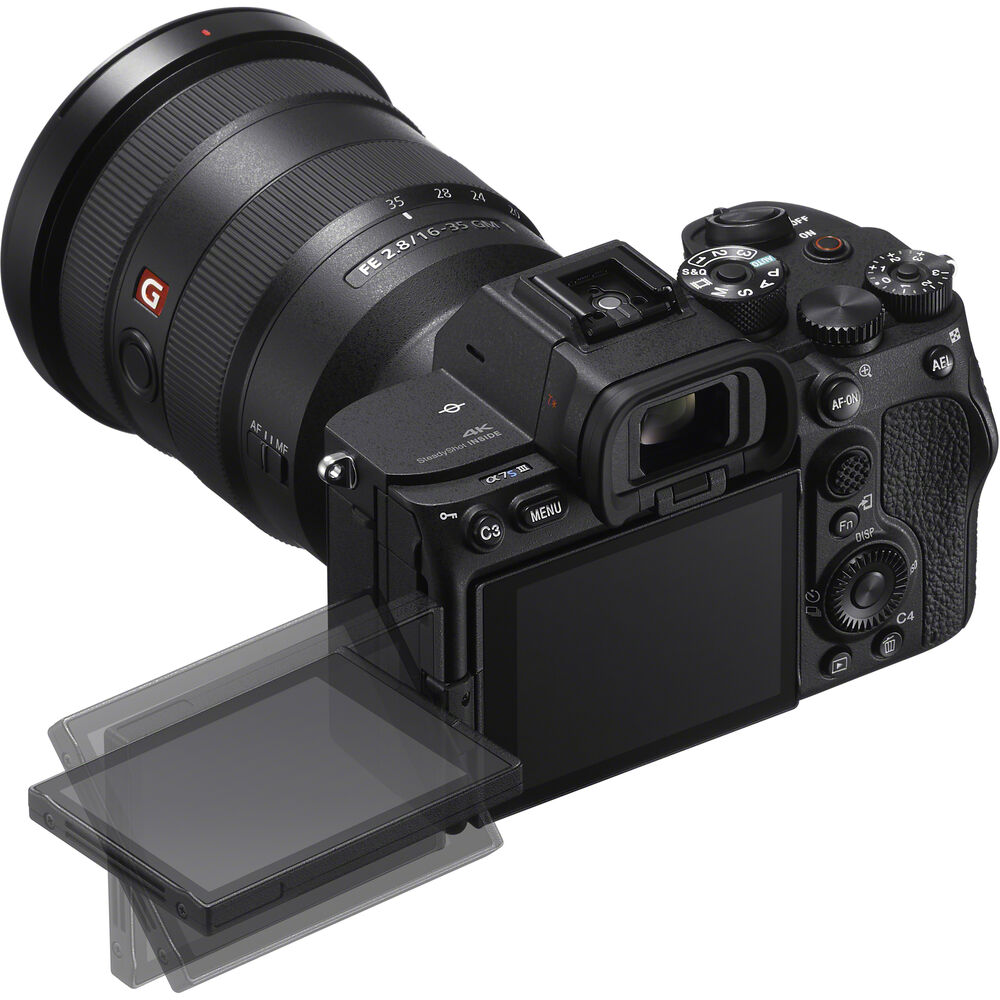
If you’re interested in understanding the differences in video capabilities of the Sony a7S III (Amazon, B&H) and the Sony a7 III (Amazon, B&H), you’ve come to the right place.
| Camera | Price of Camera body |
| Sony a7S III | $3,498 |
| Sony a7 III | $1,798 |
This is why we’re comparing them. The a7S III IS $1,700 more, or twice the price approximately. You can buy two a7 IIIs for the price of one a7S III.
In this post pandemic world a video shooter must ask the hard question:
Will moving to the Sony a7S III bring more business?
In this article we’ll look at all the important specifications relevant to video and see which camera is the best value for money.

10 Ways the Sony a7S III is better than the Sony a7 III
Here are 10 major ways the a7S III is better than the a7 III:
| Feature | Sony a7S III | Sony a7 III |
|---|---|---|
| Dynamic range | 15 stops | 13 stops |
| Chroma subsampling | 10-bit 4:2:2 | 8-bit 4:2:0 |
| RAW external recording | Yes | No |
| Maximum frame rate in 4K | 120 fps | 30 fps |
| Maximum frame rate in 1080p | 240 fps | 120 fps |
| Fully articulating screen | Yes | No |
| Eye AF (Humans) | Yes | No |
| Active Mode IBIS | Yes | No |
| Great Rolling Shutter | Yes | No |
| ALL-I codec | Yes | No |
Clearly in the image quality department there’s no question the a7S III is a step ahead. It also improves with a host of other useful upgrades like articulating LCD, better rolling shutter and Eye AF. The menu has been simplified as well, though that might come as a firmware update.
To learn more about the available lenses for each system, check this article:
In terms of ergonomics the cameras aren’t too different. The key difference is definitely the LCD. It will make shooting different scenarios a lot easier.
For these reasons, as far as ergonomics is concerned, the Sony a7S III (Amazon, B&H) wins for the new upgrades.
Comparison of video features
Now let’s get into the camera, specifically for video details.
| Camera | ISO Range | Native ISO |
| Sony a7S III | 40-409,600 | 800 in S-Log3* |
| Sony a7 III | 100-51,200 | 800 in S-Log3 |
The Sony a7S III (Amazon, B&H) is definitely the low light champion, if initial videos and Sony are to be believed, even though the a7 III is no slouch. In my tests with the a7S II and a7 III the results were very similar.
On the whole though, I’d definitely recommend going to 25,600 ISO with the Sony a7S III (Amazon, B&H) with almost no penalty. Everything above is a bonus, though of not much practical utility for most video shooters.
What about frame rates?
| Camera | Max fps at 4K | Max fps at 1080p |
| Sony a7S III | 120 fps | 240 fps |
| Sony a7 III | 30 fps | 120 fps |
When it comes to color science:
| Camera | Color Information (Internal) | Best Data Rates, Codec | Color Information (External) |
| Sony a7S III | 10-bit 4:2:2 | 600 Mbps ALL-I | 16-bit RAW |
| Sony a7 III | 8-bit 4:2:0 | 100 Mbps IPB | 8-bit 4:2:2 |
Again, there is no doubt the a7S III will be much better with S-Log3, and will offer better grading performance in XAVC S-I (ALL-I) mode at maximum data rates.
Usability
A quick word on three important upgrades as far as usability is concerned:
Eye AF for humans is improved vastly, and this should put the a7S III on par with the Canon R5 for video. It will be competitive for sure, and it is an important addition.
The key question is:
Does the improved AF help add more money on the table compared to the a7 III?
I believe yes, because if you’re shooting weddings or events, which a huge chunk of Sony’s user base shoots – improved AF especially with gimbal use is very helpful. If you can rely on AF tracking, you’re going to get better shots more.
The next is the new “Active Mode” in IBIS. You get a small sensor crop but the results are stabilized in camera. It tells me the processing happens in-camera in real-time by using data from the lens. In that respect I feel it should do on par with any post processing stabilizing software. This will save time and money.
The key question is:
Does the Active mode help add more money on the table compared to the a7 III?
I think not. This only really works with wide angle, but I feel a lot of people who want consistent stability will have already invested in gimbals. It does allow some situations where you might want to eschew the gimbal, but it doesn’t eliminate the need for a gimbal altogether. Until that happens, I don’t see this feature being a key difference.
And the last important upgrade is rolling shutter performance. The Sony a7S III (Amazon, B&H) has 3x better rolling shutter than the a7 III.
Let’s ask the question again:
Does the improved rolling shutter help add more money on the table compared to the a7 III?
I would say, no. Because most people don’t wave their cameras around like maniacs anyway. The a7S II and a7 III have been used for countless productions where the poor rolling shutter didn’t matter.
The improved rolling will definitely help in many situations and for some video shooters, but not enough to make a definite difference to the bottom line of the majority of Sony Alpha shooters.
What about overheating?
Even though the Sony a7S III (Amazon, B&H) overheats, I don’t think it will matter that much for most shooting needs. All Sony a7-series cameras overheat. The good news is, if you want to record continuously without overheating, use an Atomos Ninja V.

Media Cards
| Camera | Dual card slots | Price per hour of 4K 23.976 fps | Price per GB* | Price of Reader |
| Sony a7S III | Yes, SDXC + CFexpress Type A | $262 | $2.49/GB | $118 |
| Sony a7 III | Yes, SDXC | $72 | $1.64/GB* | $29.37^ |
^Most people don’t need SD card readers, but even so, they are cheap.
Sony sells a 160GB CFexpress Type A card. It’s too expensive, but I think the price will go down in a couple of years time. You also need a reader, which is an added expense:

Neither camera is more expensive all things considered. You can still use SD cards with the a7S III, except for one major problem:
You can’t record 120 fps 4K using SD cards. You need the CFexpress Type A card.
A lot of people who need 120 fps sparingly can buy one card and use that occasionally. It’s risky, but the price of the card is too high. Shooting for a whole day or for a whole project is just not feasible for a majority of video shooters.

Battery life and Power
| Camera | Battery life |
| Sony a7S III | 80 minutes |
| Sony a7 III | 60 minutes |
They use the same batteries. It’s hard to compare the theoretical specs, but I think in real-world terms the difference in battery life won’t matter that much.
Which is the better camera for video?
Here’s a summary of each round, and the “winner”:
| Feature | Winner |
| Ergonomics | Sony a7S III |
| Video features | Sony a7S III |
| Image quality | Sony a7S III |
| AF for video | Sony a7S III |
| Image stabilization | Sony a7S III |
| Media cards | Tie |
| Battery life | Tie |
There is no doubt the Sony a7S III (Amazon, B&H) is the winner.
What are some cons? Here’s a recap:
| Camera | USP | Cons |
| Sony a7S III | Image quality, Rolling Shutter, Continuous recording with the Ninja V, RAW, etc. | Twice as expensive, CFexpress Type A is rare and expensive, you need CFexpress for 4K 120 fps. |
| Sony a7 III | Really capable camera for a great price. | Recording limits and poor codec. |
What’s the bottom line?
The Sony a7S III (Amazon, B&H) wins, for obvious reasons. Here’s my comprehensive review:
But is the a7S III better enough to be twice the price? You also have to factor in added costs for CFexpress Type A cards and reader, the Atomos Ninja V (for RAW or continuous recording), etc.
The key competitors to the Sony a7S III (Amazon, B&H) are the Panasonic S1H and Canon R5. Those cameras are more expensive, but each has its own Achiles’ heel:
| Camera | Pros | Cons |
|---|---|---|
| Sony a7S III | More recording time, low light, DR, AF | CFexpress TypeA, expensive, external RAW only. |
| Canon R5 | Internal RAW, AF | Overheating, recording limits, lower DR |
| Panasonic S1H | Continuous recording, DR, low light | Poor AF, noisy fan, external RAW only. |
After a hard think, I feel, to the struggling video shooter who needs to remain competitive in the post-pandemic world, I would recommend they buy one or two Sony a7 III (Amazon, B&H) cameras and this would put roughly the same bread on the table.
As good as the Sony a7S III (Amazon, B&H) is, the economic situation puts too heavy a burden. A lot of those with disposable income won’t feel the pinch, and I’m sure it will be a supremely popular camera. But the video shooter who has a family to feed should be extremely careful making that purchase.
That’s $2,000 extra that will be hard to make back in 2021.
What do you think?

How can a7s III record 4K 10-bit 4:2:2 at same bit rate as 8-bit without loss of quality?
never mind my comment! i was reading wrong information from a bad website. lol
I like your conclusion. I am a simple guy, I shoot within my means. I have a Sony A7Sll with an Atomos Ninja and find that with this combination, I am able to shoot what I need to within the budget constraints that I have. Yes, it is nice to have the latest ‘shiny’ that comes out, because it is always better in some respects, but if one does not have the financial means, hunker down and film what you need with what you have,