
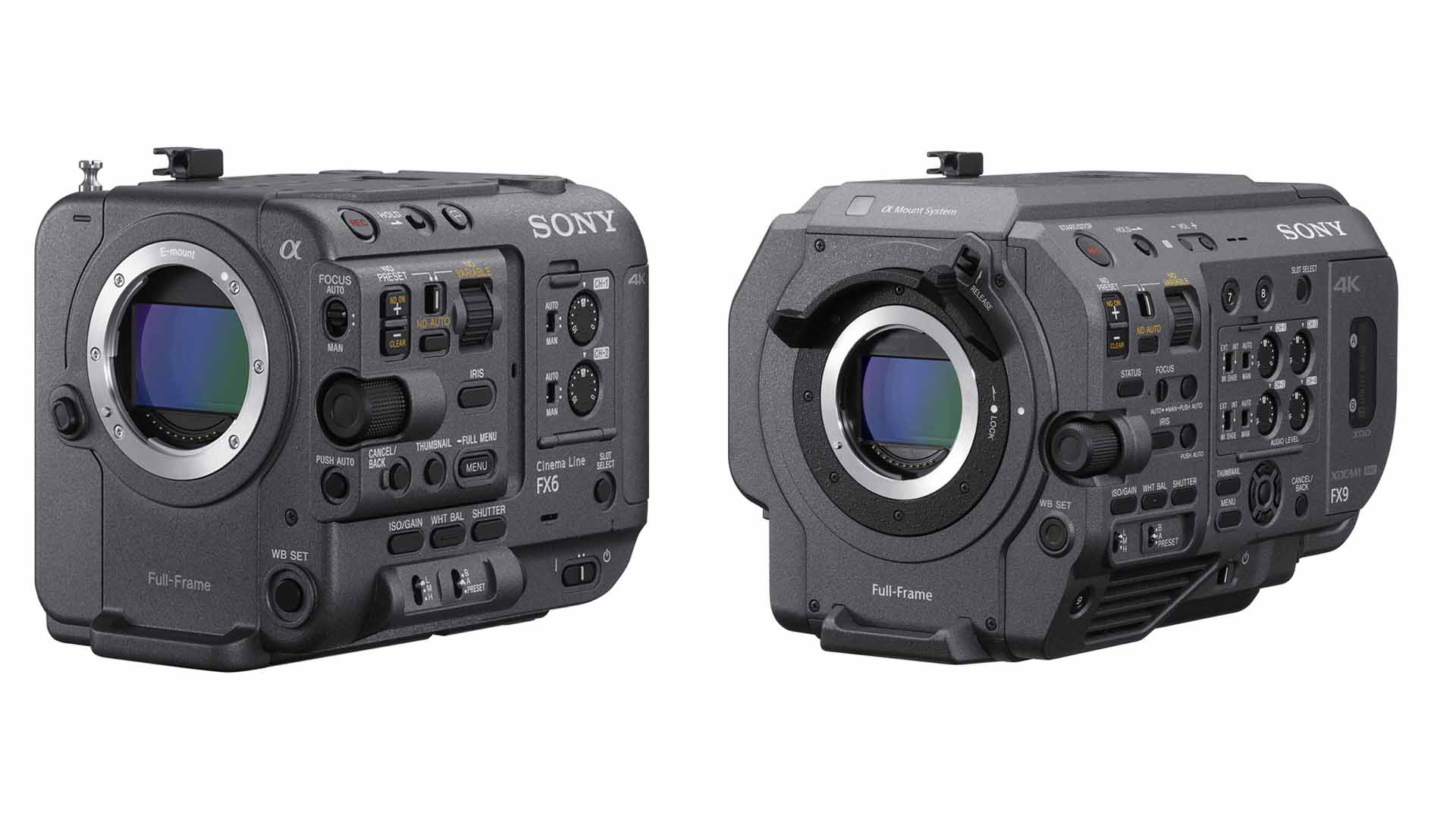
In this article we have a face off between two brothers of the same family. Does the Sony FX6 (Amazon, B&H) make the Sony FX9 obsolete? Or does size matter?
Let us figure this out.
The basics
| Camera | Price of Camera | Mount |
| Sony FX9 | $10,998 | Locking E mount |
| Sony FX6 | $5,998 | Standard Bayonet E mount |
The Sony FX9 has a locking E mount. This is more rugged than the standard E mount on the Sony FX6. This is relevant if you’re planning on using heavy cinema lenses and zooms with the camera. For most people though, it’s not as important.
Sensor Size
| Camera | Sensor Size | Maximum Resolution |
| Sony FX9 | 35.7 x 18.8mm | 6K downsampled to 4K |
| Sony FX6 | 35.7 x 18.8mm | 4.2K scan to 4K |
The FX9 in theory should producer sharper and cleaner images, but that’s not the whole story.
Super 35mm and anamorphic modes
The Sony FX9 is a full frame camera, and it has a Super35 mm mode and an anamorphic mode that allow for de-squeezing in camera.
The FX9 also has 5K at 60fps, 4K at 60 fps in Super 35mm mode, 2K at 180 fps at full frame and Super 35 mode, thanks to the new firmware update. 2K Super 16mm has been announced for a newer firmware update.
The Sony FX6 (Amazon, B&H) does have a Super 35 mode but not in 4K, it is just in HD. There is no anamorphic mode, though you can use an external monitor to desqueeze your image for monitoring. The main disadvantage is it doesn’t have the benefit of the 6K sensor, so any crop will give you less than 4K.
Cameras in this price bracket come with a certain level of image quality. Sony has decades of experience and reputation in the broadcast space. I’m expecting both cameras to be equally good in the image quality department.

Usability and Workflow
For a lot of professionals, in this price point, usability is as critical as image quality.
Those who are purchasing the Sony FX9 and Sony FX6 (Amazon, B&H) are mainly into documentaries, corporate videos, commercials, high-end weddings, music videos and maybe the occasional short or feature work. It is a given the camera is designed to perform on demand.
In short, these are money-making tools. They are investments that one needs to put a lot of thought in before committing to a purchase.
If you can’t use the cameras quickly and efficiently to maximize image quality when you (and your clients) need it, it will cost you more money than any savings you might have made with the wrong camera.


Size and weight
| Camera | Dimensions | Weight |
| Sony FX9 | 146 x 142.5 x 229 mm or 290 cubic inches | 2kg |
| Sony FX6 | 114 x 116 x 153 mm or 123 cubic inches | 890g |
Sony FX6 (Amazon, B&H) is ridiculously compact. It is by far the lightest cinema camera in the world right now beating the Red Komodo by about 10 grams.
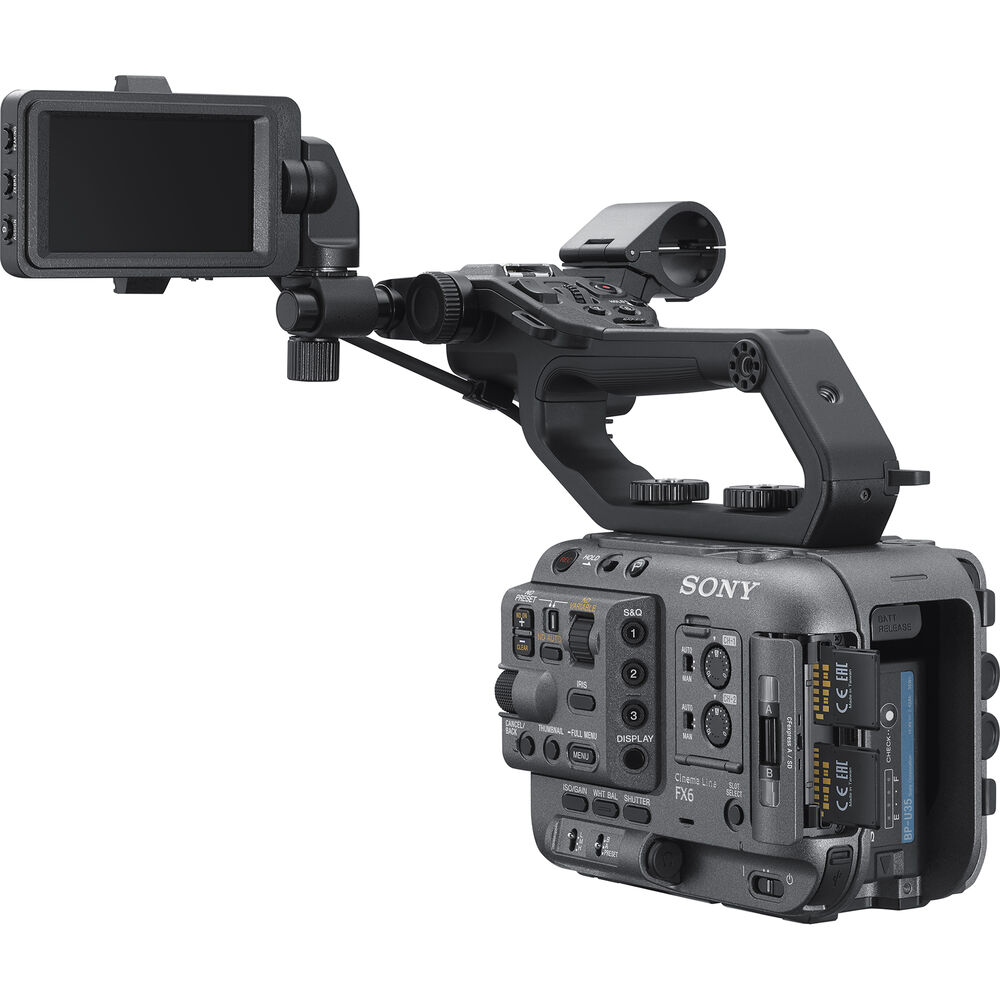
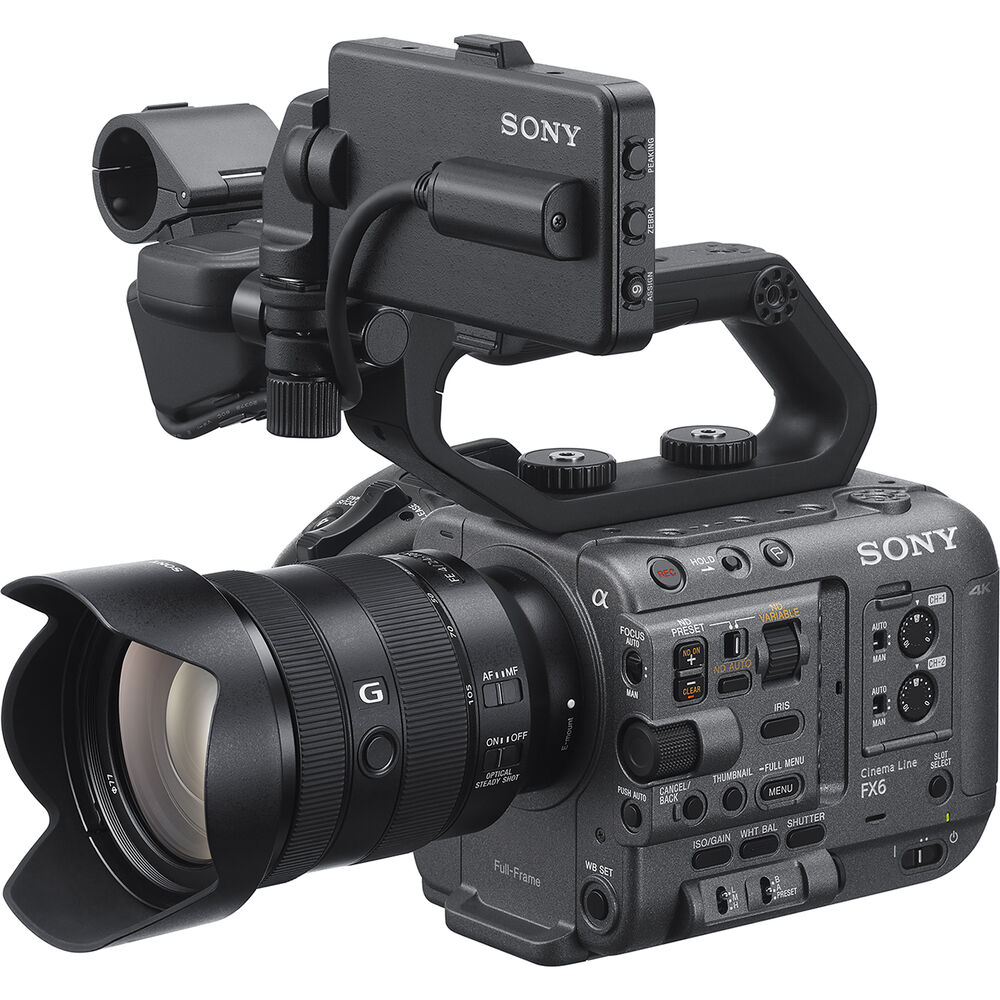
Even after slapping on every necessary accessory the FX6 will only be a little heavier than the FX9’s body. Throw it on a gimbal, attach it to a drone, use it handheld; the possibilities are endless with the FX6.
Audio
| Camera | Specs | Inputs* | Headphone |
| Sony FX9 | 4-Channel 24-Bit 48 kHz LPCM | 3-Pin XLR x 2 | 3.5mm |
| Sony FX6 | 4-Channel 24-Bit 48 kHz LPCM | 3-Pin XLR x 2 | 3.5mm |
Both cameras can control all four channels quickly and independently. They also have a hot shoe mount on top for additional audio modules if necessary:
The preamps in the cameras need to be tested though I’d be surprised if either was inferior in any practical way.
It is important to note that in the FX9 you get four control dials to control the four channels, whereas the FX6 has two audio control dials to control two channels and the remaining two channels will have to be controlled via the touch menu. That’s a minor win for the FX9.

Timecode and Genlock
| Camera | Timecode | Genlock | Headphone |
| Sony FX9 | BNC, Input and Output | BNC, Input | 3.5mm |
| Sony FX6 | BNC, Input and Output | No | 3.5mm |
Sony has omitted the Genlock input for the FX6. Clearly the Sony FX9 is the intended camera for the broadcast industry. Both cameras have a BNC connector for timecode.
Built-in ND Filter
Both cameras have built-in ND filters:
| Camera | Module | Type |
| Sony FX9 | 2 to 7 stops and Auto^ | Electronic Optical |
| Sony FX6 | 2 to 7 stops and Auto^ | Electronic Optical |
Both the cameras have a gradual increment scale for ND. The auto feature might be handy in some run and gun situations.
Comparison of video features
Now let’s get into the camera video specifications:
ISO
| Camera | ISO Range | Native ISO |
| Sony FX9 | up to 102700 | 800 and 4000 in S-Log3 |
| Sony FX6 | up to 409600 | 800 and 12800 in S-Log 3 |
The Sony FX9, in the cine EI mode, has a dual native ISO of 800 and 4000. The Sony FX6 (Amazon, B&H) is a better low light performer and it is reflected in its higher base ISOs of 800 and 12800.
This is what I meant when I said image quality isn’t only determined by the resolution K count. If 6K gives you a cleaner, crisper image, a better low light performance makes more of a difference to a real working professional.
Dynamic Range
Sony claims both cameras are exceptional when the dynamic range is concerned:


The distribution in S-Log3 is similar. I expect the image quality to be on par for the most part.
RAW recording externally
Here’s what you get:
| Camera | Max. Resolution | Bit Depth | Max Frame rate |
| Sony FX9* | 4096 x 2160 | 16-bit | 2K 120p |
| Sony FX6 | 4096 x 2160 | 16-bit | 4K 60p |
You can record ProRes RAW externally using a Atomos recorder on the Sony FX6 (Amazon, B&H) without an extension unit or added costs except the external recorder. The external RAW on the FX9 offers 2K DCI up to 120p, where the FX6 RAW tops out at 60p. I see very few people recording RAW in 2K.
The FX6 is the better choice due to less added expense of an extension unit (and the added weight!). Sony should have included RAW recording in the FX9 when it was launched. I think Sony’s a la carte pricing and firmware strategy is hurting it, especially when the competition is offering everything up front.
Even in the sensor department. Sony’s sensors haven’t made great strides. Many would still be happy with an FS7. Where is the compelling reason to upgrade?
In 10-bit 4:2:2 internally
| Camera | Max. Resolution | Data Rate | Format |
| Sony FX9 | 4096 x 2160 | 240-600 Mbps^ | XAVC-I/L |
| Sony FX6 | 4096 x 2160 | 240-600 Mbps | XAVC-I/L |
Both the cameras have similar data rates for the same frame rates. We’ll take a closer look at media card rates below.
Media Cards
Media card costs are an important percentage of ownership:
| Camera | Dual card slots | Price per GB^ |
| Sony FX9 | Yes, XQD + SD | $1.8/GB |
| Sony FX6 | Yes, CFexpress Type A + SD | $2.5/GB |
CFexpress Type A is a newer, better version of XQD, and the form factors are interchangeable. Strangely, the FX9 still doesn’t have a CFExpress update, though some other manufacturers have allowed the upgrade. You’ll still find XQD cards, though there is no upgrade path. Those expensive cards will be useless in the future.
Another interesting difference to note is that while you can dual record 4K, UHD and HD in the FX6, you can only dual record HD in the FX9.
The SD card is useful to record proxies for faster editing. The proxies are written in 8-bit 4:2:0.
What about frame rates?
| Camera | Max fps at 4K | Max fps at 1080p |
| Sony FX9 | 60 fps* | 180 fps^ |
| Sony FX6 | 120 fps | 240 fps |
The FX6 puts the FX9 into a deep pit of shame here. The Sony FX6 (Amazon, B&H) clearly is more useful in this (and the coming) economy.

Autofocus
Sony claims the Sony FX6 (Amazon, B&H) has a new and improved version of the AF tracking, eye tracking, and face detection.
In the FX9 you don’t get autofocus whatsoever in Slow and quick mode, but in the Sony FX6 you do get autofocus in Slow and Quick mode, except at 24 fps.
With the FX6 you get Lens ring AF subject selection where if the AF assist mode is on and you wish to still pull focus manually, you can do so by just rotating the ring. Once you leave the ring the camera switches back to autofocus, maintaining the focus on the subject you have selected.
Inputs and Outputs for Video
Both cameras have important SDI ports and the obligatory HDMI port:
| Camera | 12G-SDI | 3G-SDI | HDMI |
| Sony FX9 | 1 | 1 | Type A |
| Sony FX6 | 1 | 0 | Type A |
Atomos have announced 16-bit Prores RAW for the Sony FX9, but only with the extension unit. You need the newer and more expensive Neon range. To be honest I don’t know how practical this is.
You can easily record Prores RAW using an Atomos Ninja V (cheaper!) with the FX6 so you will save some money.
Battery life and Power
Here are the official numbers:
| Camera | Power Draw | Battery life* | Battery Voltage |
| Sony FX9 | 35.2 W | 108 minutes | 14.4V |
| Sony FX6 | 18.0 W | 215 minutes | 19.5V |
And the cost:
| Camera | Battery | Cost* | Cost of 4 hours of operation |
| Sony FX9 | BP-U70 72Wh | $320 | $960 |
| Sony FX6 | BP-U70 72Wh | $320 | $640 |
You will have to carry an extra battery with the Sony FX9 as it has a larger power draw. The point being, the Sony FX6 (Amazon, B&H) is more economical when we are talking about battery consumption.
Which is the better camera for video?
Here’s a summary of each round, and the “winner”:
| Feature | Winner |
| Ergonomics | Tie (depends) |
| Native lenses | Sony FX9 |
| Third-party lenses | Sony FX9 |
| Video features | Sony FX6 |
| Image quality | Tie |
| AF for video | Sony FX6 |
| Broadcast | Sony FX9 |
| Media | Sony FX6 |
| Battery life | Sony FX6 |
Final Thoughts
The Sony FX9 is a great camera, but I have no idea why Sony cannibalized most of its own customers for the FX6. Maybe the FX9 is a disaster, sales-wise. Who knows? If you’re into TV broadcast, the FX9 makes sense. But otherwise I can’t think of any professional. today who can justify the extra cost for very limited practical benefit. Your clients certainly won’t care…or pay.
For everybody else, there’s the Sony FX6 (Amazon, B&H). It’s the clear winner in this comparison.
What do you think?

Here are my thoughts… for practicality and bang for my buck the FX6 makes so much more sense. But when you compare image quality between the two the FX9 is so much clearer and detailed. It’s just one step below the dreamy quality of a Hollywood production. I know others may think differently but to my eyes there is a big difference here. Nuff said and bes of luck in 2021 to all my fellow content creators. Cheers!