

When we say ‘Cine’ lens, its mostly understood we are speaking about manual lenses for the Sony Alpha 1 (Amazon, B&H).
If you need help in deciding on a cine lens as opposed to a still camera lens, read what is a cine lens and how is it different from photo lenses?
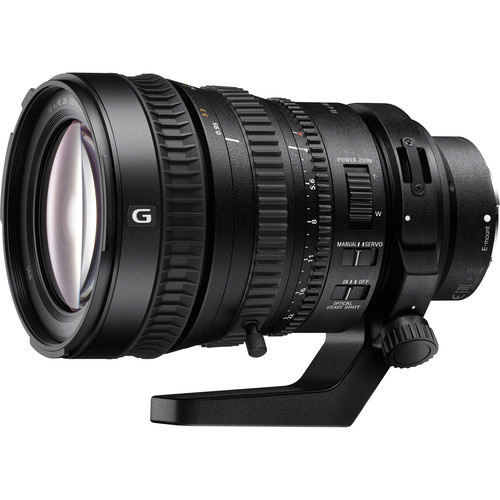
What about the 28-135mm PZ cine zoom?
Ask yourself: Will you buy the 28-135mm cine zoom (B&H, Amazon) if there were other options available? If yes, then this one is for you. Key advantages:
- Powered but silent zoom (SSM).
- De-clicked aperture.
- Constant aperture at f/4, which is not bad for both the Alpha 1, because both have great low light performance.
- Full auto and full manual control.
- Is parfocal.
- Low breathing.
- Tripod collar.
Now here are the key disadvantages:
- Expensive for what you’re getting. Is it really value for money?
- Not stellar image quality for the price.
- Not really that wide at 28mm, and not really that telephoto at 135mm.
- Crappy lens hood.
- Some parts can be repaired or replaced.
- Zoom performance not as advertised.
- 95mm filter thread.
- Heavy, at 1.2 kg
For run-and-gun work and if you don’t have any options this zoom is a great all-rounder. It is for the video shooter for whom convenience of a single zoom outweighs all the negatives.
Which mount should you pick – E or PL?
This is an important consideration. Should you stick to the Sony E mount, or should you opt for a better mount?
Given a choice, cine lenses are better off with the PL mount. However, all PL-mount lenses must interface with an adapter, so the adapter must be strong, stable and must provide good support so the E mount is not strained. The E mount isn’t really designed to hold heavy cine lenses, especially zooms. Primes are okay, but not for handholding.
All things considered, I prefer the PL mount. Assuming you have an excellent adapter that has been shimmed for focus accuracy, it also allows you these benefits:
- An additional support for heavy lenses so the E-mount isn’t taxed.
- Lock-on ring to keep the lens secure.
- Four different orientations, so the focus puller can work more freely.
Low budget cine prime lenses for the Sony Alpha 1
If you have a limited budget, then don’t look further than a Samyang/Rokinon Cine DS prime set (Amazon, B&H):

I would start with a four lens set: 24mm, 35mm, 50mm and 85mm T1.5. It costs about $1,650 for the set. And you can augment it with the stellar 14mm T3.1 Cine DS (Amazon, B&H).
Rokinon Cine DS or Samyang Cine VDSLR II?
If you’re on a budget, I recommend the Rokinon DS line. Here are its advantages over the Samyang cine lenses:
- Color matched
- Same position for aperture and focus wheels
- Dual focusing scales on both sides
I would avoid all the earlier versions.
For those who don’t know, DS lenses are rehoused Rokinon primes with the focus and iris rings all at the exact same distance, so you don’t have to change follow focus or iris gears with every lens change. That saves a lot of time on set.
However, where these fall short are they are not all the same length, size or weight, which cine lenses are supposed to be. If lenses are the same length, you don’t have to reposition the matte box with every lens change. If lenses are at different lengths and weights, it takes time to reposition your rig and adjust rod lengths. Finally, if the outer diameter isn’t the same size, you will need different matte box adapters for each lens change. All this eats up precious time on set.
Let’s not be under the impression that Rokinons/Samyangs can replace real cine lenses, but for bang for buck – they are unmatched. I absolutely recommend them, as long as you know what you’re getting into.
What about XEEN?
I don’t think it’s good value for money. When you buy a full set, you want world-class service, great rental options, easy replacements and good resale value. If you need to compromise on any of these, then it must be offset by better image quality than those listed below.
The XEEN falls last on all these fronts.
Best cine prime lenses for the Sony Alpha 1
As of 2019, many manufacturers have come out with full frame cine lenses in the top range. Click here to read my comparison of full frame lenses for large format sensors.
On the medium-budget side of things, there are two lines, both of which are good:
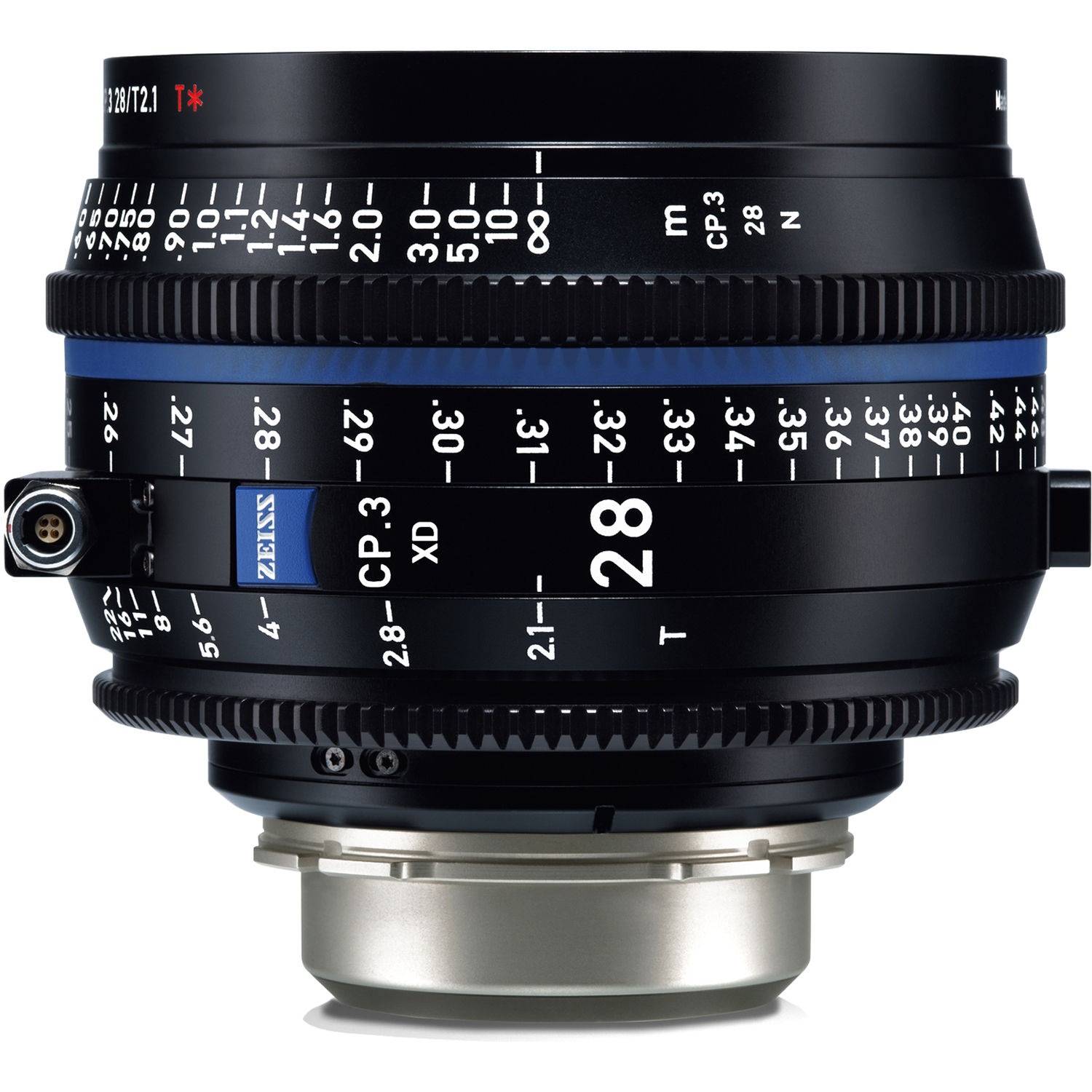
I prefer the Zeiss CP.3 (Amazon, B&H) line, for these reasons:
- Better brand recognition, rental and resale value.
- Less breathing.
- More color matched.
- More standard sizes across the range.
For the serious professional, the Zeiss CP.3 (Amazon, B&H) line offers the most focal lengths, if you want the entire range, that is.
If I had to pick, I would go with the Zeiss CP.3 (Amazon, B&H) line, no doubt. Not only is it versatile, but it has been field tested by rental houses over many years, and have worldwide sales and service. Lastly, it also color matches with its zoom cousins (below).
What about cine-mods?
Yes, and no. It seems unlikely that any manufacturer will make great cine lenses in the sub-$1,000 price range, so the next best option is to modify a still lens for cinema work. The three companies that have been doing this for a while and have sufficient track records are:
- Duclos Lenses – $250 for a full cine-mod, and $409 for a cine-mod plus mount change (you need to contact them for Sony E-mount at present)
- GL Optics – they also provide casing modifications, and the prices run greater than $3,000 per lens. For primes, the charges are too high. For zooms, they might be a bargain (considering the prices of cine zooms)!
These services don’t have a worldwide presence, so you must be aware that replacements and service will be slow; and if you want a quick replacement in an emergency you likely won’t find the exact same lens.
Cine zoom lenses
This is where cine-mods make sense. Zoom lenses for full frame sensors are as rare as UFO sightings:
| Lens | Approx Price | Mount (Filter thread) |
| Sony FE C 16-35mm T/3.1 | $10,000 | E (114) |
| Sony FE PZ 28-135mm f/4 | $2,498 | E (95) |
| Tokina Cinema Vista 16-28mm II T3 | $3,999 | EF/PL (114) |
| Sigma 24-35mm T2.2 | $4,999 | E/PL (95) |
| Zeiss LWZ.2 15.5-45mm T2.6 | $19,900 | EF/PL (114) |
| Zeiss 15-30mm CZ.2 T2.9 | $23,900 | E (114) |
| Zeiss 28-80mm T2.9 CZ.2 | $19,900 | E (95) |
| Zeiss 70-200mm T2.9 CZ.2 | $19,900 | E (95) |
| Angenieux Optimo Ultra 12x | $91,000 | PL (162) |
| Angenieux Full Frame EZ-1 & EZ-2 | $28,700 | PL (114) |
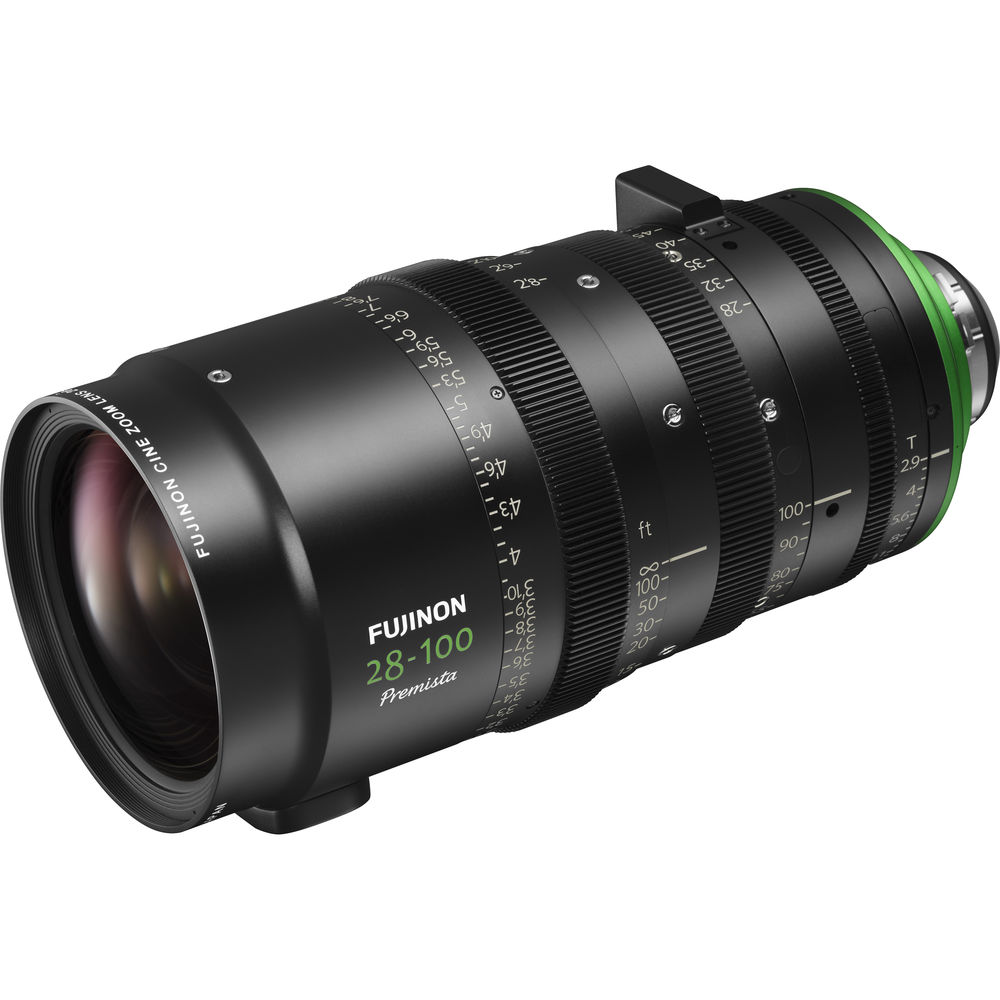
| Fujinon Premista 28-100mm T2.9 | $38,800 | PL (114) |
| Fujinon Premista 80-250mm T2.9-3.5 | $39,800 | PL (114) |
| Leitz Cine Zoom 25-75mm T2.8 | $75,000 | LPL (114) |
It would be the rare individual who will buy a $20K zoom for a $3K camera. If I had to pick a favorite, I would either pick the Zeiss CZ.2 line or Fujinon Premista line.
What about anamorphic lenses?
Most traditional anamorphic primes are made with a 2x factor, and it needs an aspect ratio of 4:3 to work. The Sony Alpha 1 (Amazon, B&H) only allows for 16:9, so a 2x squeeze will result in an aspect ratio of 3.55:1, and you’ll be forced to chop off the sides to get 2.39:1.
What happens if you use 2x on the Alpha 1 (2K, not 4K)? Here’s an example with a 28mm lens:
- 28mm normally translates to 56mm in 2x anamorphic
- In APS-C mode, 28mm becomes a 42mm equivalent
- With 2x, 42mm becomes an 84mm equivalent
- Because you have to crop from 3.55 to 2.39, the 84mm becomes a 125mm equivalent!!
- To get the same 56mm, working backwards, you’ll need a 12mm anamorphic lens!
This is why you have some manufacturers bringing out 1.8x anamorphic lenses, like the Cooke Anamorphic/i Full Frame Plus Prime Lens:

You get a range from 32mm to 180mm at a T2.3 average.
Now, with a 1.8x sequeeze, a 16:9 aspect ratio transforms into a 3.2:1 aspect ratio, and if you shoot full frame 1.5 (like with the Sony Venice), you’ll get 2.7:1.
If this is an acceptable compromise to you, that’s good. The Sony Alpha 1 (Amazon, B&H) isn’t the perfect camera for anamorphic shooters. There isn’t even an anamorphic desqueeze option in camera. But it’s doable with an external monitor that allows you to frame correctly.
If you shoot in 8K, and want to use 2x anamorphic lenses, you’ll get an effective resolution of 5184 x 4320 (1.2:1), so you definitely accomplish a 4K anamorphic finish.
That’s it! I hope you’ve found my suggestions useful. If I’ve missed an important lens please let me know in the comments below.
