
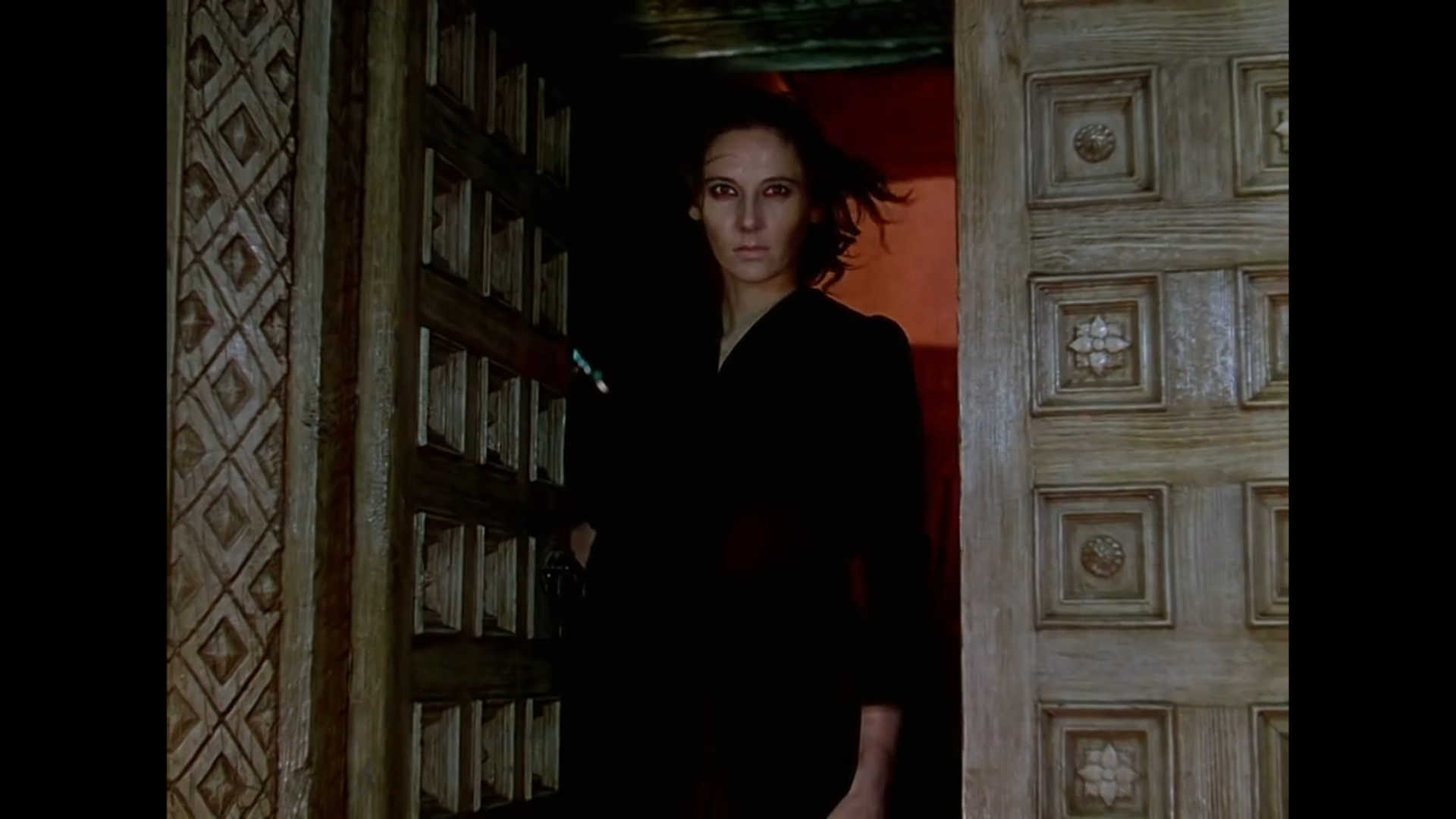
“How was your vacation?”
“Great.”
Can you make out how great the vacation was? What if I tell you the person was honest and the “great” was delivered with enthusiasm and a genuine smile? Can you say for certain the vacation was, say, as great as your vacation?
You get the idea. The importance you place on the word “great” is important. It can’t be a flippant response, but something delivered with meaning.
“Freedom and equality is great” is different from “This vanilla ice cream is great.”
So, let’s start with great.
What makes a film great?
A film is great when it excels on all levels.
It can’t just excel in one department, like lighting, for example. Then we can just say the lighting was great. Why say the film was great?

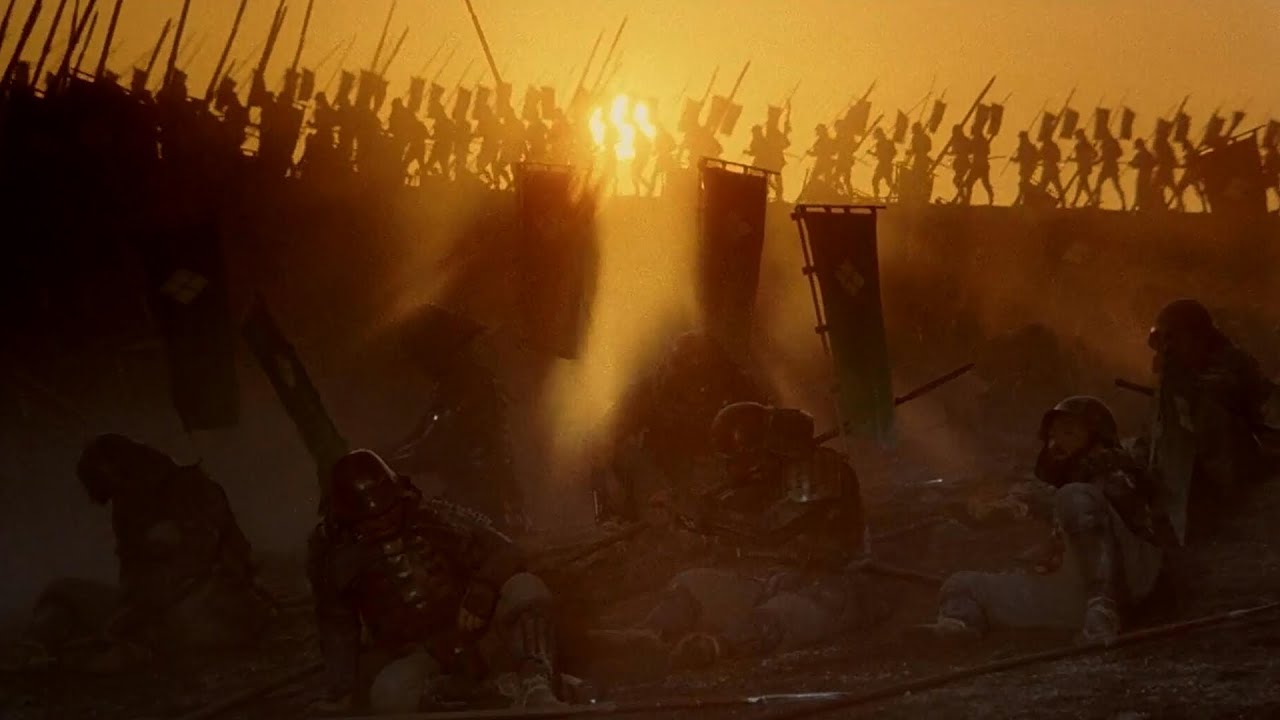
What makes a film greater than another one?
The next step is to form an understanding of how a film can compare to another film. Humans are not just happy with “great”. They also need the “greatest”.
“I just ate this new ice cream from X. It was great.”
“You should also try this other flavor. It’s better.”
The comparisons just happen automatically. We’re wired for it. Might as well not resist. Who knows? Something good might come of it.
In the case of ice creams taste is definitely one of the most important factors. Assuming it’s the only one is deceptively wrong, though.
What if the ice cream looked like excrement? Or what if it was delivered a cup that looked like a sample cup? Presentation is important.
Temperature is important. Color is important. Allergic ingredients are important.
And most importantly, your taste buds are important, too.
Nothing is simple. If this is true for ice creams, films are on a whole different level.
How can we compare films in a fair manner? Films vary wildy on subject matter (Gore vs a Pixar movie), technology (film vs digital vs animation), language and culture, actors, and so on. First we have to agree on what criteria we need to include in our comparison.
These criteria have to be distilled to the essence of cinematic expression so they are applicable to all films.
Surprisingly, this eliminates many obvious points of contention:
- The subject
- The story
- The message
- The historical context and time period
- Its financials and viewership size
- Who made it
The subject
The subject matter can’t be compared.
E.g., if you tried to compare two horror films, you’ll find enough differences that make any comparison pedantic if not impossible.
What’s so directly comparable between The Texas Chainsaw Massacre and The Shining?
When you boil it all down, you may come to the conclusion that death is the common theme in horror. Yet, in classic horror films like The Blair Witch Project or The Conjuring no one dies!
The story
This one gets everyone riled up. Films tell stories, but they don’t have to.
I wonder how you can compare 81/2 to Hiroshima mon amour to Abbas Kiarostami’s Close-up?
And then compare that to Avatar or The Avengers?
Rather than belabor the point, I’ll stop here with this sobering axiom:
How you tell a story is more important than what the story is.
The message
All messages are propaganda in some form. Yes, even “Eat healthy food.”
What could be wrong about healthy food? Nothing, except it’s a term that has no real meaning. You’ll have to drill down to more specifics, like “An apple a day keeps the doctor away.”
Except, experts don’t agree apples can keep anything away. Please notice most articles trumpeting the benefits of apples use the words “may” and “reduce risk”, but offer very few scientifically proven benefits.
Which is why most individuals don’t eat apples every day. Apples didn’t arrive in India until a few centuries ago. Yet, people lived normally for thousands of years.
The point I’m trying to make is, film is fiction. When a fictional character pronounces a message, it’s only as good as or worse than any random person on the street pronouncing the same message.
Great story teller: “They lived happily ever after.”
The Dude: “Well, that’s just your opinion, man.”
True story.
A filmmaker’s intention might be unquestionable, but we’re not putting the filmmaker on the stand here, but the film. The film has to survive on its own in a sea infested with believers and non-believers.
Films can be told from many points of view. E.g., The Catcher in the Rye brings you closer to Holden Caulfield than you would have gone without J. D. Salinger’s words. You did so not because the subject was agreeable, but because the way the words were delivered to you made it palatable.
Someone can call you an idiot straight to your face or put it thusly:
I must tell you friendly in your ear, sell when you can, you are not for all markets.
As You Like It
Or even better:
Thou damned and luxurious mountain goat.
Henry V
It’s the way the message is delivered that forms the foundation of art. The actual message is inconsequential. Take other art forms for reference:
- We don’t love Shakespeare for the subject matter or message, but the way he used the English language.
- We don’t love the Mona Lisa because she’s an influencer or rock star, we love it because of the way it is painted.
The historical context and time period
Does a film age like wine?
Actually, yes. Nostalgia is a powerful factor. Things that were mundane a hundred years ago hold good value today.
When I watch a D.W. Griffith film or a Charlie Chaplin film I am also looking into a world that will never exist again. That’s powerful.
And sad.
Time is important. But the lesson here is:
It doesn’t matter when a film was made. What matters is how much time has elapsed.
Does the value of Van Gogh’s art have anything to do with when or where it was painted? Or does it have more to do with the fact that enough time has passed for us to appreciate its value?
History is important to an art historian. But otherwise it’s just trivia.
Would your impression of Van Gogh’s art be any different if, say, it was suddenly revealed he was from a country you hate?
Should it?
People give trivia all kinds of importance. That’s reality. That’s why people worship pretend-heroes more than real heroes.
Most people would pay more for a house if they found out their favorite actor lived in. Does that make the house unequivocally better than the others in the locality? Does it make the house any better for the person buying it?
Historical baggage is hard to shrug off. The simplest way to do it is to discount it altogether, as I’ve done!
If you open that can of worms, you also have to let in messages you don’t want to hear. So, let’s agree to:
Ignore films that are just messages wrapped in a movie.
You could make a point to reject documentaries based on this. It takes great skill to make a good documentary, but they are just messages wrapped in a movie. Their main purpose is not to entertain or tell a story, but to spread a message.
The story just happens to be a vehicle, like a film star making a commercial for a product and proclaiming it’s “great”.
Documentaries use the medium of film to pontificate. If you make room for them then you’ll have no case against porn, snuff films, or anything else, as long as they are made “artistically” and “cinematically”.
Feel free to disagree. When we get down to the criteria for great films, you’ll find they are relevant to documentaries as well.
Its financials and viewership size
This one’s simple enough. Not all big budget films are good, let alone great.
The reverse works too. Zero budget filmmakers shout out the fact their film was made on peanuts.
You’re walking on the road. A car stops by.
“Get in. Let’s go for a ride together. I’m rich/poor.”
No, thank you.
Also works in this variation:
“Get in. Let’s go for a ride together. I’m well-known/unknown.”
Just because a film opened in 10,000 theaters doesn’t mean its great. Shakespeare’s plays only opened in one theater.
Who made it
Do I even need to spell this out? Spielberg made both Raiders of the Lost Ark and The Temple of Doom.
Enough said.
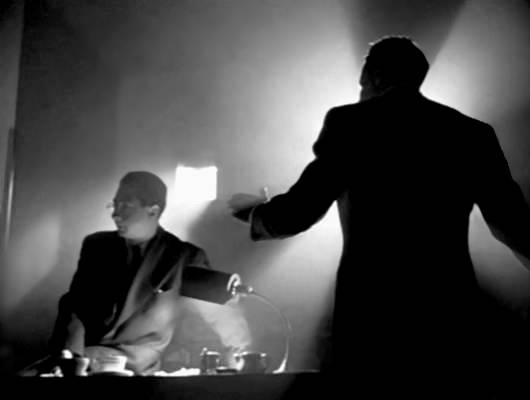
Whose point of view should be considered?
Let’s go back to our original conundrum.
Whose version of “great” matters?
Filmmakers make films, so should they know best? Or, is it the audience, for whom the film is made? Or, is it the critics, who professes to be a students of cinema? Or, is it someone else?
We can’t agree on greatness until we find common ground. Just one group’s opinion cannot be the last word. There has to be push and pull. This is especially true because movies are complex things.
Films embody multiple disciplines, styles and the work of many disparate individuals. Unlike other art forms, film stands…well…different.
Read this for more on the subject (members only):
I am of the opinion we need to take into account everyone’s point of view, and then we’ll have a list that’s more universally valid.
The four major groups we need to consider are:
- The Audience
- Critics
- Filmmakers
- Art historians
The Audience
Usually, the “audience” decides the current destiny of a film. Its success or failure or reach is dictated by the audience.
Since we have decided to disregard the size of the audience, or how much money a movie made, all we have left are two powerful parameters all audiences can relate to:
A film cannot be boring.
And:
Can you rewatch the movie and still enjoy it?
These two are the only criteria I can distill under this group that’s universally true of all films.
If a film bores you, that’s a death knell. Films are different from still photographs or video art installations or documentary newsreels and so on.
When you can watch a film full through, you get your “money’s worth”. That’s the least you can expect from a film.
What takes this another notch is if you can rewatch it, even if it were offered to you for free. A movie that can be enjoyed on successive viewings is stronger than one that just warrants only one viewing.
That’s one reason why it’s hard to rewatch murder mysteries where all you care about is the revelation of the murderer. What else does the movie have? Take a movie like The Sixth Sense. You might want to watch the film a second time just to check if the director goofed up on any of the clues leading up to the twist.
But, would you watch it a third time?
I’ve watched some movies close to a hundred times. When you cross ten viewings, something else drives the desire. Like great food or wine, you want it occasionally, but not everyday. At that point the movie just lives, and you’re in awe – like listening to great music.
Can this be an objective measure?
Not really. In theory, yes, but practically, movies are not released universally for all in equal measure. Studies haven’t been conducted for all films to see what the average “watch time” is or how many repeat viewings they got. We’ll never have those numbers, so we’re on our own here.
Please don’t fall for ratings from IMDb or some other popular site. People have to watch a film to rate it. Countries that have huge populations can vote in greater numbers. Modern films will have a greater engagement rate over older films. A democratic system would only have been scientifically relevant if implemented at the dawn of cinema. That moment has passed forever.
I use my own viewing history to decide what’s great. As an audience member, if someone asks me if a film is good, I should ask myself:
“Can I sit through three or more viewings of the movie without getting bored?”
That’s the best we can hope for as the “audience”.
Critics
Everybody’s a critic, right?
By critics I mean the people who have either been hired to critique (the polite word for criticize) films or have gained enough popularity to influence people’s decisions on a film.
Who is a film critic?
A film critic is a person who professes to be a keen and qualified student of cinema who claims to give voice to the audience’s point of view.
The key words here are “professes” or “claims”. How do we know they are the real deal unless we study their past?
That’s something to be done on a case by case basis. To this day I don’t know Roger Ebert’s credentials, but over the years I’ve agreed with his assessments more than any critic; then or since.
His passing has brought home an important point to me. It was a fluke. Maybe there was an honesty there that made his fame well deserved. I’ll never know. All I know with certainty is his views usually matched my own. He might have even influenced my thinking along the way.
The second bone of contention is “student of cinema”. Is a film critic a more qualified student of cinema than, say, Martin Scorcese or Steven Spielberg? Is a wine taster’s opinion more relevant than a wine maker?
Which brings us to the most important distinction: “give voice to the audience’s point of view”.
This is what separates the critics from the filmmakers (and the wine taster from the wine maker). A critic need only focus on those aspects an audience can appreciate as well. Why talk about things the general public cannot understand or know anything about?
What are these aspects?
The acting, for one. This can’t be hidden from anyone, can it? If a character feels alive, you know the actor did his or her job.
Since we’ve discounted the story, we can latch on to the next thing: the screenplay. Please note, I make a distinctiton between screenplay and plot.
You can make a great movie without any understandable plot or story. Yet, this movie is a progression of imagery and sound.
What is a screenplay?
A screenplay is a written record of the imagery and sound in a film in chronological order.
The images are observable. The sound (or lack thereof, as in the case of Silent Film) is observable.
Then, the order of images and sound is observable. This is the juxtaposition of these elements.
Does this mean film editing? No.
A critic cannot with any certainty know how well or badly a film was edited. Even a great film. A great film might have been greater with even better editing, because the critic hasn’t seen all the footage shot.
The same applies to a poor film. A passable film might be the result of prodigious editing talent and application, because the editor used poorly recorded material to elevate it, to save it.
How the hell will a critic know good editing if he or she hasn’t seen the footage? All they see is the final film, and they are in no position to comment on the film editing. All they can see with any certainty is the final arrangement (the screenplay) of the elements of film.
They can also judge the efficacy of visual effects.
Did you notice something? Even as keen students of cinema, critics can only hope to see the same things as any audience member – acting, screenplay and visual effects.
All they can do it is articulate in in entertaining ways to a member of the audience still undecided whether to watch a film or not. Sometimes they pepper it with trivia, their political or social leanings, and some linguistic acrobatics. It’s your call how much importance you want to give film critics.
For the sake of this article, here are the only parameters that can truly be critiqued without access to what happened behind the scenes:
- Acting
- Screenplay (images and sound)
- Visual effects
Note. A typical critic is not always qualified to judge the quality of the image or sound unless in general terms.
Which brings us to the next section.
Filmmakers
The people who really know what goes on behind the scenes, with actual practical experience!
Only those who are practicising cinematographers know what went behind the cinematography. These individuals can watch a film and tell with some certainty:
- What tools went into making the film.
- How it was lit.
- Most importantly, whether the lighting and camerawork works for the film or not.
Anyone can say a shot is beautiful or breathtaking, but that’s just one image – like a photograph.
Cinematography is the presentation of images in the service of the story.
Only the cinematographer and director know what decisions were made, and what these decisions were based on. An audience member or critic will never know whether a cinematographer did a good job or a bad one, unless they also know what happened behind the scenes.
Maybe the director insisted the lighting to be so and so, or maybe the lead actress demanded she be lit in a certain way even though that was detrimental to the film. Maybe the producer didn’t have the budget for the lighting required for a shot, or maybe the cinematographer saved a shot with great understanding of his or her tools.
The same applies to every filmmaking discipline, of which there are many:
- Film direction
- Art direction
- Sound mixing and editing
- Costume design
- Hair and makeup
- Music
- And so on
The importance of filmmakers is made known when we want to compare films. Anybody can say they like a piece of music. But it will take a real musician to compare two pieces of music to know how they stand relatively.
The same applies to films. A film director takes the responsibility of a film’s success or failure, yet the amount of control he or she has pales in comparison to the control a painter or dancer has.
Even if the responsibility is assumed, it cannot fully be fairly attributed.
With that said, only filmmakers can watch two films and understand the technical differences between them. And, only the filmmakers can appreciate the context and importance of those differences.
Modern films sound better due to major technological advances, so when judging the sound of older films the honest filmmaker will take this context into consideration while dissecting its technical merits or demerits. Without the expertise, it’s impossible.
A lay person judges the disciplines as independent silos. Great music, great visuals, amazing sound! A filmmaker judges the disciplines on how they served the film, and the circumstances around the craft. Only this kind of comparison is worthwhile.
If there were no wine makers, we’re all at the mercy of wine tasters!
Art historians
What’s funny today might not be funny tomorrow. Some of what was socially acceptable in 1910 isn’t socially acceptable in 2021.
Gone With The Wind, a film that arrived with great fanfare and excitement in 1939, is incredibly boring to watch today. I’m not even talking about the social and moral aspects of it.
Blade Runner and 2001: A Space Odyssey, two great films (even according to yours truly), were and are boring to watch for most audiences.
Saw was almost universally panned by critics, but it stands as an icon of horror filmmaking almost twenty years later.
Like I said at the beginning:
It doesn’t matter when a film was made. What matters is how much time has elapsed.
Time is one great leveller we have as a human race. It’s not always accurate or true (recorded history can be…ahem…recorded incorrectly) but it’s all we have.
Like other great works of art, sufficient time must pass for a work of art to lose all of its contextual baggage, to stand naked, so it can be judged on its own merit.
And, what merit is that?
How important is a film to humanity as a work of art that transcends all cultural boundaries?
That’s not a question we can answer for the current crop of films, though nothing stops us from playing the guessing game.
When we drop the films of the past through this sieve, only a few emerge, as films of real value. The others fail to impress posterity.
In other words, a film is only truly “great” if posterity deems it so, and only for as long as it does. Nothing is a certainty!
The people in charge of studying art and history are art historians (I’m not even sure this is a scientific discipline but you get the idea). Maybe the auction house is a better arbiter here. “Great” art of the past is great today also because of their current marketplace value. If an original Monet sold for only $9.99 would most people still call it great art?
This is why it’s not unreasonable to allow artists (and anyone else) to judge the film on its artistic merit; maybe even speculate as its future value.
Film as art is an intoxicating proposition, and is as valid as any other art. Is film an experience that can be enjoyed, passed on, appreciated and – the biggest question of them all:
Does a film gain value over time?
Enough said.
From these four groups, we can form a framework to judge films on their “greatness”.
I’ve reduced it to these four criteria:
- Technical artistry.
- Storytelling artistry.
- Entertainment value.
- Artistic value.

Technical artistry
Technical artistry in film is the use of camera, art, music, editing, sound design, lighting, etc. These are disciplines you can’t expect a member of the general public to be aware of, let alone appreciate with any reasonable degree of skill.
When we filter films through the prism of technical artistry, we come to two. important considerations:
Did the film use film techniques in the best way?
And:
Did the techniques used in the film advance the art and craft of filmmaking?
This second is one of the important parameters that separate great films from the greatest films.
Storytelling artistry
The parts the audience and critics are aware of. Story, screenplay, acting and visual effects.
As mentioned earlier, I ignore the story, subject and message. I’m only interested in how well its told.
The questions we can ask here are:
How well does the film tell a story?
And:
How real is the world of this film to me?
When a story is told well, the actors seem like real people in real situations. Every element of the film resonates as a valid cog of the film universe created by the storyteller.
Entertainment
Movies are too expensive to ignore the audience.
Finance is important, too. If you’ve been able to catch a movie somewhere, it’s because somebody else tried to make money from it. Even with YouTube, unless Google is trying to make money off a video, it won’t show it to you.
But, as I mentioned above, I’m ignoring finances and the success of a film.
The simple questions we want answered here are:
A film cannot be boring.
And:
Can you rewatch the movie and still enjoy it?
Film as art
Does the movie elevate itself to high art? Does it communicate with us on a deeper level than what’s on the surface?
This is one criterion we probably won’t agree on. Most would agree the Mona Lisa or Picasso is great. Fewer would agree Jackson Pollack is great, and even fewer still think anything of cave paintings.
We don’t all have to agree. We just have to agree in sufficient numbers to be statistically significant.
What happens when there’s a tie?
When comparing two films, if there’s a tie in the overall score, it might help to give different weightage to the different criteria.
You can decide your own, but I value:
- Storytelling over technical artistry.
- Art over entertainment.

What makes a film great?
A film is great when it excels on all levels.
It can’t just excel in one department, like technical artistry, for example, to be deemed great.
Here are the tenets:
If a movie is both art and entertainment, it is the highest form of cinema.
If advances the art and craft of filmmaking, it’s a significiant film.
If it excels in storytelling artistry, it’s a great film.
If it gains value over time, it is first among equals.
This site is dedicated to teaching filmmaking with a camera, real actors, etc. It’s just what I’m personally interested in. Which explains my list of 100 films to see before you die:

A really great article!
This is a must-read for all filmmakers, no matter their level of experience!
Thank you!