

Let’s go over the most useful lenses for the Panasonic S5 II (Amazon, B&H) and Panasonic S5 IIX (Amazon, B&H), specifically for video and cinematography.
To go directly to recommended lenses, click here.
Who makes L-mount cameras and lenses?
Both cameras have an L-mount. The L-mount system is standardized and adopted by three companies:
- Panasonic
- Leica
- Sigma
All three of them have committed to making cameras and lenses using the L-mount, so they have interchangeability and interoperability between each other.
The L-mount has a flange local distance of 20mm. This means you can adapt a range of third-party lenses to the L-mount, and we’ll talk more about that later.
What is a “native” lens?
A “native” lens is one specifically designed for the L-mount system, and which allow the following:
- Full control of autofocus, image stabilization, iris, zoom and focus control.
- Electronic metadata like iris, focal length, distortion, fall-off, focus, etc.
- Continuous auto focus for video.
The biggest advantage of owning native lenses is that it’s designed specifically for the new sensor and camera design. If you want the best autofocus performance, you need L-mount lenses.
Are L-mount lenses good for video?
It depends on what type of video you’re into. Currently the biggest issue is the limited range available as far as focal lengths are concerned.
There aren’t any super wide options, and some of the primes might be too expensive for many shooters.
The big advantages specific to Panasonic lenses are:
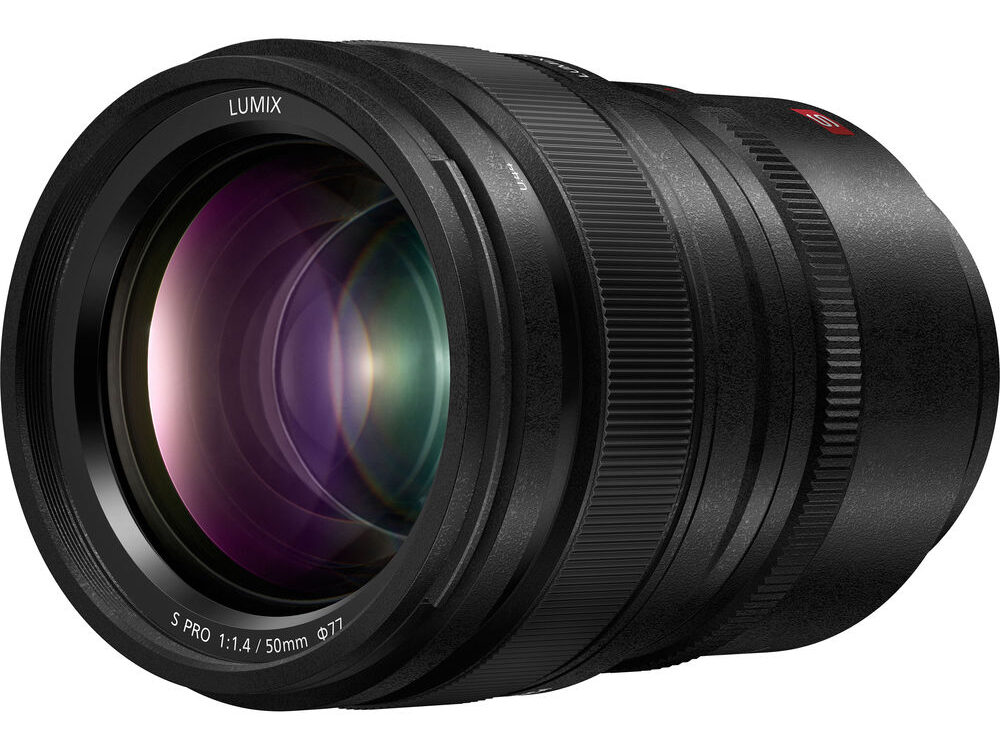
- They have controlled focus breathing, which is great. This is why I recommended the Panasonic 50mm f/1.4 over the Sigma 50mm f/1.4. The Sigma is a world-class lens, but breathes like a dragon.
- They have linear focus rings, not focus-by-wire systems. This is critical when you want to focus manually.
- They have large number of aperture blades. The 50mm f/1.4 has 11 blades.
- They are weather sealed and designed to be use in the extreme cold. Rated for up to -10 degree C.
- All three Panasonic lenses have a standard filter size of 77mm.
- The lens has an aperture ring. The Leica L lenses don’t have aperture rings.
- The lens has a distance scale. The Leica L lenses don’t have distance scales.
If you’re depressed about the lens choices (and price), then the good news is you can use third-party lenses as well.
What native lenses are available right now?
Since three companies can make native L-mount lenses, let’s divide them so its simpler to understand what’s on offer.
Panasonic
As of this writing, these are the lenses available for the Panasonic S5 II (Amazon, B&H) and S5 IIX (Amazon, B&H):
Prime Lenses:
- Panasonic Lumix S 50mm f/1.8
- Panasonic Lumix S 35mm f/1.8
- Panasonic Lumix S 24mm f/1.8
- Panasonic Lumix S 18mm f/1.8
- Panasonic Lumix S 85mm f/1.8
- Panasonic Lumix S PRO 50mm f/1.4
Zoom Lenses:
- Panasonic Lumix S PRO 24-70mm f/2.8
- Panasonic Lumix S 70-300mm f/4.5-5.6 MACRO O.I.S.
- Panasonic Lumix S 24-105mm f/4 Macro O.I.S.
- Panasonic Lumix S 20-60mm f/3.5-5.6
- Panasonic Lumix S PRO 16-35mm f/4
- Panasonic Lumix S PRO 70-200mm f/2.8 O.I.S.
- Panasonic Lumix 14-28mm f/4-5.6 MACRO
- Panasonic Lumix S PRO 70-200mm f/4 O.I.S.
The zoom lenses are relatively inexpensive when compared to the competition:
| Lens 24-105mm f/4 | Price |
| Panasonic L | $1,098 |
| Sigma Art EF | $899 |
| Canon RF | $1,299 |
| Sony E | $1,298 |
However, the biggest drawback is that Panasonic still doesn’t have a top of the line range yet for prime lenses. E.g., a 35mm f/1.4, or an 85mm f/1.4. They do have a 50mm f/1.4, but it’s $2,138 at the time of this writing. Here’s a comparison:
| Lens 50mm f/1.4 | Price |
| Panasonic L | $2,138 |
| Sigma Art L | $849 |
| Leica L | $6,595 |
| Canon RF f/1.2 | $2,099 |
| Sony E | $1,498 |
It’s clear you can’t rely on Panasonic prime lenses because you can’t create a full kit with just the 50mm f/1.4 even if you were willing to shell out the dough.
What about Leica?
Leica
Leica has the following lenses.
Prime lenses:
- Leica APO-Summicron-SL 90mm f/2 ASPH
- Leica Summilux-SL 50mm f/1.4 ASPH
- Leica APO-Summicron-SL 28mm f/2 ASPH
- Leica APO-Summicron-SL 50mm f/2 ASPH
- Leica APO-Summicron-SL 35mm f/2 ASPH
- Leica APO-Summicron-SL 75mm f/2 ASPH
Zoom lenses:
- Leica Super-Vario-Elmar-SL 16-35mm f/3.5-4.5 ASPH
- Leica Vario-Elmarit-SL 24-70mm f/2.8 ASPH
- Leica APO-Vario-Elmarit-SL 90-280mm f/2.8-4
- Leica Vario-Elmarit-SL 24-90mm f/2.8-4 ASPH
Leica has a different take on lenses, with zooms typically not having constant apertures, and primes that are more expensive than the camera itself!
It’s hard to recommend Leica lenses unless you have the cash. If you do, I recommend the best strategy is to adopt Leica primes and Panasonic zoom lenses and call it a day. Even so, it’s hard to imagine a situation where you’re so strapped for cash you have to buy an S5 or S5 IIX and then have money for Leica lenses.
Sigma
Sigma has a great selection of prime lenses that have outstanding image quality at an unbeatable price.
Prime lenses:
- Sigma 14mm f/1.8 DG HSM Art
- Sigma 35mm f/1.4 DG DN Art
- Sigma 24mm f/1.4 DG DN Art
- Sigma 20mm f/1.4 DG DN Art
- Sigma 20mm f/2 DG DN Contemporary
- Sigma 24mm f/2 DG DN Contemporary
- Sigma 90mm f/2.8 DG DN Contemporary
- Sigma 65mm f/2 DG DN Contemporary
- Sigma 24mm f/3.5 DG DN Contemporary
- Sigma 35mm f/2 DG DN Contemporary
- Sigma 105mm f/2.8 DG DN Macro Art
- Sigma 85mm f/1.4 DG DN Art
- Sigma 45mm f/2.8 DG DN Contemporary
- Sigma 35mm f/1.2 DG DN Art
- Sigma 70mm f/2.8 DG Macro Art
- Sigma 135mm f/1.8 DG HSM Art
- Sigma 20mm f/1.4 DG HSM Art
- Sigma 24mm f/1.4 DG HSM Art
- Sigma 28mm f/1.4 DG HSM Art
- Sigma 40mm f/1.4 DG HSM Art
- Sigma 50mm f/1.4 DG HSM Art
- Sigma 105mm f/1.4 DG HSM Art
Zoom lenses:
- Sigma 16-28mm f/2.8 DG DN Contemporary
- Sigma 60-600mm f/4.5-6.3 DG DN OS Sports
- Sigma 100-400mm f/5-6.3 DG DN OS Contemporary
- Sigma 150-600mm f/5-6.3 DG DN OS Sports
- Sigma 28-70mm f/2.8 DG DN Contemporary
- Sigma 24-70mm f/2.8 DG DN Art
- Sigma 14-24mm f/2.8 DG DN Art
Sigma zoom lenses aren’t known to be the best, and even though they are cheaper than Panasonic native lenses for the L-mount, I can’t recommend them. Tip: Pick the Art series whenever possible. It’s the highest quality lenses Sigma makes.
With this in mind, here are my recommendations:
Recommended native lenses for the Panasonic S5 II and the Panasonic S5 IIX
Here’s what I recommend:
Prime lenses
Why prime lenses?
The single greatest advantage prime lenses have in general is the aperture can open wider than zooms. You can go down to f/0.95 if you wanted to, with certain third-party lenses.
This makes prime lenses a great option for low light cinematography. There’s really no excuse for not having at least one prime because they also tend to be cheap without sacrificing quality. Another advantage of prime lenses is they are usually lighter than zoom lenses.
The third advantage of prime lenses are they have lower breathing, while zoom lenses (photo) breathe and are not parfocal. Prime lenses also tend to be sharper with lesser aberrations.
When should you pick prime lenses with manual focus?
When you can and want to control the focus, that’s when.
Professionals use follow focus systems, but if that’s overkill for you, you need to ensure the focus ring on the lens is solid, smooth and reliable enough to consistently nail focus.
Taking these options in mind, here are my recommended prime lenses for a full frame sensor, for up to 6K:
- Ultra Wide angle: Sigma 14mm f/1.8 Art (Amazon, B&H)
- Wide: Sigma 24 f/1.4 Art (Amazon, B&H) and Sigma 35mm f/1.4 Art (Amazon, B&H)
- Middle: Sigma 50mm f/1.4 DG HSM Art (Amazon, B&H)
- Telephoto: Sigma 85mm f/1.4 Art (Amazon, B&H) and Sigma 135mm f/1.8 Art (Amazon, B&H)
- Super telephoto: Adapt third-party lenses.
- Probe lens: Venus Optics LAOWA 24mm T14-40 2x PeriProbe (Amazon, B&H)
Zoom lenses
Here are my recommendations for a full frame sensor:
- Wide: Panasonic Lumix S PRO 16-35mm f/4 (Amazon, B&H)
- Mid-range: Panasonic Lumix S PRO 24-70mm f/2.8 (Amazon, B&H)
- Telephoto: Panasonic Lumix S PRO 70-200mm f/2.8 O.I.S. (Amazon, B&H)
- Great all-round low-budget option: Panasonic Lumix S 24-105mm F/4 Macro O.I.S. (Amazon, B&H)
The only negative here is the f/4 on the 16-35mm, but I think in the grand scheme of things one can make it work.
What about third-party lenses?
I like Leica R primes, but they are hard to find or recommend for everybody, and the price is high. You need to find a good copy, and maintenance is a problem as well. This applies to most older or esoteric lenses. If I’m recommending a lens, it should be available to purchase for most people worldwide, must be serviceable, and must offer tremendous value for money without sacrificing quality.
If you’re looking for something different I suggest you stick to Sigma lenses. They have the most extensive lens lineup at great prices. You can’t go wrong with them as they are also part of the L-aliance.
Lens adapters

How do you know if a lens can be used or not? First, you need to know what the flange focal distance is.
Here’s information on each mount, in increasing order of the focal flange distance:
| Mount | Focal Flange Distance in mm |
| Z Nikon Z-mount | 16 |
| C C-Mount | 17.526 |
| EF-M Canon EF-M mount | 18 |
| E Sony E-mount | 18 |
| FZ Sony | 18 |
| MFT Micro Four Thirds mount | 19.25 |
| RF Canon RF-mount | 20 |
| L Leica L-mount | 20 |
| M Leica M mount | 27.8 |
| FT Four Thirds mount | 38.67 |
| FD Canon Manual FD mount | 42 |
| EF Canon EOS EF mount | 44 |
| EF-S Canon EOS EF-S mount | 44 |
| LPL Arri LPL-mount | 44 |
| A Minolta/Sony A-mount | 44.5 |
| K Pentax K-mount | 45.46 |
| F Nikon F-mount | 46.5 |
| R Leica R-mount | 47 |
| PL Arri PL mount | 52 |
Third-party lenses come in their own lens mounts. So you need some sort of adapter that comes between the lens and the camera. This adapter does three things:
- It connects two mounts that naturally don’t fit together, and
- It makes up for the flange focal distance.
- Optional: Provides contacts that allow you to control aperture, zoom, focus, etc., from the camera itself. Not all features are supported.
There’s no glass in the adapter, no lens or optics. It’s just hollow inside.
The L-mount has a flange focal distance of 20mm, so any lens that has a higher flange focal distance than this in the above table can be adapted. This is why you can adapt EF lenses, because the Canon EF mount has a flange focal distance of 44mm.
You can also adapt older Canon FD lenses, Leica M lenses, PL-mount lenses and of course Nikon F-mount lenses and others.
Both Leica and Sigma have released lens adapters and given the choice, I think you should stick with them if your lens falls into that category. Very important: None of the adapters support continuous autofocus for video. You need native lenses for that.
Which is the best lens adapter for the Panasonic S5 II and the Panasonic S5 IIX?
Here’s the list of adapters I recommend for the Panasonic S5 II (Amazon, B&H) and the Panasonic S5 IIX (Amazon, B&H):
| Lens mount | Adapter | Buy |
| Canon EF | Sigma MC-21 | (Amazon, B&H) |
| Leica M | Leica M-Adapter L | (Amazon, B&H) |
| Leica R | Leica R-Adapter L | (Amazon, B&H) |
| Leica S | Leica S-Adapter L | (Amazon, B&H) |
| Nikon F | Novoflex Nikon F to SL Manual | (Amazon, B&H) |
| PL | Wooden Camera PL to L | (Amazon, B&H) |
| For Medium Format | Kipon Baveyes | (Amazon, B&H) |
| Others | Kipon | (Amazon, B&H) |
Native adapters are a bit more expensive, but they give you the best functionality, and will maintain weather-sealing where appropriate.
Recommended cine prime lenses for the Panasonic S5 II and the Panasonic S5 IIX
There are really great full frame lenses, like the Arri Signature Primes or the Leica Thalia, but these are rental items, hardly available for purchase for us “regular folk”.
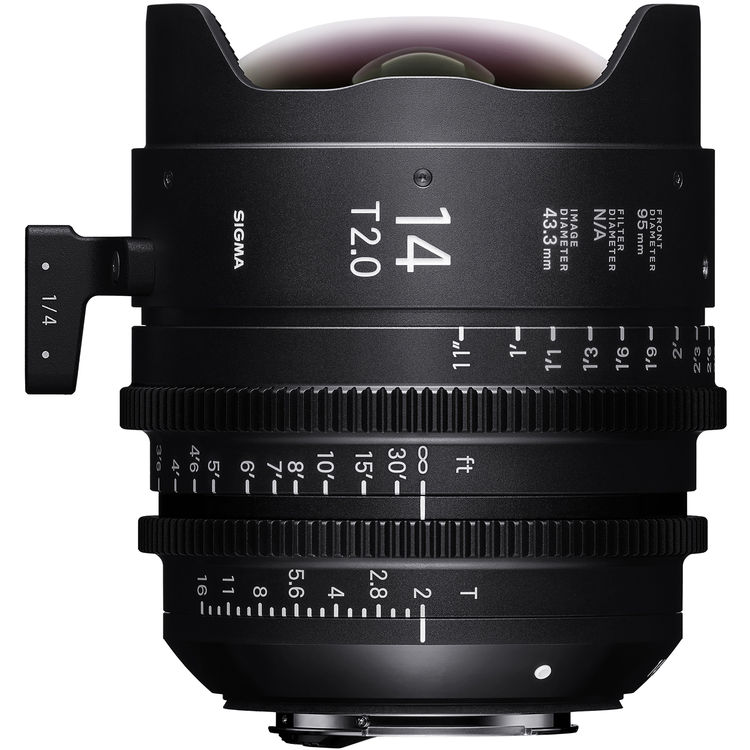
More practically, you could either go with Zeiss CP.3 primes or better yet, with Sigma Cine lenses in the PL mount. I prefer the latter, the range is just too much value for money, and it goes up to T1.5!
- Sigma 14mm T2 (Amazon, B&H)
- Sigma 24mm T1.5 (or 20mm, 28mm) (Amazon, B&H)
- Sigma 35mm T1.5 (Amazon, B&H)
- Sigma 50mm T1.5 (Amazon, B&H)
- Sigma 85mm T1.5 (Amazon, B&H)
- Sigma 135mm T2 (Amazon, B&H)
There are many other lenses that cover full frame. For more names, check out my comparison of cine primes for full frame. You can even opt for cheaper Meike cine lenses made directly for the L-mount.
Recommended cine zoom lenses for the Panasonic S5 II and the Panasonic S5 IIX
This is more tricky. Full frame zoom lenses are hard to find. Right now, these are the only options:
To be honest, these are not lenses a Panasonic S5 II (Amazon, B&H) and Panasonic S5 IIX (Amazon, B&H) owner is likely to purchase, as they are way too expensive.
Unless of course, you are using these cameras as a B-cam with a Panasonic Varicam or EVA1.
That’s it for my list! If you have any suggestions or recommendations please let me know in the comments below.

Sareesh, Thank you so much. This list is now in my file, as I’ve decided to shoot with Panasonic exclusively. Right now I’m looking forward to the X arriving, but until then the S5II will have to do—and it does well.
I’ve found the Sigma adapter works amazingly well for Canon EF lenses. They are very good for image quality, but most are too noisy for AF. The full frame motors are just not quiet. But I’m using them for some things and you can find them in premium condition for much, much less money.
I also have a few Panasonic L mount lenses that often don’t quite work as well as the Canon EF for AF. amazing, but true.
I’m also excited to see what else Panasonic will do to their camera line up in the future. I think they’re on the move and they aim to produce video oriented cameras that will elevate them in the camera company standings. Thank goodness! No one else is really doing it with such an emphasis on video. I”m glad you’ve taken it on yourself to study, analyze and publish the results, as your evaluations are always the best!
Thank you SO MUCH for presentation. I plan on purchasing the S5 2X. & really wanted to know the best possible lenses. You are ALWAYS on point.
You are welcome!