

The new Red V-Raptor 8K S35 is the Super 35mm version of the Red V-Raptor 8K VV.
Is that the only difference, and when should you pick which? This fun comparison attempts to find out with currently available information.
Since we don’t get Red cameras easily in India, and the dealer isn’t very helpful with demos, it might be some time before I get my hands on one, so be patient. I’ll have a review once I shoot with the Red V-Raptor 8K S35.
These are the new camera bodies Red currently offers (excluding the XL series):
| Camera | Price for body | Resolution |
|---|---|---|
| V-Raptor VV | $24,995 | 8K |
| V-Raptor S35* | $17,995 | 8K |
| Komodo | $5,995 | 6K |
*There’s also a Rhino edition but I guess the cheaper Red V-Raptor 8K S35 will be the one most people go for.
Both cameras are Hollywood-level cameras. There’s no doubt about that.
There is a considerable difference between the two V-Raptors in price, so it’s important to understand the distinction from an investment standpoint as well as a filmmaking one.
Let’s find out.

What does S35 and VV mean?
S35 stands for Super 35mm, because the sensor size adheres closely to the Super 35mm format.
VV stands for Vista Vision, which is a legacy film format similar to a full frame sensor. It can shoot in Super 35mm mode too, but at 6K since the sensor has to be cropped.
Comparison of sensors and video features
Here’s how the camera sensors compare:
| Camera | Resolution | Shutter | Sensor Size | Dynamic Range | ISO |
| Red V-Raptor S35 | 8192 × 4320 | Rolling | 26.21 mm x 13.28 mm | 16.5 | 250-12,800 |
| Red V-Raptor VV | 8192 × 4320 | Rolling | 40.96 mm x 21.60 mm | 17+ | 250-12,800 |
Both the V-Raptors don’t have a global shutter like the Red Komodo. They have rolling shutters.
The sensor size is slightly larger than full frame and Super 35mm. This can cause problems sometimes with lens coverage for these specific formats. The crop factor between these two formats is 1.56.
The Red V-Raptor 8K VV has the highest dynamic range of any Red camera, and according to Red’s own published data the Red V-Raptor 8K S35 has half a stop less of dynamic range. This is in spite of the ISO range being similar. The larger sensor will surely see better into the shadows and will be a better camera in low light situations.
What about frame rates?
| Max Frame Rate* | Red V-Raptor VV | Crop Factor^ | Red V-Raptor S35 | Crop Factor |
| 8K | 120 fps (150 fps @ 2.40:1) | 1.00 | 120 fps (150 fps @ 2.40:1) | 1.56 |
| 6K | 160 fps (200 fps @ 2.40:1) | 1.33 | 160 fps (200 fps @ 2.40:1) | 2.00 |
| 4K | 240 fps (300 fps @ 2.40:1) | 2.00 | 240 fps (300 fps @ 2.40:1) | 3.12 |
| 2K | 480 fps (600 fps @ 2.40:1) | 4.00 | 480 fps (600 fps @ 2.40:1) | 6.24 |
*Maximum frame rates are always not possible with the Redcode HQ setting. E.g., in Redcode HQ, when shooting 8K, the maximum frame rate is 60 fps. You only get 120 fps in LQ mode.
| Resolution | Red V-Raptor S35 | Red V-Raptor VV |
| 8K | HQ (24p to 60p), LQ (120p) | HQ (24p to 60p), LQ (120p) |
| 4K | HQ (24p to 240p) | HQ (24p to 240p) |
| 2K | HQ (24p to 480p) | HQ (24p to 480p) |
Compression ratios listed are the highest possible. Everything under that is available.
The sensor is cropped at higher frame rates, which is nothing new for Red cameras so it is what it is.
The important distinction here is the added reach of Super 35mm. E.g., if you’re filming wildlife with a 600mm lens, this is how it translates in practical situations:
| Camera | Focal length in 8K | Focal length in 4K |
| Red V-Raptor S35 | 936mm | 1872mm |
| Red V-Raptor VV | 600mm | 1200mm |
Your camera essentially gets a 1.56 tele-converter while filming with the Red V-Raptor 8K S35, without losing the ability to film in 8K. With the Red V-Raptor 8K VV, if you wanted to film in Super35mm mode to get the same reach, you can only do so in 6K. That’s the key distinction.
Red has confirmed that Redcode MQ is as good as the best in the DSMC2 line of cameras, and Redcode HQ is better than what you would get with the Red Monstro.
Both cameras also record in all variants of Apple Prores, except Prores RAW:
| Alternate Codecs | Red V-Raptor S35 and Red V-Raptor VV |
| 4K | ProRes 4444 XQ, ProRes 4444, ProRes 422 HQ, ProRes 422, and ProRes 422 LT |
| 2K | Proxy recording up to ProRes 422 HQ |
There is no DnxHR recording in either camera.
What you get externally:
| Camera | Connection | Best external resolution and fps |
| Red V-Raptor S35 | 12G SDI x2 | 4096x2160p @ 60fps 10-bit 4:2:2 |
| Red V-Raptor VV | 12G SDI x2 | 4096x2160p @ 60fps 10-bit 4:2:2 |
You can use the external port to record video but I think most filmmakers will prefer to use Redcode RAW.
The S35 also has the ability to pre-record, faster operation and feedback from the system etc. It also has autofocus, though I’ll have to get my hands on both cameras to test them for AF as well as rolling shutter differences.

Audio
They have similar specs:
| Camera | Connection | Specs |
| Red V-Raptor S35 | Mic, Line +48V input via 5-pin | 24-bit 48 kHz |
| Red V-Raptor VV | Mic, Line +48V input via 5-pin | 24-bit 48 kHz |
With the Red 5-pin XLR adapter you should be able to record XLR audio into the camera without recorders.
Lenses
Both of them have a locking Canon RF mount. The locking mount ensures adapters stay rock solid for PL lenses. It is fully electronic.
Red’s strategic choice of RF is clear. They are betting on Canon to come out with more RF lenses. Check out our comprehensive articles on all the currently available RF lenses:
You can get a robust RF to PL (and any other alternative) adapter. Red sells them too:

Both have contrast and phase detection autofocus.
You can also Canon EF lenses and cine zooms with an adapter. However these adapters from Canon don’t come with locking EF mounts.
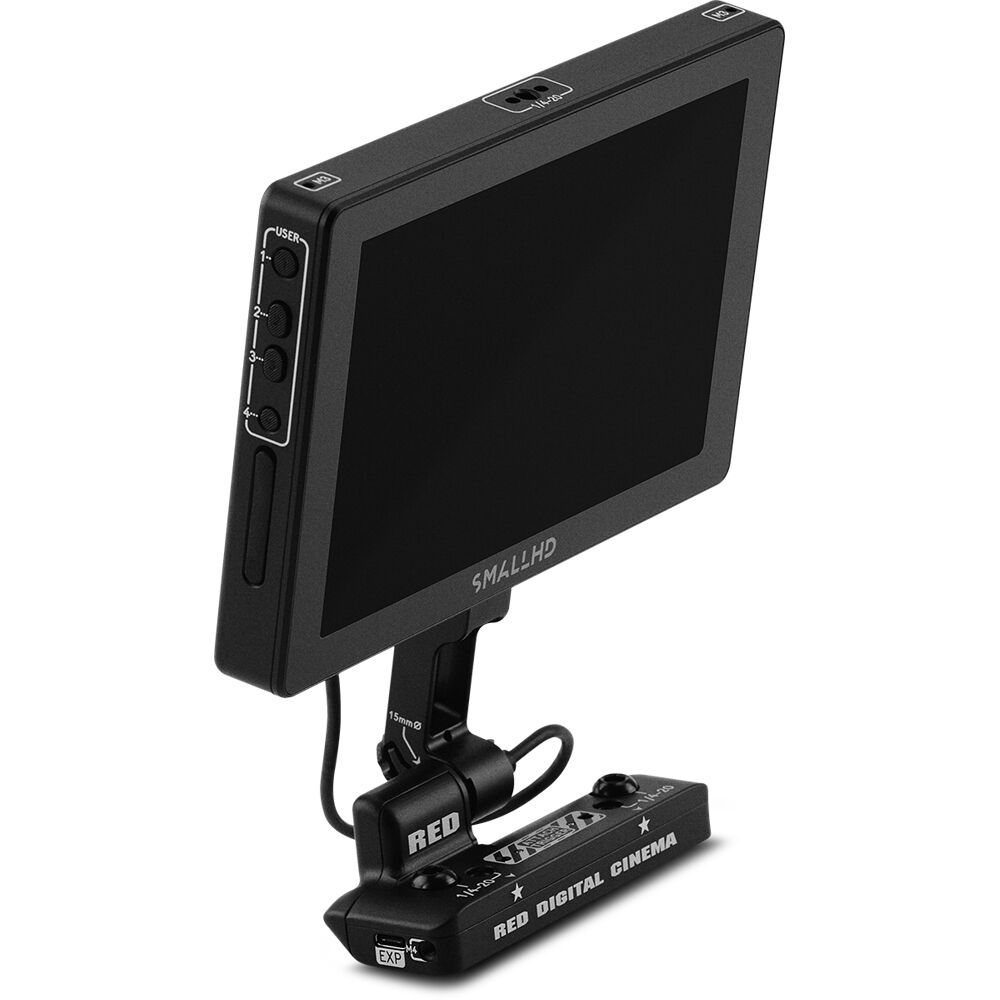
Monitoring and ergonomics
You have to purchase a monitor separately, for $2,750.
If you don’t want Red touch screens you can always get something else via SDI. No issues. The advantage of the Red touch screen is the direct connection to the camera.
You can still operate the camera through the OLED display and buttons and dials.
What about weight? The cameras are similar for all practical purposes:
| Camera | Weight |
| Red V-Raptor S35 | 4.00 lbs |
| Red V-Raptor VV | 4.03 lbs |
Wireless monitoring and control
You have Wi-Fi camera control and monitoring in both cameras. You get dual band (2.4 GHz/5 GHz) mounted to a connector.
For monitoring you get a 1080p live preview video feed via 2.4 GHz and 5 GHz Wi-Fi. You don’t even need a monitor if you have a nice iPhone or iPad!
You can control the camera via wired USB-C or Gigabit Ethernet (compatible USB-C to Ethernet adapter required) allowing remote camera control, live video feed and remote media offload.
You also get Genlock, Timecode-in, GPIO and Ctrl (RS-232) via an integrated 9-pin EXT Port.
Batteries and media cards
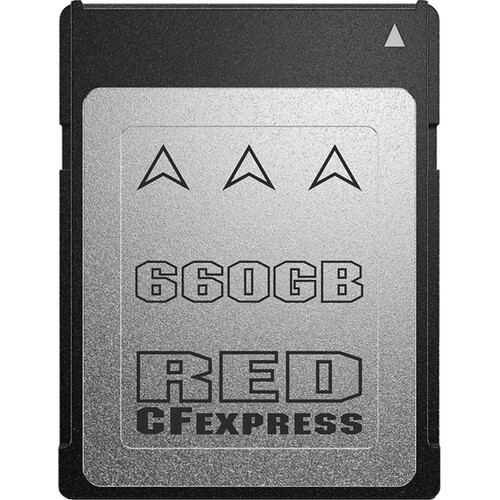
Red has its own ‘rebranded’ CFexpress Type B card, called the Red Pro CFExpress card. Here are the variants possible at the moment:
| Card Capacity | Cost | Price per GB |
| 660 GB | $960* | $1.45 |
| 1.3 TB | $1,800* | $1.35 |
| 2 TB | $960 | $0.47 |
| 4 TB | $1,800 | $0.44 |
*I have no idea about the price discrepancy here.
These cards are most likely rebranded Angelbird cards. They are good enough to sustain the highest data rates in 8K. I guess most people should stick to the 2 TB card. 4 TB would be great for wildlife and long-form documentaries or events.
You do need to purchase a Red CFExpress Card Reader for about $120.
Red is allowing users to use any card in the market as long as they hit sustained 800 MB/s write. Very few cards do at this time. For an updated list of compatible cards, click here.
What about battery life?
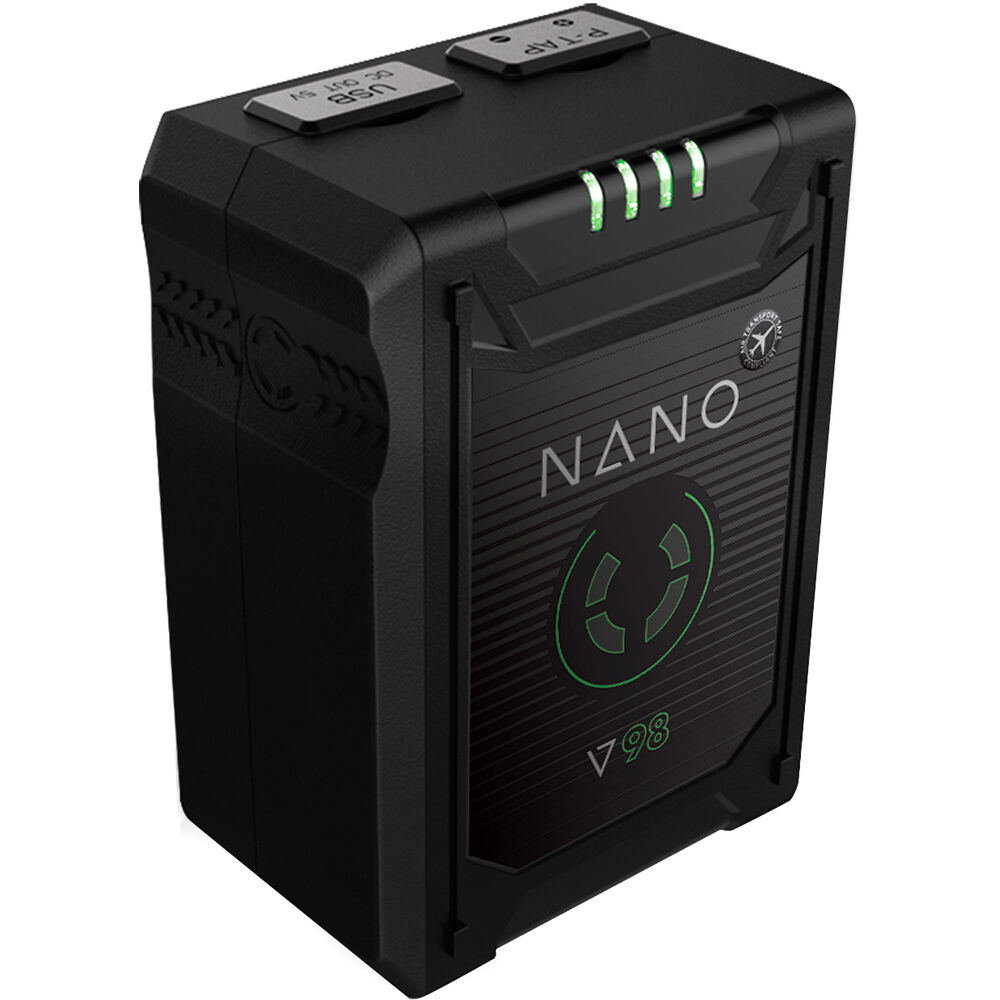
Both cameras come with a 11-17 V 6-pin DC port. What is great is that there is an integrated V-Lock battery interface optimized for Micro V-Lock Batteries. I think the future is smaller brick batteries so it’s a good move (except if you already have a ton of large bricks).
The battery life sucks on both cameras though. You get about one hour on a 98Wh battery. It sucks power in 8K.
| Camera | Power Draw | Battery life in 8K | *Cost of two batteries and charger |
| Red V-Raptor S35 | 65-75W | 60 minutes | $900 |
| Red V-Raptor VV | 60-75W | 60 minutes | $900 |
*I’m sticking to Red batteries and chargers, but you can use cheaper varieties as long as they are proven performers and can consistently deliver clean power.
Both cameras would also most likely need a top handle.
Which is cheaper to own?
They’re pretty much the same camera except for the sensor. The price difference comes down to the price difference in camera bodies and the lenses used.
The difference in price is $7,000. You’d really need the advantages of a full frame camera to justify this price difference.

When do you pick the Red V-Raptor VV over the Red V-Rapter S5?
A recap:
| Feature | Winner |
| Dynamic Range | Red V-Raptor VV |
| ISO Range | Tie |
| Motion/Rolling Shutter | TBD |
| Frame Rates | Tie |
| Lenses | Red V-Raptor S35 |
| Media | Tie |
| Ergonomics | Red V-Raptor S35* |
| Battery life | Tie |
*With lighter Super 35mm lenses, you get a lighter overall package. Not by much, but it’s important for wildlife filmmakers. You also have a wide range of lenses to pick from with Super 35mm.
I’d pick the following two cameras in this way:
| Project | Camera | Major Reasons |
| Fictional films | Red V-Raptor VV | Dynamic range and choice of film formats |
| Documentaries | Red V-Raptor VV | Wider angles in confined spaces and better low light |
| Music Videos | Red V-Raptor VV | Wider angles with higher frame rates |
| Wildlife | Red V-Raptor S35 | Telephoto reach and greater depth of field in close ups |
On the whole, I’d still pick the Red V-Raptor 8K VV. The $7,000 price difference isn’t too much in the grand scheme of things. The Red V-Raptor 8K VV will let you film more kinds of projects and will be a better long term investment.
What do you think?

Great job bringing these numbers together! I do own a Komodo mainly because customers love the “brand” names and I have no intention to love these cameras more than they do but having someone else to do side by side comparisons makes my life easier to understand at least what’s benefit of shooting with RED and if is worth.
Thank you!