

The Nikon Z8 (Amazon, B&H) has the Z-mount.
In this mega-article, let’s go over the most useful lenses for the Nikon Z8, specifically for video and cinematography.


What is a “native” lens?
A “native” lens is one specifically designed for the Nikon Z-mount system, and which allow the following:
- Full control of autofocus, vibration reduction, iris, zoom and focus control.
- Electronic metadata like iris, focal length, distortion, fall-off, focus, etc.
- Continuous auto focus for video.
What native lenses are available right now?
As of this writing, these are the lenses available or imminent:
Primes
- Nikon NIKKOR Z 20mm f/1.8 S (Amazon, B&H)
- Nikon NIKKOR Z 24mm f/1.8 S (Amazon, B&H)
- Nikon NIKKOR Z 26mm f/2.8 (Amazon, B&H)
- Nikon NIKKOR Z 28mm f/2.8 (Amazon, B&H) or Nikon NIKKOR Z 28mm f/2.8 SE* (Amazon, B&H)
- Nikon NIKKOR Z 35mm f/1.8 S (Amazon, B&H)
- Nikon NIKKOR Z 40mm f/2 (Amazon, B&H) or the Nikon NIKKOR Z 40mm f/2 SE* (Amazon, B&H)
- Nikon NIKKOR Z MC 50mm f/2.8 (Amazon, B&H)
- Nikon NIKKOR Z 50mm f/1.2 S (Amazon, B&H)
- Nikon NIKKOR Z 50mm f/1.8 S (Amazon, B&H)
- Nikon NIKKOR Z 58mm f/0.95 S Noct (Amazon, B&H)
- Nikon NIKKOR Z 85mm f/1.8 S (Amazon, B&H)
- Nikon NIKKOR Z 85mm f/1.2 S (Amazon, B&H)
- Nikon NIKKOR Z MC 105mm f/2.8 VR S (Amazon, B&H)
- Nikon NIKKOR Z 400mm f/4.5 VR S (B&H)
- Nikon NIKKOR Z 400mm f/2.8 TC VR S (B&H)
- Nikon NIKKOR Z 600mm f/4 TC VR S (B&H)
- Nikon NIKKOR Z 800mm f/6.3 VR S (B&H)
*This is a Special Edition lens which will cost you $30 more for its design features which inherits knurled control ring, from the classic NIKKOR lenses.
Zooms
- Nikon NIKKOR Z 24-50mm f/4-6.3 (Amazon, B&H)
- Nikon NIKKOR Z 24-70mm f/4 S (Amazon, B&H)
- Nikon NIKKOR Z 24-70mm f/2.8 S (Amazon, B&H)
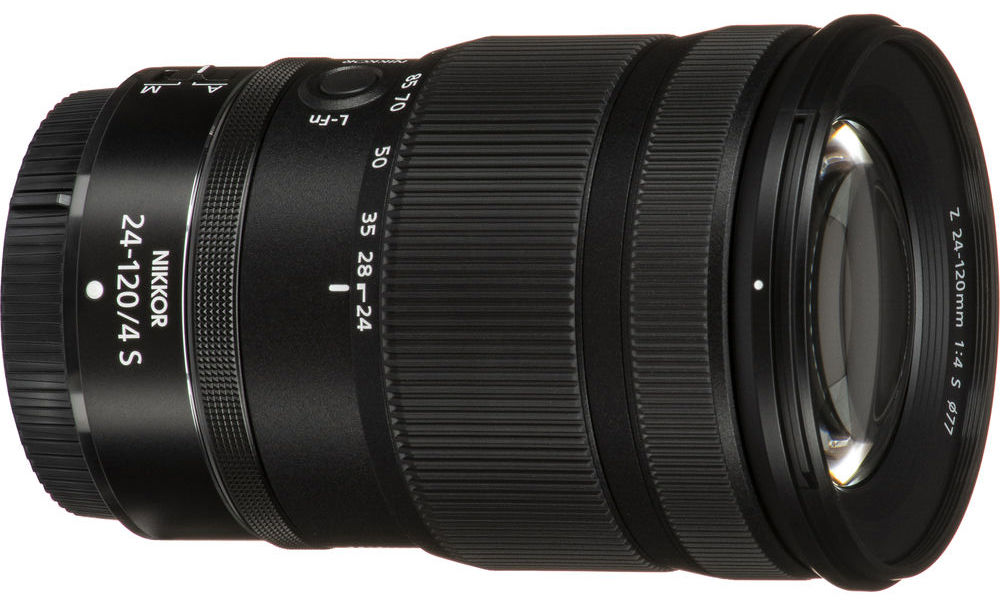
- Nikon NIKKOR Z 24-120mm f/4 S (Amazon, B&H)
- Nikon NIKKOR Z 24-200mm f/4-6.3 VR (Amazon, B&H)
- Nikon NIKKOR Z 28-75mm f/2.8 (Amazon, B&H)
- Nikon NIKKOR Z 17-28mm f/2.8 (Amazon, B&H)
- Nikon NIKKOR Z 14-30mm f/4 S (Amazon, B&H)
- Nikon NIKKOR Z 14-24mm f/2.8 S (Amazon, B&H)
- Nikon NIKKOR Z 70-200mm f/2.8 VR S (Amazon, B&H)
- Nikon NIKKOR Z 100-400mm f/4.5-5.6 VR S (Amazon, B&H)
Are native lenses good for video?
It depends on what type of video you’re into. If you’re into vlogging or travel videos, or some unchallenging wedding or corporate work then maybe it will be fine.
However, for any cinema-type work – shorts, features, web-series, etc., they are not useful due to the impossibility of consistent follow focus. I’ve had the opportunity to review some S-line lenses:
- Nikon NIKKOR Z 58mm f/0.95 S Noct lens review
- Nikon NIKKOR Z 85mm f/1.8 S lens review
- Nikon NIKKOR Z 50mm f/1.8 S lens review
To be honest though, even though the lenses seem fine as far as image quality is concerned (the 50mm f/1.8 S I have is stellar) I can’t seriously recommend them for professional video shooting or cinematography. To make matters worse, as you can see from the roadmap above, it’s going to be sometime before they give you a full kit enough to handle different video situations, so you’ll have to complement them with third-party lenses.
However, in the future, if Nikon gives us the option to switch off focus-by-wire and give us linear focusing, then the lenses will become relevant again.
If these lenses are not recommended, what about Nikon’s older lenses?

The FTZ II adapter
Nikon has a lens adapter called the FTZ II adapter (Amazon, B&H) that allows you to use the Nikon F lenses in the Z mount:
It seamlessly adapts the F-Mount to the larger Z-Mount, retaining the image quality, autofocus performance*, weather sealing and comfortable handling of any mounted lens. Keep using the lenses you love with the most innovative camera bodies available.
*Full AF/AE supported when using FX or DX AF-S Type G/D/E, AF-P type G/E, AF-I type D lenses and AF-S/AF-I Teleconverters Nikon USA
This gives you a tremendous range of older Nikon lenses to use with this system. I’m going to divide the options into the following categories and you can pick whichever you like:
- Best value: Prime lenses with manual focus
- Best value: Zoom lenses with manual focus
- Best Quality: Third-party prime lenses with manual focus
- Cine prime lenses
- Cine zoom lenses
The key here is to use manual lenses, simply because the autofocus is not very practical even for basic level motion. This is true of the original Z lenses, and any older lenses adapted with the FTZ II adapter is worse, period.
Tip: If you can’t live without autofocus, stick to Nikkor Z lenses as listed above.
When should you pick prime lenses with manual focus?
When you can and want to control the focus, that’s when.
Professionals use follow focus systems, but even if that’s overkill for you, you need to ensure the focus ring on the lens is solid, smooth and reliable enough to consistently nail focus. The Nikon Z8 (Amazon, B&H) has focus peaking as well as a zoom-in feature, so you can nail focus by looking at the back LCD.
The one big gotcha is the focus-by-wire mechanism of many of the native lenses. This means you don’t get the same amount of focus for an equivalent amount of turn. You can’t get any kind of muscle memory going, and you’re totally dependent on the lens for the job. What’s worse, each lens will behave a bit differently! For this reason, I only recommend lenses for manual focus where the focus ring is good enough for professional use.
Why prime lenses?
The single greatest advantage prime lenses have in general is they can open wider than zooms. You can go down to f/0.95 if you wanted to with the Nikon 58mm f/0.95 S Noct (Amazon, B&H).
This makes it a great option for low light cinematography. And there’s really no excuse for not having at least one prime because they also tend to be cheap without sacrificing quality. Another advantage of prime lenses is they are usually lighter than zoom lenses (comparing the same price range).
The third advantage of prime lenses are they have lower breathing, while the zoom lenses (photo) breathe and are not parfocal.
You might want to get a 50mm (35mm equivalent) as your first general purpose lens.
What are the best budget prime lenses for manual focus?
Here are my suggestions for the budget conscious (except super-telephoto, since there are very few options here):
- Super wide angle: Samyang 14mm T3.1 Cine for the Nikon F mount (Amazon, B&H) – I own this lens.
- Wide angle: Nikon 24mm f/2.8D (Amazon, B&H) and Nikon 35mm f/2D (Amazon, B&H)
- Great mid-range option: Nikon 50mm f/1.2 (Amazon, B&H) – I own this lens.
- Telephoto: Nikon 85mm f/1.4D (Amazon, B&H) and Nikon 135mm f/2D (Amazon, B&H) – I own this lens.
- Super-telephoto: Nikon 200mm and others (Amazon, B&H) – but these are expensive and huge.
All of these lenses are adapted with the FTZ II adapter (Amazon, B&H). What are the advantages of the Nikon D series? Here are several:
- Manual aperture control.
- Smooth focus ring that can be used for follow focus.
- Great image quality for video work.
- Built like tanks and not plastic.
- You can control aperture via the camera if you stop down to the smallest aperture.
- Available worldwide, and it’s easy to find replacements if you lose one.
What are the best budget Nikon zoom lenses for manual focus?
In this class I would definitely pick Nikon G lenses:
- Nikon 14-24mm f/2.8G (Amazon, B&H)
- Nikon 24-70mm f/2.8G ED (Amazon, B&H)
- Nikon 70-200mm f/2.8G ED VR II(Amazon, B&H)
All of these lenses are adapted with the FTZ II adapter . Why not the original D-series zooms? Well, it’s hard to find good copies, unlike the primes, and secondly, the image quality benefits of the newer G-series in this case warrants it. Even though the price is higher, since you only need three lenses, it’s well worth it.
Adapters and third-party lenses
How do you know if a lens can be used or not? First, you need to know what the flange focal distance is.
Here’s information on each mount, in increasing order of the focal flange distance:
| Mount | Focal Flange Distance in mm |
| Z Nikon Z-mount | 16 |
| C C-Mount | 17.526 |
| EF-M Canon EF-M mount | 18 |
| E Sony E-mount | 18 |
| FZ Sony | 18 |
| MFT Micro Four Thirds mount | 19.25 |
| RF Canon RF-mount | 20 |
| L Leica L-mount | 20 |
| M Leica M mount | 27.8 |
| FT Four Thirds mount | 38.67 |
| FD Canon Manual FD mount | 42 |
| EF Canon EOS EF mount | 44 |
| EF-S Canon EOS EF-S mount | 44 |
| LPL Arri LPL-mount | 44 |
| A Minolta/Sony A-mount | 44.5 |
| K Pentax K-mount | 45.46 |
| F Nikon F-mount | 46.5 |
| R Leica R-mount | 47 |
| PL Arri PL mount | 52 |
Third-party lenses come in their own lens mounts. So you need some sort of adapter that comes between the lens and the camera. This adapter does three things:
- It connects two mounts that naturally don’t fit together, and
- It makes up for the flange focal distance.
- Optional: Provides contacts that allow you to control aperture, zoom, focus, etc., from the camera itself, like the FTZ II adapter (Amazon, B&H).
There’s no glass in the adapter, no lens or optics. It’s just hollow inside.
The coolest thing about the Nikon Z-mount is, it is right on top of this list. So you can pretty much adapt any lens designed for full frame to the Nikon Z mount.
Which makes it really hard to give a recommendation because people pick lenses for a multitude of reasons. Personal taste and aesthetics factor big time in any decision.
However, it is hard to argue against this next list in terms of performance and value for money. The package is unbeatable in my opinion.

Best prime lenses for Nikon Z8
What do I prefer? If I’m recommending a lens, it should be available to purchase for most people worldwide, must be serviceable, and must offer tremendous value for money without sacrificing quality.
Right now, only one series meets all of these requirements: The Sigma Art series with a Nikon F mount:
- Sigma 14mm f/1.8 Art (Amazon, B&H)
- Sigma 24 f/1.4 Art (Amazon, B&H)
- Sigma 35mm f/1.4 Art (Amazon, B&H)
- Sigma 50mm f/1.4 Art (Amazon, B&H)
- Sigma 85mm f/1.4 Art (Amazon, B&H)
- Sigma 135mm f/1.8 Art (Amazon, B&H)
- Sigma 40mm f/1.4 Art Lens (Amazon, B&H)
- Sigma 28mm f/1.4 Art (Amazon, B&H)
- Sigma 105mm f/1.4 Art (Amazon, B&H)
- Sigma 20mm f/1.4 Art (Amazon, B&H)
For super-telephoto, nothing beats Nikon’s own line.
You can purchase any of these lenses for the Nikon F mount and adapt them with the FTZ II adapter (Amazon, B&H), or hopefully in the near future, the Z-mount directly.
Recommended Cine Prime lenses for the Nikon Z8
There are really great full frame cine lenses like the Arri Signature Primes or the Leica Thalia, but these are rental items, hardly available for purchase for us “regular folk”.
More practically, you could either go with Zeiss CP.3 primes or better yet, with Sigma Cine lenses in the PL mount. I prefer the latter because they are great value for money and they typically go up to T1.5!
- Sigma 14mm T2 (Amazon, B&H)
- Sigma 24mm T1.5 (or 20mm, 28mm) (Amazon, B&H)
- Sigma 35mm T1.5 (Amazon, B&H)
- Sigma 50mm T1.5 (Amazon, B&H)
- Sigma 85mm T1.5 (Amazon, B&H)
- Sigma 135mm T2 (Amazon, B&H)
I would use these with a PL to Nikon Z adapter.
The only other lenses I should note that I would personally test against the CP.3s and the Sigma cine lenses are the Tokina Cine Vista Prime lenses.
The major disadvantage of the Tokina lenses are they are extremely heavy. Just to compare, a Tokina 50mm T1.5 weighs 2.11kg, while the Sigma cine 50mm T1.5 weighs 1.21kg and the Zeiss CP.3 50mm T2.1 weighs 0.77kg.
How many people would go for such a heavy lens with a camera like the Nikon Z8 (Amazon, B&H)? Even though it’s possible, it’s not practical for most people, which is why I didn’t recommend it. But if you feel like it, then why not?
Recommended cine zoom lenses for the Nikon Z8
This is more tricky. Full frame zoom lenses are hard to find. Right now, these are the only options:
To be honest, these are not lenses a Nikon Z8 owner is likely to purchase (except the Tokina), as they are way too expensive. For this reason, if you need zoom lenses, it might be better to just purchase Nikon zoom lenses as listed above, or get them cine-modified by Duclos Lenses if you have the budget. I’m not a big fan of re-housing, waste of money, if you ask me. Just get them de-clicked with focus gears.
That’s it for my list! If you have any suggestions or recommendations please let me know in the comments below.
