

What are in-camera transitions?
In-camera transitions are transitions that are planned and recorded while filming, without the need for any additional editing or visual effects.
While post-production provides various options for creating a wide variety of transitions, the art of in-camera transitions remains an invaluable and useful filmmaking technique in some situations.

In-camera transitions capture a shot change with a sense of authenticity and immediacy that is hard to replicate in post-production.
Let’s look at the three important types of in-camera transition techniques:
1 The Whip Pan
The Whip Pan is a quick and sudden transition from one panning shot to another with a blur effect in between.
This technique is commonly used to show a change in place, time or perspective. Whip pans add a sense of energy and urgency to the scene, creating a dynamic impact.
The movement should be fast enough to create motion blur (or streaking effect) in the frame.
A whip pan can either be in the same shot moving from one end to the other or in between two shots where the cut is not noticed because of the motion blur. In case of the latter the whip pan should begin in the first shot and end in the second shot at the same speed, creating a fluid and dynamic visual transition.
Let’s look at these in detail:

Whip Pan without Cut
When using a whip pan without a cut the transition occurs within a single continuous shot, without any visible cuts. This technique requires careful choreography and precise camera movement.
Here’s a guide to execute a whip pan without a cut:
- Determine the composition and framing for the shot.
- Plan the movement and choreography of the subjects or objects within the frame to smoothly transition to the next shot.
- Start by framing the shot and initiate the whip pan movement, following the predetermined path and speed.
- Simultaneously, coordinate the movement of the subjects or objects within the frame to complement the camera movement.
- Ensure that the camera movement is seamless and consistent throughout the whip pan motion. A good tripod and fluid head is important here.
To enhance the fluidity and continuity of the whip pan transition, ensure that the lighting, color, and overall visual style match between the shots.
In post-production, if required, perform any necessary color grading or minor adjustments to ensure a seamless transition.
Whip Pan with Cut
When using a whip pan with a cut, the transition involves a quick and sudden camera movement from one shot to another, accompanied by a cut between the two shots.
Here’s a guide to execute a whip pan with a cut:
- Plan the shots you want to transition between.
- Ensure that the composition and framing of the shots are compatible and allow for a smooth transition.
- Determine the start and end points for the whip pan in both shots. These should be precise and strategically chosen to get the desired effect.
- Maintain a consistent speed throughout the whip pan movement to create a fluid motion. As above, a good tripod and fluid head is important here.
- Stop the camera movement precisely as you reach the starting point of the second shot.
Whip pans are often used in action sequences, suspenseful moments and fast-paced scenes to enhance the energy and intensity. To achieve a smooth whip pan transition, the camera operator should practice the movement and coordinate it with the timing and rhythm of the scene.
2 The Match Cut
A Match Cut is a type of in-camera transition that highlights the compositional, thematic, symbolic or graphic similarity between two shots.
The purpose of a match cut is to create a logical connection between two shots that wouldn’t exist otherwise. The most important, and in my opinion the greatest, match cut in history belongs to the film 2001: A Space Odyssey (pictured below). To know more about this please watch this video:
A match cut works when one matches the subject, color, movement and composition of both the preceding and succeeding shots.
Match cuts serve several purposes in filmmaking, such as:
- Continuity: Match cuts help maintain continuity by connecting scenes seamlessly, without jarring the viewer. By visually linking shots together, they create a sense of coherence and flow, enhancing the overall viewing experience.
- Emphasis: Match cuts can be used to emphasize a specific element or theme. By connecting shots that share a visual or conceptual similarity, filmmakers can draw attention to certain details, ideas, or emotions, enhancing the impact of the narrative.
- Symbolism: Match cuts can also be used to convey symbolism or deeper meaning. By connecting shots through visual similarities, filmmakers can establish metaphorical associations, inviting viewers to interpret the connections and enriching the storytelling.
There are different ways to execute a match cut:

a. Graphic Match Cut
A Graphic Match Cut is a match cut that involves matching shapes, patterns or visual elements of the two shots.
For example, a shot of a circular object can be followed by a shot of the sun or a round table. The circular shape becomes the connecting element between the two shots, creating a seamless and visually pleasing transition.
A famous example is from Stanley Kubrick’s film 2001: A Space Odyssey where the two similar shaped object is lined by a match cut that metaphorically links mankind’s first weapon, a bone, to his latest space weapon.
Another example of a graphic match cut is a transition between a shot of a spinning wheel followed by a shot of a spinning fan, where the circular motion adds to the graphic match.

b. Relationship Match Cut
In a Relationship Match Cut, the focus is on connecting shots through the symbolic or thematic relationships that exist between the subjects of the two shots.
For example, a shot of a character lighting a match can be followed by a shot of a lit candle, connecting the action and maintaining a visual thread. Such a cut forms the basis of one of the most famous cuts of all time from Lawrence of Arabia (pictured above).
c. Movement/Action Match Cut
A Movement or Action Match Cut involves matching the action or movement between shots.
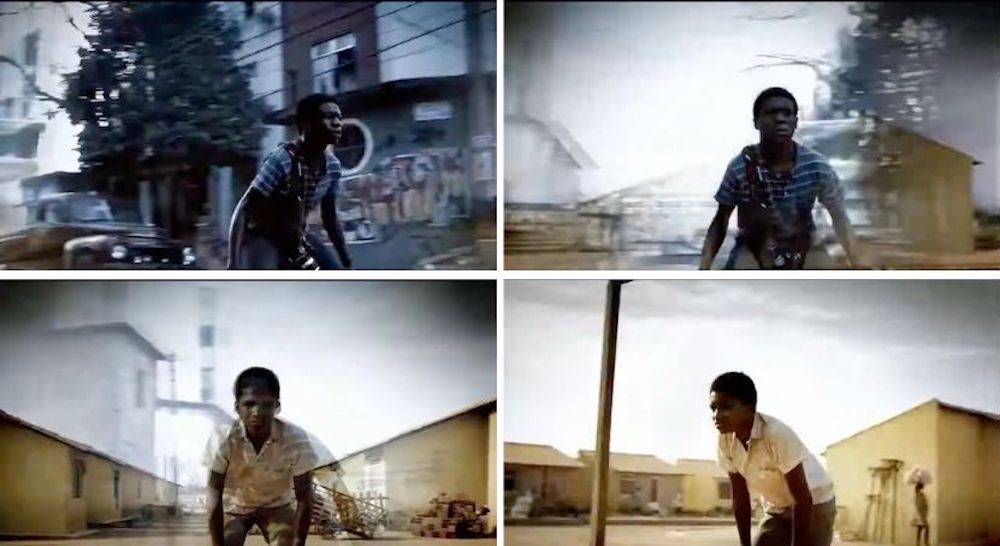
An example is the circular camera movement and transition in City of God (pictured above).
Movement or action match cuts can convey meaning through the seamless progression of action or movement, without breaking continuity.
By connecting shots with matching actions filmmakers can also enhance the energy and pace of a scene. Quick and precise action match cuts can create a sense of urgency or excitement, keeping the audience engaged by immersing them in the action.
When executed effectively, they contribute to the overall cinematic experience and help create a more engaging and an immersive storytelling environment.
d. Sound Match Cut
A Sound Match Cut is a match cut that connects two shots based on the continuity or similarity of sound elements.
Maintaining audio continuity is important, thereby creating a seamless and cohesive auditory experience for the audience.
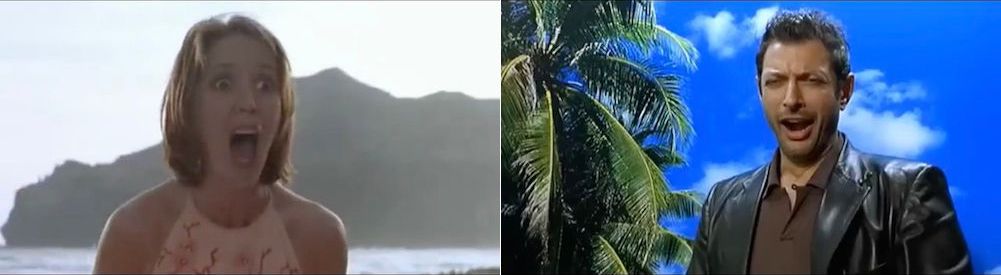
A great example is the shot above from The Lost World, where the sound of the lady screaming is masked by the sound of the train through the cut; as well as a graphic match and a relationship match, all in one shot!
Sound match cuts can be particularly effective in creating a sense of coherence, rhythm, and an emotional surprise in a film by engaging the viewer’s senses.
Sound match cuts can also be used to convey symbolism or evoke emotions. By connecting shots with similar or contrasting sounds, filmmakers can create metaphorical associations or enhance the mood of a scene. For example, a shot of rain falling can be followed by a shot of a glass breaking.

3 Choreographed Transition
Choreographed transitions refer to the carefully planned and coordinated actor blocking or movements within a scene to make smooth transitions possible between shots.
Choreographed transitions typically draw attention to themselves and are typically a matter of style. It’s almost impossible to hide a choreographed transition!
Choreographed transitions offer an opportunity to showcase technical prowess, creativity and a unique artistic vision, elevating the film’s visual style and leaving a lasting impression on viewers.
It involves smoothly blending two shots together by gradually overlaying one image with another, creating a gradual transition between the two scenes. The best example of a choregoraphed transition is from Leland’s interview in Citizen Kane. It’s a careful composition and lighting change that occurs in four steps.
How do you pull off a good choreographed transition?
First of all, it’s important to maintain consistent lighting between the two shots. The lighting should be matched as closely as possible to avoid abrupt changes in brightness or contrast during the transition.
The dissolve need not be achieved in camera. It’s far better to do in post production. You can control the dissolve (or any other transition) by keyframing it for a highly precise result.
Achieving an in-camera dissolve transition requires careful timing and precision. You want to watch the shots in a monitor, and if possible have an overlay prepared so you can geometrically align all the important elements. It will make things a lot easier in post.
Practice and rehearsals are essential to achieve a smooth and pleasing effect.
It goes without saying that choreographed transitions require technical expertise and coordinated execution between different departments of filmmaking. You have to be pretty sure the choreographed transition is worth the trouble!
I hope these three examples will inspire you to try in-camera transitions. If successful, these transitions can be creatively satisfying and deliver an impact impossible otherwise.
If you’d like, watch the video version of this:
If you have any in-camera transitions or your own work to share, please let me know in the comments below!
