

Edward Yang’s Yi Yi is celebrated for its deep emotional resonance and intricate storytelling.
And central to the film’s emotional impact is its visual style. It’s characterized by the use of wide shots that create a rich, contemplative tableau. These tableau shots build an emotional foundation that makes the final shot of the film – a poignant close-up of Yang-Yang delivering a speech at his grandmother’s funeral – profoundly moving.
Let’s unravel how Edward Yang’s meticulous use of tableau shots throughout “Yi Yi” culminates in this final, tear-evoking moment.
Watch the video:

What is a tableau?
A tableau is a carefully composed arrangement within a single shot, often wide and static, that captures the essence of a scene or moment.
A tableau sort of looks like a staged photograph, but with moving people in it.
The Edward Yang Visual Tableau
From the opening scenes of “Yi Yi,” Edward Yang establishes his distinctive visual style right in the opening scene, with a family tableau. I like this one better:
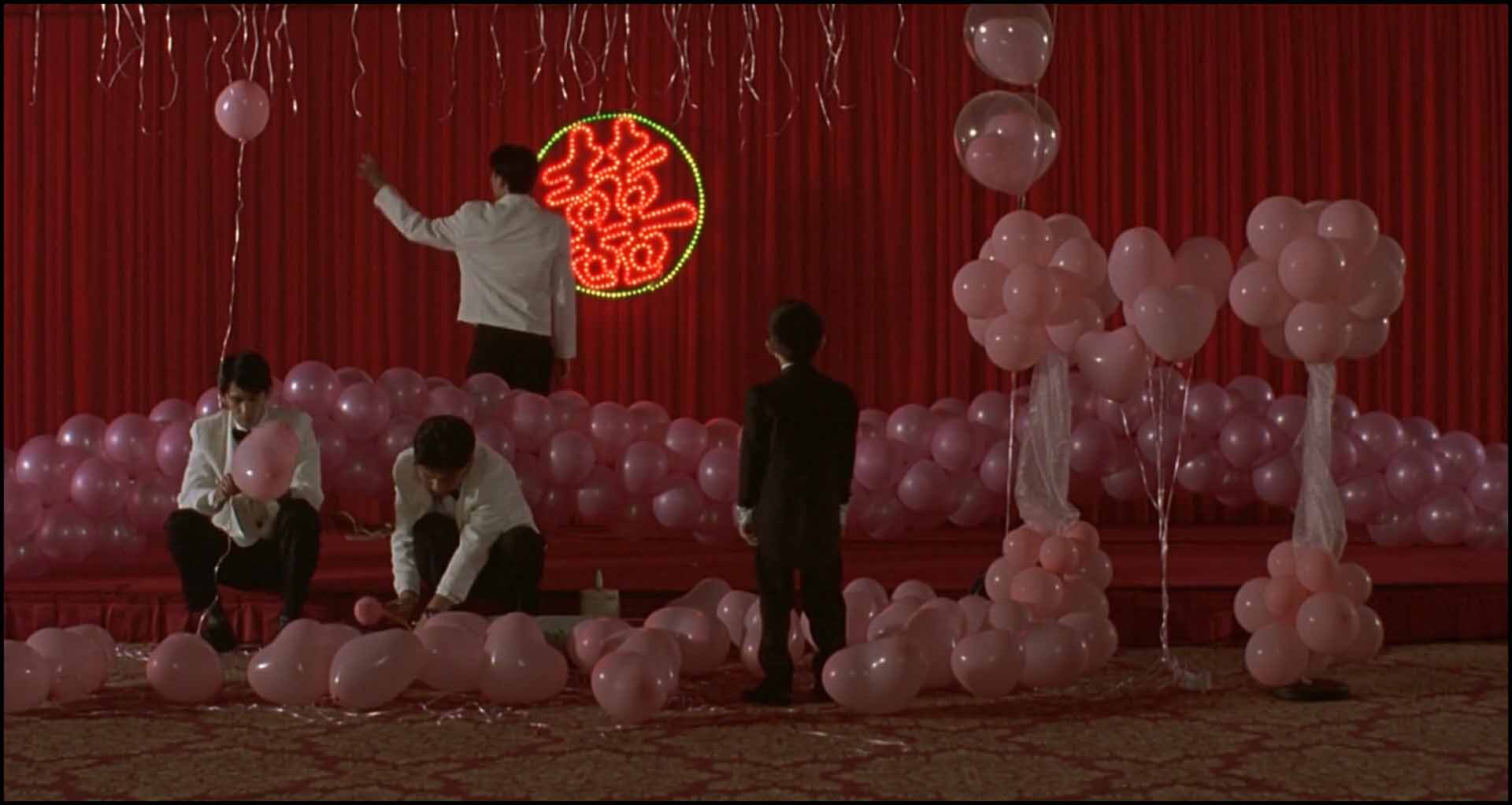
These wide shots do more than just set the scene. They invite the audience to engage with the characters’ surroundings. We are given the space to reflect on their emotions and body language.
Body language is a big part of a tableau. If everyone just stands in one place it’ll just look like a group photograph.
Director Edward Yang’s tableaus are meticulously designed. The staging is detailed and helps us understand the characters better. These frames often resemble a living picture or a staged scene. Every element within the frame contributes to the storytelling.
The camera lingers on the faces in the crowd and the space between them. The small gestures reveal more than words could.
This style of framing also establishes a sense of realism and immediacy. It draws the viewer into the world of the Jian family.
A tableau doesn’t always have to be filled with people:
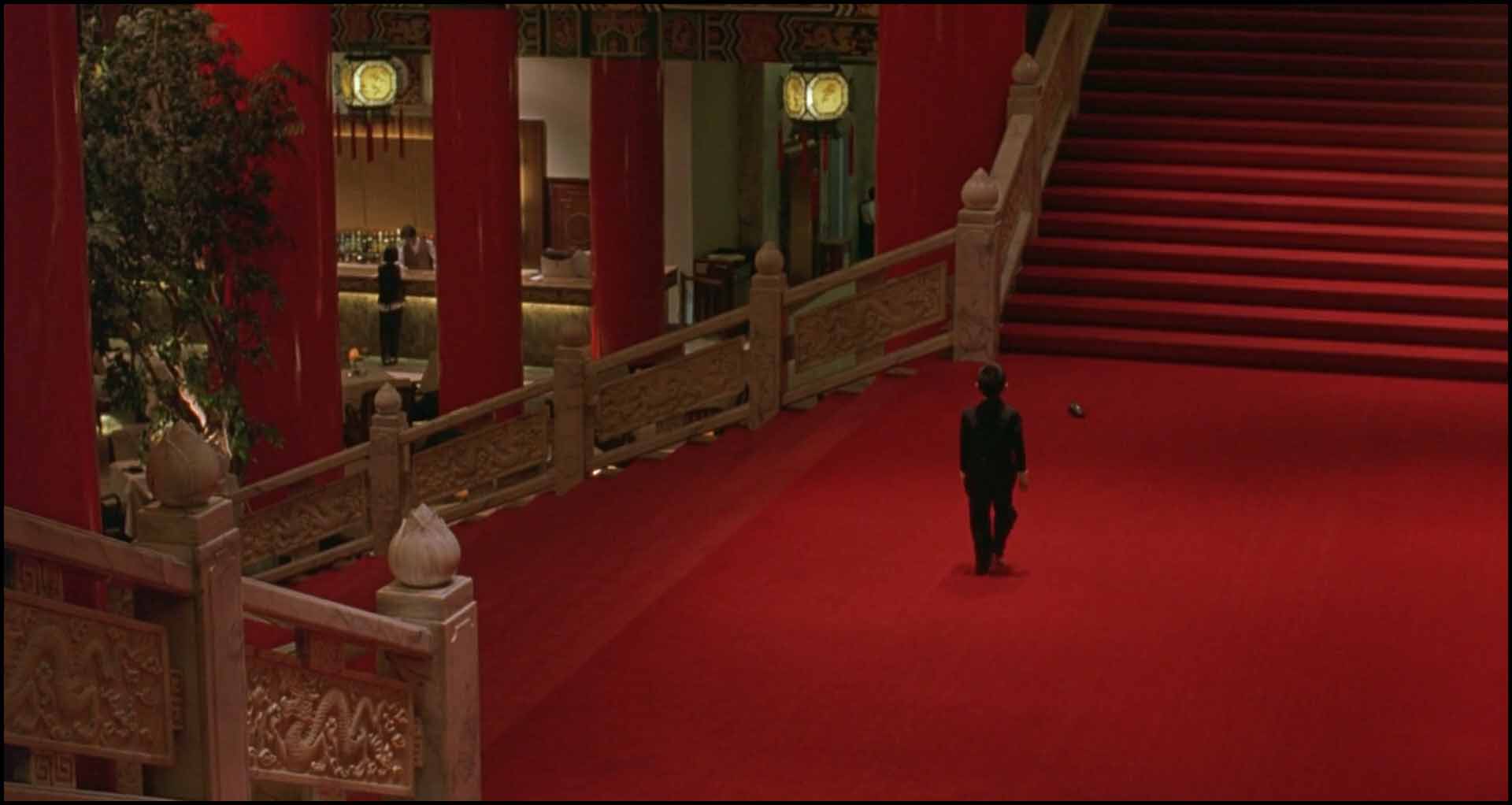
Small Individuals in a Large Vista
The Wide shots in Yi Yi serve to highlight the emotional isolation of the characters.
NJ, the father, is frequently shown in expansive office spaces or wandering the city streets alone. These wide shots emphasize his sense of disconnection and search for meaning in a world dominated by corporate culture and personal regrets.
Consequently, the physical distance captured in these shots mirrors NJ’s emotional distance from his family and his own desires.
Similarly, Ting-Ting, the teenage daughter, is depicted in wide shots that capture her complex relationships with her neighbor friend and her boyfriend. Her feelings of guilt and confusion really hit home.
Moreover, Ting-Ting, when alone in her room, is surrounded by her neatly arranged possessions. It underscores her internal struggle and the peer pressures she faces.
Yang-Yang, the youngest, explores his surroundings with a sense of wonder and curiosity. His curiosity leads him to take photographs of the backs of people’s heads, a motif that Yang uses to symbolize the unseen and unexplored aspects of life. His words are wise. Paraphrasing, it amounts to “Nobody can see or know everything.”
Thus, some of the wide shots create a visual diary of Yang-Yang’s journey.
The emotions are rarely shown directly. Some shots are so wide that the characters look very small. It’s hard to see all the details of Yi Yi on a mobile phone. This film is made for a big screen!
The wide shots use a medium lens (and telephoto lenses too). Faces and objects look natural, not stretched or squished. The view looks normal. Yang doesn’t use blurry backgrounds or sharp focus unless it fits the scene.
He sets up his shots like photographs and lets the characters move around in them.
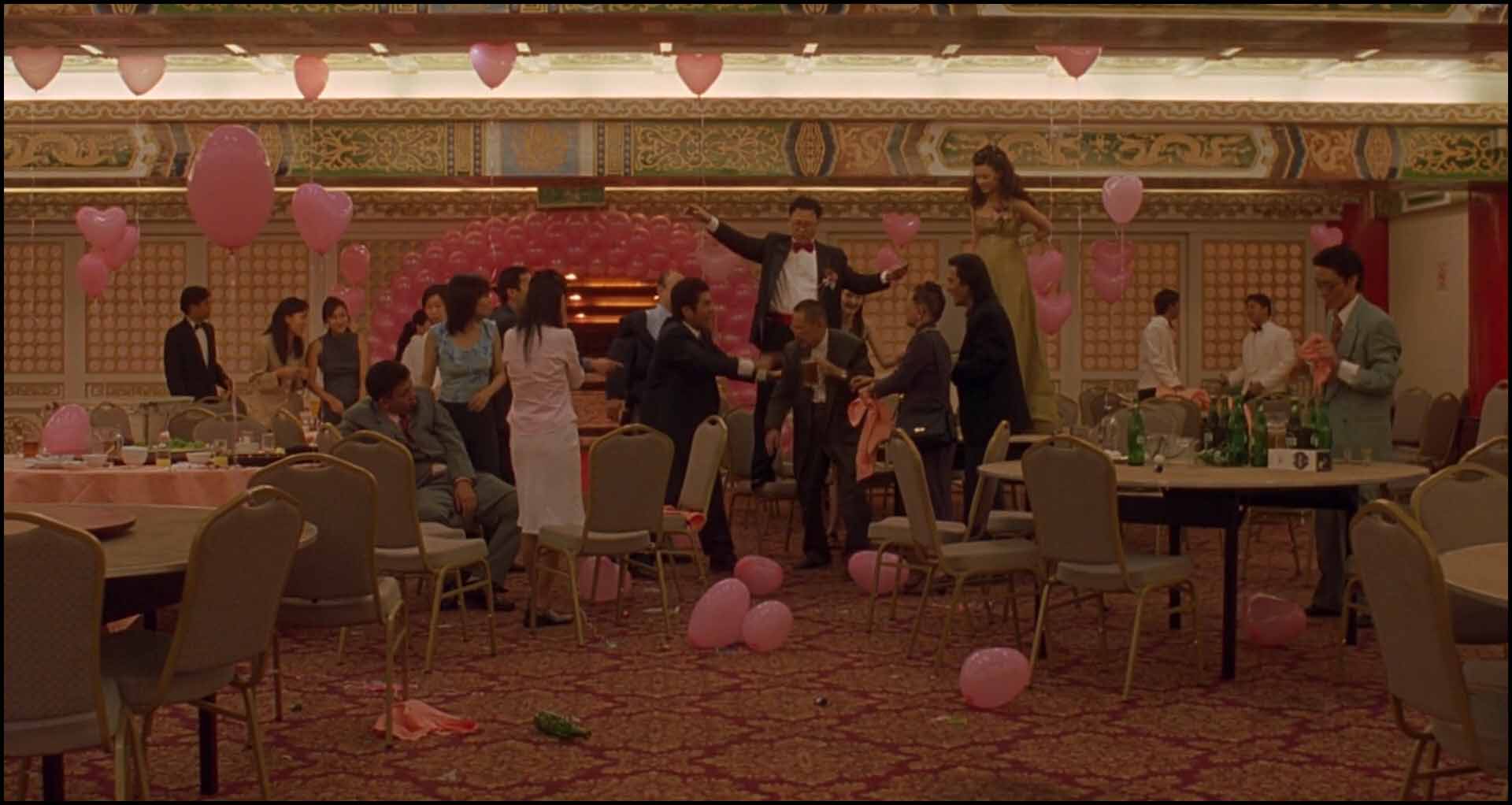
Other elements of filmmaking in Yi Yi
When characters are outside, the sounds of the streets are louder than usual. This makes what they are saying seem less important. The sound design almost has a documentary feel.
In a scene late in the movie, we have dialogue of one interaction (when NJ is with his old flame, Sherry) overlapping images of Ting-Ting with her new boyfriend.
Every shot has a lot of information. Every moment adds new details, sometimes in funny ways. If you’re paying attention, you’ll actually discover the film moves at breathtaking speed. You can’t miss anything!
Early in the film, Yang-Yang doesn’t look excited about his food at the wedding party. Then, cut to: Father and son share a meal at McDonald’s. This shows, without saying it out loud, how much NJ loves Yang-Yang.
NJ also gives his son a camera to help him be creative. NJ can’t be creative anymore due to the nature of his business.
Edward Yang’s frames show the city of Taipei in the background. The city doesn’t take over the story or make a big statement like in his other films.
In Edward Yang’s earlier films, the bustling streets, crowded markets, and towering skyscrapers of Taipei symbolize the rapid economic growth, cultural shifts, alienation, and societal pressure.
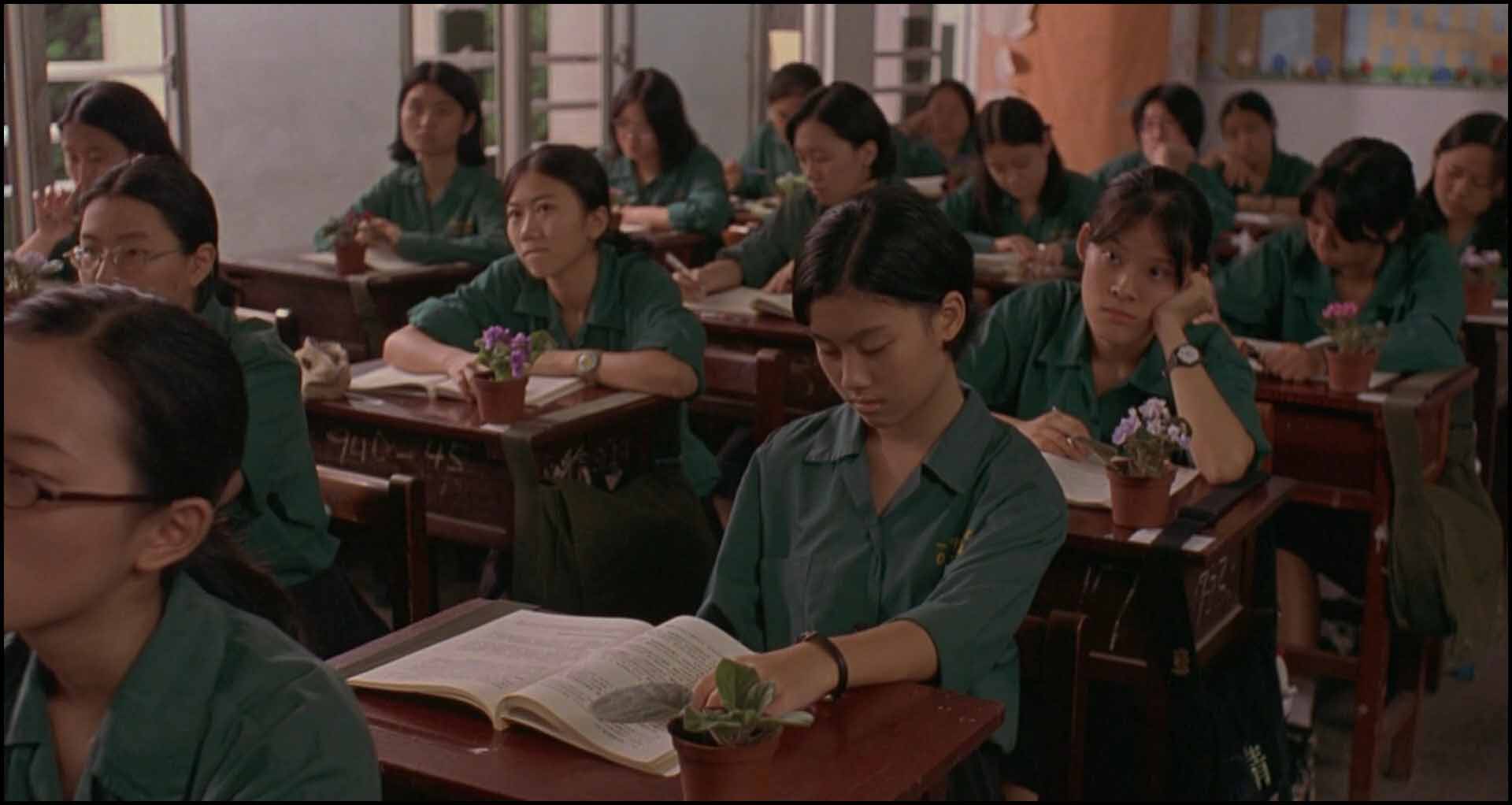
In Yi Yi, there’s great attention to detail in every set. They seem like real locations. The rooms of every character have personal items that make their personas richer. There’s also a lot of color harmony that adds to the scenes, like this shot:
The Reflections in Yi Yi
One of the most striking features of Edward Yang’s style in Yi Yi is his masterful use of reflections:
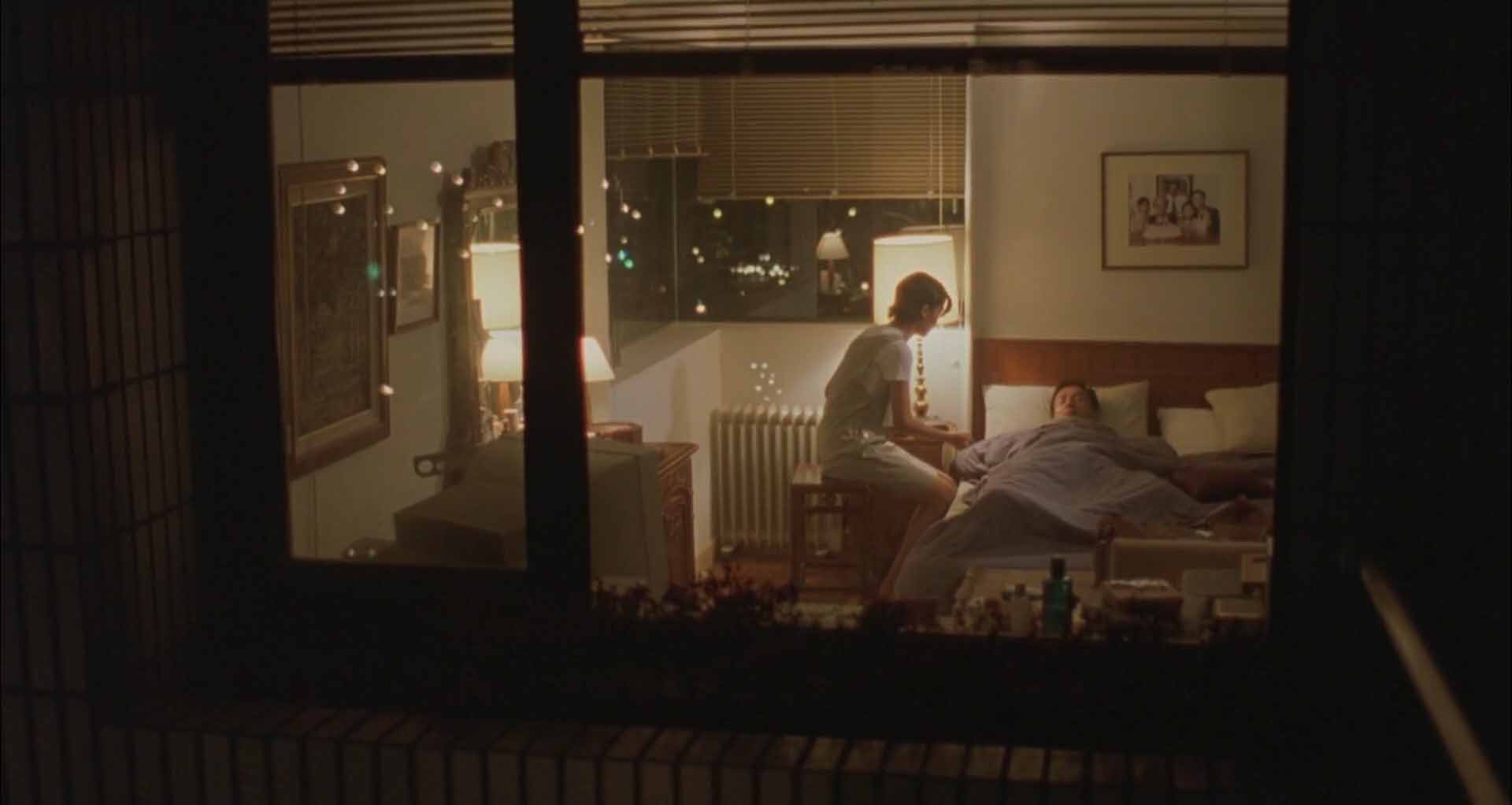
These reflective surfaces, whether in windows or mirrors,, add layers of depth and complexity to his compositions.
Reflections often bring the bustling city of Taipei into the frame, creating a visual dialogue between the characters and their environment. This technique subtly brings in the external world into intimate moments.
However, the locations are not clear, they’re just streets and traffic, or building lights. In Yi Yi, it’s more about isolation. The characters feel even smaller!
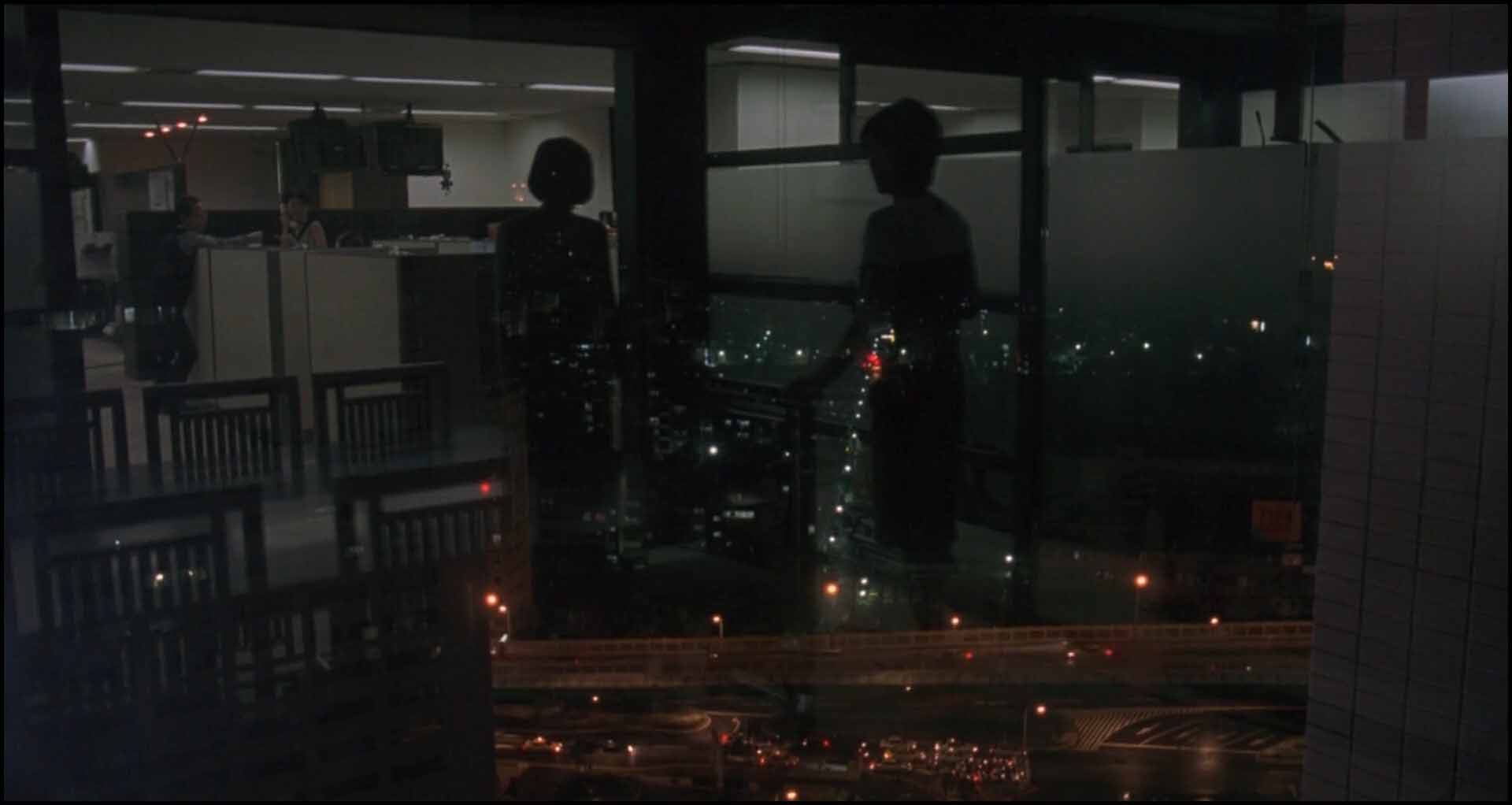
Characters are frequently seen moving between light and shadow. Their reflections or silhouettes blend with the urban landscape.
The reflections allow Yang to convey emotional and narrative depth without overt exposition. The characters’ movements and positions within these reflective spaces often reveal more about their state of mind and relationships than dialogue alone could achieve.
In many ways Yi Yi is about people like us, like everybody. We all face existential isolation at some point in our lives.
The Final Shot
The final shot of Yi Yi – a close-up of Yang-Yang delivering a heartfelt speech – makes it all about him and the truth as he sees it.
His perspective offers a counterpoint to everyone else’s complex and troubled viewpoints.
Yang positions the camera at eye level with Yang-Yang. It creates a direct and personal connection between the character and us. Moreover, the shallow depth of field isolates Yang-Yang’s face, blurring the background and ensuring that the viewer’s focus remains solely on him.
Additionally, the lighting in this scene is soft and natural. This enhances the realism of the moment, making it feel genuine. The lack of dramatic music or overt sound cues really drives home this point.
Yang-Yang’s speech is simple yet profound. It reflects his naive way of processing loss and sorrow. His words, delivered with a mix of childlike innocence and surprising wisdom, cut deep.
The actor portraying Yang Yang, Jonathan Chang, delivers the text like he’s reading a text in school. The lack of emotion is what I feel makes it work even more powerfully. You can’t expect kids to really understand what’s happening.
As Yang-Yang speaks about his desire to understand life and death, in a very matter-of-fact way, we can fully empathize with him. The sum total is a powerful emotional response, evoking tears from even the most stoic viewers.
The final close-up of Yang-Yang also carries significant symbolic weight. Throughout Yi Yi Yang explores the cyclical nature of life, with the film beginning with a wedding and ending with a funeral.
He started the film in a suit at a wedding, and ends in a suit at a funeral. He has learned a lot about life in between these two events. Yet, to all those around him, he probably hasn’t changed at all!
On some level this truth hits home. We understand it intuitively, if nothing else.
Close-ups exemplify the power of cinema to convey complex emotions through visual storytelling. You really can’t have a film without close ups! Watch this video to learn more:
In an era where special effects and high-octane action dominate the screen, Yang’s choice to end Yi Yi with a simple, heartfelt close-up stands out as a reminder of the profound impact that intimate, human moments can have.
Furthermore, this film is a masterclass in the art of filmmaking.
Edward Yang’s untimely death at the age of fifty-nine marked a profound loss for the world of cinema. After the release of Yi Yi in 2000, Yang was diagnosed with colon cancer.
Despite battling the disease for seven years, he passed away in 2007.
He left behind a legacy of remarkable films that capture the complexities of life in Taiwan at the end of the last century. Edward Yang had the rare ability to portray the human condition with unparalleled depth and sensitivity.
As his last film, Yi Yi represents the culmination of Yang’s artistic journey and serves as a poignant reminder of what the world lost with his early passing.
While his films can be challenging to find, Yi Yi is essential viewing. Don’t miss it for the world.
I hope you like this video and article. Please let me know what you think in the comments below.
