

In 1994, The Crow arrived in theaters, offering audiences a visually striking blend of gothic aesthetic and haunting storytelling. The film’s imagery captivates with its rain-soaked streets and its tragic hero, Eric Draven, rising from the dead.
Watch the video:

Inspired by Blade Runner
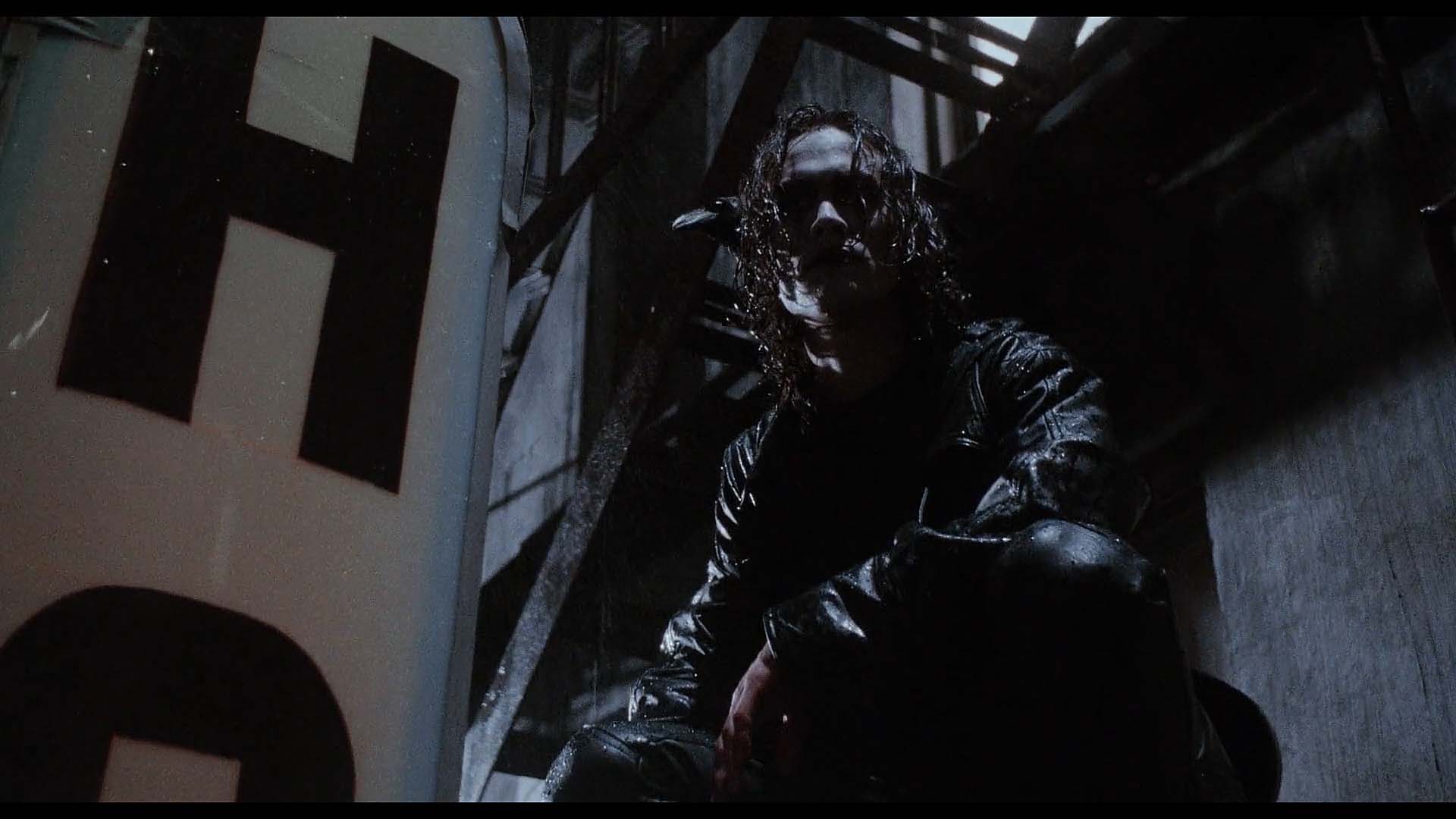
One of the defining aspects of The Crow‘s visual style is its use of light and shadow. Cinematographer Dariusz Wolski relied heavily on backlighting to create an eerie, immersive world, emphasizing the textures of rain, cobbled streets, and Eric’s iconic costume.
Backlighting not only served to bring depth to these visuals but also provided an almost supernatural aura around Eric, highlighting his ghost-like presence throughout the film.
Despite budget constraints, the production team cleverly used miniature sets for some of the larger, more complex scenes, including the car chase sequence. Heavy backlighting on the miniatures helped integrate them into the film seamlessly, adding richness and a feeling of scale that masked the limitations of the set.
This attention to detail is what helped the film achieve its gothic and atmospheric style on a relatively modest budget.
The Color Palette
Originally, director Alex Proyas wanted to shoot The Crow in black and white, to more closely match the comic book source material. While this was ultimately rejected, the film embraced a monochromatic style, enhanced by the use of a sepia filter.
This filter helped to tone down the colors on set, giving everything a brownish hue, which was then adjusted in post-production to desaturate the film even further. By removing the sepia during color timing, the filmmakers created a world that felt worn and decayed—one that had already fallen apart long before Eric’s return.
The production design team took extra measures to avoid blue tones, as the desaturation process would have caused them to glow unnaturally. To counter this, they painted the walls black and removed any blue elements from the set.
This ensured that the visual world remained consistent with the film’s dark, brooding atmosphere. When color does appear, it’s often in the form of red—used sparingly for blood, neon lights, or to accentuate moments of violence.
The film’s use of saturated colors is notable in the flashback scenes, which are a stark contrast to the rest of the movie. These sequences feature brighter, more vibrant colors, particularly in the depiction of Shelly’s memories.
This visual approach helps to distinguish the past from the present, making the loss of Eric’s love all the more poignant.
One of the most striking visual choices in the film is Eric’s makeup. His white face paint, set against the film’s muted backdrop, ensures that he stands out as a symbol of both death and vengeance.

The Cinematography
The Crow was filmed using Kodak 5295 stock and Zeiss lenses (probably Standard Speeds), which contributed to its gritty and grainy texture.
The crew often used shallow depth of field and close-ups to conceal the limited sets and keep the focus on the characters, further intensifying the emotional weight of the scenes. The car chase, filmed with miniature cars, was another example of creative problem-solving, with the filmmakers using handheld camera movements to avoid making the miniatures look artificial.
The night scenes were carefully lit using tungsten lights rather than the more common HMI lights, which would have cast a blue hue. This choice ensured that the film retained its warm, night-time tones, setting it apart from other films of the era.
The resulting visuals create a world that feels cold and unforgiving, but not without moments of warmth and beauty.

Brandon Lee
Brandon Lee’s performance shines through, and his smile cuts through the grim atmosphere with moments of humanity and joy. Despite the dark and tragic themes, Lee’s portrayal of Eric Draven feels alive and authentic, as though he was fully immersed in the character’s journey for vengeance.
It’s this raw, emotional energy that resonates with audiences and makes his performance unforgettable.
The influence of The Crow can be seen in countless films that followed. Heath Ledger’s portrayal of the Joker in The Dark Knight owes much to Lee’s performance, both in visual style and character interpretation.
The iconic shootout scene in The Crow is eerily similar to the Joker’s “Pencil Trick” moment:
The rooftop chase scene in The Matrix clearly borrows elements from Eric’s pursuit of justice. The DNA of The Crow can even be traced back to Tim Burton’s Batman, though The Crow is a much darker and grittier film. The physicality of Brandon Lee’s performance is a highlight, particularly in the fight scenes. Unlike his father, Bruce Lee, Brandon wasn’t primarily known for his martial arts, but his performance in The Crow carries a visceral, grounded quality that makes the action feel raw and unpolished.
This fits perfectly with the film’s overall tone—The Crow isn’t about sleek, choreographed action but about the brutal reality of violence and its emotional toll.
Disjointed Editing
The editing in The Crow feels disjointed and fragmented at times, but this is likely intentional.
The editing style reflects Eric’s fractured memories and trauma. The film’s pacing shifts between fast cuts in action scenes and slower, more reflective moments, allowing the audience to absorb the emotional and visual depth of each frame.
However, what truly makes The Crow stand out are its iconic images.
In many ways, The Crow has a timeless quality.
Even though goth culture and 90s music may no longer be in vogue, the film’s visual style remains influential. Its use of lighting, color, and texture continues to inspire filmmakers today
Whether you’re drawn in by the tragic story of Brandon Lee or the film’s groundbreaking cinematography, The Crow endures as a haunting and beautiful piece of cinema.

This movie was shoot with moviecam Compact Kameras, rented by sammy’s London.
I assabled the camera and serviced it after Brandon come to dead during this Shooting.
unforgettable tragedy
Thanks for sharing. Can’t imagine how it must have felt like.