

Christopher Nolan’s Interstellar is a feat of imagination and craft that still leaves audiences in awe, even after a decade since its release.
Why does it resonate so much? Start by watching the video:

Interstellar is the kind of movie you think about long after the credits roll, a perfect storm of groundbreaking visuals, emotional storytelling, and raw ambition.
Interstellar tackles huge ideas – time dilation, four-dimensional space, interstellar travel, space migration, survival and love.
Emotional Stakes Amidst the Stars
At its core, Interstellar is about people, not just planets. Nolan anchors the story in the bond between Cooper, a father desperate to keep his promise to his daughter, and Murph, a daughter struggling to understand why he left.
The stakes are deeply personal.
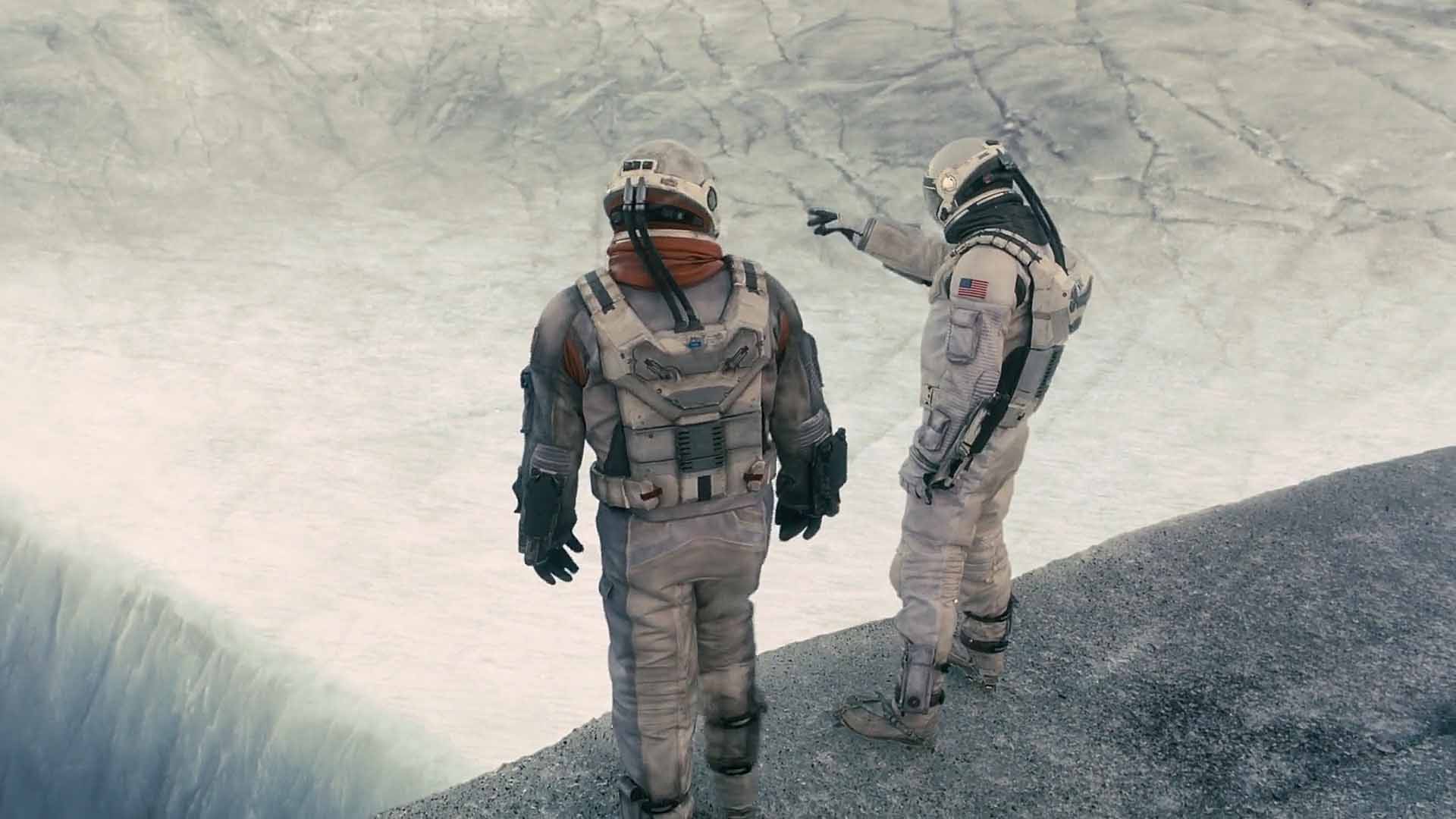
The film uses interstellar space as a metaphor for the emotional distance between these characters. Every breathtaking shot of Gargantua or the icy plains of Mann’s planet reinforces this distance.
The visuals don’t just amaze; they add weight to the story. When Cooper makes the heartbreaking decision to leave Earth, you feel every ounce of that pain because the film’s visuals mirror his emotional journey.

A Masterclass in Cinematography
Hoyte van Hoytema’s cinematography is one of the film’s greatest triumphs. By combining IMAX 70mm film with the anamorphic format, he created a visual language that’s both expansive and intimate.
IMAX captures the grandeur of space, while the anamorphic format grounds the visuals to a more “earthly” realm. The first format is extremely sharp, clean and detailed. The second is softer with greater optical aberrations like barrel distortion, vignetting and anamorphic lens flares.
But it works! This blending of formats gives Interstellar its unique look and feel.
What’s even more impressive is Hoytema’s innovation with IMAX cameras. Traditionally bulky and unwieldy, these cameras were re-engineered for handheld use during Interstellar. This allowed for dynamic, up-close shots that feel raw and personal while maintaining the grandeur of the IMAX format.
Hoytema used natural light wherever possible, especially for Earth scenes. The muted tones and dusty atmosphere reflect the planet’s decline, while the stark, vibrant lighting of space creates a sense of awe.
The warm light of Earth scenes represents humanity and connection, while the cold, harsh light of space emphasizes isolation and survival.
To know more about his cinematography, watch this video:
The locations
Nolan chose Alberta, Canada, for its wide-open landscapes and natural beauty—landscapes that were transformed into a dying world. The dust storms were created using massive fans and synthetic dust, giving the scenes a gritty, realistic feel.
Earth in Interstellar isn’t just a setting; it’s a character. Its desolation mirrors humanity’s desperation. The muted colors, low-hanging clouds, and ever-present dust make you feel the weight of its decline.
You believe that humanity needs to leave, desperately, not because the script says so, but because you see it dying before your very eyes.
Nolan chose Iceland to represent Mann’s ice planet and Miller’s water world. These locations were carefully selected for their otherworldly qualities, with minimal CGI enhancements to keep them grounded.
Anne Hathaway nearly getting hypothermia during a scene on the water planet is a testament to the crew’s commitment to authenticity.
You can feel the danger in those moments because it’s real. The water is cold, the waves are massive, and the actors are reacting to actual elements, not just a green screen.

The Science Behind the Black Hole
Gargantua, the black hole, is one of Interstellar’s most iconic visuals. It’s not just a pretty image, it’s grounded in real science. Physicist Kip Thorne provided equations that the visual effects team used to simulate how light bends around a black hole.
This attention to detail makes Gargantua not only stunning but also scientifically accurate. It’s a perfect example of how Interstellar balances artistic vision with real-world science.
The Practical Effects That Ground Interstellar
One of Nolan’s trademarks is his commitment to practical effects, and Interstellar is no exception. The spacecrafts Endurance and the landers weren’t just CGI models. They were massive, highly detailed miniatures nicknamed “maxatures.”
These models were so large and realistic that IMAX cameras could be mounted on them, creating shots that feel authentic.
Even the robots, TARS and CASE, were practical puppets controlled on set. Their design is functional, not flashy, which makes them feel like real, working machines. This grounded approach keeps the film from feeling too polished or fake.

The Tesseract
The tesseract sequence is Interstellar at its most ambitious. Inside the black hole, Cooper experiences time as a physical dimension. It’s a visually stunning representation of an abstract concept.
This scene was created using a combination of practical sets and CGI, which keeps it grounded despite its complexity. The tesseract is both a narrative turning point and a visual spectacle, showing how Interstellar blends story and visuals seamlessly.
Sound That Immerses
Hans Zimmer’s score, built around a church organ, adds a sense of grandeur and emotion that matches the visuals. The music is the driving force that heightens the tension and amplifies the stakes.
Nolan’s sound design is equally bold. In some scenes, the sound effects drown out dialogue, immersing you in the chaos of space. It’s a risky choice, and is not to everyone’s taste. Either way, you feel Interstellar in more ways than one!
What makes Interstellar truly special is how all these elements come together. The visuals, the sound and the story are all working toward the same goal. It’s film craft at its finest.
Nearly ten years later, Interstellar still looks and feels like a billion bucks. It’s a testament to what filmmaking can achieve when ambition, innovation, and heart come together.
For filmmakers, it’s a masterclass. For everyone else, it’s a reminder of why we go to the movies in the first place.

I watched it, and it made 2001 seem understandable. A big yawn for me.
Interstellar has so much science you need to know before you can understand the whats and the whys of the plot.