

Gladiator II arrived in theaters recently, and it has sparked renewed interest in the original Gladiator, which premiered over two decades ago yet still looks as impressive as many modern releases.
It is large in scope, but it also feels very human. It balances spectacle with intimate character moments, which remains a rare feat even now.
Let’s examine why Ridley Scott’s Gladiator has such enduring power.
Watch the video:

Gladiator (2000) follows the story of Maximus, a Roman general betrayed and forced into slavery. Through a series of battles and personal trials, he rises to become a symbol of hope and a champion in the Colosseum.
The film arrived when historical epics were not the most common type of blockbuster. Yet it managed to capture the public’s imagination. Part of its success came from the authenticity of the battles, sets, and costumes. Another key was Ridley Scott’s visually driven storytelling.
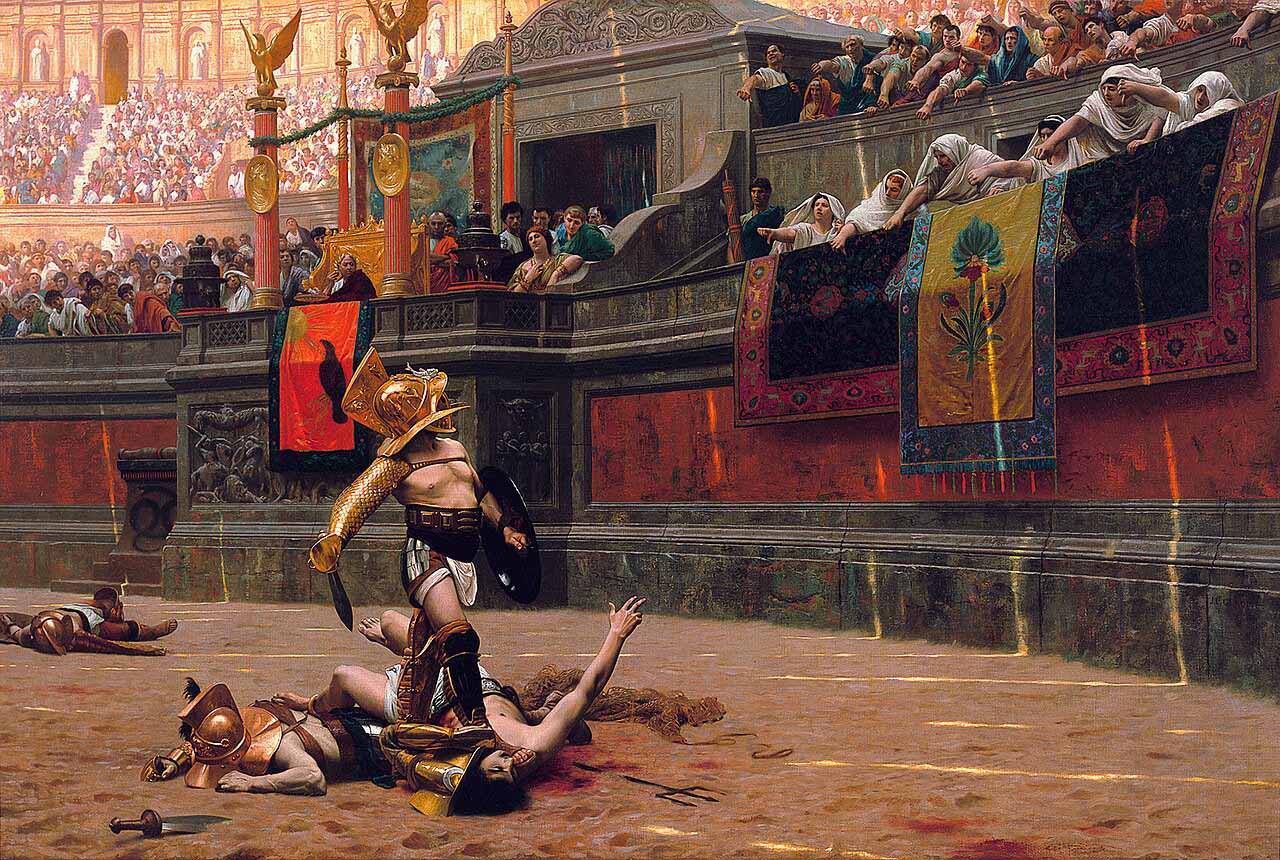
The Painting that Started it All
The story goes that when producers asked Ridley Scott to take on the project, they showed him the painting Pollice Verso by Jean-Léon Gérôme. It depicts gladiators in an arena, awaiting a life-or-death signal from the crowd. The dramatic lighting and tension leaps off the canvas.
Scott reportedly decided on the spot that he wanted to direct the film, without even reading the script. That initial spark from a single image reveals how integral visuals can be to a director’s imagination. Gladiator’s aesthetic owes much to that painting’s sense of raw tension and grand spectacle.
Those First Ten Minutes!
In the first ten minutes, viewers witness a brutal battle on the edges of the Roman Empire. Ridley Scott layers details in a unique way, weaving together editing rhythms, camera movements, and strategic angles.
The result is a cohesive visual experience that informs the viewer about the characters’ mindsets and the looming conflict.
The Rhythmic Pulse
The opening sequence uses a pulsating editing rhythm. If the footage is sped up, one can see how consistently the shots alternate between close-ups and wide angle shots.
This back-and-forth repeats throughout the scene, like an electronic dance beat.
This pace keeps the viewer fully engaged and emphasizes the might of the Roman forces.
Camera Movement
Initially, the camera movements are smooth and static. As war intensifies, the shots become handheld and shaky. The shutter speed changes to produce that smeary motion blur during chaotic moments.
The transition from steady to unsteady camerawork places the audience in the midst of the fight, while also showing how quickly war upends any sense of control.
Camera Angles
Ridley Scott and his cinematographer often use low angles for Maximus and the Romans, making them appear dominant. They shoot the opposing tribe from higher angles, suggesting that they face an battle they can’t win.
Scott loves telephoto lenses. They compress space so that small clusters of soldiers seem like large armies. At the same time, the production budget allowed for breathtaking wide shots. This combination of technical tricks and substantial resources sells the scale of the conflict.
For Gladiator, they used Panavision cameras and Panavision Primo lenses, usually long telephoto options. This allowed them to rapidly shift between sweeping wide shots and tight close-ups of characters.
They often rolled multiple cameras at once. During the opening battle, they had as many as seven cameras capturing different angles. Most were large Panavision rigs, but lighter handheld cameras like Arris and Aatons were used for dynamic combat scenes.
Breaking the 180-degree rule
The 180-degree rule keeps characters moving in consistent directions, preventing confusion. Scott follows it initially, showing Romans moving left to right and the tribes right to left. However, at a critical moment, Maximus launches a surprise attack from the opposing side. The camera flips positions, creating a sudden sense of confusion.
Once the chaos peaks, the camera seems to appear everywhere at once. It abandons the 180-degree rule entirely, providing a stark sense of war’s disorder. Yet the editing remains controlled, so viewers never lose track entirely.
To know more about breaking the 180-degree rule, watch this video:
The 45-degree Shutter
Early in the battle, the shutter speed is set to a standard rate. As hostilities intensify, Ridley slows it, creating motion blur that adds to the turmoil. Limbs, weapons, and even the environment appear streaked and frenzied. They go as low as 45-degrees on the shutter angle.
The audience experiences the disorientation of the soldiers. Once the dust settles, the camera reverts to its steadier setting, signaling that calm has returned.

Atmosphere
The sequence starts in morning fog, transitions to fire-lit chaos, and ends with snowfall. It frames the battle as both real and slightly mythical. It’s pure cinema.
Ridley Scott does not tend to embed overt political messages in his films. Instead, he focuses on visual storytelling, atmosphere, and emotional arcs. That approach worked wonders for Gladiator, which won multiple Academy Awards.
Music and Sound
Hans Zimmer’s score enhances these shifts. His music builds tension, rises to dramatic peaks, and then settles into bittersweet melodies. It turns the scene into a rollercoaster for the senses.
When combined with the visuals, it immerses the viewer in a place that feels both ancient and immediate. I don’t have to say more about Hans Zimmer.
Another highlight is the film’s immersive sound. Hearing the Colosseum roar was a significant experience for theater audiences.

Color Grading
The film was shot on Kodak film stock in Super 35 spherical format. It maintained a 2.39:1 aspect ratio, preserving that cinematic scope. Scott’s dedication to careful pre-visualization helped the production stay on track and produce memorable images.
John Mathieson’s cinematography impressed critics and viewers alike. The opening in Germania is dominated by cold blues and grays, reflecting a harsh battlefield and freezing climate. Later, the color palette shifts dramatically when the story moves to the deserts of North Africa. Warm browns, yellows, and oranges evoke intense heat.
When the narrative arrives in Rome, golden hues make the city appear majestic, almost otherworldly in its grandeur. By contrast, Commodus often appears in shadows or is lit from the side by cooler tones, reinforcing his moral ambiguity.
Gladiator also experimented with color grading at a time when the practice was not standard. The movie occasionally adopts a desaturated look, highlighting the brutality of war. These subtle shifts in color enhance the emotional beats of each sequence, guiding viewers’ reactions.

Production Design
The production design is another major factor in the film’s continuing appeal. Rome was brought to life with a mixture of miniatures and digital set extensions. This hybrid approach gave the environment tangible depth and texture.
Even the background details, like chipped walls, weathered armor, and dusty roads, make the ancient world feel genuine. Historical accuracy was not the film’s priority, but it portrayed a version of Rome that felt real enough to immerse viewers.

The Acting
Ridley Scott’s directing style allows actors a certain freedom within carefully orchestrated frameworks. Russell Crowe brought quiet intensity to Maximus. Joaquin Phoenix, portraying Commodus, exuded menace and insecurity in equal measure.
Gladiator emphasizes immediate action rather than long-term plotting. This approach resonated with audiences craving a straightforward, visceral epic.
The calmer segments allow viewers to witness Maximus’s personal heartbreak and longing for a peaceful life. They also underscore his devotion to family and an afterlife he hopes to rejoin.
These moments add value. When Maximus steps back into the arena, the stakes feel higher. His motivations remain clear.
Part of Gladiator’s staying power comes from its limited dependence on early-2000s CGI. Many modern blockbusters rely heavily on digital environments, which can age rapidly as technology advances.
Gladiator took a mixed approach. Real sets and miniatures formed the foundation, with CGI used for crowd replication and background extensions.

After Gladiator, audiences welcomed a resurgence of large-scale historical and fantasy films. Its success proved that epic stories could still be major draws. Directors like Peter Jackson built on crowd-simulation techniques for The Lord of the Rings. Zack Snyder employed stylized violence and distinct color grading for 300. Each subsequent film built on concepts that Gladiator had helped establish.
Gladiator earned critical acclaim, including several Academy Awards. The line “Are you not entertained?” is now one of the greatest lines in cinema history. I
Ridley Scott’s eye for detail ensures that these themes are conveyed with clarity and drama. Gladiator remains an extraordinary example of cinema done right!
What do you think about Gladiator? If you’re a fan of Ridley Scott, watch this:
