

Sigma’s latest offering, the Aizu Prime Line of cine prime lenses, marks a significant milestone. It is the first full frame cinema lens series to feature a consistent T1.3 aperture across all focal lengths.
In this article let’s go over the most important features of the Sigma Aizu Primes you should be aware of for filmmaking and cinematography.

46.3 mm Image Circle
The typical size of a full frame sensor is 36 mm x 24 mm. You hardly shoot in an aspect ratio lower than 1.77:1 (16:9), so a lens that covers full frame must cover this sensor size. The diameter of a full frame sensor is 43.3 mm.
Here are the sensor coverage sizes of typical cameras:
- Red Raptor: 46.31 mm
- Arri Alexa LF: 44.71 mm
- Sony Venice 2: 43.5 mm
- Full frame (16:9): 43.3 mm
- Full frame (1.85:1): 42 mm
With a 46.3mm image circle, the Aizu Primes can pretty much cover every single full frame (also called large format) cameras and VistaVision systems.
In comparison, the Arri Signature Primes only cover 44.7 mm; and Sigma’s own line of cine lenses cover 43.3 mm.
That’s a great start!
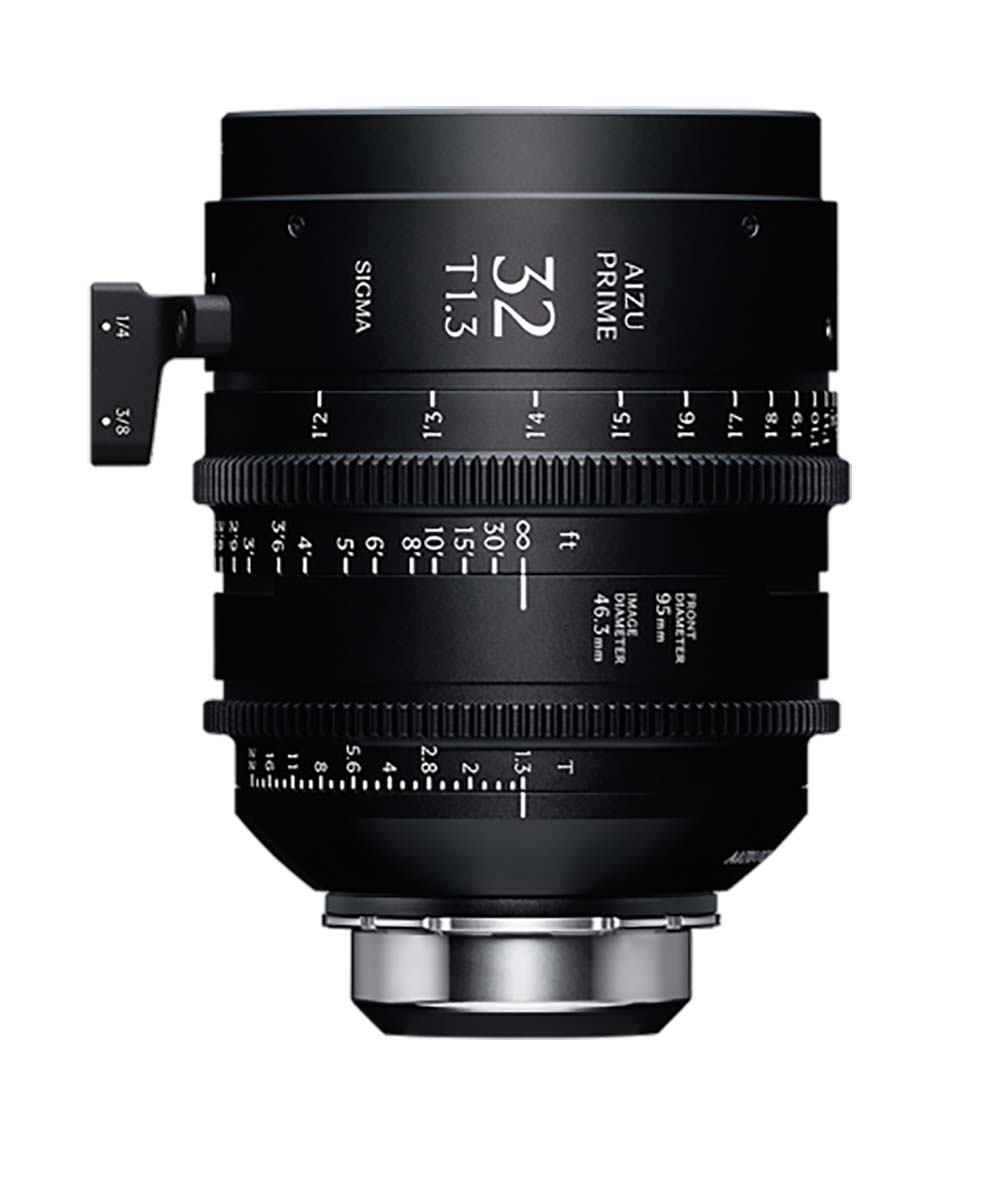
A Consistent T1.3 Aperture
One of the standout features of the Aizu Prime Line is its uniform T1.3 aperture across all 12 focal lengths, ranging from 18mm to 125mm.
The T1.3 aperture enables exceptionally shallow depth of field, though the bokeh differences have to be tested to know how well the lenses work at this aperture. Another thing that affects filming at T1.3 is the resolution, and whether the shots from different focal lengths will match or not. Only testing can reveal these details.
However, Sigma has said these lenses are engineered to control distortion and minimize focus breathing. two critical factors for maintaining visual consistency and ensuring this line hangs with the big boys from Arri, Cooke, Leica, etc.
Sigma has also placed a strong emphasis on ensuring that all lenses in the Aizu Prime Line share consistent color balance, contrast, and flare characteristics. They are designed to match seamlessly.
The ambition is obvious. Sigma is not one for hyperbole, unlike some other manufacturers – so these claims deserve our attention.
Comprehensive Focal Length Coverage
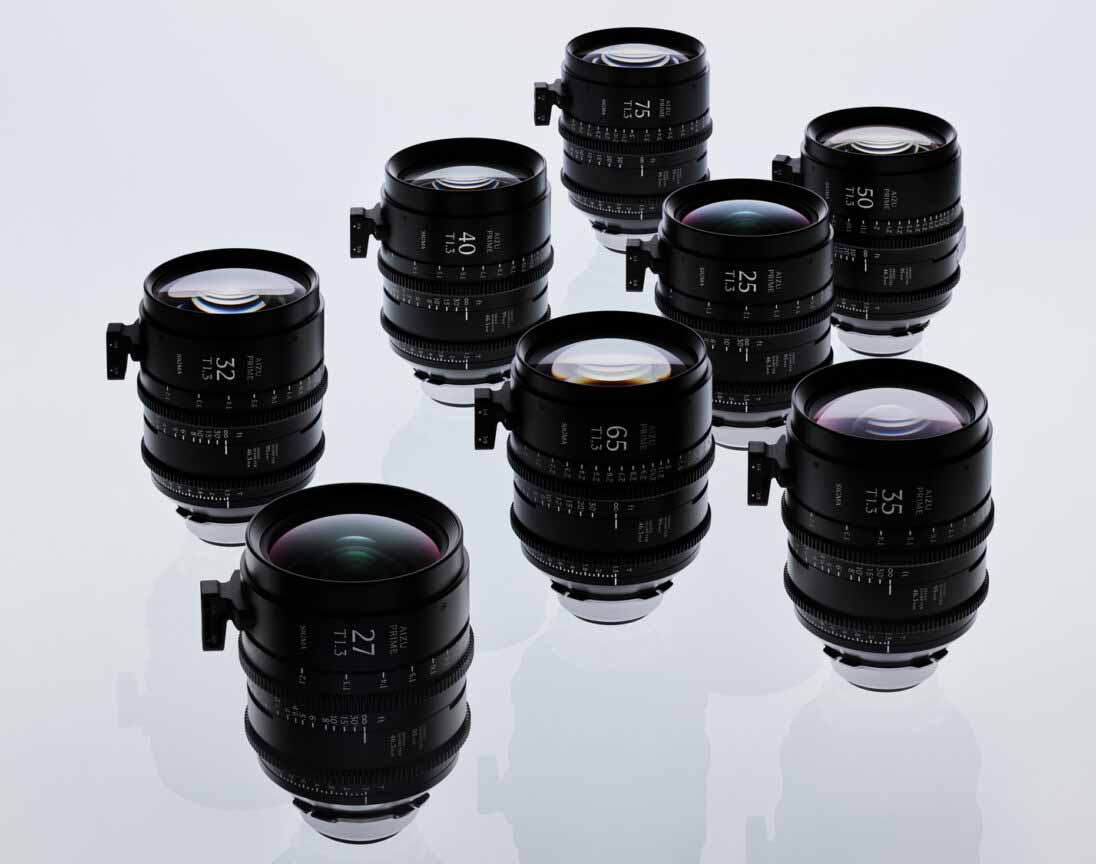
The Aizu Prime Line offers a comprehensive range of focal lengths to accommodate various shooting scenarios. The initial release includes eight lenses covering 25mm to 75mm, with plans to expand the lineup to include 18mm, 21mm, 100mm, and 125mm options.
What’s great is Sigma has gone all-in on these lenses, and it gives filmmakers and rental houses confidence the line is designed to grow and compete with the best.
Available Lens Mounts
The Aizu Prime Line will be available in these two mounts:
- PL Mount
- Sony E-mount
It’s interesting they have not released the line in the LPL mount, but PL is fine.
The Price!
A typical cine lens (each one) for a full frame sensor can cost about $40,000-ish. Each lens.
The Sigma Aizu Prime comes in at about $8,299 per lens.
If it can meet the expectations of the most demanding cinematographers at this price point, it is a surefire winner – and will send shockwaves through an already battered industry.
Why the name “Aizu”?
The Sigma factory is based in Aizu, Fukushima, Japan.
From the moment we first established a factory in Aizu, our focus has been on growing and developing as a member of the local community. As a company, we believe we have an economic, cultural, and ethical responsibility to the local community.
Sigma
Size and Weight
The Aizu Prime lenses maintain a relatively compact and lightweight form factor. Weighing between 1.6 to 1.7 kg (3.5 to 3.7 lbs), these lenses are light!
Here’s a comparison table published by Sigma with all the specs:
| Focal Length | Close Focus | Front Diameter | Length* | Weight* |
|---|---|---|---|---|
| 18mm | Not published | |||
| 21mm | Not published | |||
| 25mm | 0.31 m / 1’0 | 95 mm | 125 mm | 1.7 kg / 3.6 lb |
| 27mm | 0.33 m / 1’1 | 95 mm | 125.4 mm | 1.7 kg / 3.6 lb |
| 32mm | 0.34 m / 1’2 | 95 mm | 128.5 mm | 1.7 kg / 3.7 lb |
| 35mm | 0.35 m / 1’2 | 95 mm | 128.6 mm | 1.6 kg / 3.6 lb |
| 40mm | 0.38 m / 1’3 | 95 mm | 128.8 mm | 1.6 kg / 3.5 lb |
| 50mm | 0.48 m / 1’7 | 95 mm | 126.3 mm | 1.7 kg / 3.7 lb |
| 65mm | 0.61 m / 2’0 | 95 mm | 125 mm | 1.6 kg / 3.6 lb |
| 75mm | 0.73 m / 2’5 | 95 mm | 128.1 mm | 1.7 kg / 3.8 lb |
| 100mm | Not published | |||
| 125mm | Not published | |||
There are some gotchas here you should be aware of:
Close focus
The close focus suffers a bit compared to a typical full frame lens in some focal lengths, but we have to remember this is a T1.3 lens. On some focal lengths it fares better.
Here are some comparisons for a 40mm lens:
- ARRI Signature Prime 40mm T1.8 – 13.78″ / 0.35 m
- Leitz Cine Prime 40mm T1.8 – 14″ / 0.356 m
- Cooke S8/i Prime T1.4 – 18″ / 0.457 m
- Sigma Aizu Prime T1.3 – 15″ / 0.38 m
Length
This is a head scratcher. Here’s a picture with the length differences:

What I can’t understand is why Sigma didn’t add a bit to all the lenses just to get them to be exactly the same. It was ripe for the taking! I think this isn’t a huge deal breaker, but the lengths are so close it would have been sort of trivial to just add a bit of length – unless it would reduce the light ray angle somehow.
Of course, adding a bit of material will also increase the weight, but it’s not as if the weight was exactly the same either:
Weight
The weights are not the same. The difference is so tiny (about 100 grams or so) I wonder why Sigma just didn’t add some weight to make the lenses exactly the same weight.
I don’t think these are oversights. I’m pretty sure there’s a technical explanation as to why it’s so close yet so far. But just imagine if all the lenses were the exact length and weight!
Which brings us to the most important gotcha.
What’s it made of?
Sigma have not disclosed on any product page or press release what the lenses are made of? Metal, plastic, new compound?
There is also no mention of weather resistance or sealing, or temperature ranges, etc.
I wonder why that is? We’ll find out soon though.
Gears
Here are the specs:
- Focus Rotation: 270°
- Iris Rotation: 70°
Advanced Metadata Support
The Aizu Primes support ZEISS eXtended Data, providing real-time lens metadata during shooting. This feature enables the export of distortion and shading correction data, streamlining workflows for visual effects and post-production.
Pricing and Availability
Each lens in the Aizu Prime Line is priced at $8,299 USD. The first eight lenses are scheduled for release in August 2025, with the remaining focal lengths to follow.
What do I think?
If the Sigma Aizu Prime Line is better than the existing Sigma Cine lens lineup (based on the Sigma Art series of photography lenses), then it’s a winner. It really is a cinema lens, designed from the ground up:
All lenses in the Aizu Prime lineup feature an optical system developed exclusively for cinema applications. While maintaining modern sharpness, they avoid rigid or harsh depictions—delivering a natural, organic look. They provide quiet elegance and depth to the image, with distortion and focus breathing carefully minimized to ensure visual consistency, even in dynamic scenes.
Sigma
It will be incredible to test these lenses to see how they compare to the most expensive cine lenses. Have Sigma cut corners, or not? Can’t wait to find out.
What do you think? Are these game-changer lenses?
