
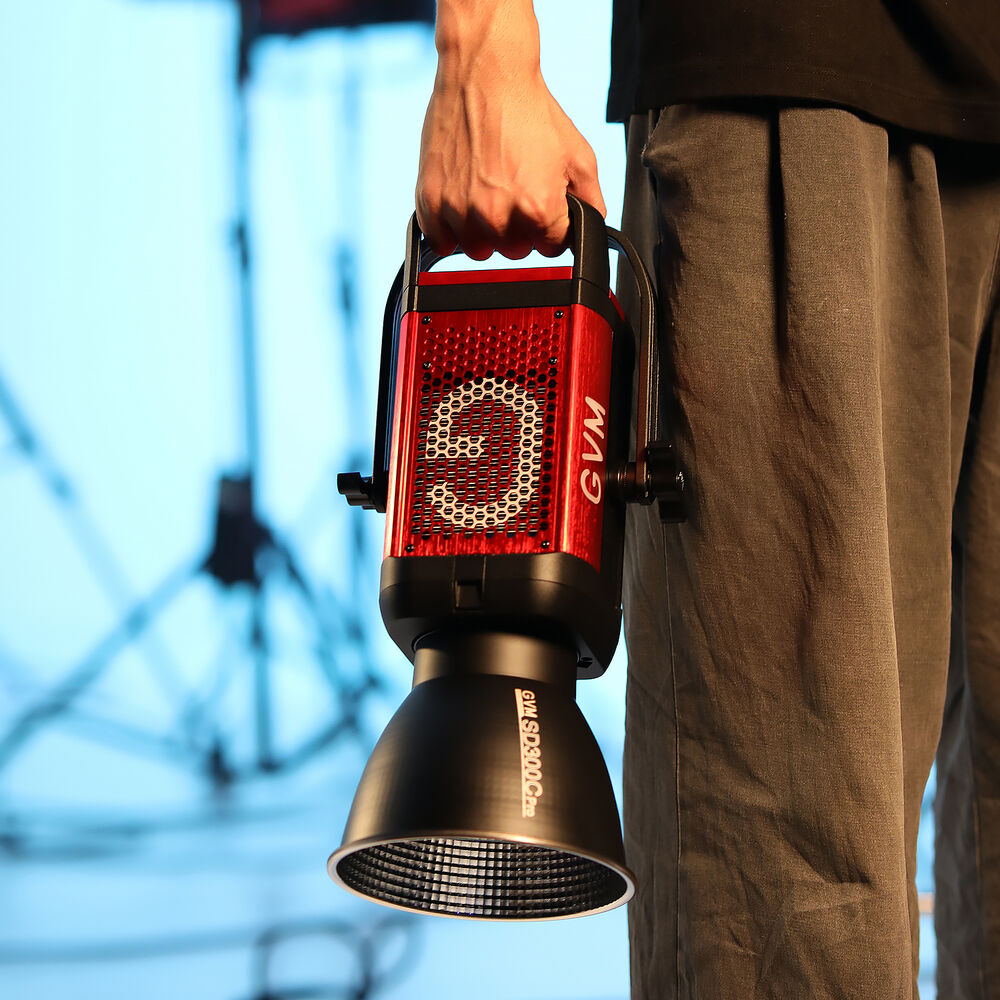
Choosing the right main light is critical for filmmakers, especially those working in documentaries, interviews, and low budget narrative films. A main (or key) light sets the mood, shapes the subject, and is often the only light you might need.
Modern 300 Watt-class LED spotlights have become a kind of sweet spot: powerful enough to handle most lighting setups, yet lightweight and manageable for solo or small-crew productions.
What makes 300 Watts a good power output for low budget films?
A 300W LED spotlight delivers plenty of power even through modifiers like softboxes or Fresnels, ensuring ample brightness as your main or key light. For night work they are an excellent backlight as well.
If you’re only filming interviews to documentaries, combine it with a softbox and you’re golden. With the option to run off batteries or standard wall outlets, you can set it up quickly almost anywhere.
Bottom line, I’ve found myself in a myriad of lighting situations in my life – and a 200 to 300 Watt LED light covers most scenarios.
What to Look For in a Good 300 Watt Spotlight
When picking a 300W LED spotlight as your main source, focus on:
- Brightness and beam quality: A good main light should offer robust output.
- Decent beam angle: Not too wide (great only for softboxes) and not too narrow (not versatile enough).
- Silent or near-silent operation: Critical during dialogue-heavy scenes or interviews.
- Bi-color or RGB options are mandatory nowadays. I’m not too biased towards RGBWW, because it’s really rare to need different colors for your main light. Most of the time it’ll stay in the 3200-5600K range.
- I recommend a Bowens mount which gives you all kinds of versatility. E.g., I like Elinchrom modifiers, so I can use an adapter to use it with Bowens.
- Power versatility (battery or mains) matter big-time in real-world setups. 300 Watts is pushing what you can do with batteries, but with a dimmable light, you can even lower the output and still get a lot done, longer.
Let’s dive into five practical options, then.

Here are five excellent 300W LED spotlights, each suitable as a main source in diverse shooting scenarios.
1. amaran 300c RGB
Let me start with the best bang for your buck, but there are caveats, the amaran 300c (Amazon, B&H).
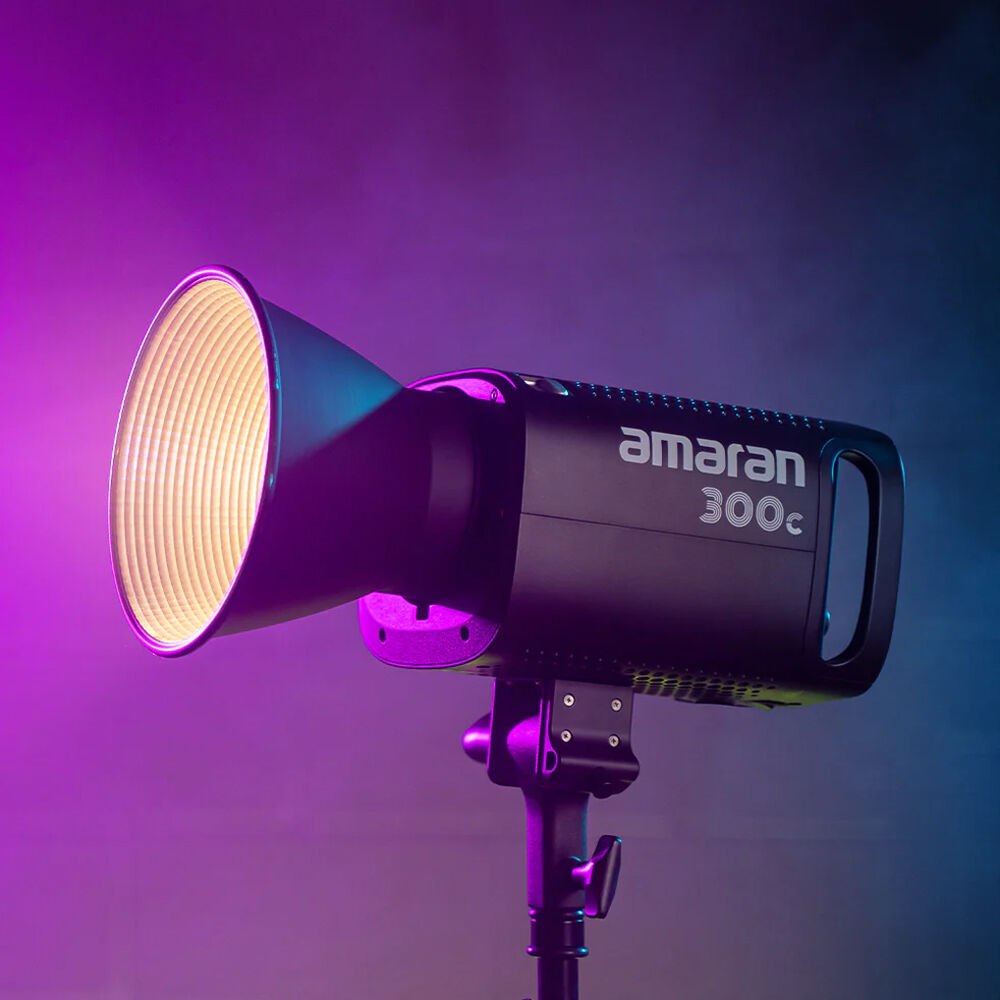
The amaran 300c has a great price, and provides full RGBWW color mixing with a color temperature range from 2500K to 7500K. Output is around 26,000 lux at 1 meter with its standard reflector – perfectly adequate for typical interview setups and as a key light.
The fixture is fan-cooled but offers a quiet mode ideal for dialogue recording.
The caveats? It’s not built to Aputure standards (the amaran is the budget line), so it’s not as tough. Secondly, you’ll need to spend extra for the Aputure Power Station (Amazon, B&H) if you want to operate it on batteries. Lastly, it is actually a 360 Watt light.
On the whole though, if you’re short of cash, you can’t get much better than the 300c. If you want a more professional grade light, get the Aputure LS 300x (Amazon, B&H).
2. GVM Pro SD300C RGB
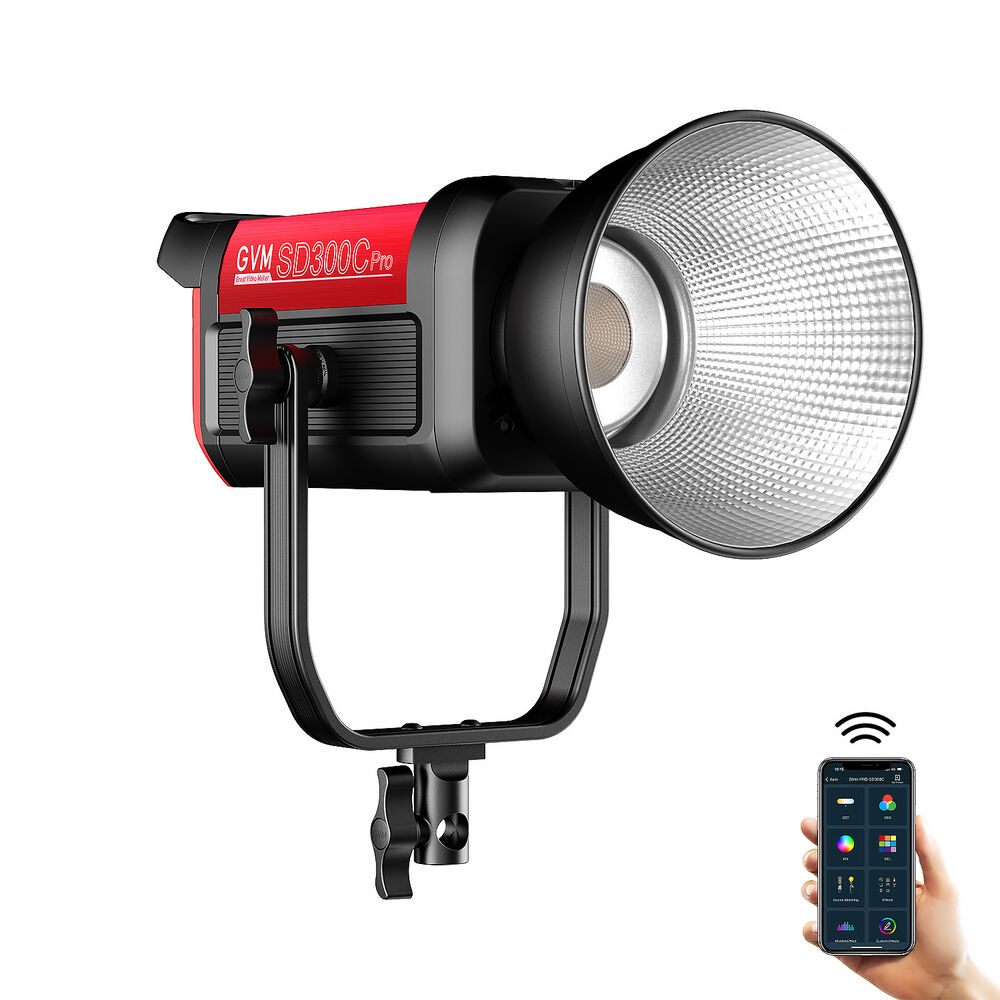
The GVM Pro SD300C (Amazon, B&H) is another affordable RGBWW option, with a better color temperature range from 2000K–10,000K, and full RGB color control. It also delivers greater punch than the amaran at 48,000 lux at 1 meter.
One cool feature, it has four dimming curves: Linear, Exponential, Log, and S-Curve – which is more of an event-thing but can be useful for certain shots. It also has 16 different light effects – party, cop car, hue loop, ambulance, bad bulb, explosion, lightning, candle, TV, CCT loop, pulsing, strobe, fire engine, SOS, fireworks, and paparazzi.
It has a silent mode too, and actually comes it at 300 Watt. Sadly, you need to buy V-mount battery adapters separately, but for the price, it’s a great option.
3. Zhiyun MOLUS B300 Bi-Color
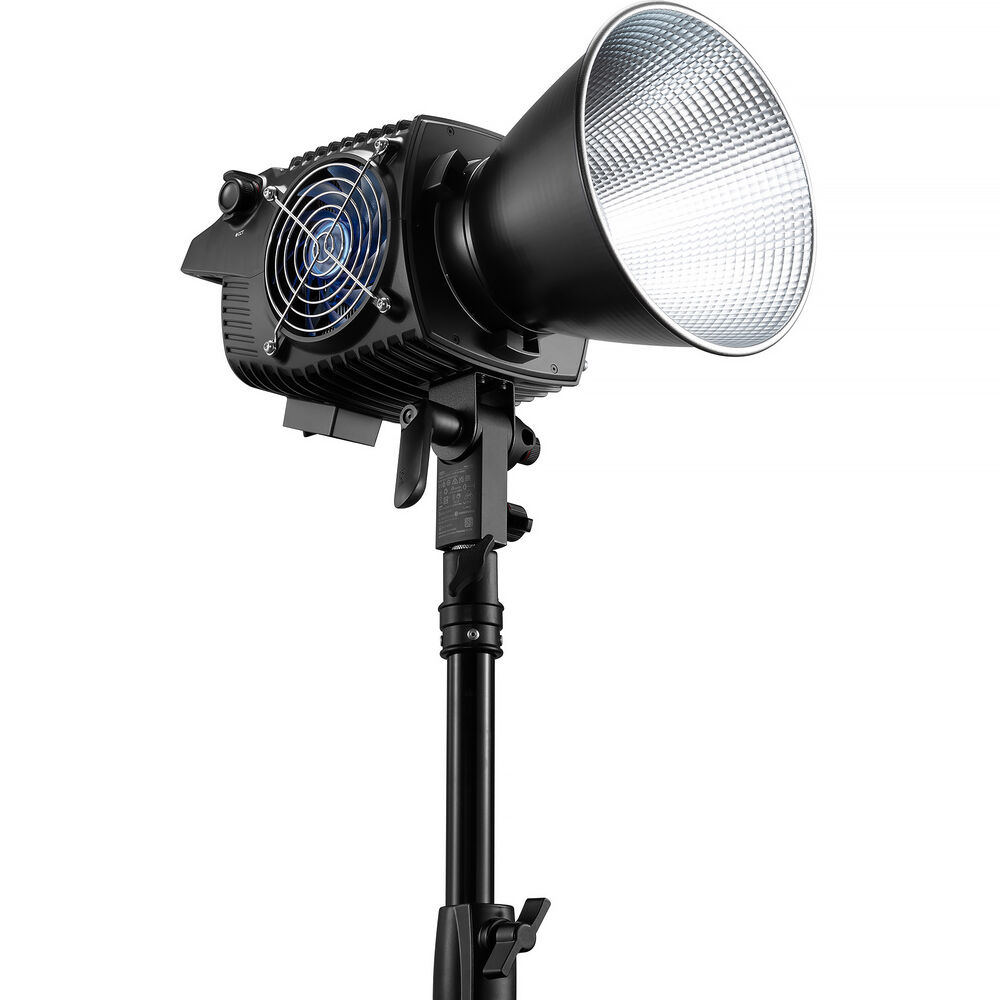
Zhiyun’s MOLUS B300 (Amazon, B&H) is bicolor, but stands out with its exceptional portability, weighing only 4.3 pounds.
It provides up to 63,000 lux at 1 meter, and its passive cooling fins combined with a low-noise fan keep sound levels exceptionally low. It has 13 effects – SOS, paparazzi, faulty bulb, TV, lightning, CCT loop, CCT flash, CCT pulse, flashlight, welding, explosion, flame, and fireworks.
This fixture is particularly suited for solo filmmakers or interviewers frequently traveling or shooting in confined spaces. The extra punch you get for only 300 Watts and a tough body is really practical when you need to run and gun.
The big negative is you can’t run it off batteries.
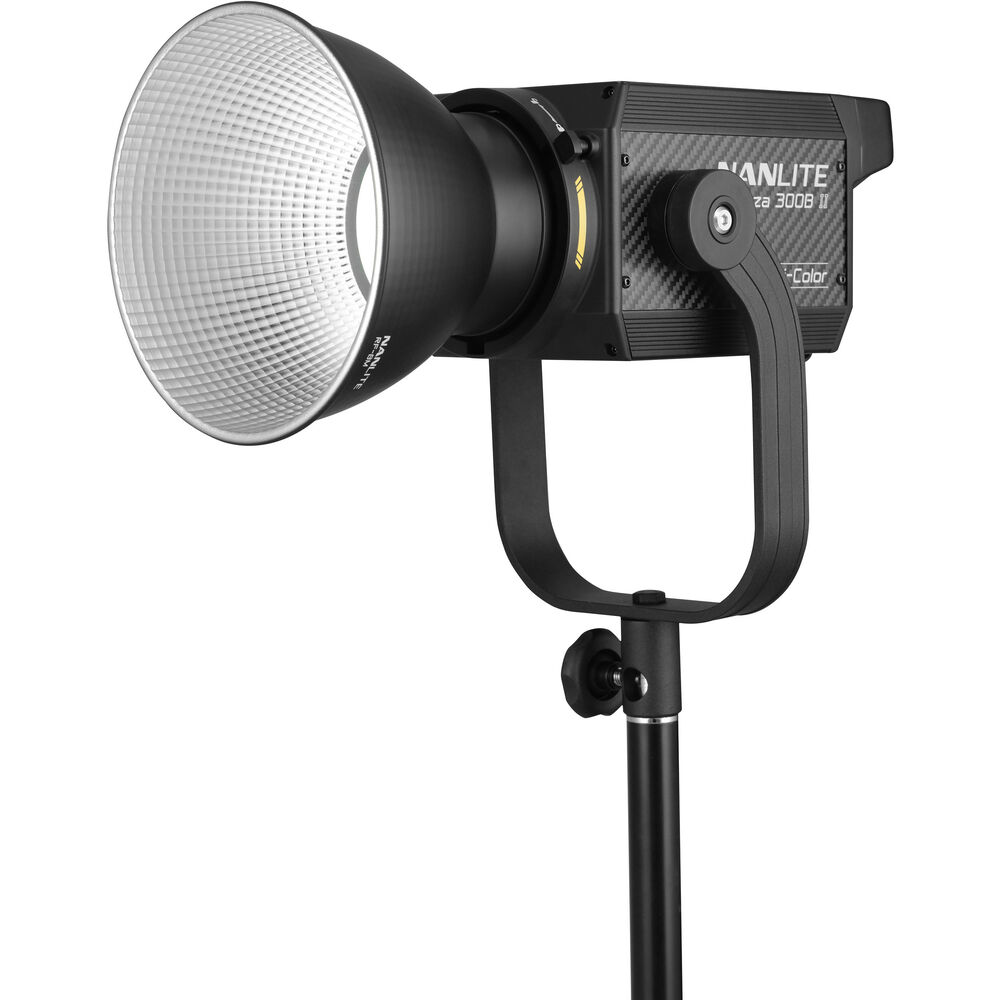
4. Nanlite Forza 300B II Bi-Color
Nanlite’s Forza 300B II (Amazon, B&H) delivers impressive brightness – about 68,000 lux at 1 meter with its included reflector – while maintaining excellent color fidelity. It includes a ±80 green-magenta tint adjustment. Also comes with 12 effects.
Its dual-fan cooling system features a quiet mode below 29 dBA, virtually silent for most interviews. It also separates ballast and fixture, allowing easier rigging overhead or on boom arms. However, it draws 350 Watts.
I’ll be honest, I’m a Nanlite fan, having owned and used their lights in studios as well as in the field under tough conditions. They’re even rented a lot so you’re getting excellent bang for your buck. You’re getting some pro-level features:
- It can run using one or two 14.8V V-mount batteries. The adapter is included in the price.
- 100% brightness using two batteries
- 45% brightness using one battery
- Fanless control unit gets 30% more battery life
- A lock button prevents accidental changes
- Includes a long 19.8′ power cable and a 9.8′ head cable
- Durable construction
If you need a cheaper option as the first two on the list, and with RGB, there’s the Nanlite FS-300C RGB (Amazon, B&H).
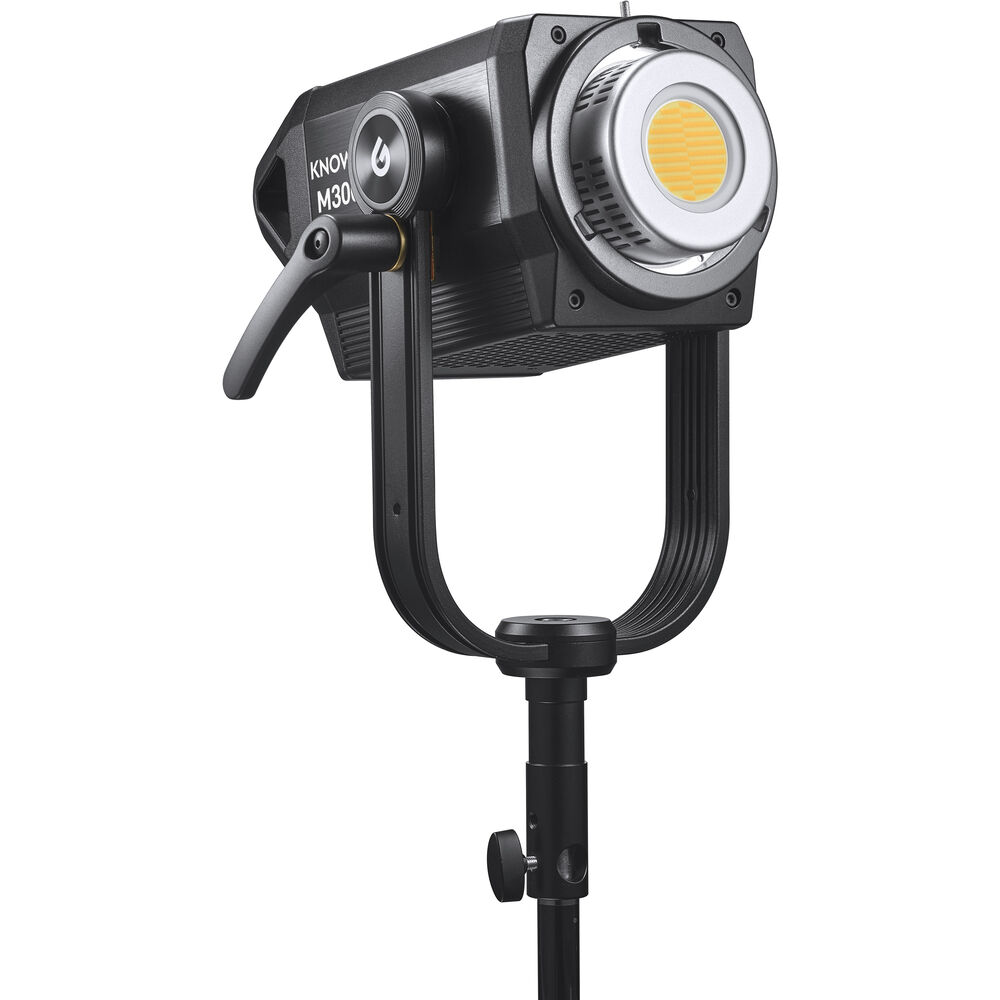
5. Godox Knowled M300Bi Bi-Color
The Godox M300Bi (Amazon, B&H) packs exceptional brightness – 141,000 lux at 1 meter (using its optimized reflector). Its robust metal construction and included hard carrying case make it highly durable for tough location shoots.
It comes with 7 special effects – flash, lightning, TV, broken bulb, fire, firework, and candle.
Cooling relies on a dual-fan system, but noise stays remarkably low, especially in its quieter mode. It’s more expensive than the Nanlite, but draws 330 Watts, 20 Watts lower. It’s a matter of how much power output you need.
If you need an RGB option, Godox has the Godox KNOWLED M300R.
Key Features at a Glance
| Light | Output (Lux @1m) | Noise* | Weight |
|---|---|---|---|
| amaran 300c | 26,000 | ?28 dBA | 5.3 lbs |
| Nanlite Forza 300B II | 68,000 | ?29 dBA | 6.8 lbs |
| Godox Knowled M300Bi | 141,000 | Quiet mode available | 7.5 lbs |
| Zhiyun MOLUS B300 | 63,000 | ?27 dBA | 4.3 lbs |
| GVM Pro SD300C | 48,000 | Quiet mode available | 6.2 lbs |
What about “Heritage” Brands?
The problem is price and availability.
The Mole-Richardson Vari-Junior 300W Bi-Color LED Fresnel relies on an active cooling fan. At around 36 dBA, this can be problematic for sensitive audio setups. It also needs an optional ballast for battery power, pushing total costs and complexity higher. Yeah, just check out the price!
The DeSisti Super LED F10 HP Vari-White Fresnel draws only 230W but outputs similar brightness to fixtures rated at 300W. However, this premium product commands a significantly higher price compared to competitors with similar performance, making it harder to justify.
ETC is an established brand but their fixtures are large and relatively heavy, making it difficult for run-and-gun or quick setups.
The widespread adoption of Bowens mount compatibility significantly enhances the versatility of Chinese brands, making accessories universally accessible and affordable. You can always buy them in stock almost anywhere in the world. And who can fight the price?
I’m not knocking on them. Some brands like Arri still make sense for a lot of productions, but I don’t know if “heritage” brands will be around much longer.
Which One Would I Pick?
It’s an easy choice for me. The Nanlite Forza 300B II (Amazon, B&H) is tough and worth the extra (it comes with a dual-battery adapter). Bi-color is good enough for most practical setups, and I really don’t think paying extra for RGB is prudent for the cash-starved filmmaker.
It’s widely available and can be paired with all their other lights. No brainer if you ask me, especially with my experience with their products.
What do you think?
