
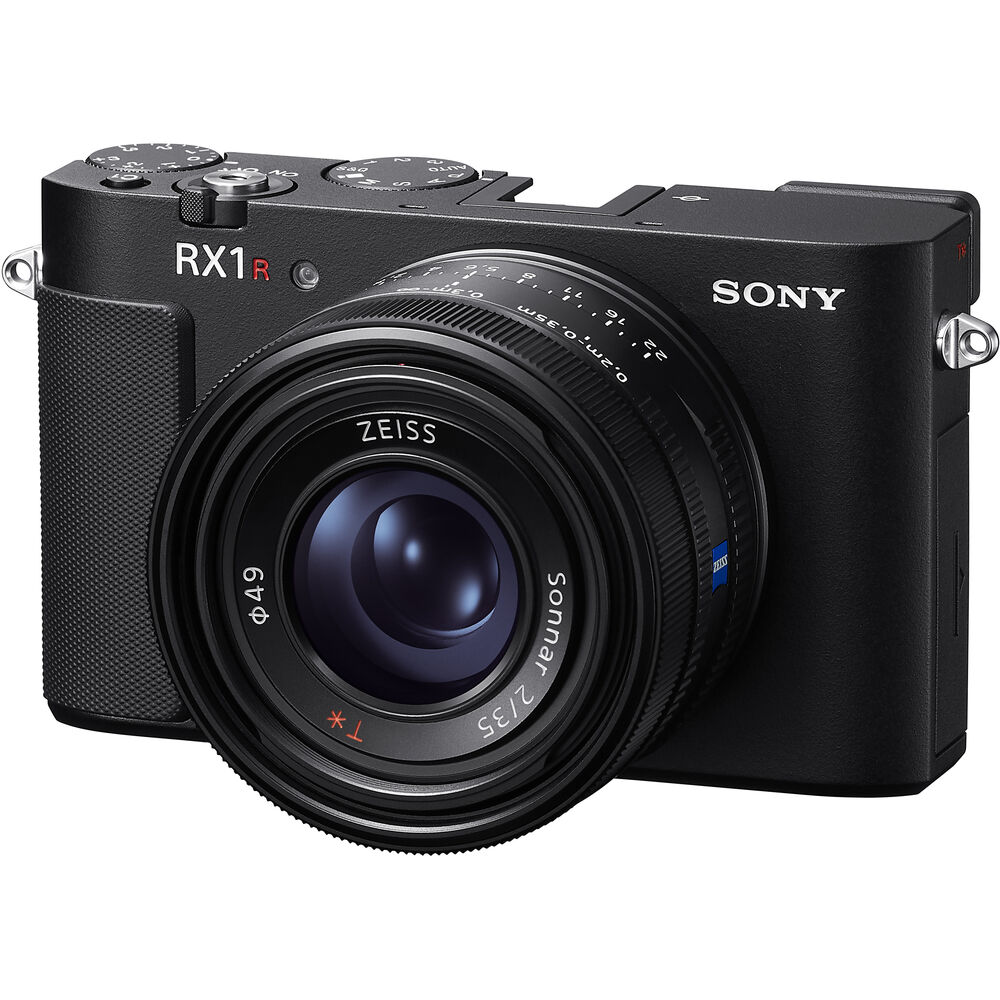
I don’t usually cover photography cameras, but the Sony RX1R III might be pointing to a new direction in Sony’s strategy, and it’s worth paying attention.
The Sony RX1R III is a full-frame compact camera with a fixed 35mm f/2 lens.
It’s primarily intended for a very select niche of photographers – street photographers, documentary and reportage shooters, and amateur enthusiasts with enough money to splurge.
New Features in the Sony RX1R III:
- 61MP sensor (same as A7R V)
- Real-time subject tracking (human, animal, and vehicle detection)
- 4K 10-bit 4:2:2 XAVC-I (only up to 30p)
- In-camera crops for 50mm and 70mm fields of view
- New macro ring around the lens for close focus down to 20 cm
- Fixed LCD touchscreen
- Pop-up 2.36M-dot EVF
- USB-C with power supply
- Uses a larger NP-FW50 battery with a better runtime
Compared to the Sony RX1R II (Amazon, B&H):
- Resolution has increased from 42MP to 61MP
- Added phase-detect autofocus and AI subject recognition
- RX1R II had no 4K
- Touchscreen added (RX1R II had none)
- Real-time tracking and full Eye AF
- Battery upgraded and USB-C added
- Macro functionality now built into the lens ring
- Step Zoom is a new feature entirely
- Body design is more minimal, with simplified controls
These upgrades might seem substantial, except for a couple of facts:
- The RX1R II launched nearly a decade ago – an unusually long gap in product development. During that time, Sony’s full-frame lineup evolved dramatically.
- At $5,099, the RX1R III costs nearly $2,000 more than its predecessor at launch.

How Good Are the Updates, Really?
There’s no doubt that the RX1R III benefits from Sony’s latest technology. The 61MP back-illuminated sensor is excellent. The AI-based autofocus system is fast, reliable, and class-leading. Subject recognition is great. On paper, it matches or exceeds what most hybrid shooters would need.
But – the value of these upgrades begins to look shaky when you examine Sony’s existing lineup
The Sony A7R V (Amazon, B&H), for example, shares the same 61MP sensor, engine, and AI subject detection system. It adds in-body image stabilization, a fully articulating screen, better EVF, dual card slots, and a far more flexible interchangeable lens system – all for roughly $1,200 less than the RX1R III.
The Sony A7 IV (Amazon, B&H), priced even lower, delivers a respectable 33MP sensor with excellent dynamic range, real-time Eye AF, in-body stabilization in a larger but more versatile body.
So while the RX1R III is technically impressive, it doesn’t offer anything exclusive that isn’t already available in other Sony bodies for less. What it does offer is compactness and a fixed-lens, so let’s talk about that.
Same Lens, or Slightly Reworked?
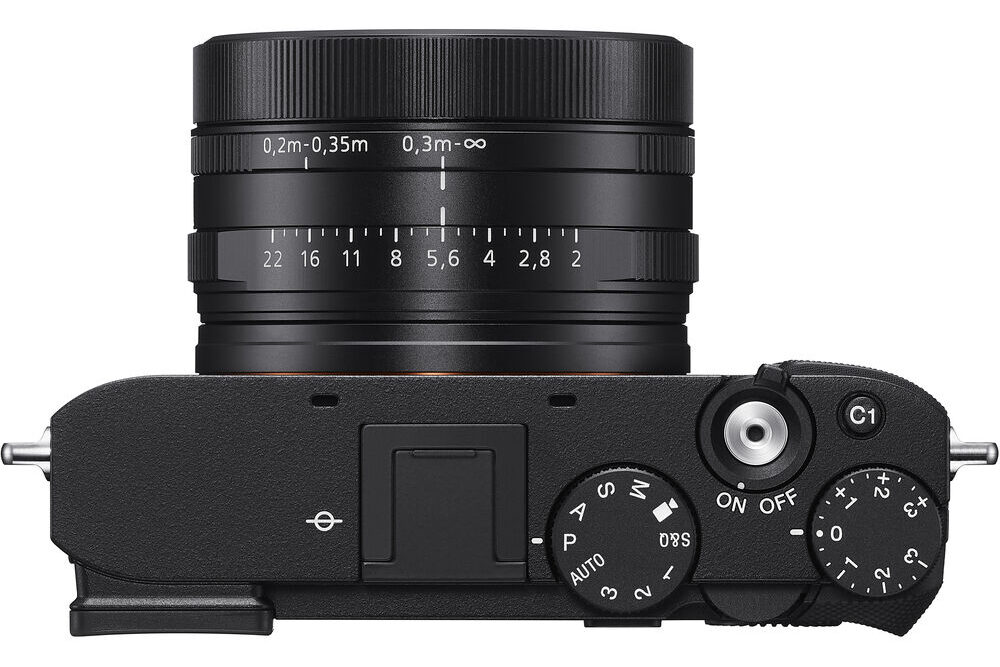
At the heart of the RX1R III is a 35mm f/2 Zeiss Sonnar T* lens, the same focal length and aperture used in the original RX1 from 2012. It’s a strong design known for its sharpness and bokeh.
However, Sony hasn’t clearly stated whether the lens is optically redesigned. What they have said is that the lens has been “micron-adjusted” to match the new 61MP sensor.
That likely means tighter manufacturing tolerances and subtle calibration improvements – not a new optical design. The physical design appears unchanged, including the same aperture ring, macro switch, and physical dimensions.
What’s worse, it remains a non-stabilized, manual-focus-by-wire lens with a minimum focus distance of 20 cm in macro mode.
In short, I would bet this is not a newly developed lens for all practical purposes.
Is There a Better Deal Out There?
Why don’t we check? Here’s a comparison table showing selected Sony camera bodies with an equivalent or better lens:
| Camera | Body Cost | 35?mm f/1.8 Lens* | 35?mm f/1.4 Lens** | Combined Cost (f/2, f/1.4) |
|---|---|---|---|---|
| Sony?a7R?V | $3,798 | $798 | $1,498 | $4,596, $5,296 |
| Sony?a7C?II | $2,398 | $798 | $1,498 | $3,196, $3,896 |
| Sony?a7?IV | $2,398 | $798 | $1,498 | $3,196, $3,896 |
**Sony FE 35mm f/1.4 GM lens
All prices are from B&H at the time of writing. It might be different in your area.
You can get a better camera and lens for the cost of the RX1 III, or even lesser. You still have extra money left over for lenses, or even a trip.
Does the RX1 III have any advantage? Yes – weight. It’s about half the weight, but also about half the features for the same price. If you are already catering to a niche audience, now the niche is even smaller – photographers who want a fixed lens but also can’t handle 250-500g more in return for less versatility and features.
It just doesn’t make sense. Sony typically avoids cutting corners in flagship models, especially when it comes to optics. Japanese engineering is known for iterating quietly but deliberately. So while it’s unlikely this is a “cash grab,” it does feel like a misstep.

What Does This Say About Sony’s Strategy?
The RX1R III is a curious release. The FX series, a7 line, and ZV lineup are all examples of feature-rich cameras priced sensibly.
The RX1R III feels like a break from that philosophy. Instead, it seems targeted at a low-volume, high-margin niche.
There’s a lot of Internet-chatter that this camera targets Leica buyers.
I can tell you something anecdotal from my own experience though. When I started out I yearned for a Leica M camera. I couldn’t afford it (thankfully). Even after owning many cameras the urge never went away. Then, Sony released the a7S, and overnight my desire for a Leica just vanished – never to return.
A Leica M with a similar lens is easily twice the cost, so if Sony is targeting any Leica buyer, it’s a Leica Q3 buyer. The Q3 is also a full frame camera with a Summilux 28mm f/1.7 ASPH. lens. It costs more than the RX1R III, but offers 8K video, a wider lens and aperture, Prores HQ, and a tilting LCD.
Leica sells heritage, exclusivity, and a tactile experience that has little to do with pure specs. Sony sells performance, innovation, and flexibility – but the RX1R III falls behind in even that compared to the Q3. It’s hard to see why someone would choose the RX1R III over the Leica Q3, even if they own Sony cameras or lenses (which you can’t use).
If Sony steps too far into luxury pricing without the corresponding philosophy, it risks alienating core users who have come to expect more for less.
I’m pretty sure Sony knows all this. But it priced the camera at $5,000 anyway.
There’s also the question of timing. Ten years between updates signals either hesitation or low strategic priority. If the RX1R II had sold like hot cakes the update would have come a lot sooner.
If the RX1R III was built for prestige rather than broad adoption, that would explain the price and the modest evolution. But it could also mean that future compact cameras may follow this strategy: fewer units, higher prices, and a tighter focus on build and branding over utility.
To be honest, even that logic doesn’t make sense. If ten years have passed, then clearly nobody is clamoring for a new model, so why do it? Surely Sony had to know it’s a losing proposition – even the most basic levels of market research would have told them that.
How about we look at it from another angle: Are fewer people buying cameras? Is this in response to a scenario that’s a scary thought for any manufacturer?
I understand tariffs and silicon availability and all that jazz – but the launch price is about the same worldwide (cheaper in Japan). The underlying problem might be that cameras aren’t selling like they used to. I feel Sony is testing the waters because it has no clue what the next big camera will, or should, be.
Maybe they don’t want to sell too many of this model.
The Sony RX1R III seems like a highly capable tool, and likely a joy to use in the right hands. But for $5,099, I would not recommend it to anybody. To put it bluntly, even at $3,500 the camera is nothing more than a token upgrade.
Sony could have:
- Released it with a 100 MP sensor,
- Or an f/1.4 lens, or
- with a weight so ridiculously light it becomes a watershed statement.
They did none of that. And I think that’s a bad sign for everybody.
What do you think?

It’s got practically no market but if it was a rich mans toy (and there is some marketing vibe that way) you would have expected a luxe campaign and there’s none of that.
But it doesn’t necessarily reflect Sony Camera going off the rails. I’ve worked a lot (and still do) for corporations and what one division or line are doing (including screwups) may simply reflect that lines attempt to make itself internally relevant again but at delivery it didn’t get the launch support it hoped for – either due politics or SC thought it wasn’t work the cost but not worth pulling either.
Like you said feels like a miss and an obvious one in retrospect.
Yes, I don’t understand why they didn’t go all out on the luxury – exotic materials, leather – anything to make it stand out. You might be right.