
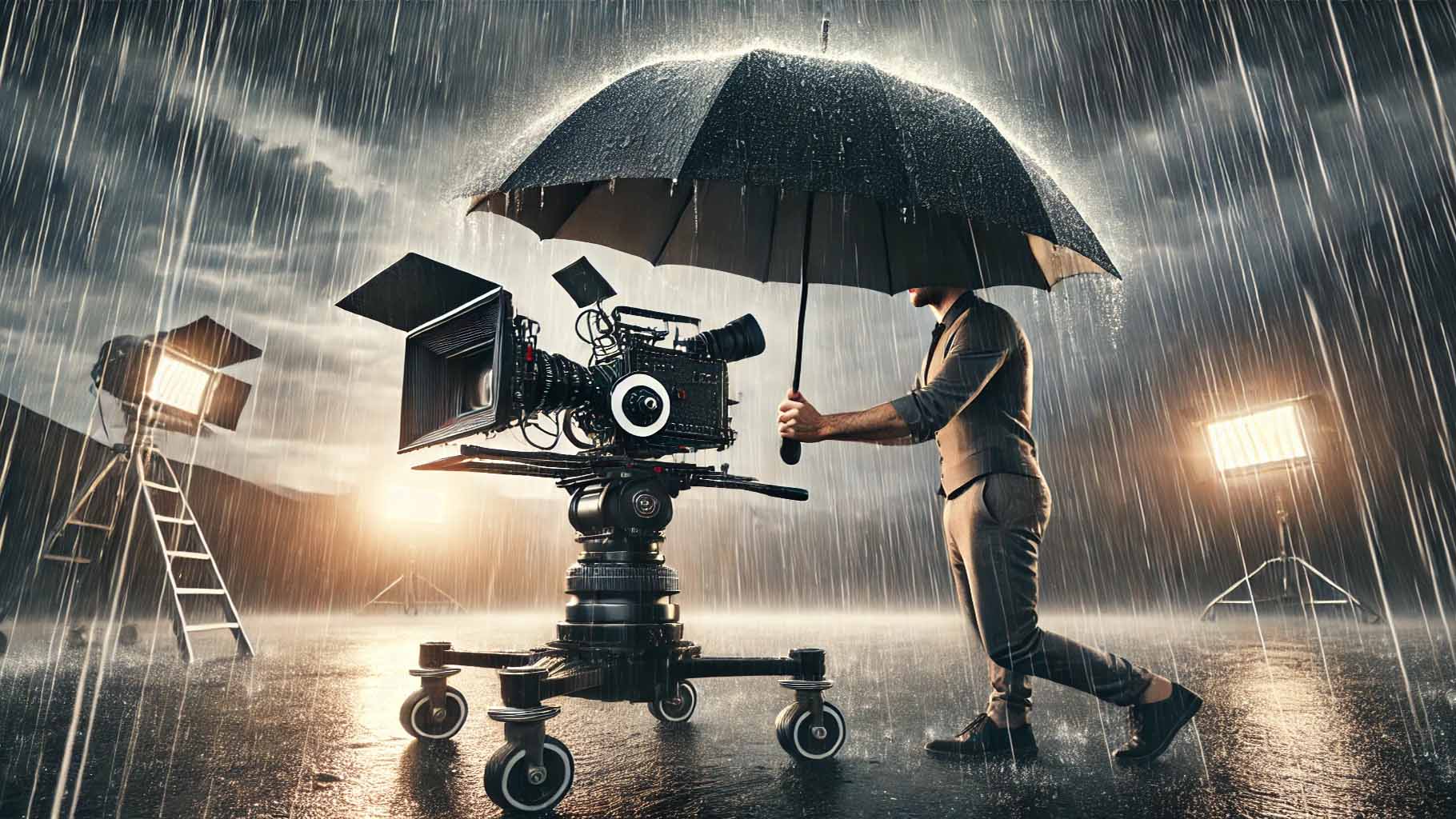
Professional camera gear isn’t designed to sit in a glass case at home. It’s made to be used, often in tough conditions. While professional equipment usually comes with some weather protection, it might not always be enough.
On the other hand, consumer or prosumer gear, when exposed to the same wear and tear, requires extra care to keep functioning.
You need some protection to extend the longevity of your gear.
This article will guide you on how to protect your equipment and ensure it returns home in the same condition you took it out.
Important: This article is for information purposes only. You are responsible for your own actions. When it doubt, refer to the manual or repair center for your gear.
Use this menu for quick access:
- Understanding the weather ratings on cameras and gear
- Constant Conditions:
- Varying Conditions:
- Camera Material and Construction


How tough are camera bodies?
Professional camera bodies are tough, usually made of stainless steel or magnesium alloy and plastic, and is treated to be resistant to corrosion.
However, there are always ports, lens mounts, battery compartments, card slots, etc. that are weak links in the overall weatherproofing design. So, over and above a weatherproofing body, there are weather seals.
More expensive camera bodies are expected to perform under the toughest conditions. The limits are almost always publicly displayed on the specifications page.
Let’s take a look at that.
What are the weather ratings of camera bodies?
You might be surprised to know that professional cameras are typically rated at:
- 0°C-40°C (32°F-104°F)
- Humidity – Less than 85% (no condensation)
Here are the numbers from a few popular cameras:
| Camera | Operating Temperature | Storage Temperature | IP Rating | Max. Humidity* |
|---|---|---|---|---|
| Arri Alexa 35 | -20°C-45°C (-4°F-113°F) | -30°C-70°C (-22°F- 158°F) | IP 51 | 95% |
| Red Raptor X | 0°C-40°C (32°F-104°F) | -20°C-50°C (-4°F-122°F) | n/a | 85% |
| Canon EOS R1 | 0°C-45°C (32°F-113°F) | n/a | n/a | 85% |
| Sony FX3 | 0°C-40°C (32°F-104°F) | -20°C-55°C (-4°F-131°F) | n/a | n/a |
| Sony Venice 2 | 0°C-40°C (32°F-104°F) | -20°C-60°C (-4°F-140°F) | n/a | n/a |
| Blackmagic Design PYXIS | 0°C-40°C (32°F-104°F) | -20°C-45°C (-4°F-113°F) | n/a | 90% |
Nobody currently guarantees 100% weather protection. To expect it is foolishness.
For this purpose, professionals resort to camera protection. Different conditions require different methods of protection.
I’m going to divide this article into three groups:
- Constant Conditions – when you have constant weather, good or bad.
- Varying Conditions – situations where the weather is unpredictable, and non-negligible changes are expected during a single day of shooting.
- Camera Material and Construction – different materials and how they react under different weather conditions.
Constant Conditions
Rain
Rain begins as water, but by the time it lands on earth it might have reacted with gases in the atmosphere and become decidedly acidic, alkaline or basic. It isn’t as bad as concentrated chemicals, of course, but constant abuse will strip away the outer coating of your camera, no matter what it’s made of.
Let’s assume it’s pure water. What could possibly happen? Water can seep through the imperfections and reach the inner circuitry. Water damage isn’t usually covered by the warranty, and even if it were, how do you go about testing it?
It’s obvious the camera has to be covered with something. This cover must be light, cheap when compared to the camera, and must not interfere with the operation in any way.
Is there such a thing? Not really!
Here’s what a professional rain cover looks like:
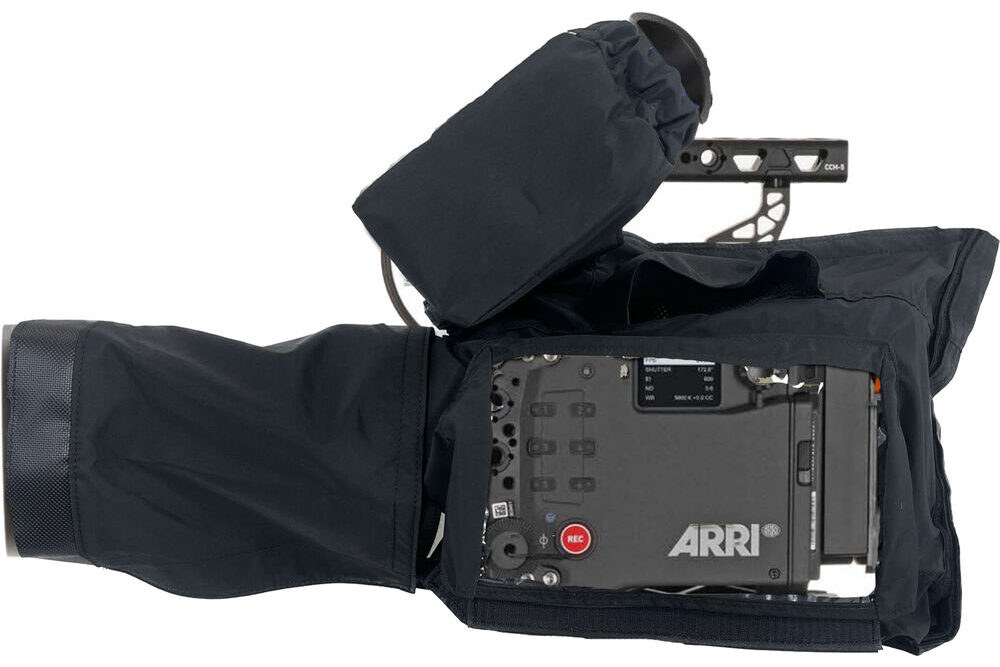
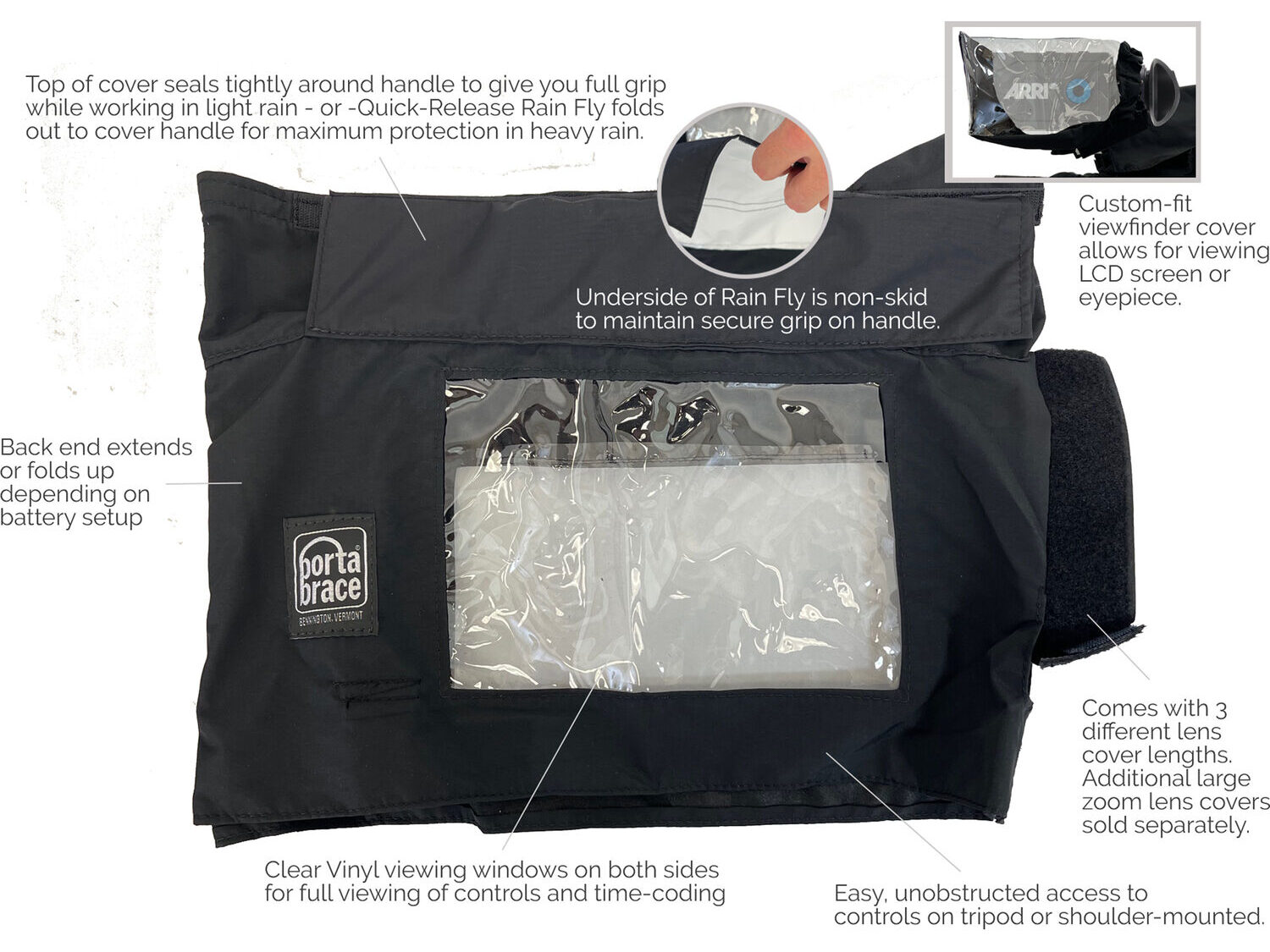
The great thing about modern camera bodies is that they can easily handle the typical drizzle or shower. However, stay away from heavy rain or rain showers caused by rain machines.
There are too many weak links for water to seep into – you cannot plug every one of them without a full cover.
Sub-zero temperatures
Most weather-sealed professional cameras should work temperatures below freezing point, but only the Alexa 35 (in the above table) is rated to work till -20°C (-4°F).
If cameras couldn’t handle the cold, most of Europe, North America and Russia wouldn’t have any live broadcasts or filming during the winter!
Professional-grade mirrorless cameras are used at -40°C without issues, and most high-end cinema cameras can be stretched to about -30°C.
As long as the temperature is constant and the camera is used at a constant rate (to keep the temperature generated by the camera constant), it shouldn’t pose a problem.
The camera can weather the elements a lot better than the human body can!
However, you can’t do much if your camera doesn’t want to operate after a certain point. Worry about your batteries more, and keep equipment stored in padded bags.
Within the operating range, though, the camera can stay ‘naked’ – as long as it’s not snowing. If it is, run for cover. Not only is your camera in danger of being exposed to condensation, but might also be in physical danger if what is falling happens to be hail.
Tip: If you do happen to be shooting at -20°C or so, please carry eye-piece warmers, otherwise your breath might freeze on the viewfinder and make shooting hell.
Heat
There are places on earth that have never seen snow or sub zero temperatures. These places are usually unlucky enough to see the other extreme – temperatures that can reach 50°C and higher. If the internal heat generated by the camera helps it in cold climates, it makes it worse in hot climates.
The human body is better suited to high heat than the camera sensor circuitry. Heat also reduces the viscosity of lubricants within the lens, camera assembly, etc.
What do you do? You could hug the camera to stabilize the temperature, but this isn’t practical.
Higher end cameras have internal cooling fans. When things get really out of hand, you could use a handheld fan or blower, or a wet cloth (not dripping) dipped in cool water.
However, the best way to cool the camera in heat is a large parasol or the shade.
High humidity
The rated maximum relative humidity of most gear is 85%. Most of them can be stretched to about 95% if the change isn’t very drastic. The weather sealing on a camera body stops large particles, but it can’t stop air and water vapor.
Humid air can easily enter and come in contact with camera circuitry.
Condensation will not occur even when the humidity is 100%, as long as the temperature remains constant. However, at such high humidity, even a small variation in temperature (which is bound to happen many times during the course of the day) can cause serious havoc. It’s not something the camera can recover from.
If you’re working indoors or in a controlled environment, you could use dehumidifiers.

When storing gear, always use desiccants (Silica Gel).
Silica gel can adsorb 15% of its weight in water vapor in a couple of hours. Instead of using one big sachet, buy smaller sachets to increase the surface area of absorption.
As a general rule of thumb, in a hermetically sealed box (no air can get in or out), 5 grams of silica gel are required per cubic foot of the box’s volume. The actual calculation is quite complex and depends on many variables, so it is always a good idea to add a little more than required.
When outdoors, there’s nothing practical that you can do that’ll work at 100% humidity. Some things you could try:
- Use weather proof lenses
- Don’t change lenses, filters, cards or batteries at all
- Wipe your gear regularly, but not so much that it causes a temperature change!
- Don’t try a ziplock bag. Unless you want a cheap extra filter for your lens.
- Wipe your hands often
When storing gear in humid places (usually close to large water bodies like seas or lakes, etc), use a de-humidifying cabinet (Amazon, B&H):
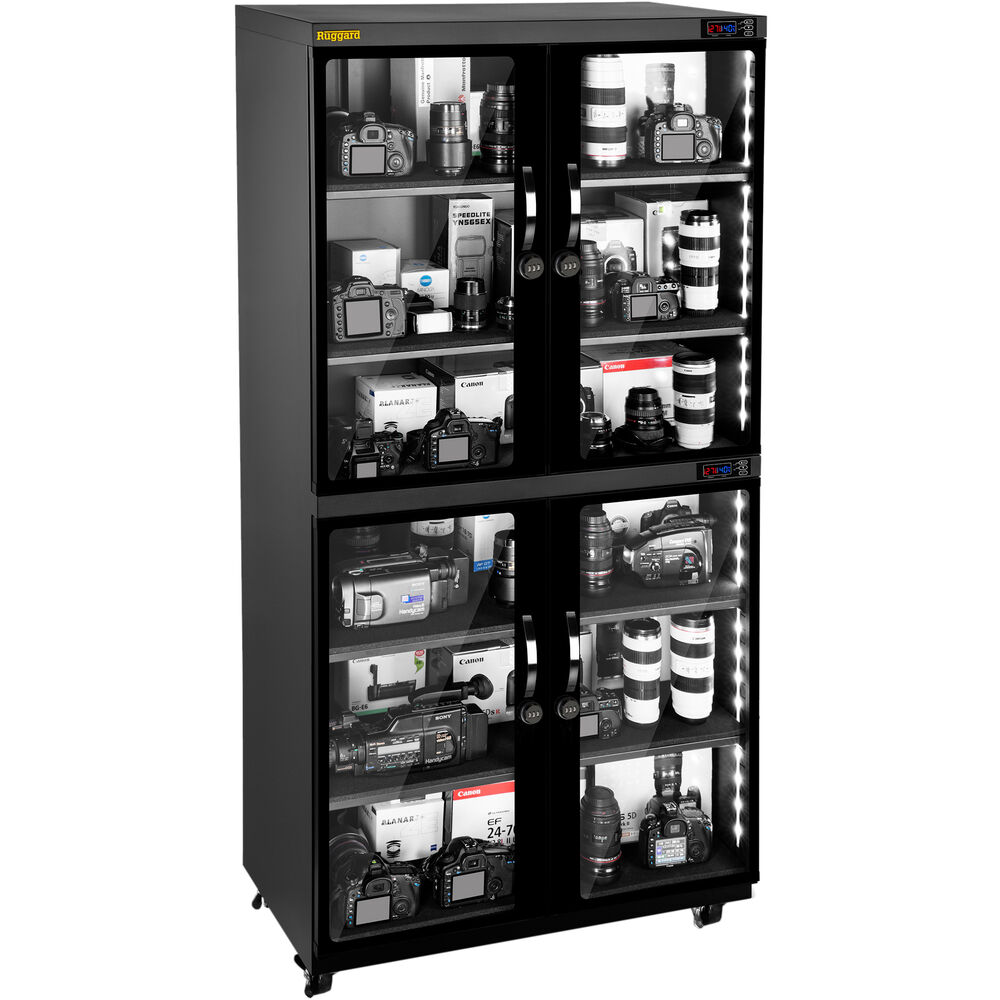
Lesson? Stay away from high humidity if possible.
What about Low humidity?
Low humidity also affects gear. The human body needs at least 20% to stay comfortable. What happens when there’s no moisture in the air?
- It gets dry, and there are lubricants in your camera that need the moisture
- Static electricity becomes a serious concern
Just like cold dry air can crack skin, it can also impair the functioning of lubricants in your lens, shutter, etc.
Static electricity is more serioius. It builds up when air becomes drier. All it takes is for something (like your hand) to touch your gear, and – say goodbye to your camera circuitry.
Usually, cameras are rated at a minimum of 25% relative humidity. If your working environment has humidity lower than this, try a humidifier.
When storing gear at low humidity levels, you’ll be better off using sophisticated anti-static devices like an Anti-Static Wrist Strap.
Snow
Ideally the same rules apply for snow as for rain. Water droplets, being more viscous, will ‘stick’ to the gear. Snow should just fall off, being much drier. A plastic sheet wrapped around the lens is all you need, or you could go for a rain cover.
Wind
When I mean wind I don’t mean a soothing romantic breeze. I mean at least an 8 on the Beaufort scale. That’s about 72 kph or 45 mph minimum. A life-threatening situation is an 11 on the Beaufort scale (108 kph or 67 mph).
Are there any serious concerns that need to be addressed when working below speeds of 10?
Yes.
If you are recording sound, even small winds will ruin your day. For microphones, you need windscreens.
For slightly stronger winds, you can protect yourself with a Beach Umbrella.
For stronger winds, you’ll need an emergency shelter tent:

At really high winds, the wind speed might match the resonating frequency of your tripod setup, and cause vibrations while recording.
Tip: never protect yourself from only two or three sides. You will be creating a wind tunnel and make it worse. If you leave only one side open, you will create an outward pressure on you and your equipment.
It’s one side or all sides. Remember that.
Dust or Sandstorm
Sand and dust is dangerous, not only for your gear but also for you. You have no choice but to fully wrap everything. Consider the tent or rain cover (which is usually good enough for dust as well).
To protect yourself, you’ll need:
Tip: If you are caught in a sand storm, stop and get to high ground. Cover everything and wait.
Industrial Dust
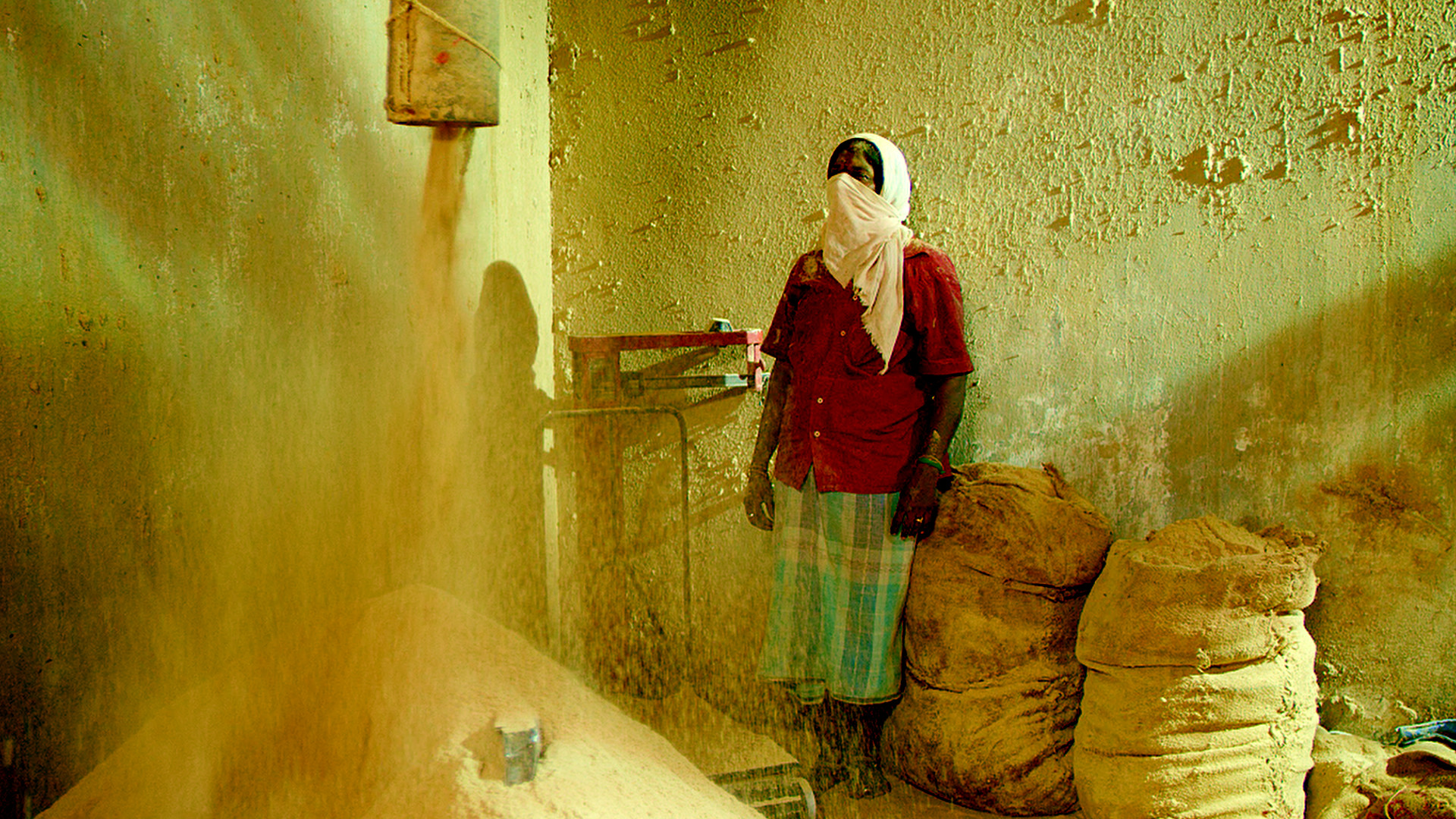
Industrial dust can be deadly. Different chemicals react to gear components differently, and corrosion is the greatest threat. Protect your gear with dust proof gear, and protect yourself with goggles and masks.
To wipe your equipment and yourself clean, you will need Microfiber Cleaning Cloths.
Before you get into an industrial environment, know what you’re dealing with. Is it fine metal particles? Is it chemicals? Is it radioactive or toxic? Is it corrosive? Is it poisonous or allergic?
When in doubt, follow the safety precautions recommended by the safety engineer or safety manual for that particular environment.
Volcanic ash is also a special kind of dust, and is not something to take lightly. It can be abrasive and chemically corrosive.
Tip: Always vacuum to remove dust and ash. To clean up residue, it is first good to moisten it a bit, but too much moisture can make it stick rather than come off. When in doubt, send in the gear for professional servicing.
High Pressure and Underwater Environments
Waterproof cameras can be submerged in a bath tub or swimming pool – though you wouldn’t do that with professional gear unless it is housed in waterproof gear.
There are two scenarios here:
1. Sea level to 150 feet
You need an underwater housing solution for your particular camera. Good products must support at least up to 150 feet:
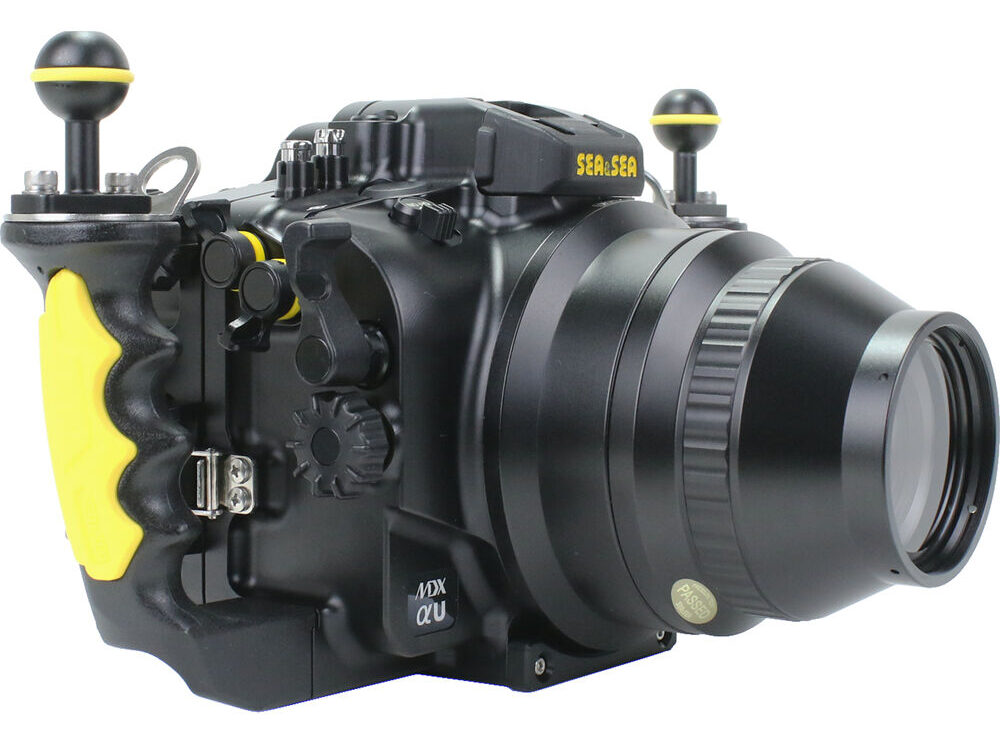
Professional underwater solutions also account for lighting, monitor, battery and cable support among other gear.
2. Deep sea diving
You’ll need a custom-made rig in a pressurized mini sub.
Mist and Fog
Mist and Fog are water particles suspended in air. It is fog if the visibility is one kilometer or less. Otherwise it is known as mist.
For misty conditions follow advice as outlined under high humidity. For fog, follow rain protection guidelines.
Haze
Haze is dust, smoke and other particles suspended in air. If it is brownish it is haze. Follow advice for dust protection.
Airport Scanners and Radiation
Airport Scanners have negligible effects on gear. It isn’t something you can completely control.
Solar phenomenon effects on cameras during air flights are negligible for infrequent fliers. Frequent fliers can ‘ship’ their gear instead, but there’s nothing else that can be done reliably. Cosmic radiation doesn’t affect most commercial flying.
Radiation affects everything. It can ruin your sensor, but if you are in such an environment, your gear is the last thing you should worry about. Anyway, to shield from radiation, especially particle radiation, use a dense material – the denser the better. The traditional material used is lead.
Other acceptable materials are steel and concrete, but you need a greater thickness. Any material will shield from radiation, as long as it is thick enough to absorb it.
Lightning
Cameras cannot usually withstand direct lightning strikes.
However, most cameras can withstand minor secondary voltages due to the large electromagnetic fields produced by a lightning strike in close proximity. But there are limits.
To take care of secondary voltages, you need a surge protector between the power supply and the camera.
You need to properly ground the camera but a camera in motion is not likely to have proper earthing protection.
The best that can be done, is to get into a car and wait. For your gear, a properly grounded metal container should protect your equipment, but who has those ready for a stormy day?
That’s it for constant weather conditions.
Now let’s deal with varying weather conditions, where a change is sufficient enough to create problems of its own.
Varying Weather Conditions
From cold to hot or humid
Why do glasses fog up instantly when you step outside?
When water vapor in the air come into contact with a cold surface, it condenses into water. Water, being a sufficiently viscous liquid, sticks to surfaces. This is dew.
A quick wipe can, in most instances, solve your problems – the key is to:
- Not let water come in contact with internal circuitry.
- Not let water stay on the gear, which may cause corrosion.
Can condensation be prevented at all? Yes.
What you want to know is the ‘Dew Point’.
What is the Dew Point? The temperature at which the outside water vapor will condense is the dew point. For human comfort, the dew point should ideally be less than 20oC (68oF).
There are many places on earth that have constant humidity levels far higher than this, sometimes about and over 90%. At these levels the dew point is greater than 26oC (79oF).
If your gear is in an air-conditioned environment at 21oC (70oF), and the temperature outside is 40oC (104oF) with a dew point of 26oC (79oF), you are sure to get dew on your gear as soon as you step out.
There are apps out there that claim to tell you the dew point in your location – but no weather service can tell you the exact values of the location you are in. The only reliable way is to use something like an Anemometer and Humidity Meter.
In any case, the idea is to keep your gear at a temperature equal to or above the dew point.
How is this done without a meter?
For one, switch off the air-conditioner if possible an hour before leaving. If you have no control over the air-conditioning, then try opening the windows slightly and let the temperature stabilize slowly. If you are in a difficult situation with no control, use thermal blankets.
As soon as you finish shooting, put your gear in your bags, and wrap them while it’s still warm.
For most gear, though, if dew settles down, don’t freak out. Just wipe them off immediately with Microfiber Cloth.
Try to get your gear into direct sunlight, and remember not to switch on your gear until you are certain it is completely dry.
From Hot to Cold
Condensation also happens when you go from hot to cold climates. This is a more dangerous situation. Here, the warm air is inside you gear, and might also condense inside.
Before you step into a warmer area, seal your gear with Big Ziploc Bags.
Also throw in silica gel to absorb any moisture.
Don’t forget to organize your gear in separate bags – bags within bags offer better protection for critical components like batteries, memory cards, etc.
Once you are inside a warmer room, wait for a few hours and slowly open your gear. The idea is to keep your equipment warmer than the dew point.
Long Term Storage
How is storage a varying weather problem? When you have to store your gear for years while the world changes outside, the change might impact your gear. The cheap way to store gear is in air-tight plastic containers with desiccants thrown in.
But this isn’t really ideal for a lot of gear. For proper control, you need something like a dry storage cabinet.
Dry cabinets come in various sizes. They usually have in built hygrometers for automatic control. Just to be sure it isn’t broken, you can throw in Wireless Weather Station.
The idea for long term storage is to keep the enclosure moisture-free, at a constant temperature and humidity, with a pressure close to sea level.
If you are extra paranoid, you can throw in a lead or concrete vault and store everything underground!
To electrically isolate your gear you can use Faraday cages.
Salt, Sea Water, Sweat and other chemicals
Prevention is the key here. Most salts are good conductors and can short circuit internal electronics. Chemical solutions, like alcohols or acids, are to be avoided – unless you like camera cocktail.
What do you do if your gear comes into contact with salt water? First, switch off your camera and remove the batteries IMMEDIATELY. Also remove cards and any other accessories or attachments.
From this point on you have the following options:
DIY (at your own risk!):
Wash your gear with fresh water and leave to dry for a few days (but not in sunlight). If you have a reliable refrigerator you can dry it there. Keep the batteries separate.
Professional Cleaning and Repair
The only reliable option.
Under no circumstances should you continue to use gear once it has come into contact with salt water or sweat. In either case your batteries, LCD screens, etc are the most vulnerable. Especially the batteries. Salt water corrodes batteries. And, most batteries are not waterproof.
Get a rain cover if you know you’re going to be in proximity to sea water.
Mechanical Forces
Gear gets dropped, sometimes from a great height. It also gets knocked about.
Most professional padded bags made of cloth protect gear from small jolts and falls, and are usually weatherproof as well. But nothing offers as much protection as a storm or heavy duty case.
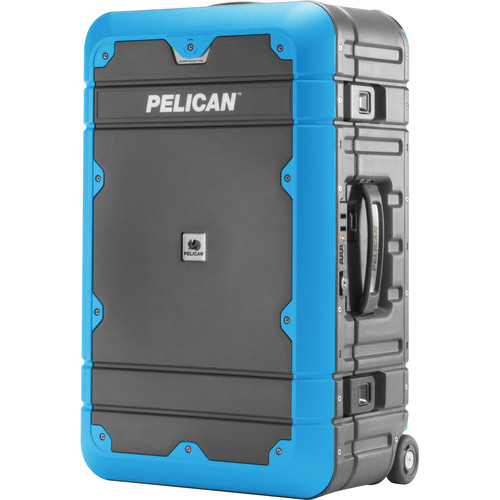
Always use the best quality foam, with a minimum thickness of two inches for best protection. Don’t rely on cheap brands. Even though they might use the same materials, it is the engineering and expertise that makes the difference.
If it is well-engineered, the loads are distributed ‘around’ the gear.
That’s it for varying weather conditions.
Now I’ll try to outline some important properties of common materials used in the construction of professional audio and camera gear. This part is more technical, and might not be completely useful.
Camera Material and Construction
Magnesium Alloy
What it is
Magnesium is the lightest structural metal, and magnesium alloys are alloys in which the primary component is magnesium.
Strength and Weight
Magnesium alloy is used when weight is of greater importance than strength. Its strength is comparable to steel alloys, so no major compromises in strength are made. Due to its low density, its strength depends on its thickness.
Against temperature
Its strength reduces as temperature increases. But, within the usual rated temperature range of most professional gear, which is about -10oC to 40oC, it shouldn’t affect performance.
Against Corrosion
Most magnesium alloy bodies are coated to resist corrosion. It performs similarly to steel against corrosion. Salt water is its nemesis.
Silicon
What it is
Silicon is an element, and when used in electronics, it is more than 99% pure.
Strength and Weight
Silicon cannot withstand great stress while used as wafers. It has to be protected against dust or glass particles or the surface might get damaged.
Against temperature
Silicon is a good conductor of heat, and therefore should be protected against high temperatures.
Against Corrosion
Being a semiconductor, contact with water or salts is suicide, especially while in operation.
Copper
What it is
Copper is a metal that is extremely ductile – which is why it is used in wires.
Strength and Weight
It isn’t very strong, and is mostly used in cables and connectors.
Against temperature
It isn’t very resistant to heat, and needs to be protected from it with shielding.
Against Corrosion
Copper does not react with water, but corrodes just being in contact with the atmosphere. You might have seen the green coatings that form on old copper structures. To prevent this copper is usually mixed with other materials to form alloys.
Steel and Stainless Steel
What it is
Steel is an alloy made by combining iron and other elements, usually carbon. The most commonly used type of steel for electronics is stainless steel. It is a type of steel that has a percentage of chromium in it.
Strength and Weight
Steel is very strong, with the disadvantage that it is heavy as well.
Against temperature
Steel is perfectly fine for normal operating temperatures.
Against Corrosion
Stainless steel is highly corrosion-resistant, and this is one of its strongest properties.
Plastic
What it is
Plastic is usually made from organic materials, but can also be mixed with inorganic materials to give it a wide variety of properties.
Strength and Weight
Consumer plastic is usually brittle and unreliable for heavy loads. However, plastic mixed with carbon fiber or other such materials increases its strength dramatically. There are endless possibilities due to which it becomes difficult to classify consumer grade plastics.
Against temperature
Cheap or poorly made plastics don’t perform well under temperature extremes – cold or hot.
Against Corrosion
Plastics are usually designed to resist corrosion.
Glass
What it is
Glass is usually made from silica (SiO2). Due to its wide availability (it’s basically sand), it is cheap and is used in lenses.
Strength and Weight
Glass has good strength but is unfortunately very brittle. It is also heavier than plastic.
Against temperature
Glass performs excellently in high and low temperatures, which is why it is still the preferred material for lenses over plastic.
Against Corrosion
Glass is highly resistant to corrosion.
Magnets
What it is
Any material that produces a magnetic field is a magnet. Speakers and Headphones usually employ a permanent magnet.
Strength and Weight
Magnets are usually made of metals, and as such have good strength. However, if magnets are dropped, or subject to heavy shock, they lose some or all of their magnetic ability. This is why it is advisable not to drop microphones or speakers.
Against temperature
Magnets lose their magnetism at high heats. But, within the operating range of the equipment they are fine.
Against Corrosion
Magnets should be kept away from water and salt. Most magnets are metallic, and corrosion is a huge concern.
Chrome and Chrome plating
What it is
Chrome plating is a method of electroplating a thin layer of chromium over metal or plastic surfaces.
Strength and Weight
Industrial chrome is strong, but consumer-grade chrome is a very thin layer, and can be scraped off under a large stress, but it isn’t that weak either, and can take most normal day abuse.
Against temperature
Chrome usually has no problems in the normal operating range.
Against Corrosion
The primary reason why chrome plating is done is to protect the underlying metal or plastic from corrosion.
Cloth and Textiles
What it is
It is a flexible woven material that can be made from synthetic or organic materials. It is usually used for bags.
Strength and Weight
Cloth is not meant to be strong, and low weight is the prime consideration.
Against temperature
Cloths tend to catch fire easily. Even when ironed at high temperatures, it can lose its physical shape.
Against Corrosion
Mostly a non-issue, unless you use cloth made from specific materials that have its own corrosive properties.
Leather
What it is
It is a flexible material made by tanning animal hide or skin.
Strength and Weight
Leather is stronger than cloth, but heavier.
Against temperature
High heat for prolonged periods can ruin leather. Slight exposure is okay.
Against Corrosion
Leather can lose its value in low humidity. Being organic it is subject to degradation unless maintained with conditioners. Water is anathema.
Rubber
What it is
Rubbers are elastomers – materials that change shape under stress but return to their normal state when the stress has been released. Rubber can be natural or synthetic.
Strength and Weight
Rubber, as used in tires and such, can be quite strong. Rubber used in camera and audio gear are made to withstand falls, rough grips and knocks, and are used as a cushion over the alloy chassis to help grip the camera.
Against temperature
Different rubbers have different responses to high heat. On average, rubbers perform well under the normal operating range.
Against Corrosion
Rubbers are designed to resist corrosion, and this is borne by the fact that weather sealing gaskets are made of rubber.
Aluminum
What it is
Aluminum is a metal. It is the third most abundant element on earth after oxygen and silicon.
Strength and Weight
Pure aluminum isn’t very strong, and is light and malleable. But alloys can be made that make it a very tough metal. Its use in the aerospace industry bears witness to its phenomenal strength to weight ratio.
Against temperature
Aluminum is a good conductor of heat, about half as much as copper, but within the normal operating range of gear, it is fine.
Against Corrosion
The really cool property of aluminum is its corrosion resistance. However, in alloy form, this resistance can be weakened, especially with the contact of salts.
That’s about it. Seriously, we’re done!
I hope you’re not under the weather having read all that (pun intended).
I hope this knowledge will help you better protect your gear. If you have any tips of your own, please share them in the comments below.
