

In this article we will take a look at the best cine lenses for the Canon EOS C70 (Amazon, B&H).
I will try to gauge and comprehend which lens will work the best and will be worth spending your hard-earned money on.
The Canon EOS C70 comes with an RF mount, which can be adapted to work with EF lenses.
If you need EF lenses, then you’ll need the EF-RF adapter. There are four kinds, as we have discussed already in this article:
The EF-EOS R 0.71X EF to RF lens adapter will give you an extra stop of light and a decreased crop factor, though many might prefer just the basic adapter, or even a PL to RF adapter.
First, here are some criteria for the lenses to be included in this article:
- True cine lenses, not rehoused still lenses.
- EF-mount or RF-mount lenses.
- Must cover a Super 35mm sensor or above.
We won’t be looking at specialty lenses or anamorphic lenses.


What do you get with cine lenses?
Generally speaking, you get the following benefits with cine lenses (though not all might be true):
- Less focus breathing.
- Some zoom lenses are parfocal.
- The construction is solid and designed for heavy use under many scenarios. Being heavy, they also don’t shake much on touch.
- Manual focus rings are precise so a focus puller can use tape to nail focus. You can also use wireless follow focus systems standardized for this.
- The aperture ring is de-clicked so you can smoothly ride the aperture during a shot.
- The size, shape and weights are very similar so you can swap lenses without readjusting balance on gimbals, steadicams, cranes, etc.
- True cine lenses should be color matched, so they cut well together.
For a better understanding of cine lenses and why are they such a prized possession of a professional, consider reading the article below before diving in the vast castle of glass.
Canon cine lenses come in both primes and zooms. Let’s start with cine primes.
The advantage of the EF mount cine lens is you get great dual pixel autofocus with Canon cameras. So you can use many kinds of lenses made my Canon, not just manual focus cine primes. The ecosystem is seamless and integrated, and that is very important to a lot of professionals.
Why do you need RF mount?
The RF mount boasts a shorter flange distance, this would in turn allow the Canon engineers to make lenses with wider aperture and corner to corner sharpness with minimal light falloff
RF lenses has a 12 pin connection which provides more information and a quicker communication between the lens and the body. This will allow for improved autofocus and commendable IS (Image stabilization).
Now the caveat is, Canon itself hasn’t designed RF Cine lenses for any of their cameras. However, I don’t anticipate any issues if you’re using Canon’s EF to RF adapter.
Canon Cine Prime Lenses
As for primes, Canon makes two sets of cine lenses:
| Set | Mounts | Focal lengths |
| Sumire Primes | PL and EF mounts | 14, 20, 24, 35, 50, 85, 135^ |
| CN-E primes | EF mount only* | 14, 20, 24, 35, 50, 85, 135^ |
*Some companies offer a conversion service from EF to PL convert it to PL at an additional cost.
^Average T-stop is T1.5, though the range is from T1.3 to T2.2, and the 14mm for both is a T3.1.
The Sumire lenses are almost twice the price. What is different about them? Canon claims these are completely new optical designs, and the lenses were designed for a more aesthetic look to them.
I’ll let Canon explain the difference:
Many other manufacturers also provide cine cameras in the EF mount. E.g., the Panasonic Varicam and Red cine cameras.
To be honest, at this price range and budget, you owe it to yourself to test both sets and see which one you like. To my eyes, I prefer the CN-E primes, though they don’t come in RF mount. For the person the Canon EOS C70 is mostly aimed at, I don’t think that’s a huge problem.
Due to the crop factor (both these lens sets are made for full frame sensors) you might get a great bargain by opting for the focal reducer Canon makes.
Third-party cine prime lenses
With the EF mount, check out the Schneider CINE-XENAR III prime series that covers Super 35mm, is rated at T2 and is available in the EF mount.
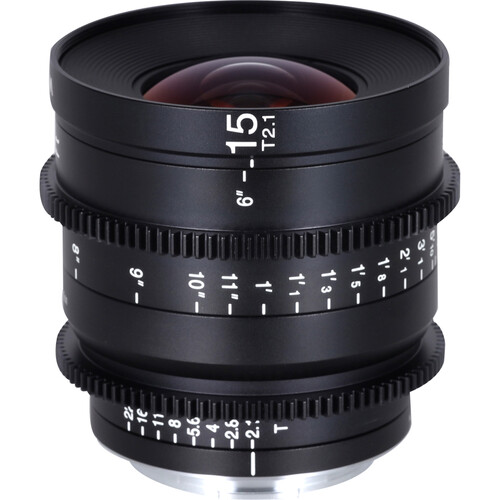
There are other third-party lenses for the RF mount from newer brands like Venus Optics Laowa, Rokinon/Samyang, IRIX, etc., though I generally don’t recommend those as they haven’t been proven in real-world situations yet. If you have access though, I urge you to test them out for yourself.

Canon Cine Zoom Lenses
Canon has zoom lenses that are in only EF mount so yes you will most definitely require the EF-RF adapter.
One key difference between the cine primes and cine zoom lenses are that the primes cover full frame cameras, while the zoom lenses are designed for APS-C and Super 35mm cameras. This means the focal reducer will not work, you need the basic adapter.
If you could only pick one, get this: Canon CN7x17 KAS S Cine-Servo 17-120mm T2.95 – you could shoot entire projects with just this one lens.
Zoom lenses by Canon
- Canon CN-E 70-200mm T4.4 Compact-Servo Cine Zoom Lens (EF Mount)
- Canon CINE-SERVO 25-250mm T2.95 Cinema Zoom Lens (EF Mount)
- Canon CN-E 18-80mm T4.4 COMPACT-SERVO Cinema Zoom Lens (EF Mount)
- Canon CN-E 30-300mm T2.95-3.7 L S EF Mount Cinema Zoom Lens
- Canon CN-E 14.5-60mm T2.6 L S Cinema Zoom Lens with EF Mount
Three amazing lenses to add to your kit:
- Canon CN-E 15.5-47mm T2.8 L S – for wide angles.
- Canon CN-E 14.5-60mm T2.6 – for general work.
- Canon CN-E 30-105mm T2.8 L S – for telephoto work.
- Drool over this, the most popular lens among wildlife documentary filmmakers: Canon CINE-SERVO 50-1000mm T5.0-8.9

Cheaper cine zoom lenses for the Canon EOS C70
These zoom lenses are rehoused still glass, but have really proven the test of time and are well-loved by many filmmakers:
I think the above set would make most people happy. Again, these are for Super 35mm sensors so you’ll need the basic adapter.
That’s it! These are my suggestions for the best Canon lenses for the Canon EOS C70 (Amazon, B&H) for video and cinema work. Hope you found it useful!
