

This article is a comparison of the specifications of the Canon EOS C70 (Amazon, B&H) and RED Komodo (B&H) for cinema work with currently available information as of this writing (Komodo v1.3.1).
Cameras have drastically improved over the last three years, to the point where you can now own an amazing cinema camera for less than $6,000.
It has become harder and harder to justify a $9,000+ priced camera, as the democratization of filmmaking drives down prices year after year. I believe there is no stopping that. Cameras are going to get better and cheaper.
Canon has made a bold entry with Canon EOS C70 (Amazon, B&H) priced at $5,499. RED Komodo (B&H) has launched a 6K Super 35mm beast at a about $6,000. Red, too, sees the need to drive down prices or perish.
Image quality
Here’s some early sample footage from the Red Komodo:
Here’s official footage from the Canon EOS C70:
Both look good for this price point and market. Both cameras are probably better than 99.99% of filmmakers, so there’s nothing to complain about.
Comparison of sensors and video features
Here’s how the camera sensors compare:
| Camera | Resolution | Shutter | Sensor Size |
| Canon EOS C70 | 4096 × 2160 | Rolling | 26.2 x 13.8 mm |
| Red Komodo | 6144 × 3240 | Global | 27.03 x 14.25 mm |
The RED Komodo (B&H) has a slightly larger sensor, but more importantly shoots 6K. This certainly is an advantage, and we’ll look at frame rates later to get a more rounder picture.
However, the biggest differentiator is the global shutter. It will definitely prove an advantage in situations where rolling shutter artifacts are a problem.
In terms of dynamic range, the Canon EOS C70 (Amazon, B&H) claims to be “better”:
| Camera | Dynamic Range | ISO Range | Built-in ND? |
| Canon EOS C70 | 16+ stops (-6 to 54 dB Gain) | 100 to 102,400 | 2, 4, 6, [8, 10]* |
| Red Komodo | 16 | 250 to 12,800 | No |
*Jarred has said the Komodo does well at least till ISO 3200, which makes it better than the Dragon in terms of low light performance.
However, the C70 should blow it out of the water in terms of low light performance. Also, the dual gain architecture of the sensor gives it the same dynamic range as its bigger sibling, the C300 Mark III.
Lastly, the built-in ND feature adds a ton of usability to the C70, and is a big omission with the Red Komodo. You are either stuck to large filters in front of the lens/matte box or the Canon adapter with an ND filter. More below.
What about frame rates?
| Camera | Max fps at 6K | Max fps at 4K | Max fps at 1080p |
| Canon EOS C70 | n/a | 120 fps @ 4K | 180 fps @ 1080p |
| Red Komodo | 40 fps | 60 fps @ 4K | 120 fps @ 2K |
The Canon EOS C70 (Amazon, B&H) can do 120 fps in 4K and 180 fps in 1080p.
Codecs:
| Camera | RAW | Color |
| Canon EOS C70 | No RAW, XF-AVC Intraframe (H.264) | 10-bit 4:2:2 |
| Red Komodo | Compressed Redcode RAW, Prores HQ (up to 4K) | 12-bit |
How important is RAW to you? The Komodo can record to a more friendly Prores HQ, as well as the new variant of Redcode RAW. It definitely has the advantage here.
Finally, what you get externally:
| Camera | Connection | Best external resolution and fps | Audio |
| Canon EOS C70 | HDMI | 4K @ 120 fps | 2x Mini XLR |
| Red Komodo | 12G SDI | 2K @ 60fps | None |
The C70 definitely is ready to shoot more than the Komodo. However, you need a mini-XLR to XLR adapter; and you only get an HDMI port.
It’s hard to call a definite winner here, so we’ll wait a bit.
Lenses
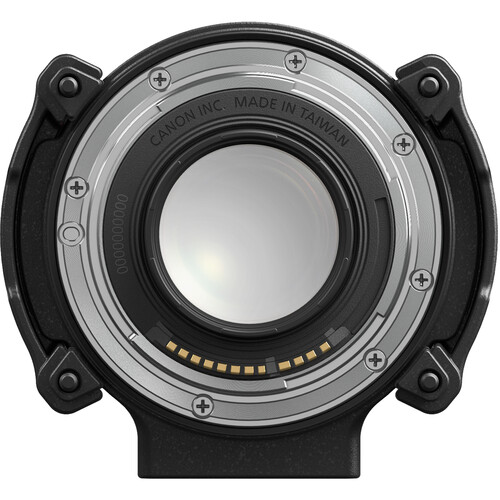
The Canon EOS C70 (Amazon, B&H) and the Red Komodo (B&H) both have RF mounts, with one major difference: The Komodo RF mount doesn’t support full RF functionality.
You could add an adapter to the Komodo and C70 to make it compatible to another mount, or just use RF lenses natively. Canon has released a new focal reducer adapter for the C70 exclusively which decreases the focal length of the lens and gives you an extra stop of light. This new addition puts Canon at a considerable advantage. This one small investment could potentially save lens enthusiasts a lot of money. To be fair, the RF system hasn’t been fleshed out yet, so we should at least balance the scales by assuming you need the EF to RF mount.
However, the biggest question one needs to ask is: How important is dual pixel auto focus? Canon has a considerable advantage here, but only if you need it.
Focus, monitoring and ergonomics
The Komodo is smaller. Way smaller:
| Camera | Volume | Weight |
| Canon EOS C70 | 147.2 cubic inches | 1430g |
| Red Komodo | 64 cubic inches | 900g approx. |
Still, the Canon EOS C70 (Amazon, B&H) is a light, handy camera, no doubt.
It is very important to note that Canon has erred by placing both buttons and inputs on the same side (the left). It’s going to be the bane for many solo operators.
Both cameras have touchscreens. The one on the C70 can swivel, so is more useful overall.
What about wireless? This is one feature where Komodo pulls ahead:
Yeah Wireless is a pretty important part of Komodo…
…Our Engineers put the range increase to 300 feet. But they literally test in a perfect field in the middle of nowhere away from any other RF signals and no metal and no walls and no animals or people in the way and I am pretty sure they even cut the grass a little shorter on testing day to get that 300ft.
…You can control Komodo wirelessly from any phone ( in fact that was actually the only way to control the first komodo prototypes) , but you can not wirelessly monitor ( i.e. watch a video feed ) from your hydrogen or any other phone.
Jarred Land
Neither camera has Genlock, though with the Komodo you can purchase a separate “Cradle” for Genlock, and it also has USB-C and wired control (CTRL).
The Canon EOS C70 (Amazon, B&H) can be paired with the RC-V100 Remote Control to access and control the camera from afar (don’t click the link to see the price. You’ve been warned).
Batteries and media cards
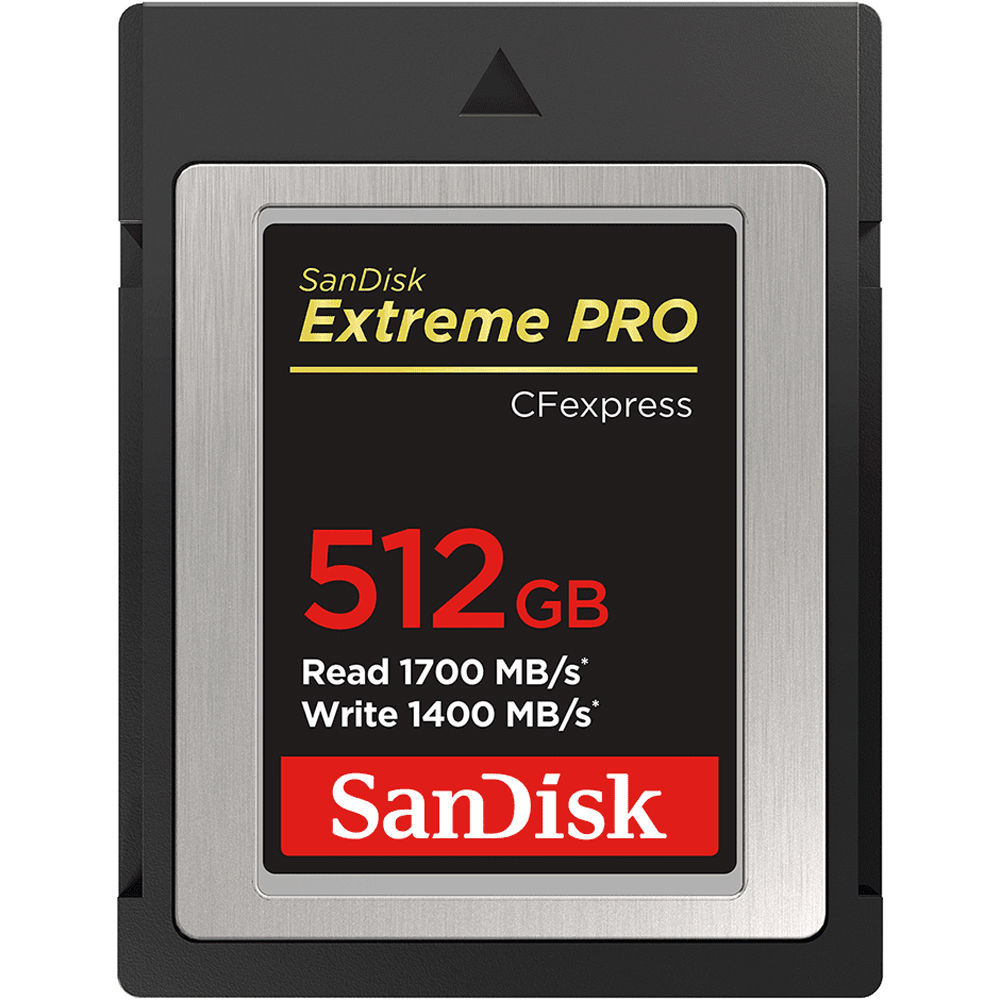
Here’s a look at the media options:
| Camera | Dual card slots | Price per GB for 480/512 GB* | Card Reader* | Best Data Rate in 6K/4K |
| Canon EOS C70 | Yes, SDXC | $0.35/GB | None | 51.25 MB/s |
| Red Komodo | No, CFast 2.0 | $1.2/GB | CFast 2.0 Reader ($49.5) | 280 MB/s |
The Canon EOS C70 (Amazon, B&H) wins here. If you don’t have the money, or if your cards run out, you can always still keep shooting with cheaper SD cards.
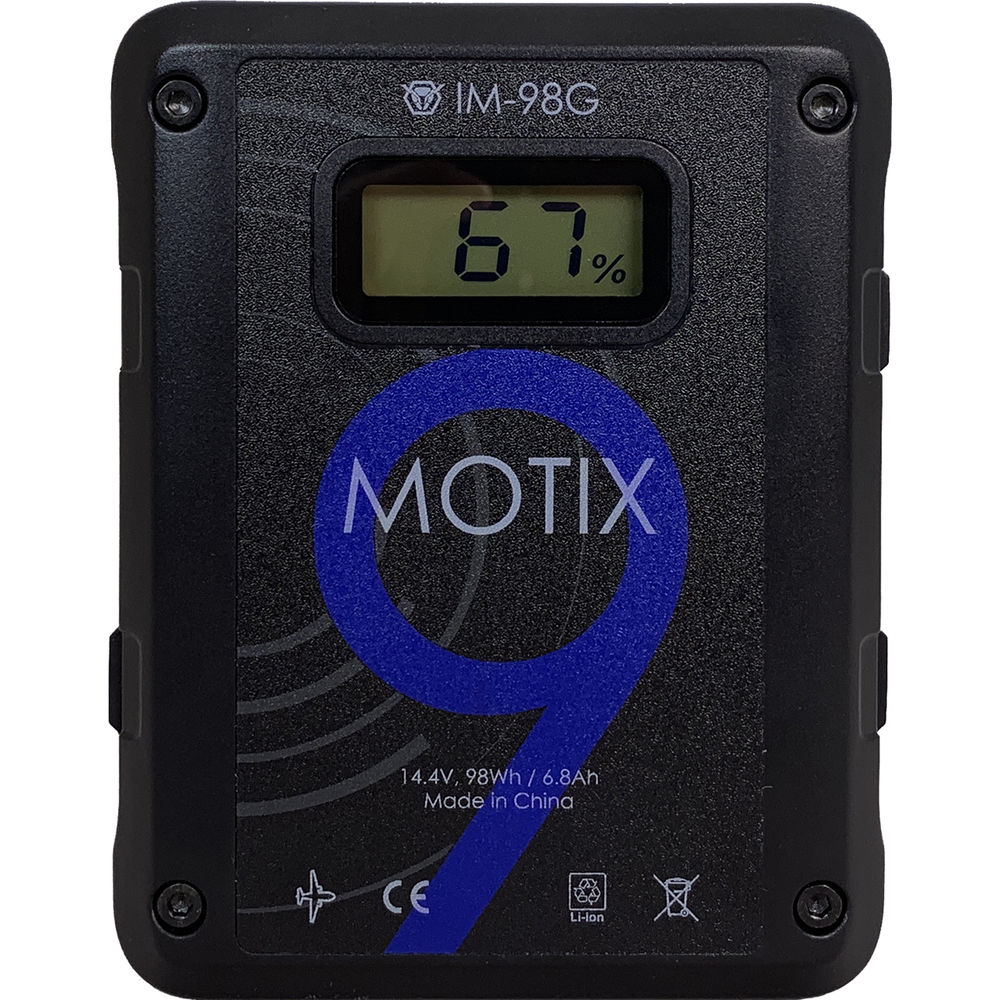
What about battery life?
The Red Komodo (Amazon, B&H) uses two Canon BP-style batteries, and I believe the Canon BP-955 (Amazon, B&H) is currently the sweet spot.
| Camera | Battery life with 2 batteries | Cost of two batteries and charger# | Cost of 6 hours of operation |
| Canon EOS C70 | 6 hours | $480 | $480 |
| Red Komodo | 3 hours* | $389 | $639 |
#With original Canon batteries and chargers.
You can hot swap the batteries from the back on the Red Komodo, and this is important for continuous shoots (if you can keep the camera from shaking).
Canon wins here. The older Canon batteries used the Komodo are harder to find, but you still get a lot of cheaper third-party batteries and chargers.
The Canon EOS C70 (Amazon, B&H) has 24V DC IN for DC input. The Red Komodo (Amazon, B&H) also has a 14.4V DC port as well as an AC adapter.
The RED Komodo would need a top handle, but you do get one with the Canon EOS C70 (Amazon, B&H).
Audio Inputs
Here we find one stark difference between these two cameras. The Canon EOS C70 (Amazon, B&H) has 2 in-built Mini XLR inputs, while you will need a XLR to Mini XLR adapter to it, this will definitely be more efficient than the basic mic input that the RED Komodo has.

Which is cheaper to own?
Shall we?
| Camera | Red Komodo | Canon EOS C70 |
| Camera body | $5,995 | $5,499 |
| Top handle | $399* | $0 |
| Media Costs per Hour | $1,180 | $63 |
| Batteries^ | $0 | $0 |
| Total | $7,574 | $5,562 |
^Similar enough to not matter.
There is a very apparent difference of almost $2,000.
Now, you can obviously buy the starter/production kit that the RED Komodo provides. You get quite a lot of accessories in that kit for an additional $1,200
- KOMODO™ 6K Camera System
- Canon Drop-In Filter Mount Adapter EF-EOS R with Variable ND Filter
- Wing Grip
- RED CFast 512GB
- RED CFast 2.0 Card Reader
- RED EXT-to-Timecode Cable 3′
- RED PTap-to-Power Cable 6′
- 1-Year Standard Warranty
However, I still don’t think it will go a long way to reduce the imbalance in price. These are two different cameras for two markets.
Verdict
First, a recap:
| Feature | Winner |
| Dynamic Range and colors | Tie |
| ISO and Low Light | Canon EOS C70 |
| Motion | Red Komodo |
| Codecs | Red Komodo |
| Frame Rates | Canon EOS C70 |
| Autofocus | Canon EOS C70 |
| Image Stabilization | Canon EOS C70 |
| Media | Canon EOS C70 |
| ND filters | Canon EOS C70 |
| Ergonomics | Tie |
| Battery life | Tie |
| Wireless | Red Komodo |
| Audio | Canon EOS C70 |
It’s a tough choice because the answer to which is the best camera depends on what features you need the most. On the whole, the Canon EOS C70 is definitely the most all round camera designed to meet the needs of professionals who work with small budgets. The Komodo is for those who need it as a B-cam to bigger Red cameras.
The choices boil down to:
| Feature | Yes, then pick: |
|---|---|
| Do you need RAW? | Red Komodo |
| Do you need the best AF? | Canon EOS C70 |
| Do you need global shutter? | Red Komodo |
Most filmmakers and videographers who buy cameras in this price range don’t really get paid for RAW, and definitely don’t get paid extra for a global shutter. These are features a lot of filmmakers convince themselves they want, but they don’t get paid extra for them.
| Camera | USP | Major Cons |
| Canon EOS C70 | Mini XLR, ND Filters, Dual card slots, Dual Pixel Auto Focus | Weird Button and input placement, No RAW |
| Red Komodo | Global shutter, 6K, Wireless, Hot swappable batteries, RAW | Need extra accessories, No XLR for audio |
For me the choice is pretty obvious. For this price group, RAW and global shutter don’t matter as much as:
- Autofocus
- ND filters
- Price
- XLR inputs
- Stabilization
- RF and EF mount compatibility

Komodo is a 16 bit 444 color camera
C70 is a 10 bit 422 color camera as are many dslr
The Komodo isn’t true 16-bit. It’s probably 12-bit rewrapped (16-bit “processing”).
The C70 can also shoot RAW.The C70 cannot shoot RAW.C70 can not shoot RAW
You are right, Bob. It cannot. I think that was a typo.
The c70 does shoot raw now.