

Watch the video:

What is Aspect Ratio?
Aspect ratio is just the horizontal length of the frame by the vertical length of the frame.
E.g., the video above has a resolution of 1920 x 1080.
1920 divided by 1080 is 1.77 or 1.78 rounded off, so we say the aspect ratio is 1.78:1. It’s a ratio. 1.78 is a bit hard to remember, so most people use 16:9, which is the same thing. You pick the number that’s easy to remember.
Since video has an aspect ratio of 16:9, if you’re watching on a 16:9 monitor there aren’t any black borders around the edges. If you’re watching on a laptop or mobile device you might notice black borders. For simplicity sake I’ll assume your screen is 16:9, which is the standard size for HDTVs that you might buy for your living room.
Cinema has two standard aspect ratios and they’re not 16:9. The most widely used is 1.85:1 (Flat).
The other standard in cinema, which is probably overused, is 2.39:1 (Scope). That’s even more rectangular, with considerable black bars on top and bottom.
Even before computers and social media, you had multiple aspect ratios. With today’s technology though, you’re not restricted by your choice of aspect ratio. You can pick whatever you want.
By changing the length or height you get many shapes of boxes, and your film or video can fit in any of them. You can choose whatever aspect ratio fits your needs, within limits. Many commercials, music videos and film trailers get hundreds of millions of views, and they all have black bars. Some people think 2.39:1 is cinematic, but tell that to Spielberg or hundreds of great directors who hardly use it.
Some Netflix shows like House of Cards use a 2:1 aspect ratio, also known as the Univisium format, suggested by cinematographer Vittorio Storaro. I don’t think most people complained. People are used to black bars by now, so don’t let that stop you from experimenting.
The last but earliest popular aspect ratio is 1.375:1, which is the Academy frame. Most black and white films were shot in this aspect ratio. You can also simplify it to 4:3, or 1.33:1, if you like. I love this format, and have experimented with it quite a bit.
What are some common aspect ratios?
Here’s a list:
| Aspect Ratio | Name |
|---|---|
| 16:9 (1.78:1) | HDTV and UHD 4K and 8K |
| 1.85:1 | DCI Flat |
| 2.39:1 | DCI Scope |
| 2:1 | Univisium |
| 3:2 | Full frame 35mm photography |
| 1.375 | Academy |
| 4:3 | Micro Four Thirds photography |
| 1.2:1 (6:5) | Anamorphic for a 2x squeeze |
| 1.66:1 | European |
| 9:16 | Vertical video |
What’s the best aspect ratio for your film?
Asking which aspect ratio is the best is like asking which window size and shape is perfect for your house. Only you know. But if you want tips, here are three:
Tip 1
The audience will tell you what medium they’ll most likely consume your video or film in, and that should give you a strong indicator of their preference.
But you might not like their preference. Many filmmakers think 2.39:1 is cinematic, but they forget that many great films have been made in 1.85:1. It’s your choice. That’s number two.
Tip 2
If you think a certain aspect ratio is cinematic, go for it. Just be ready to meet your expectations with the expectations of your audience.
With the explosion of social media content you also have vertical videos. The most common is 9:16, which is 16:9 flipped. But you can also shoot square, which is 1:1. Many DSLR and mirrorless cameras that shoot video have a native sensor size of 3:2, because 3:2 is a popular aspect ratio in photography. It’s not used in video, but why does it have to stop you? If that’s what you like, go for it.
Tip 3
The third strategy to use when thinking about aspect ratios is to look at your subject matter. Most films get this wrong. Many filmmakers opt for 2.39:1 but the frames and action just don’t warrant that aspect ratio. By limiting the height you’ll either have to cut off subjects or make them smaller. The same shot size in 1.85:1 will have the subject appear larger than 2.39:1, on the same screen.
Then you have the issue of the extra negative space on either side when you make your subject smaller. You can tell easily when the frame doesn’t feel right. The most likely culprit is the filmmaker picking an aspect ratio without considering how it will affect the story or subject. And it shows.
There are even a couple of funny practical issues. If one actor is a lot taller than the second in a two-shot you’ll either have to chop off one’s head, or make the other a lot smaller.
If you like close ups the same problem applies. 2.39:1 forces you to get a lot closer to get the same size, and that’s not always what the audience wants to see.
These issues also affect large budget productions. Think Marvel superheroes and villains, all of different heights and widths. Or think dinosaurs and humans, or King Kong, or just buildings. Car shots are another crazy scenario.
Height is just one element. The width, too, plays an extremely important part. Imagine a 2.39:1 frame, where two characters talk to each other and are placed at both ends. You feel the emotional distance between them. If you want to bring them closer, you’ll have negative space on both sides, and sometimes this is distracting. On the other hand, having a 16:9 frame forces you to get the two people closer physically, and you lose the power of the 2.39:1 frame.
Every aspect ratio has its positives and negatives, and your subject and story should tell you what the right aspect ratio is. I’m here to tell you in today’s age, you are free to pick whatever you want.
I made a fashion film a few years ago where I experimented with aspect ratios. I’ll explain why I picked the aspect ratio I picked, and you can decide if it makes any sense. You can watch it here:
In the first scene I picked 4:3, one of my favorite aspect ratios. I picked this because I just wanted to showcase the girl in her shell, waiting for a call, ready to break free. It’s like a cage, with no negative space on either side:

Would you have picked a different aspect ratio? Let me know.
In the second scene we go to 2.39:1 because I had a blue couch and tiled wall that allowed that sort of composition. We also had a box and girl at either end, and it was about her journey from one end to the other:
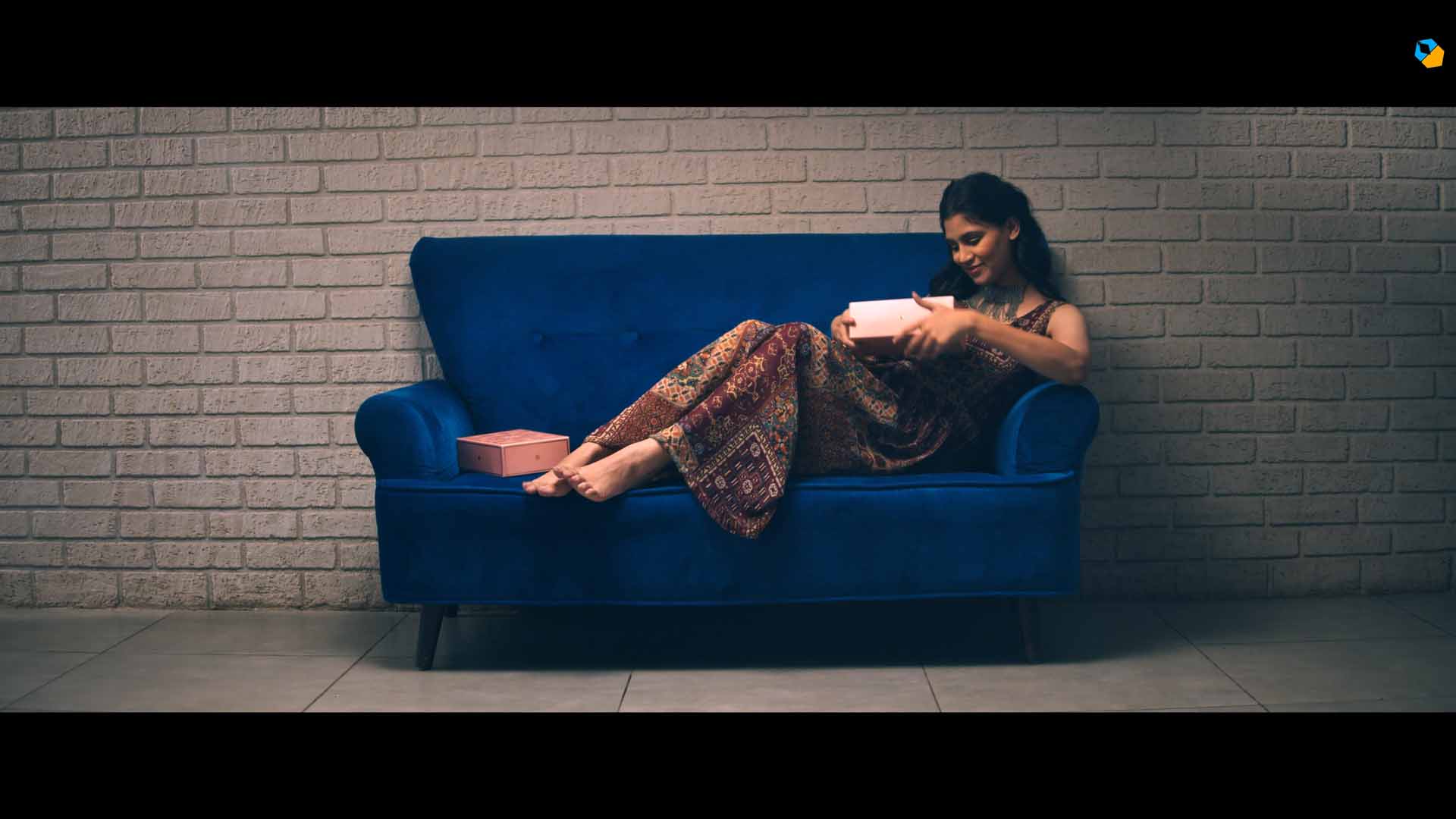
I continued this aspect ratio to the next shot, where it was sort of a limitation, but I had to do it because it was the same location and there was the issue of continuity in storytelling.
And I cut immediately to the third setup, back to 4:3, because again it had all the space I needed, and the subject, the model, was the only thing important:
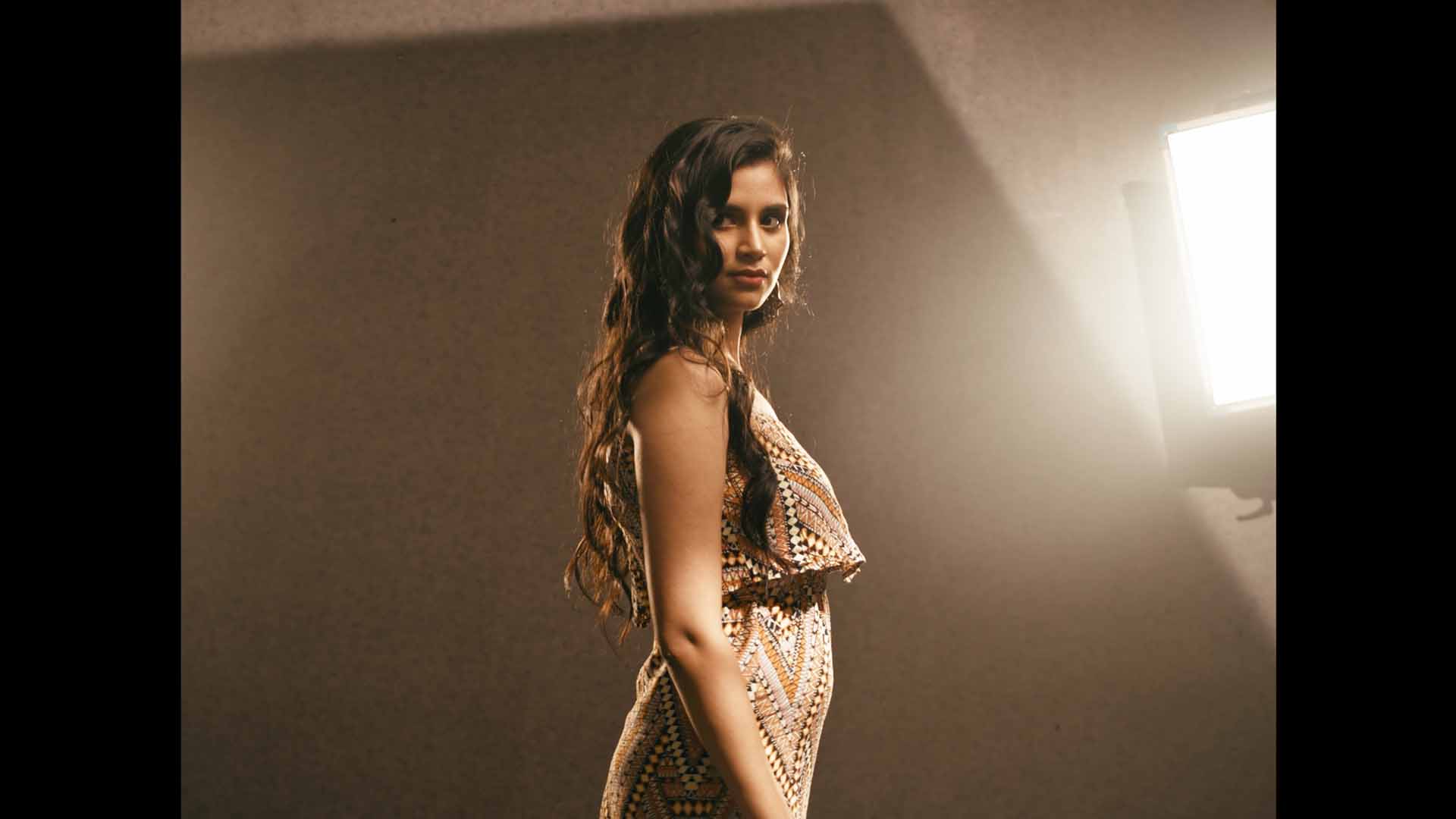
The compositions are looser, with more negative space. She doesn’t feel that restricted anymore. The same aspect ratio, but used differently. However, she’s not totally free yet. There’s one more change:
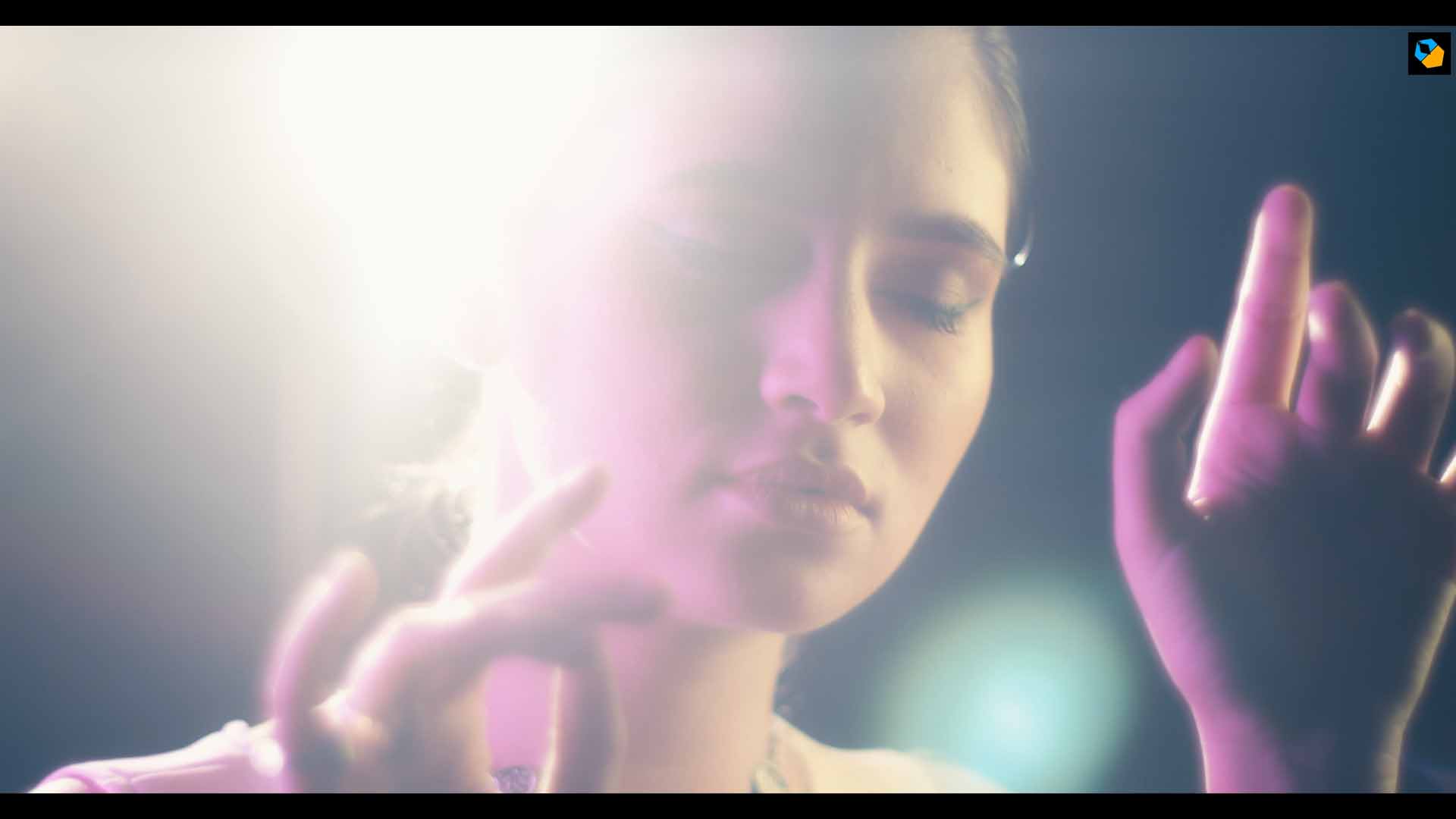
In the last look, we jump from 4:3 to a full 16:9 frame, with no back borders.
In this film I used aspect ratios like a cell, or constraint, to box her in, and during the course of the story she breaks free of the box, in steps. In the final shots, with a 1.90:1 frame, she’s completely free and is able to use the entire space.
That’s how you tell a story with something mundane like the aspect ratio. It’s an important thing!
I used to hate television channels cutting off a film’s sides to fit it on the tube, and I’m glad we’re in an age where nobody has to crop video any more to fit any device. It gives you maximum freedom to explore and experiment, and there are no more excuses to pick the wrong aspect ratio for your film.
What’s your favorite aspect ratio and why? Let me know in the comments below.

Really useful/helpful and it will make me think about which AR I pick next time I shoot (ie I am a bit of a 16:9 junkie for now (just lazy I guess)). I have to add that watching old movies (eg of late “It’s A Wonderful Life”) in SD on a 55″ OLED TV is a pain. Why? While I like the “real” look of the original movie in SD, I really dislike the black bars on the sides. But if I change the AR in my TV, then all the people become “fat” via the image expansion. It’d be great if there were a compromise in there somewhere; may there is one and I am unaware of it.
Good article. Years ago I worked Paramount’s Necessary Roughness, as a camera operator. There were 8 of us and the cinematographer got us all together to go over the shots on the football field. I had talked to a studio executive earlier and he mentioned, “keep it framed for television” or 4:3 (16:9 was not a thing then). I mentioned this to the D.P. His response though not technical was colorful, “Fuck TV!”