

It’s a tough choice with the Panasonic GH7! Especially if you have shot with the Panasonic GH4, GH5, GH5S or GH6. Do you owe loyalty to the Micro Four Thirds format?
I have owned the Panasonic GH5, shot many projects on it. Even made a guide (it’s free!). I know the sensor size and its capabilities very well. I’ve also made guides for Sony alpha cameras, all the way from the first a7S to the latest a7S III. I think this experience puts me in a good position to make this comparison.
Let’s find out if the Panasonic GH7 (Amazon, B&H) even makes any sense in this day and age. Can it be better value than a full frame camera at a similar price?

Let’s start with the elephant in the room.
Autofocus comparison. Does the Panasonic GH7 hold up?
The Panasonic GH7 (Amazon, B&H) has, finally, In addition to contrast autofocus, phase detection autofocus. However, it does not outclass the Sony A7 IV (Amazon, B&H). It’s good, though.
In real-life situations, especially in low light, no autofocus is dependable for serious filmmaking work. You can get by for vlogs or weddings, but not actor movement.
For a long time autofocus tracking (or the lack of) has been the Achilles heel of the GH-line. Now that that’s sorted, we can actually compare the two cameras with a straight face.
Comparison of sensors
The primary difference, hard to miss, are the size of the sensors:
| Camera | Sensor Size | Format |
| Panasonic GH7 | 17.3 x 13.0 mm | Micro Four Thirds |
| Sony a7 IV | 35.9 x 23.9 mm | Full frame |
Here’s how the camera sensors compare for video:
| Camera | Resolution | Maximum FPS | Max fps at 4K | Max fps at 1080p |
| Panasonic GH7 | 5760 x 4320 | 60 fps^ | 120 fps^^ | 240 fps# |
| Sony a7 IV | 3840 x 2160 | 60 fps* | 60 fps* | 60 fps** |
** It can record up to 100 fps in 8-bit 4:2:0 mode.
^ In 10-bit 4:2:0 17:9 mode unfortunately. In 4:3 “Open Gate” mode it’s 30 fps.
^^ In 10-bit 4:2:0 mode only. In 10-bit 4:2:2, it’s 60 fps.
# In 10-bit 4:2:2 ALL-Intra H.264
The Panasonic GH7 (Amazon, B&H) means business.
Video features
Let’s look at more specs:
| Camera | Video ISO Range | Base ISO in Log | Dynamic Range | Oversampling |
| Panasonic GH7 | 100-12800 | 500-12800 in V-Log | 500/250** | 13+ stops* | 5760 x 4320 |
| Sony a7 IV | 100-51200 | 800-51200 in S-Log3 | 800 | 13+ stops | 7008 x 3944^ |
** ISO 500 up to 60 fps, ISO 250 above 60 fps. The ISO range drops across the board over 60 fps.
^ 7K oversampling is possible when recording in 4K 30p.
What this means is the GH7 seriously drops in dynamic range and low light ability (which means more noisy) above 60 fps. The Sony A7 IV (Amazon, B&H) over-samples from a higher resolution, and has excellent low light ability.
To round out the comparison, here’s info on the codecs and color:
| Camera | Internal Codec in 4K and Higher | Color Information |
| Panasonic GH7 | Prores RAW HQ | Prores | H.264/H.265 ALL-I, IPB | 10-bit 4:2:2 / 8-bit 4:2:0 |
| Sony a7 IV | H.264/H.265 ALL-I, IPB | 10-bit 4:2:2 / 8-bit 4:2:0 |
From Panasonic:
5.7K 30p ProRes RAW HQ footage can be recorded on the camera body itself.
Panasonic
The GH7 offers Prores, Prores RAW HQ, higher frame rates and higher resolution. The a7 IV offers better low light performance, and possibly better dynamic range.
Which is better?
From a filmmaking and cinematography perspective, the a7 IV offers the better value. No amount of RAW can trump dynamic range and low light performance.
From a wedding, YouTube or commercial perspective the GH7 offers more options.
Let’s explore further.
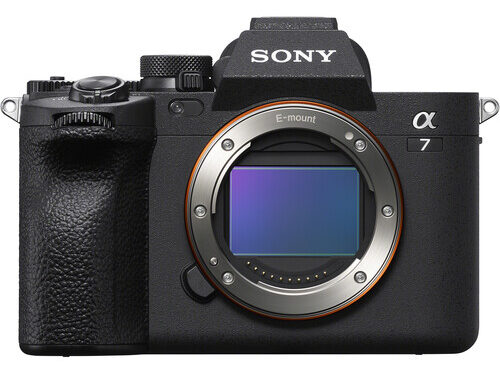
The Panasonic GH7 has better exposure aids
Here are the exposure options:
| Camera | Exposure |
| Panasonic GH7 | Waveform, Zebras, Histogram, Meter |
| Sony a7 IV | Zebras, Histogram, Meter |
The Panasonic GH7 (Amazon, B&H) has a waveform monitor. Panasonic has always been ahead of the game in this regard.
Both cameras have similar viewfinders and LCDs and in real-world shoots I don’t think it will matter all that much.
Overheating and Recording Limits
The Sony a7 IV is prone to overheating. There are modes in the camera that help with this issue, but ultimately, there’s no fan inside.
On the other hand, the GH7 has an internal fan, and is rated to run for as long as you have card space. The smaller sensor definitely helps in this regard:
No need to stop shooting due to overheating. The GH7’s compact body and heat dissipation structure enable extended recording even when shooting at heavy loads (4:2:2 10-bit C4K/4K 60p/50p, ProRes RAW HQ).
Panasonic USA
External Recording and RAW
RAW over HDMI or SDI isn’t real RAW, unless it is also offered in the camera. This is easily verifiable because you’ll hardly get an image quality improvement over the best codec internally.
Cameras that offer true RAW will show a marked improvement in dynamic range (at least a third of a stop or higher) in RAW over non-RAW modes.
Having said that, which camera offers what? Here’s the lowdown:
| Camera | HDMI Port | RAW Codec |
| Panasonic GH7 | Type A | BRAW#, Prores RAW* |
| Sony a7 IV | Type A | Prores RAW* |
# You need a Blackmagic Design recorder for BRAW.
In this regard, the Panasonic GH7 (Amazon, B&H) is clearly better.
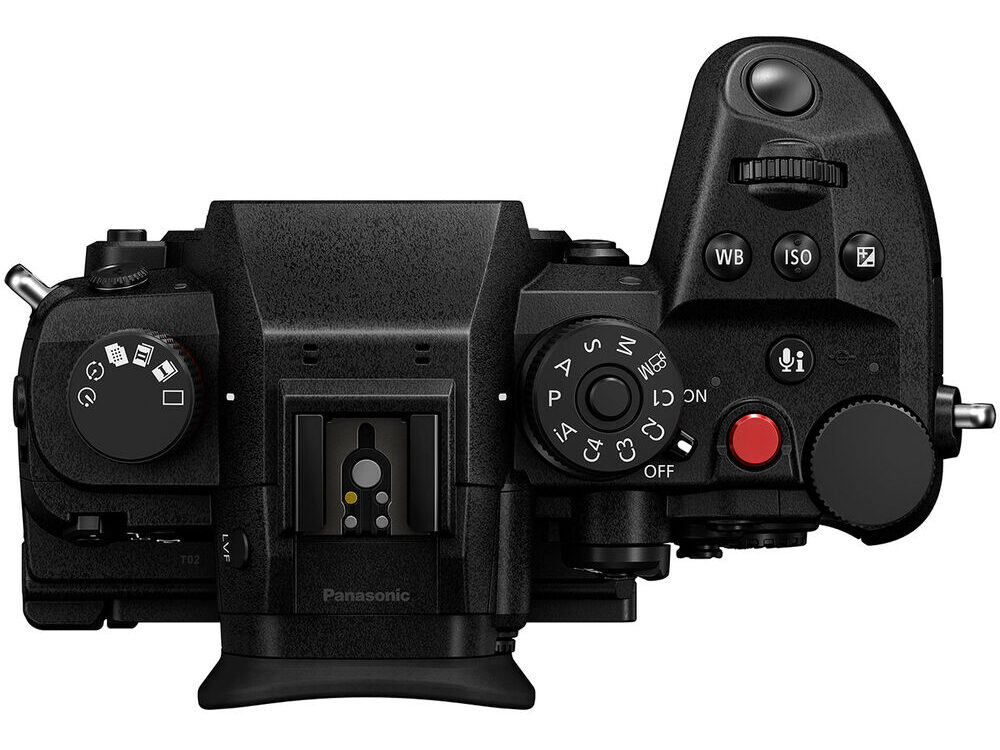
Image Stabilization
Both cameras have 5-axis image stabilization with the best performance coming from native lenses.
Without a thorough test it’s hard to say which is better, though from initial reports it seems the Panasonic GH7 will have an advantage due to it being the smaller sensor. There’s one more advantage to having a smaller sensor with a faster readout:
Rolling shutter
The GH7 will clearly have the better rolling shutter performance. Things are getting interesting in this comparison!
Media cards. Does the Panasonic GH7 really have USB-C SSD support for Prores RAW?
Let’s take a closer look at the media card situation:
| Camera | Dual card slots | Price per GB^ |
| Panasonic GH7 | Yes, CFexpress Type B, SD UHS-II, SSD via USB-C* | $0.08/GB |
| Sony a7 IV | Yes, CFexpress Type A or UHS-II SD Card | $0.78/GB |
^ For 512 GB. SSD for the GH7, including the adapter and coupler, and CFexpress Type A for the a7 IV.
| Camera | Data rate RAW 24 / 60 fps | Data rate 4K 24 / 60 fps* | Recording Limit |
| Panasonic GH7 | 1,741 / 4,301 Mbps | 400 / 800 Mbps | Unlimited |
| Sony a7 IV | N/A | 240 / 600 Mbps | Varies |
Here’s the problem. You get RAW recording, but at these data rates it’s going to cost a lot in terms of media and storage; not to mention the quality of graphics card you need to edit and grade these monsters. Are people really going to film in RAW? My experience says, no.
However, if you’re filming in Prores HQ or ALL-I, then definitely, an SSD is cheaper.
Cost per 4 hours of data in 4K 24p 10-bit 4:2:2:
| Camera | Total Data | Cost for 4 hours |
| Panasonic GH7 | 703 GB | $56 |
| Sony a7 IV | 422 GB | $329 |
I think it speaks for itself.
Batteries. Is the battery life of the Panasonic GH7 as poor as Panasonic’s full frame cameras?
What about battery life?
| Camera | Battery life* | Cost one one battery | Cost of 6 hours of operation |
| Panasonic GH7 | 45 minutes | $67.50 | $540 |
| Sony a7 IV | 100 minutes | $78 | $280 |
The internal fan increases power consumption and weight of the Panasonic GH7.
Which camera is cheaper to own?
Let’s just add up the costs:
| Camera | Sony a7 IV | Panasonic GH7 |
| Camera body | $2,498 | $2,198 |
| Media and Accessories | $329 | $56 |
| Batteries | $280 | $540 |
| AC Adapter/DC Coupler | $0 | $138 |
| Total | $3,017 | $2,932 |
The difference is negligible. So it must come down to the features. It’s going to get ugly.
Recap
Who wins each feature?
| Feature | Winner |
| Sensor and ISO | Sony a7 IV |
| Video features | Panasonic GH7 |
| Dynamic Range | Sony a7 IV |
| Color | Panasonic GH7 |
| Rolling Shutter | Panasonic GH7 |
| Overheating and Recording Limits | Panasonic GH7 |
| Exposure Aids | Panasonic GH7 |
| Media | Panasonic GH7 |
| Lenses | Tie |
| Ergonomics | Panasonic GH7 |
| Ports and Monitoring | Tie |
| External Recording | Panasonic GH7 |
| Audio | Tie* |
| Autofocus | Sony a7 IV |
| Image Stabilization | Panasonic GH7 |
| Battery life | Sony a7 IV |

My Verdict of the Panasonic GH7
Here’s what I think:
| Type of Filmmaking | Preferred Camera | Major Reasons |
|---|---|---|
| Documentaries and corporate videos | Panasonic GH7 | Longer record times, AF, IBIS, Prores HQ |
| Short or feature films | Panasonic GH7 | 6K RAW, better colors, cheaper recording to SSDs |
| Music Videos | Panasonic GH7 | Higher fps, IBIS |
| Journalism | Sony a7 IV | Low light performance, battery life, AF |
| Wildlife | Sony A7 IV | Better AF |
| Weddings and Events | Sony A7 IV | Low light performance, battery life, AF, Dynamic Range |
Which is the better camera? The Panasonic GH7 (Amazon, B&H), clearly. The advantages of the Sony a7 IV don’t really count all that much to the features in the GH7.
If you’re sold on the Micro Four Thirds format, then go for it. I don’t think you’ll be disappointed.
But that’s not my final answer, or recommendation.
Is Micro Four Thirds worth it?
Micro Four Thirds has two advantages over full frame:
- Deeper focus, in case you don’t like shallow DOF.
- Better telephoto reach with smaller lenses.
The first is out of fashion at the moment. Has been for a long time now. The second is exclusive to wildlife, sports and journalism. It’s not really that useful for filmmakers.
So, as a sensor size, it’s not all that advantageous.
As a system, the Micro Four Thirds system is hard to recommend. Will there be a GH8? Are the lenses ever going to get better? Will it ever have 16 stops of dynamic range and low light ability as full frame sensors?
The GH7 is the flagship Micro Four Thirds camera for video or cinematography, and it pales in comparison to what’s possible with Super35mm and Full frame cameras.
If you’re looking to earn money, more people want Sony cameras. If you own a Sony camera, you find more work. I can’t imagine any producer, director, agency or client asking for Micro Four Thirds.
So it’s a passion thing. There must be something about the format that’s irreplaceable to you. Is there, really? If the GH7 arrived with 15+ stops and compressed RAW, then yes. But sadly, 13+ stops won’t cut it when you have a Blackmagic 6K (Amazon, B&H) for far less.
I think the Micro Four Thirds format stays dead with the GH7. The Sony a7 IV (Amazon, B&H) wins.
What do you think?
If you want to see how the a7 IV compares to other cameras, check out this comparison:

I’m thrilled with both the Canon C400 and the Panasonic GH7, and plan to purchase multiple units of both. The GH7 has two big wins that do not overlap the C400’s capabilities: 1) Compact size for long lens use. Shallow DoF is not a real consideration for telephoto work. Also, speed and convenience of opportunistic B-roll. 2) I am building a portable, easily transportable, multi-camera livestreaming package based on bonded cellular for use at daylight outdoor events. Low RF congestion at my rural locations will allow all cameras to be rigged with wireless transmitters, providing outstanding mobility during broadcasts. The GH7 wins a spot due to multiple factors including auto-focus, compactness, economy, lens choice, etc.
I think a Canon R6 II would pair well with the C400, or the newly announced Nikon Z6 III with 6K RAW up to 60 fps.
MFT stays dead? Hahaha even Gerald Undone admits he was wrong when he thought that. Its alive and thriving. I respect your work but this is a severely bad take if you think the GH7 (especially now with Arri CLog) is “staying dead”. Sure dynamic range isnt Arri levels but if you cant make a beautiful image that gets incredibly close, if not entirely, matches an Arri with this camera in a controlled narrative film environment, then the problem is you.
Let’s wait and see.
Thanks for the ALWAYS great info. A great comparision and yes, that Sony low light feature is important for so many reasons. I’ve had a GH4, GH5s & the BMC4k. I have to stay with Pane for a while because of all the micro 4/3 lenses I have purchased over the years. Very inexpensive lenses & no adaptors to deal with. The 6400 ISO on the GH5s is often ok for shooting live music stills. But almost any Sony full frame will be better in that dark world of concert photography..
You’re welcome!
I have the Panasonic G9M2 and love it now that Panasonic has a “real” focus. I had a GH6 and sold it; I did not like the “clunky” feel in my hand, what with its “fan bump” at the back.
I use four anamorphic lenses with my G9M2, and after getting used to the menu system, I enjoy using it.
I also have a set of anamorphic lenses for my Canon R5 that I enjoy using.
So my answer is “yes,” MFT still applies. As you pros often (really often) say, ” It’s not the camera; it’s what’s behind the camera that matters.” So … :0)