

Watch the video

What is the 180-degree rule?
You draw an imaginary line between two characters, and make sure the camera is always on one side, so they appear they are talking to one another:
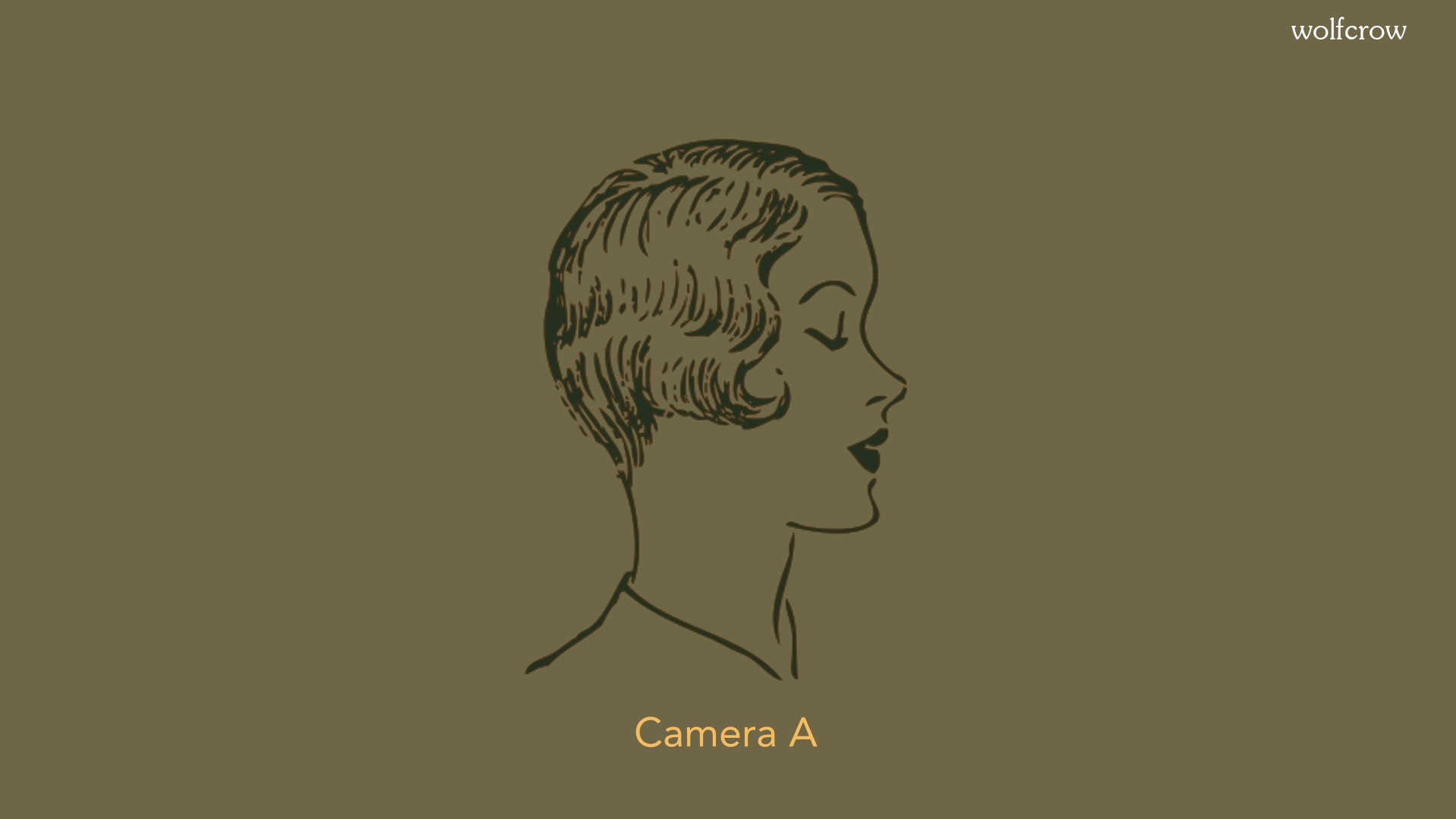
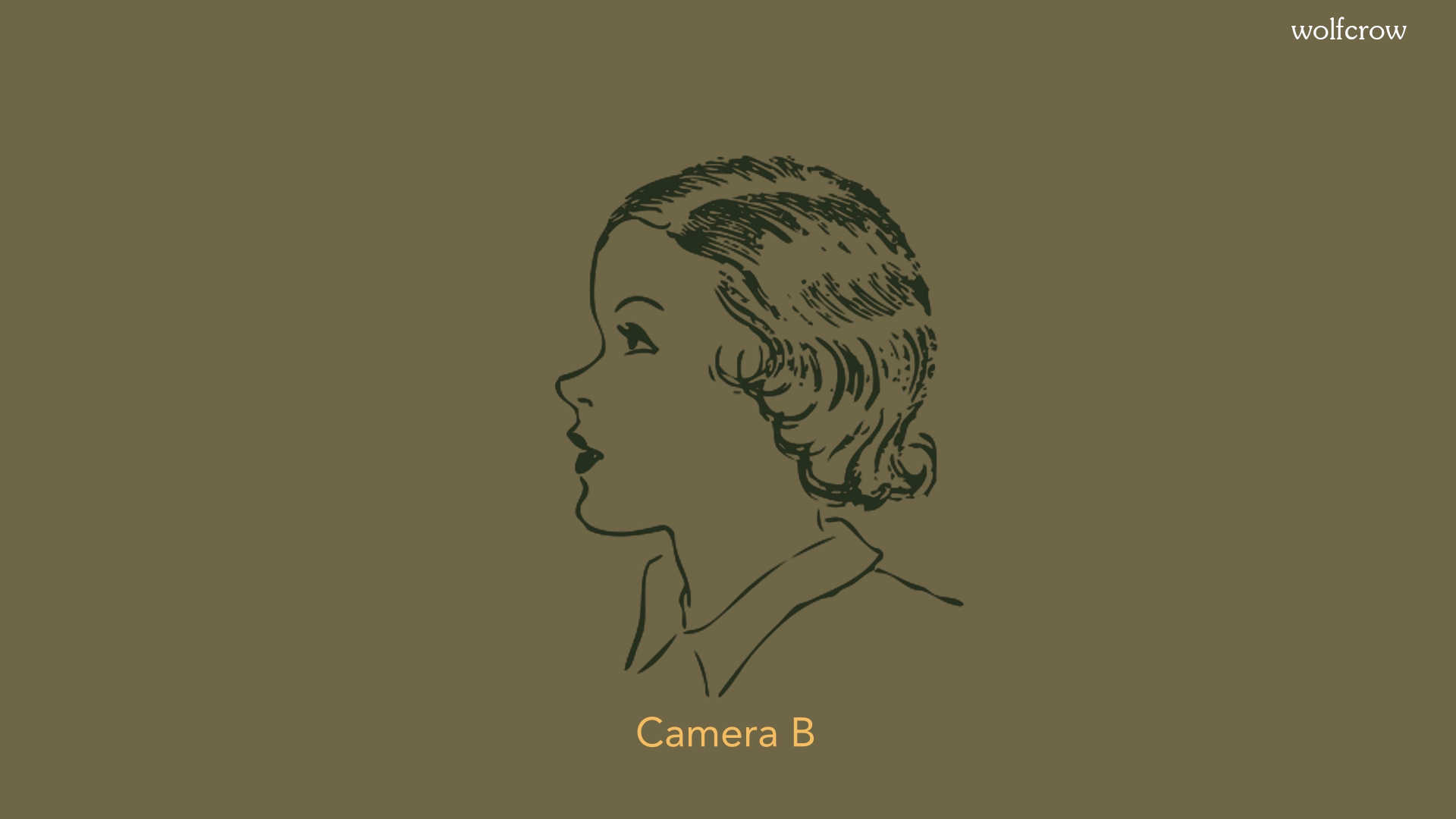
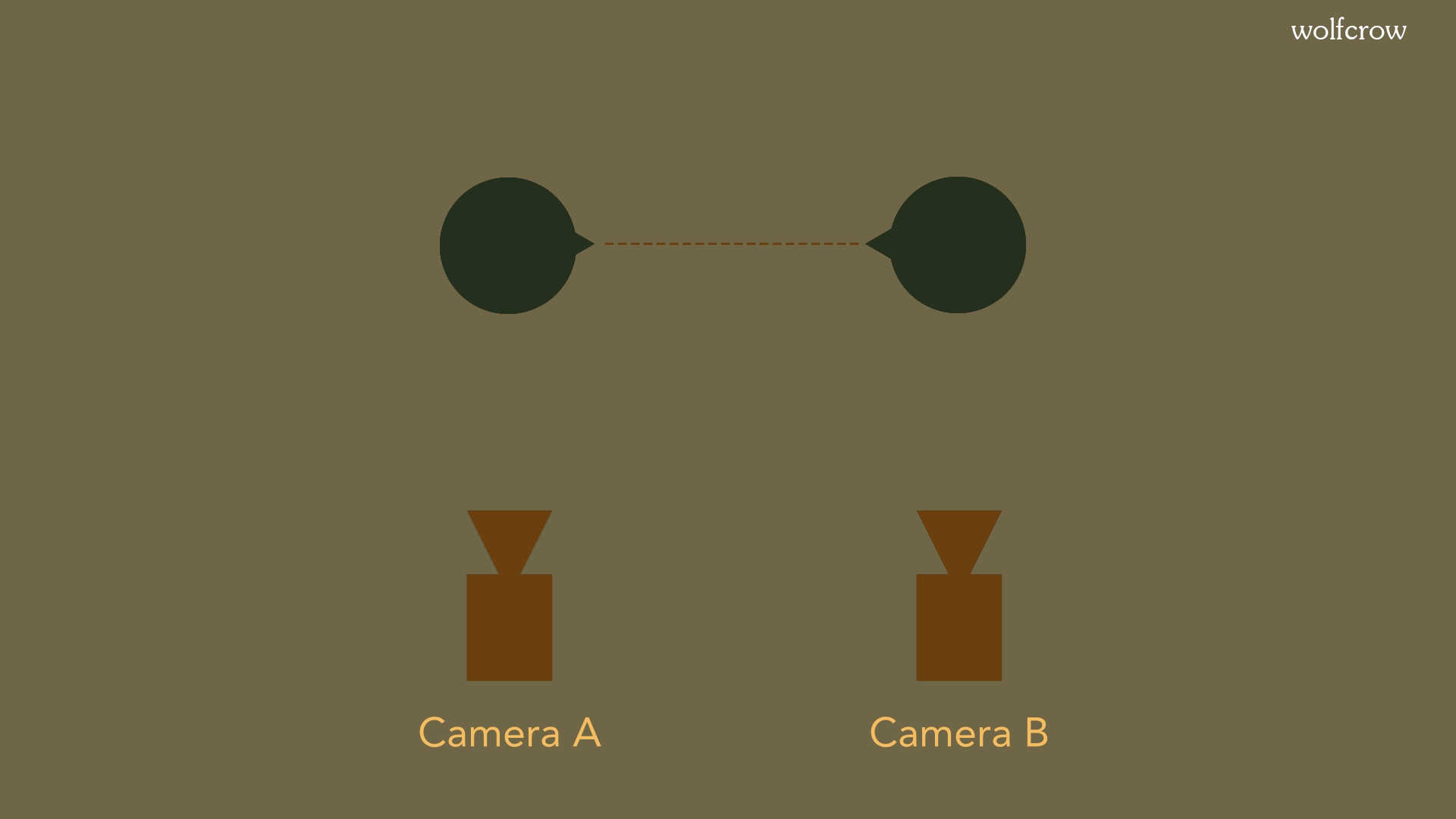
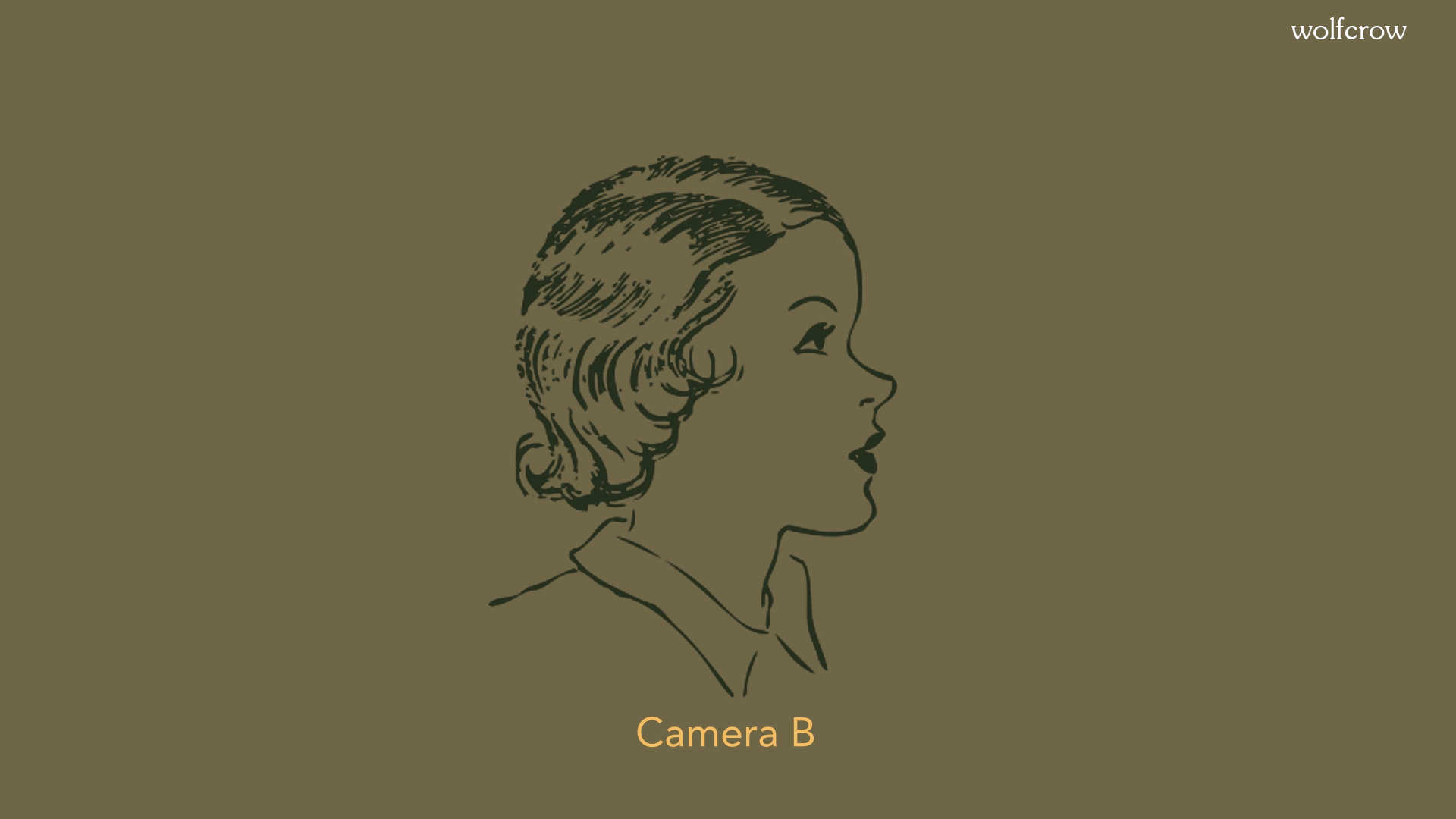
If you don’t, it will appear they are talking to two other people:

To know more, check this out:
All you have to remember is: The character remains in the same position, and looks in the same direction in all the shots. E.g., in this over the shoulder exchange, one character is on the left and looks to the right of the frame:

In the reverse angle that character will still be on the left and will still look to the right of the frame:

If you remember this you’ll be okay. Unless, you turn devious and want to break it!
Yazujiru Ozu broke the 180-degree rule…a lot
I love breaking the 180-degree rule, and so did Yazujiru Ozu (I didn’t pick it up from him, I was just a rebel, but I’m glad someone I admire also did it regularly). The trick is to do it with style. There are things you can do to break the rule and still get away with it.
Yazujiru Ozu is a great example because he broke the 180-degree rule both ways. He was subtle about it, but sometimes he was jarring, on purpose.
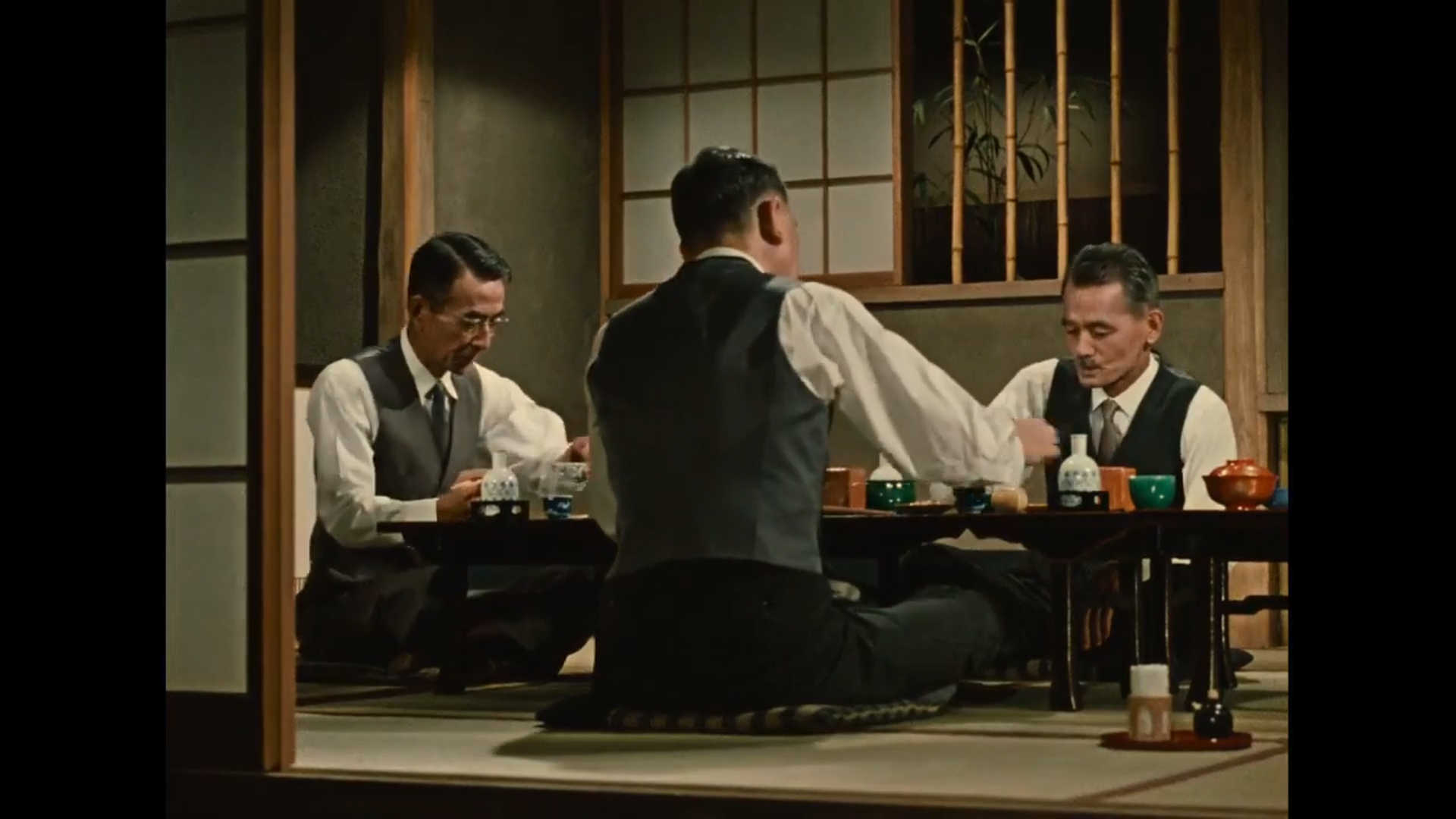
We’ll look at An Autumn Afternoon. In this early scene the old friends get together for a drink. This master shot shows their positions in the scene:
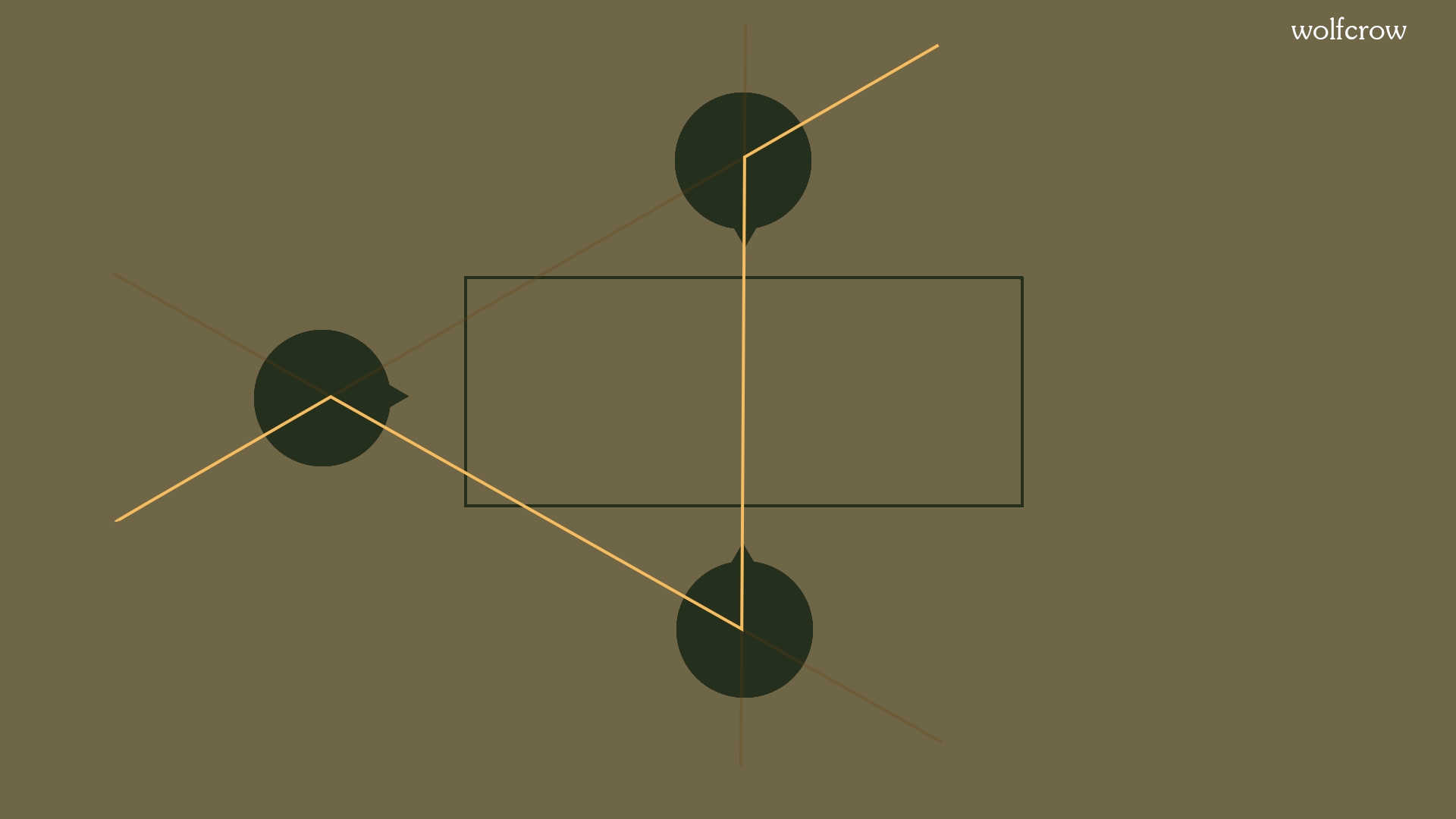
The 180-degree rule dictates the lines of direction are in this way:
Ozu broke this convention at will. In this shot you can see the two singles don’t follow the direction set by the master:
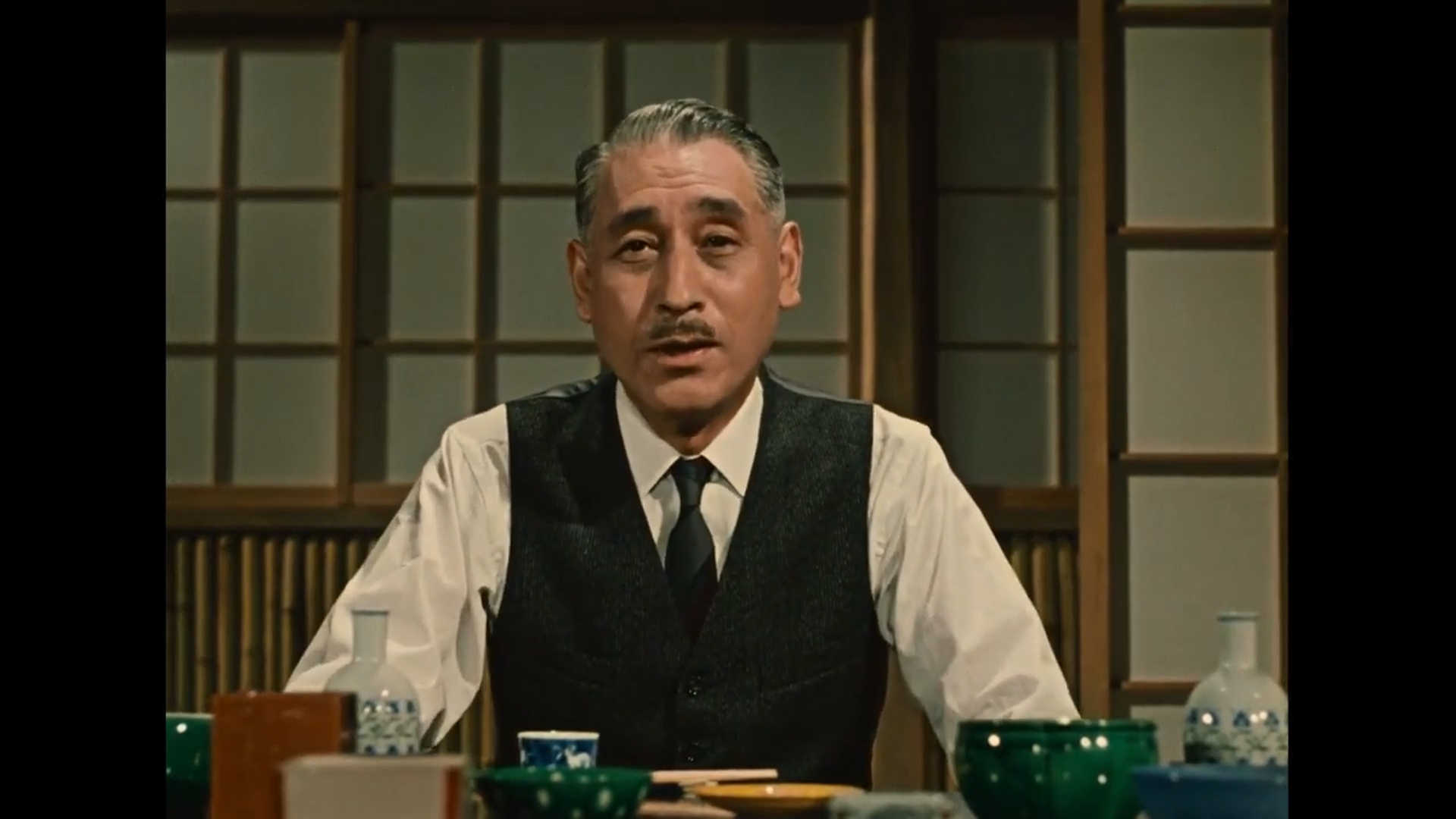
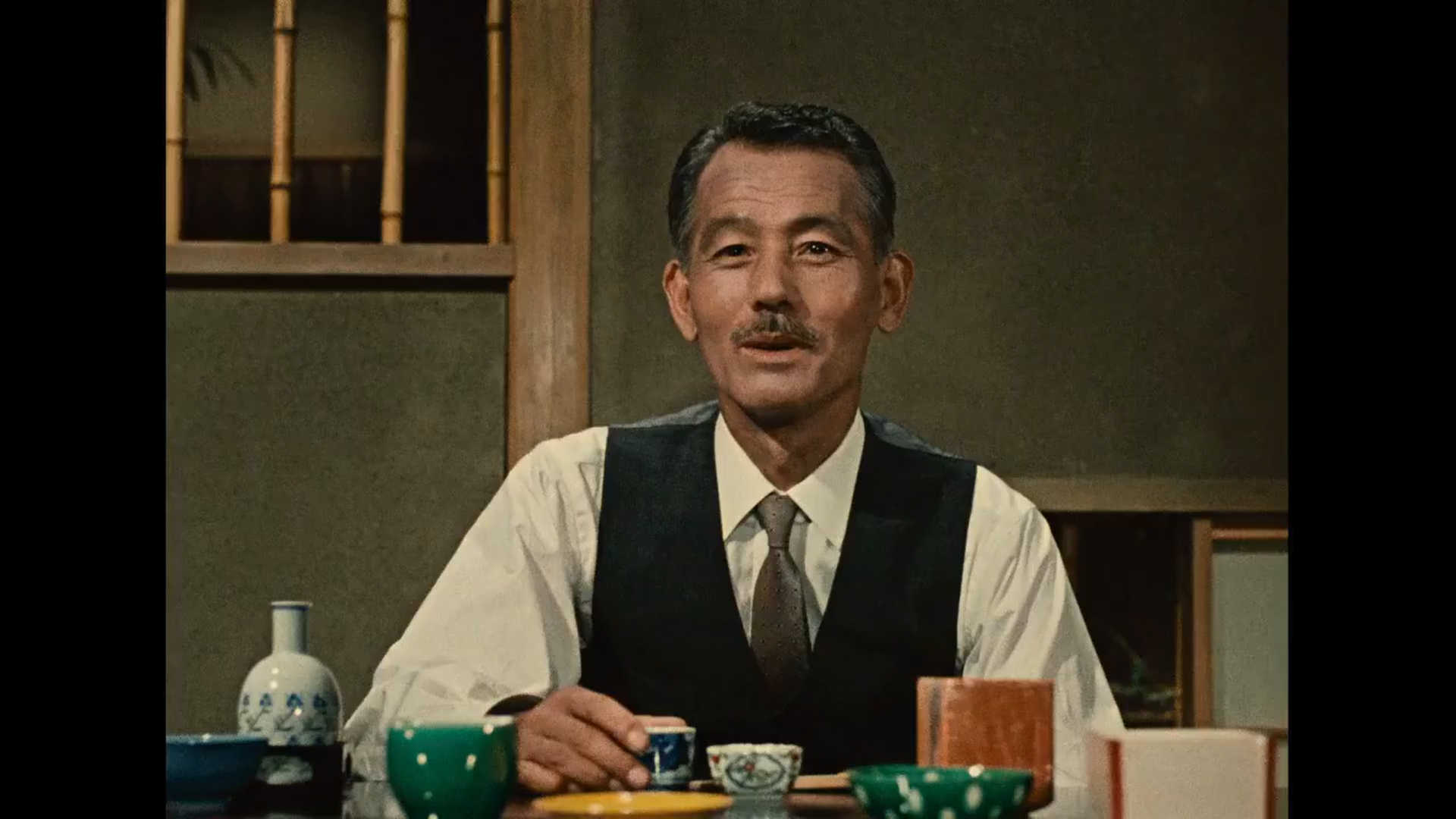
This is a common theme in Ozu’s framing and blocking.
One of the best and most subtle ways to break the 180-degree rule is to make sure the actors are facing the camera head on. They are not looking directly into the lens, just slightly off. You fix something to the edge of the mattebox and ask the actor to focus on it. That’s the “look” or “eyeline”.
Ozu repeats compositions across multiple films. He constructed sets according to his vision. He would precisely dress the set and stage everything beforehand, and there would be no surprises. He was very rigid with his blocking, as you can see in this shot, where the character walks to the very edge of the shot and beyond, but the camera doesn’t bother to pan right even just a bit.
Ozu used only one focal length for everything. More about it here. He framed from a lower angle, and this consistency in the visual language lets you relax into it. The honesty with which he broke the rule makes all the difference.
No matter what the master, the next shots are mid shots where the character is in the center of the frame mostly just looking off center. Let’s look at this in detail. A is the lead, B is the one in the center and C is on the side. This is just to keep it simple:
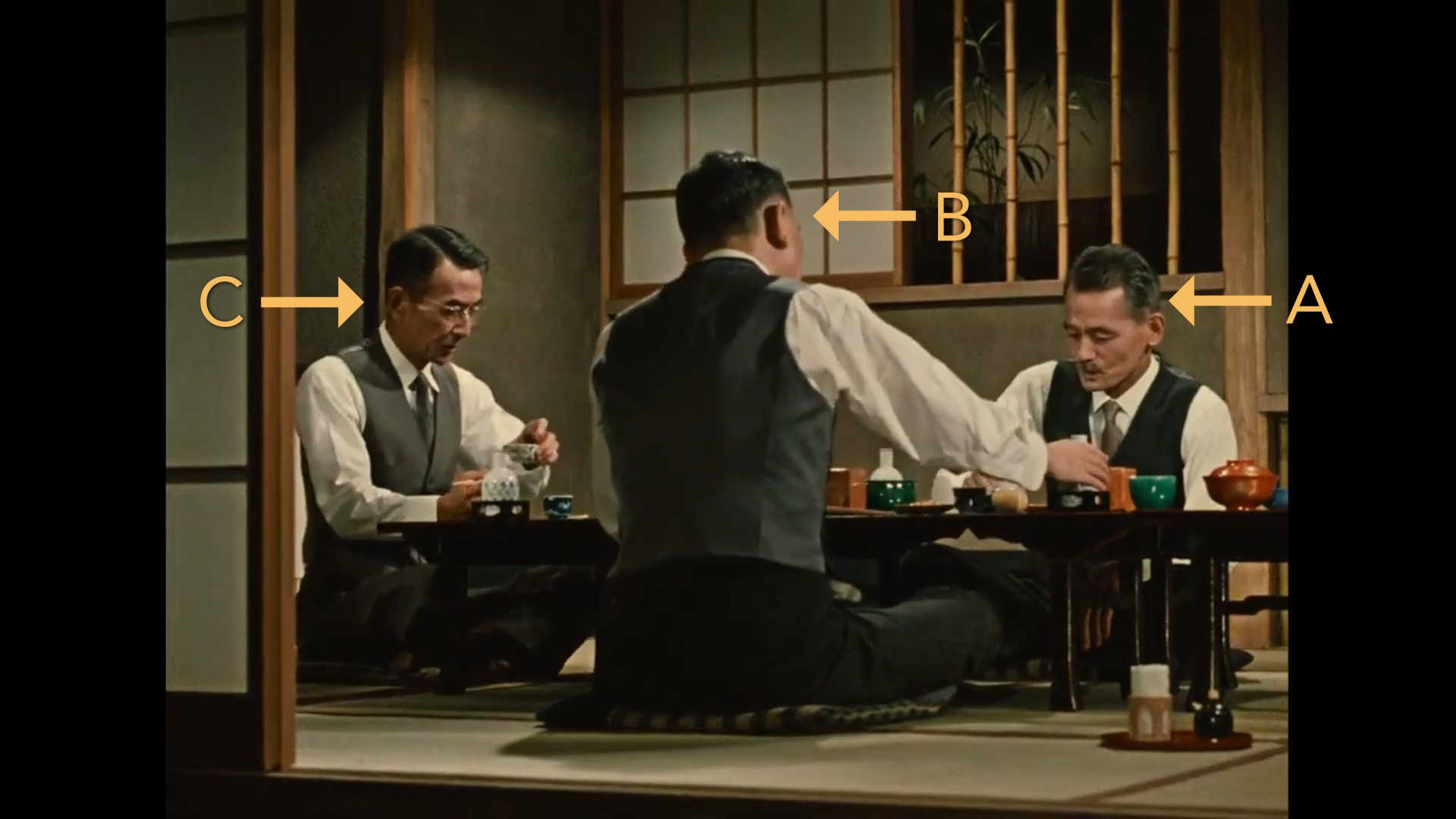
The way B is positioned, he is to A’s left and should look to the right of frame:
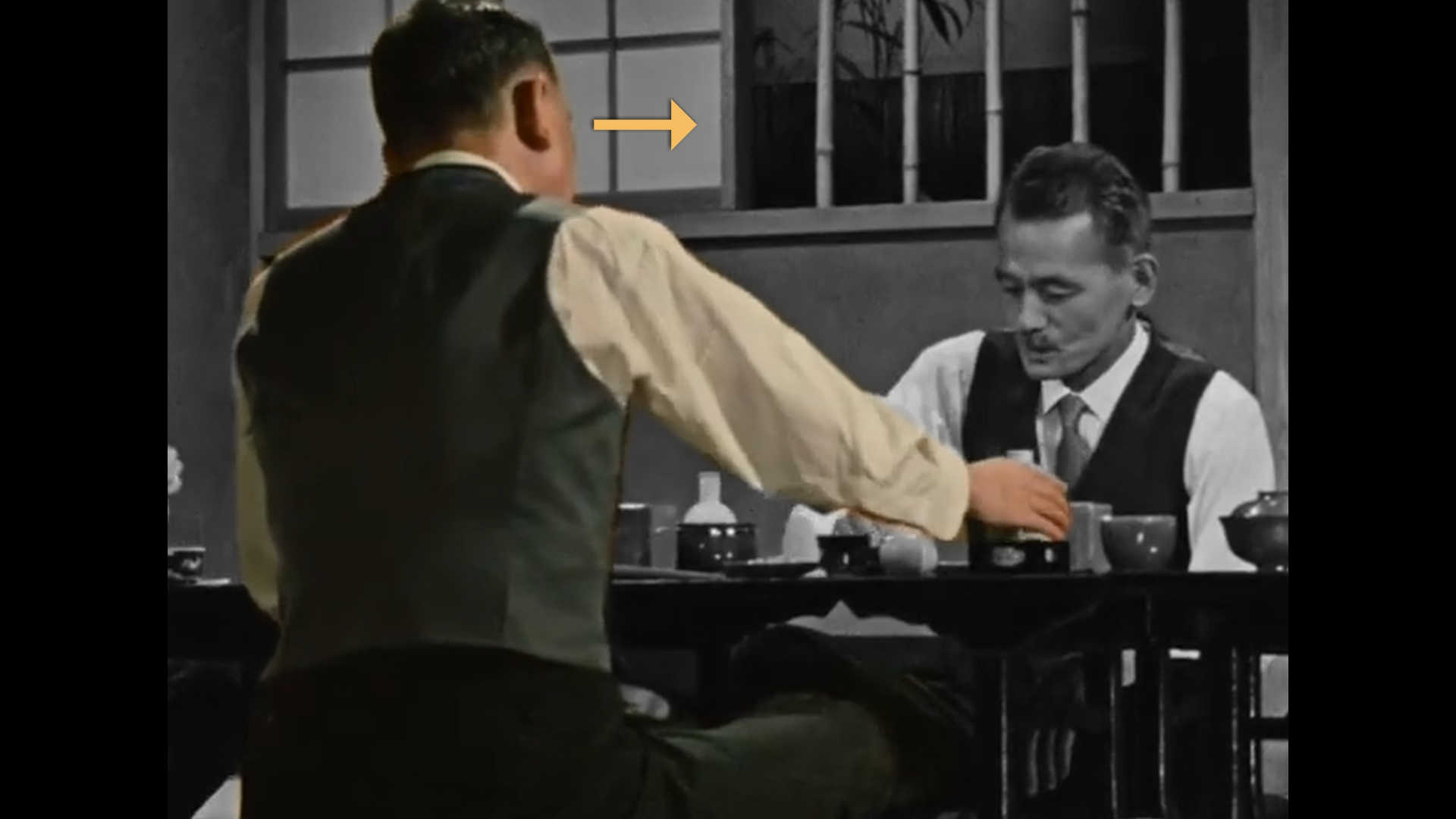
When we cut to B, he’s looking off to the left, and he turns to look at C:
A is supposed to look left, which he does when we cut to him:
Basically Ozu crosses the line to the other side, thereby reversing the direction. When he cuts to C he looks to the left and to the right. C is, by convention, always supposed to look to the right, but that goes out the window in this triangle formation.
When you have characters staring at each other, you can cut to the other side without drawing too much attention to the break in the 180-degree rule.
If the camera is in the center, in one fixed position, and just turns to face each character head on, you would get the kind of compositions you see in the film:
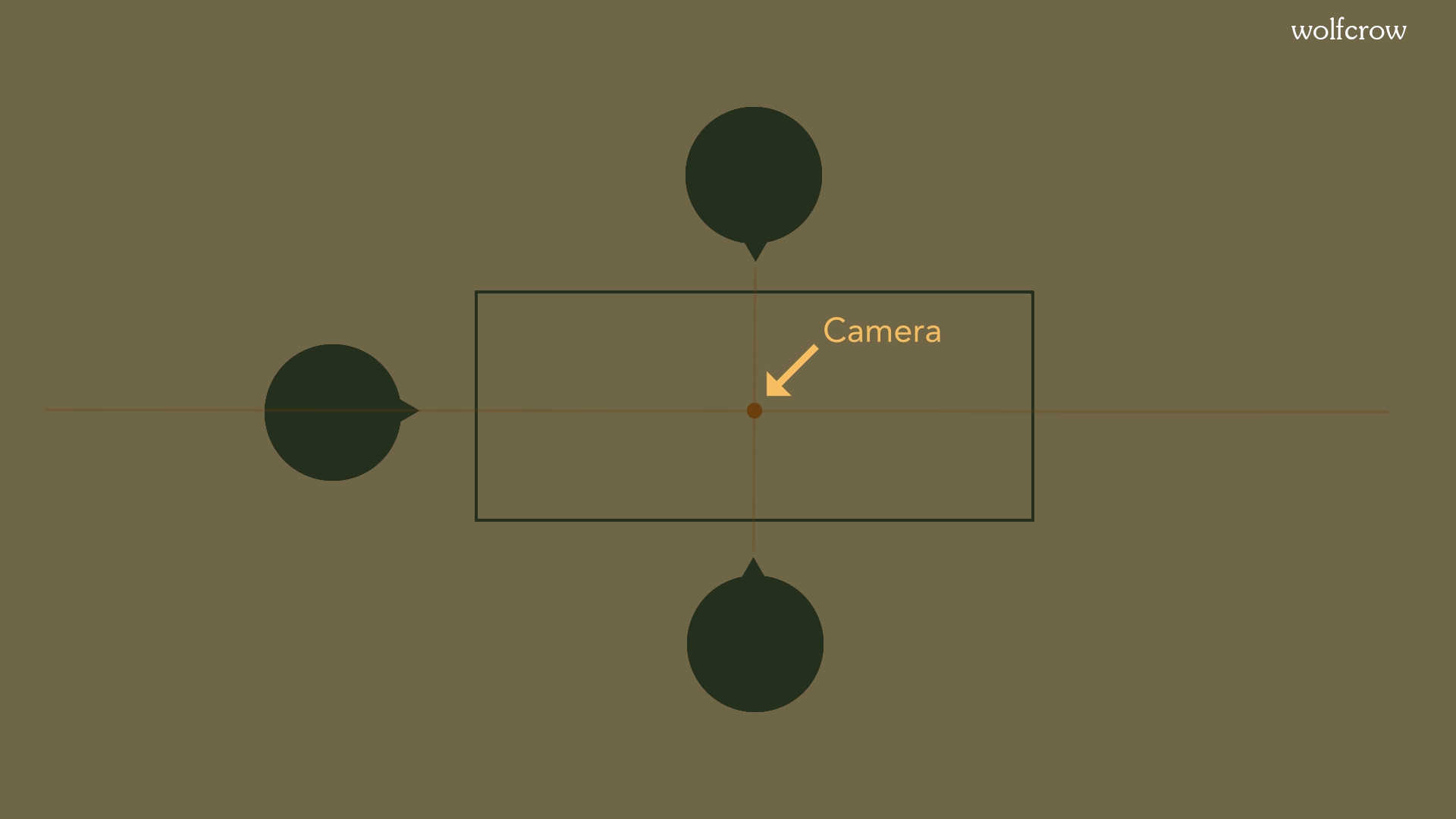
This works even though the master clearly establishes the conventional layout of the 180-degree rule. In fact, I’ll argue that it works precisely because Ozu shot a master, so we are aware of everyone’s position beforehand. We have a visual layout in our head, and this helps orient us during the scene.
In these shots the characters could have easily been asked to look in the right direction, but they weren’t. It was done on purpose. I’m not interested in the why as much as the how, so let’s move on.
When a fourth character enters the frame, she is positioned on the right, looking left:
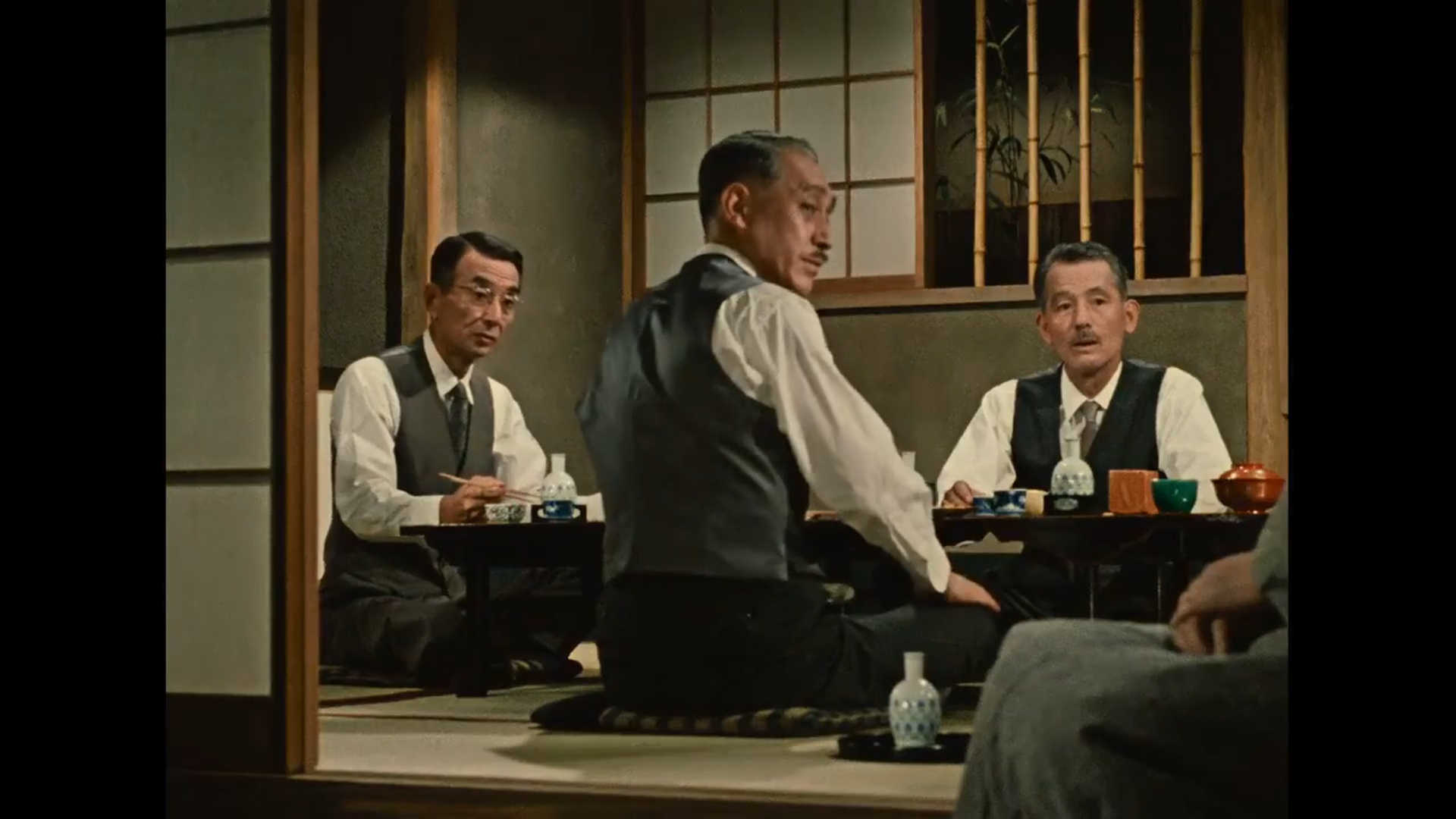
We cut to the reverse over the shoulder from A’s point of view, and she’s on the left, looking right:
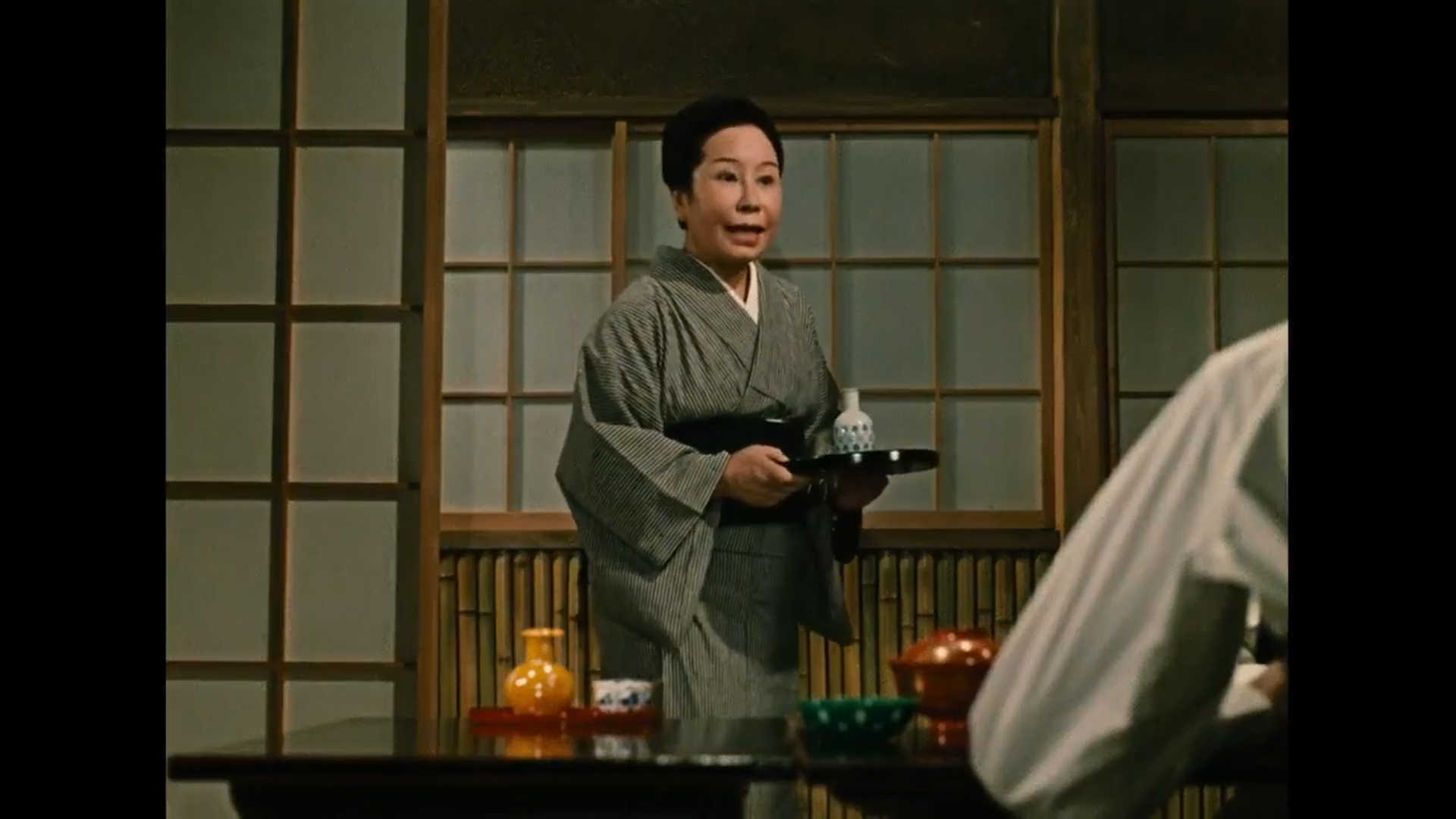
Instead of following the 180-degree rule, Ozu follows the real life rule. This is what we would see if we got up and went to the other side. So what if it breaks the 180-degree rule, it’s still valid.
In the very next scene A reaches home, and speaks to his daughter. She’s positioned right, looking left at him:
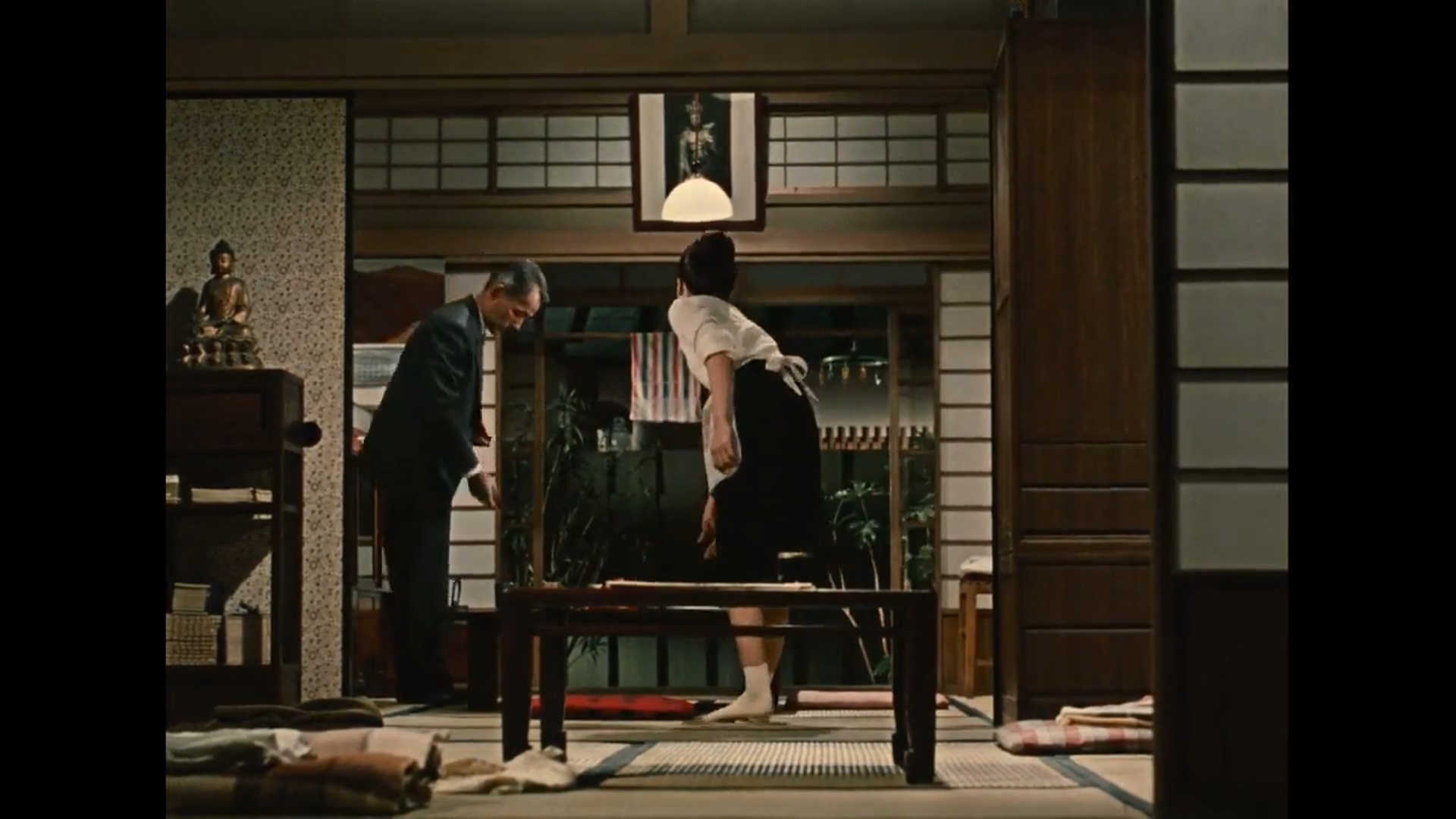
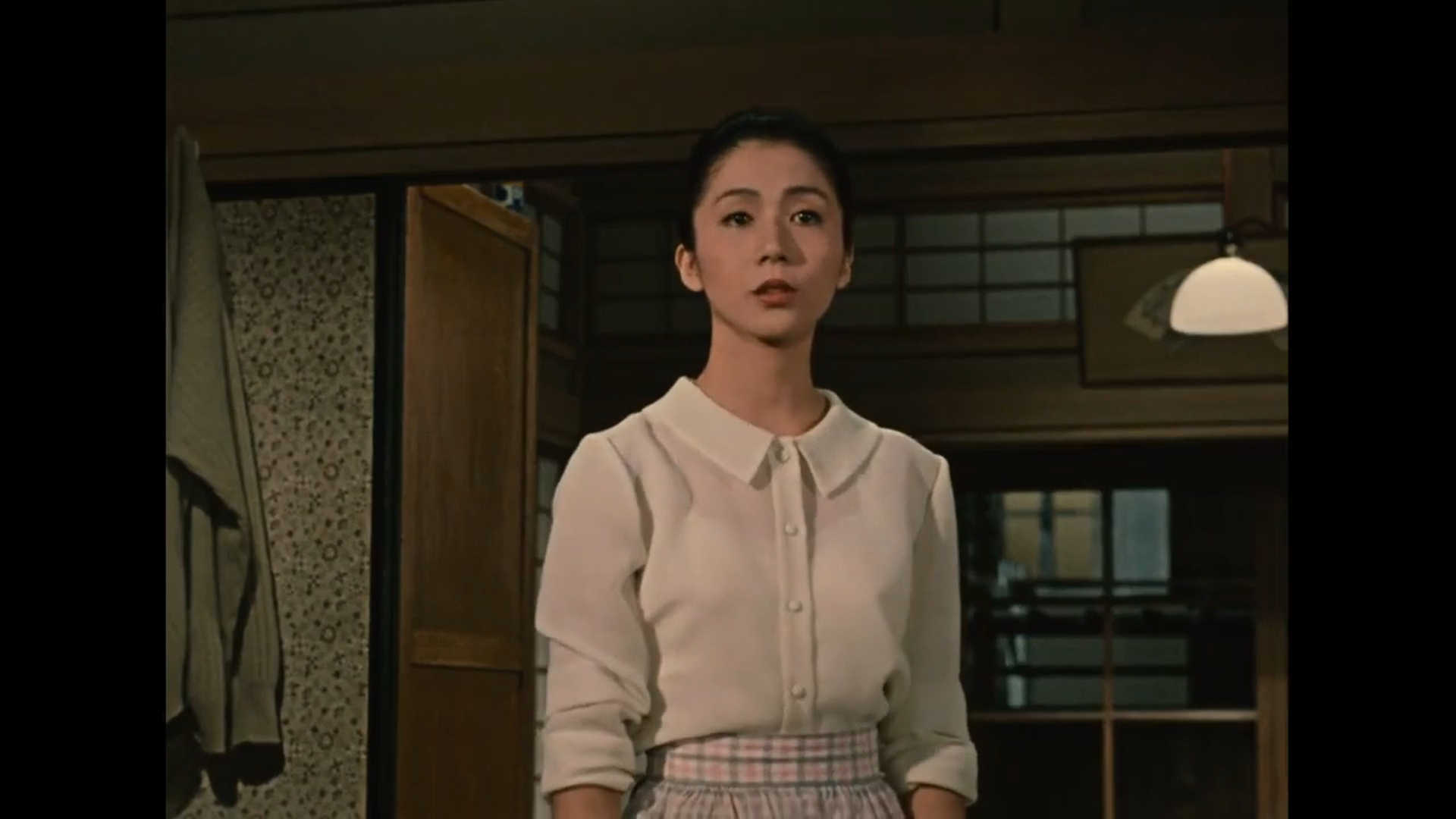
Cut to her mid shot, and she looks right:
He looks left:
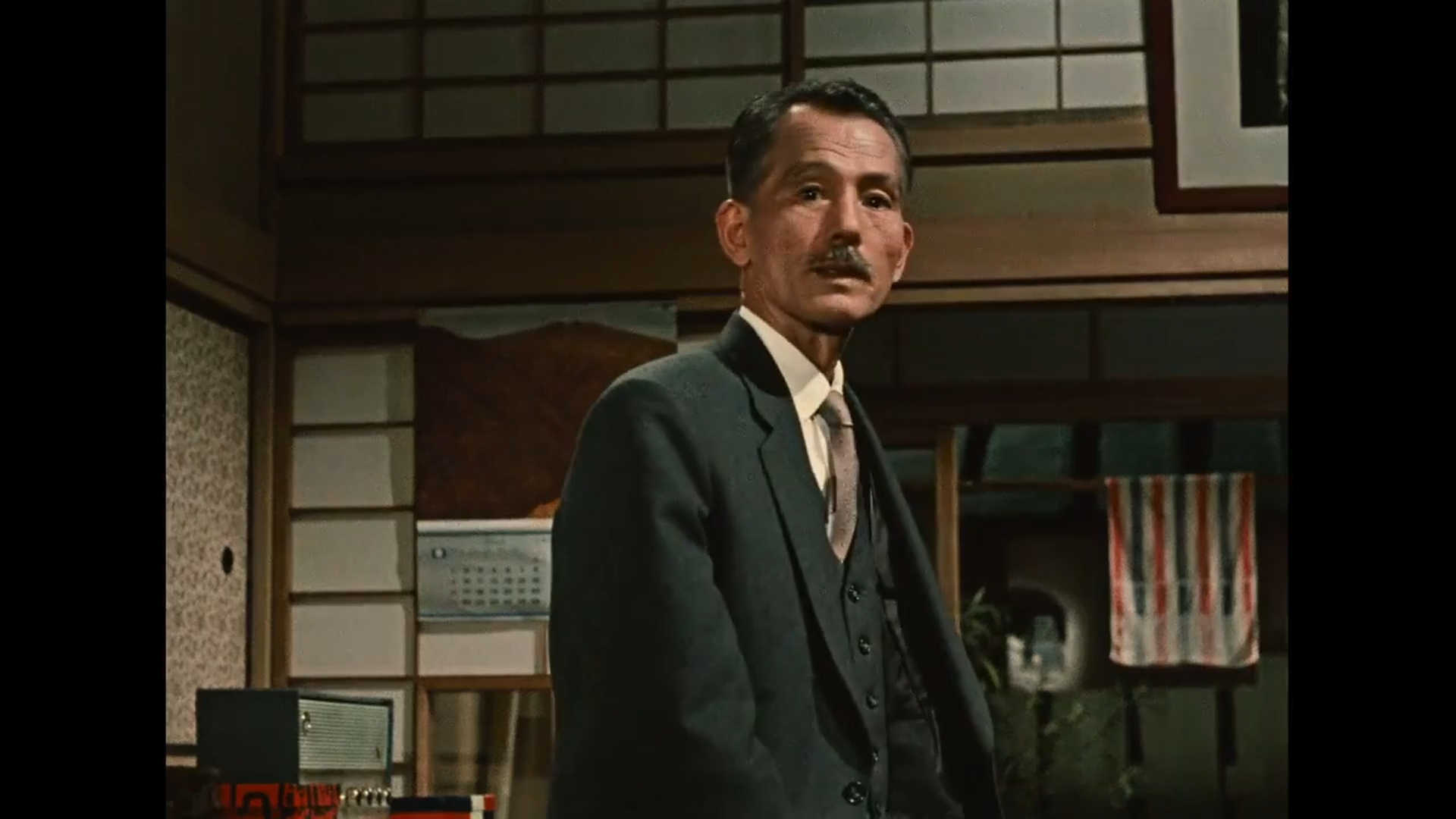
The key here is the order in which the shots are presented. If his solo shot followed the master, it looks weird.
This is the second key to breaking the 180-degree rule with subtlety. You don’t cut to the same person while breaking the rule. You do it after the opposite shot is first shown.
But Ozu was not always this subtle. Let’s take his most popular film, Tokyo Story.
In it he breaks the rule we just set, in the very first scene. Here we have the two central characters sitting in their positions, looking to the right of the frame:
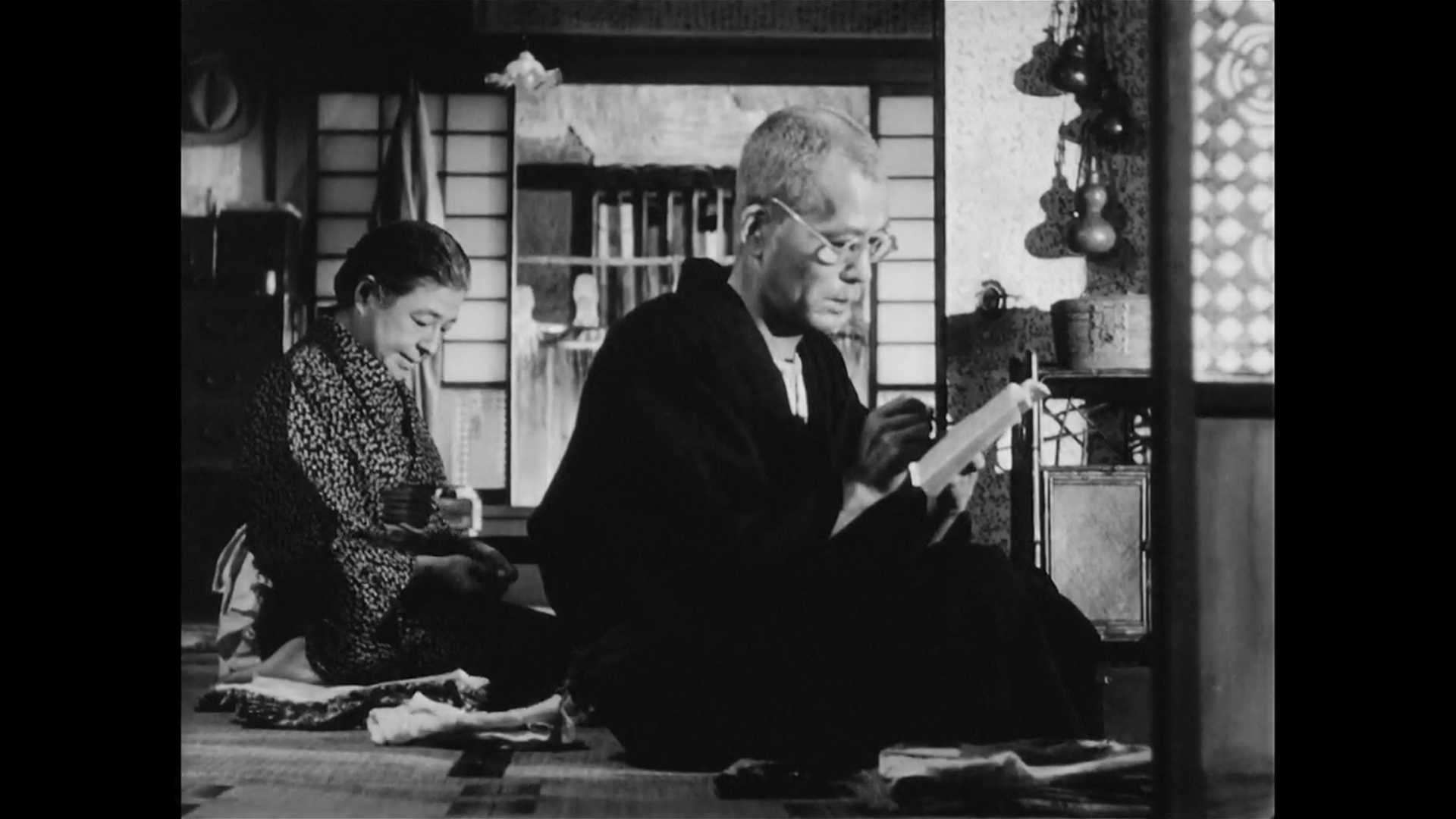
Then we cut to the male character, and he’s looking left:
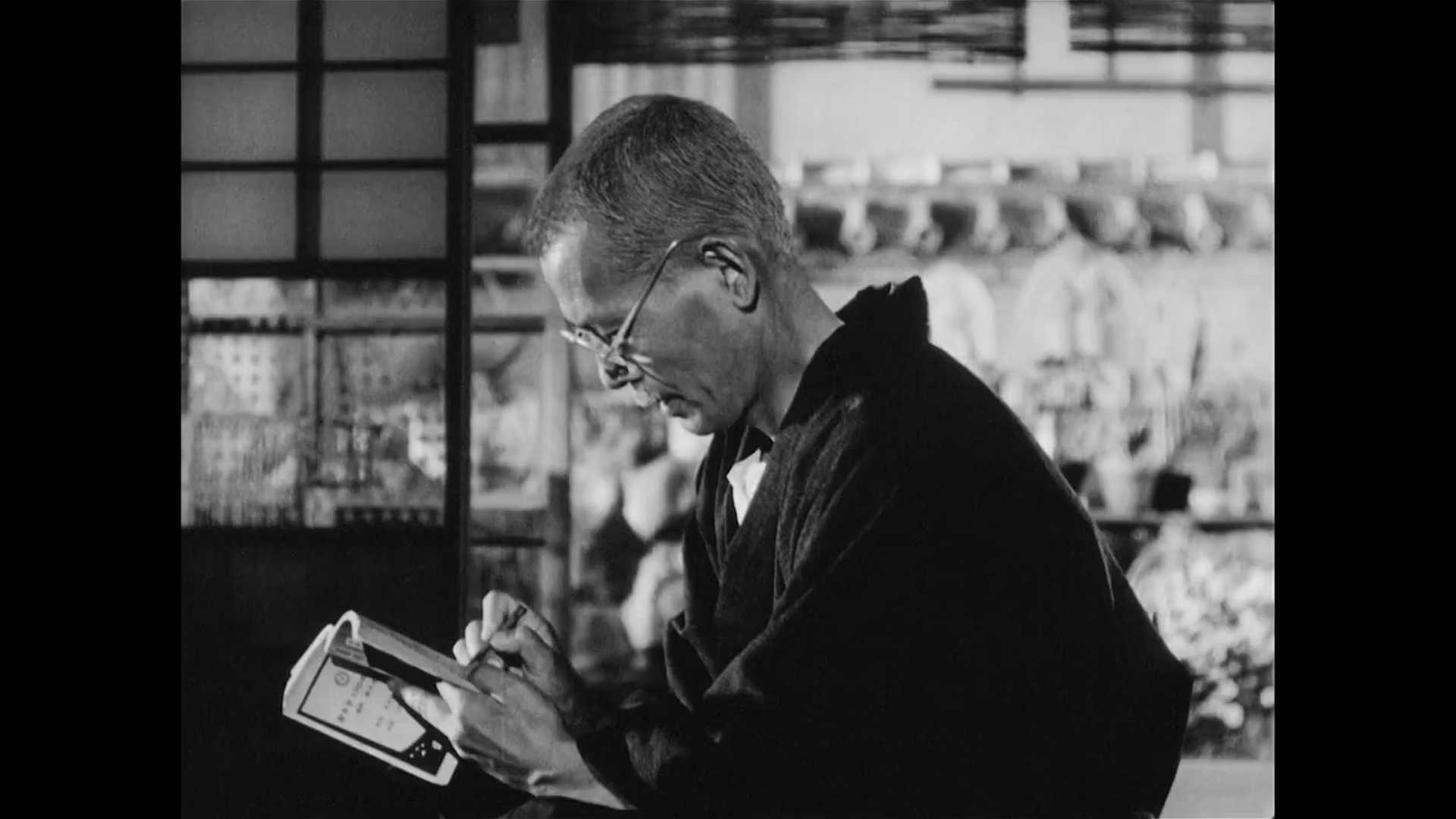
This is a more sudden jerk in the edit. Most people would classify it as a jump cut.
When he turns to look back at her, he looks to the right of the frame, which breaks the 180-degree rule:
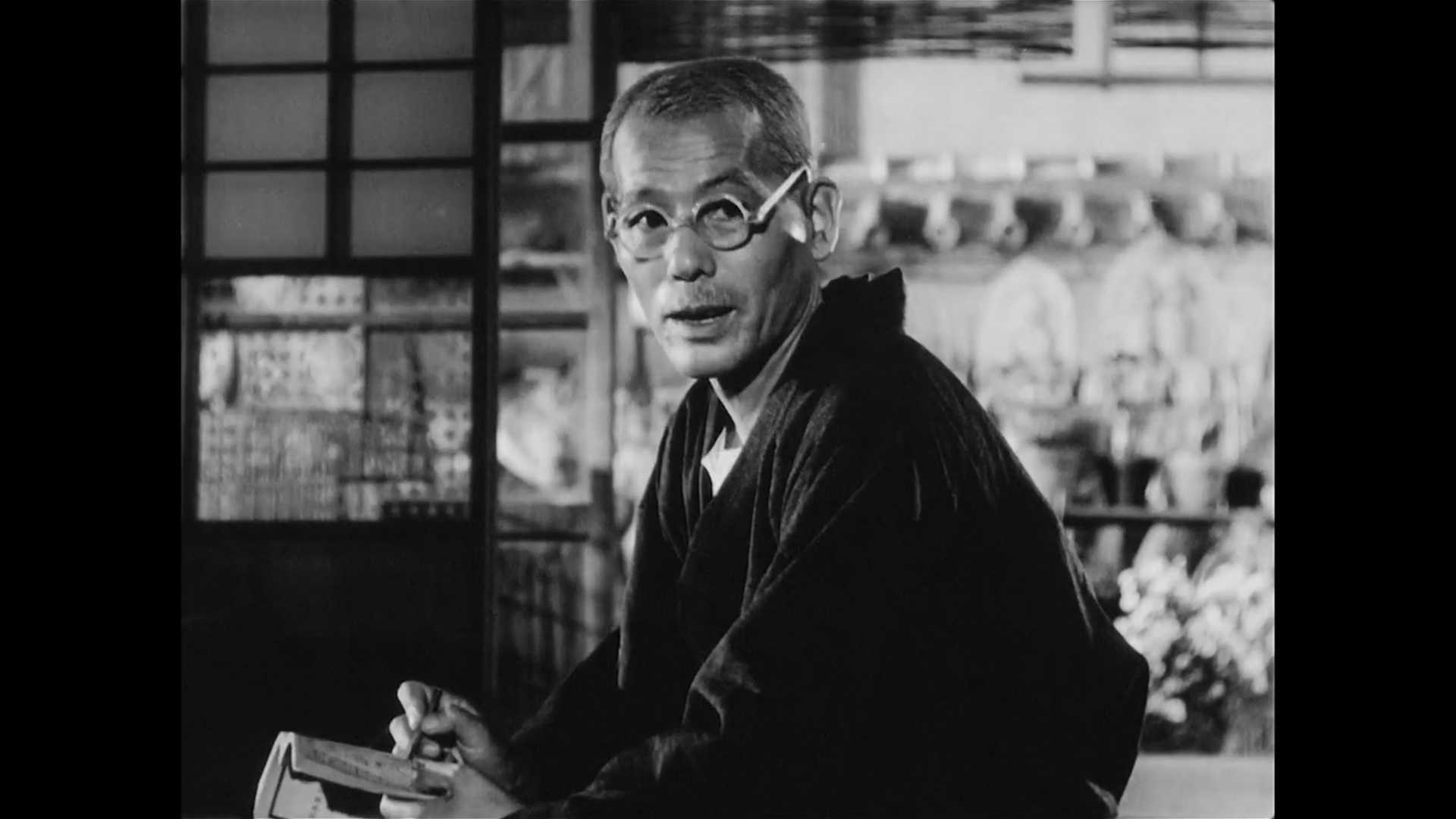
And this is the third secret to breaking the jump cut. About 20 years ago, I learned this by accident as I experimented in breaking the 180-degree rule myself. The trick is to show a mirror image. In Ozu’s case, the camera always faces the face, it’s almost never the back of the head.
After the daughter walks out we return to the two central characters:
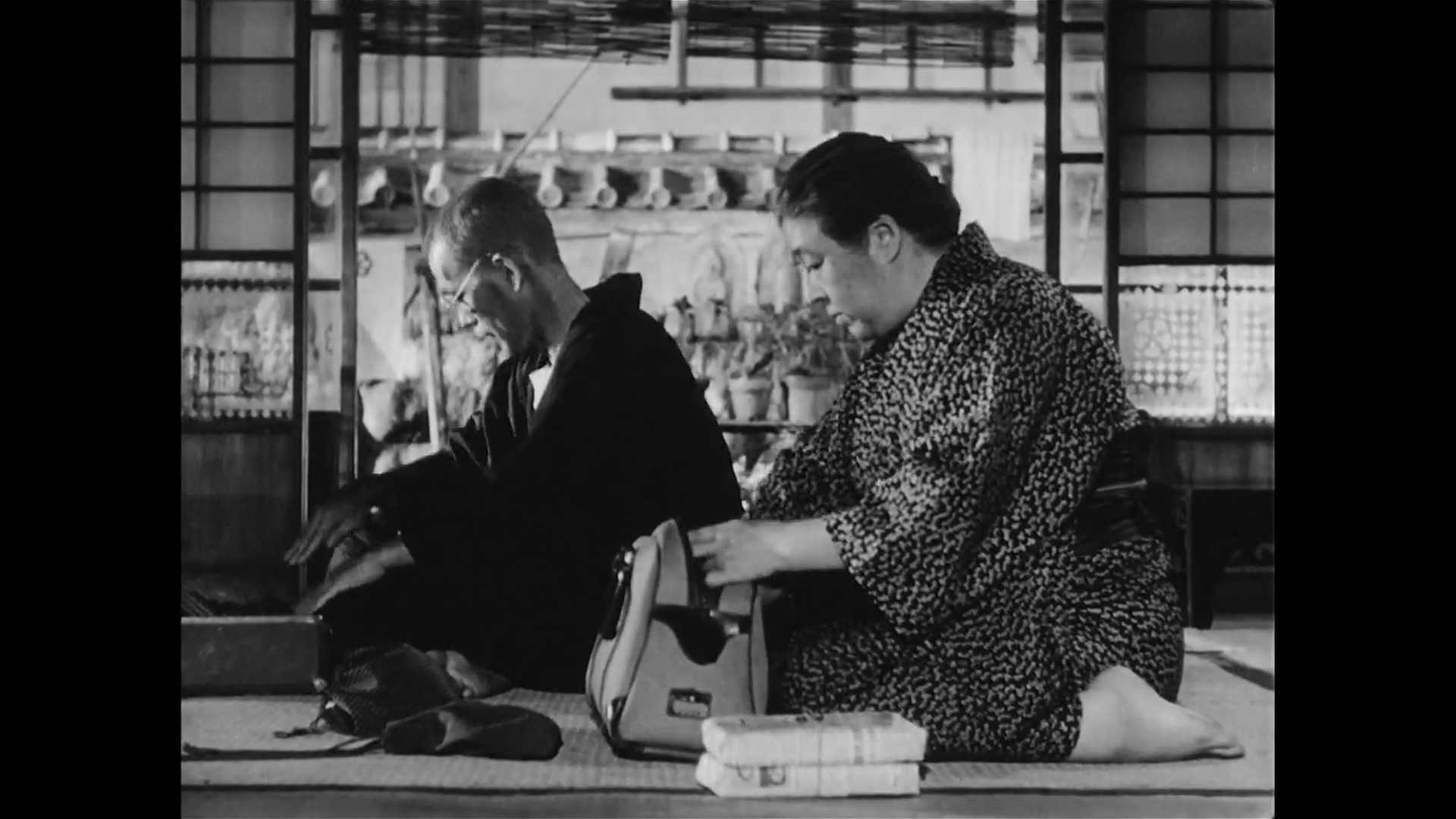
And this time we shift to the woman’s single:
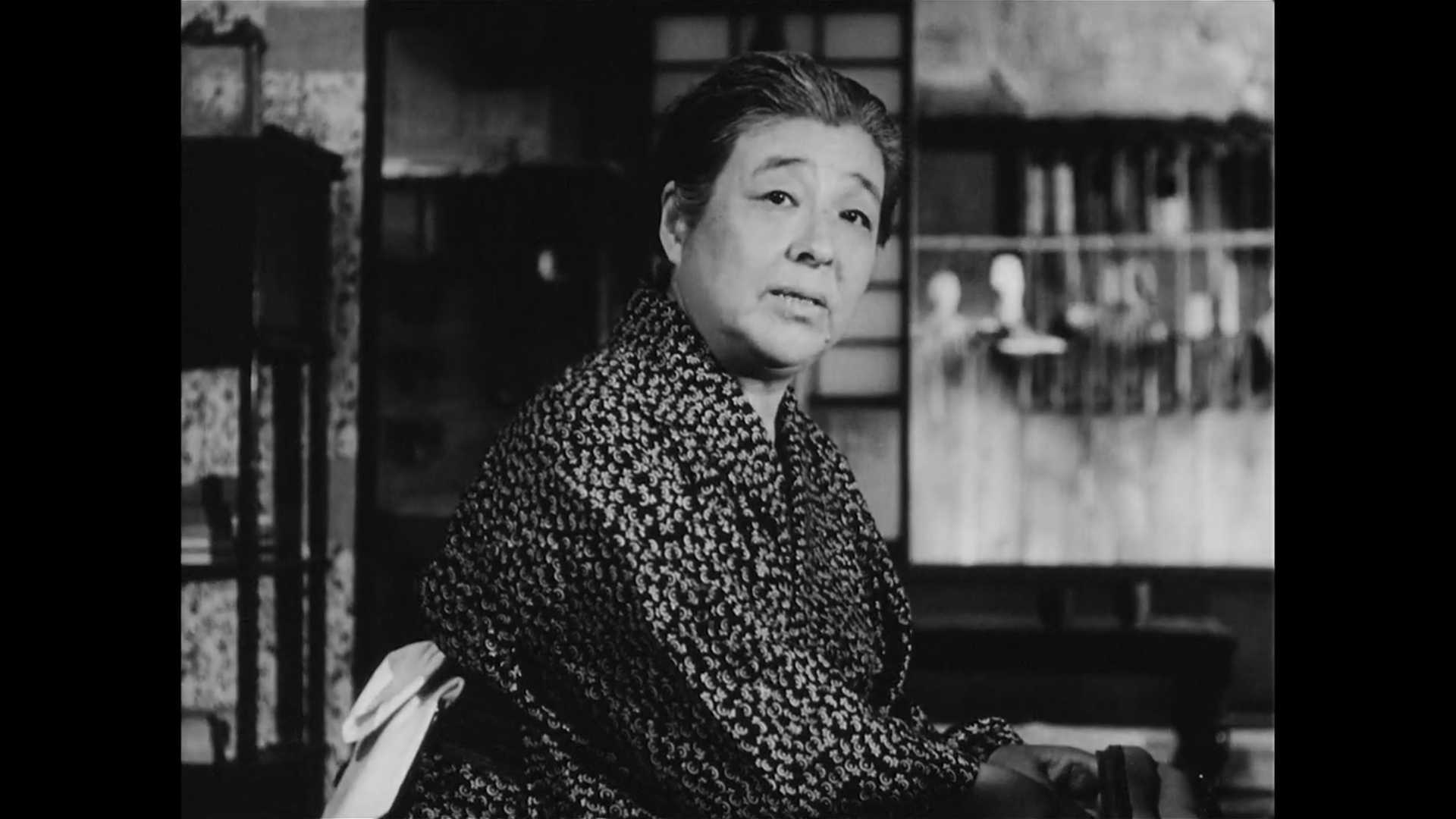
When the neighbor interrupts their packing we cut back and the reverse camera position is now justified:
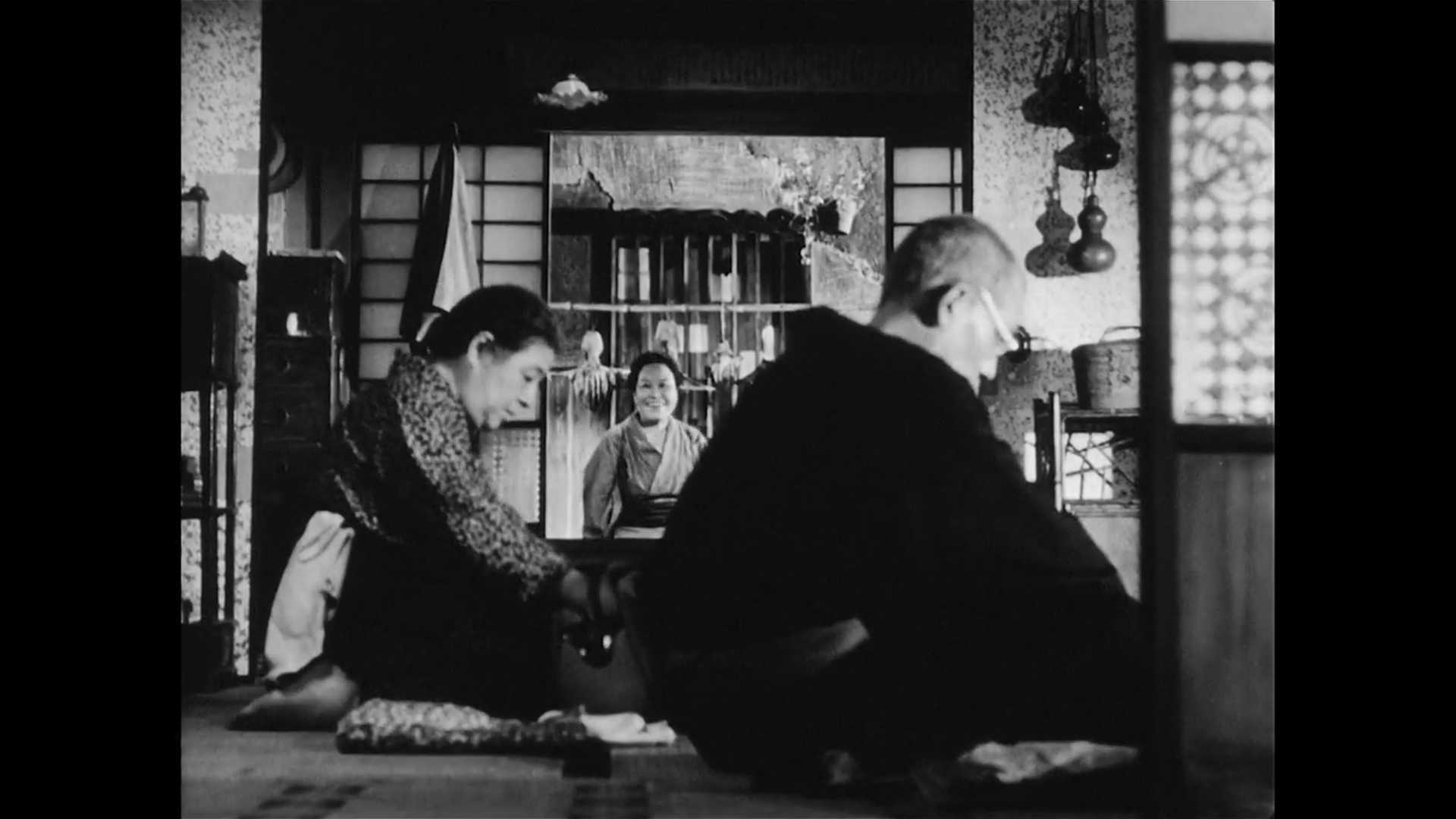
Ozu balances the scales and in both cases his imaginary line runs directly in the center of the action. Even the camera is a mirror image, and so are the looks:

The 180-degree rule is not all about sitting characters in dialogue. Action is also an important element. A couple of scenes later we see this lady in her home:
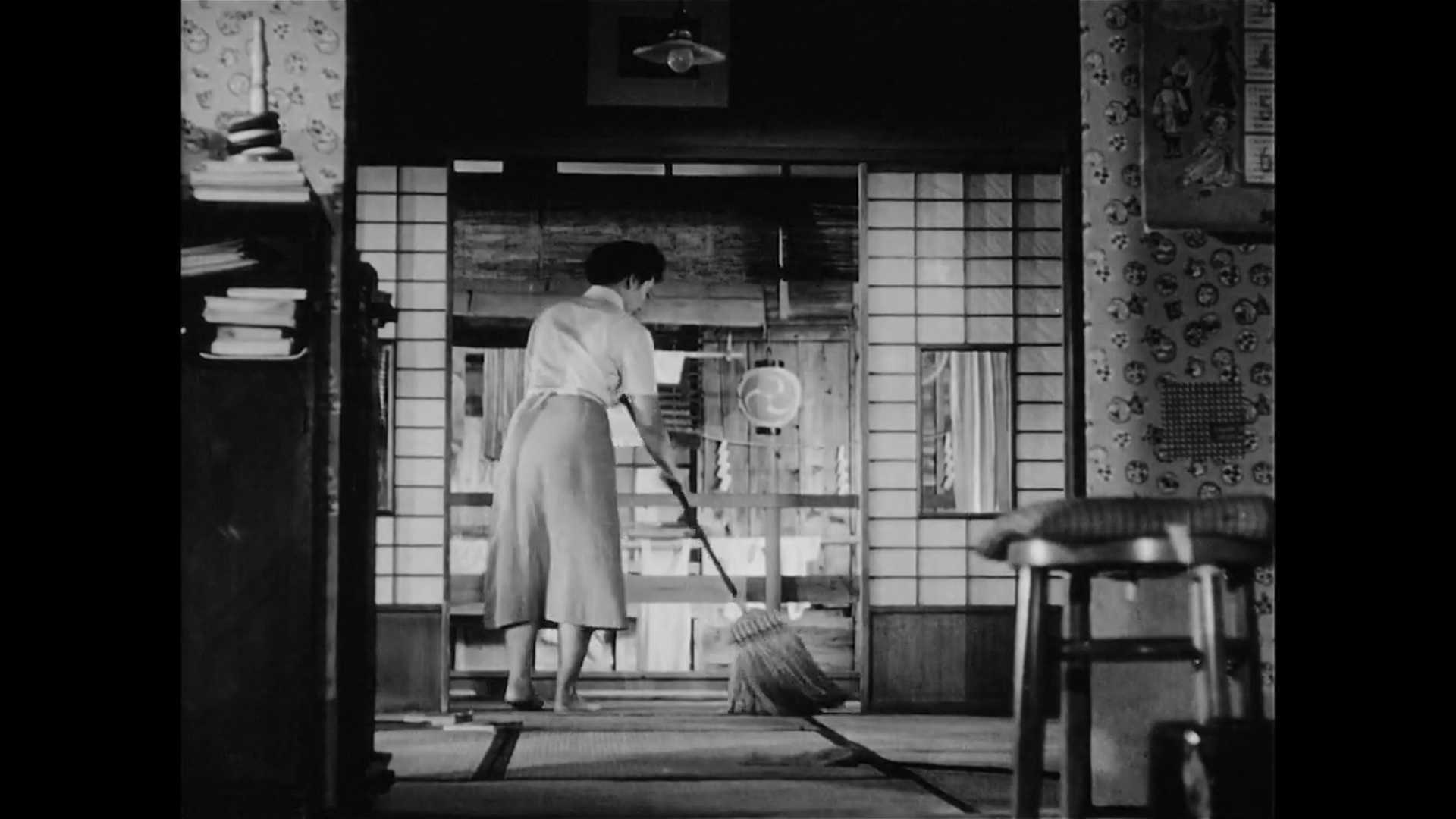
At first she exits left and enters from the right. That’s the 180-degree rule in play. Then she exits right and you expect her to start from the left, but out she pops from the right. She exits left and pops out from the left again. The effect of this is, you’re disoriented now. You don’t know which room is where.
It seems complicated, but once you draw out the diagram you see Ozu has just split the house down the middle, and the camera jumps to the other side, as a mirror image.
The last trick to breaking the 180-degree rule is to do it consistently as part of a visual language. Don’t just do it once or twice, because that would seem like a mistake.
How to break the 180-degree rule
You can break the 180-degree rule with these four steps:
- Shoot a master long shot that establishes the geometry of the scene.
- Use a neutral cut before the jump. The actors could be facing the camera head on in singles.
- Keep the camera angles and characters as a mirror image of the other shot.
- Break the 180-degree consistently to establish a visual language and rhythm.
That’s it! I hope you found this useful.

Thanks, just awesome, how to break the 180 rule in film.
You’re welcome!
What a brilliant exposition of the 180 degree rule – many thanks indeed. I shall look at Ozu’s Tokyo Story with new eyes.
Thank you!
Wow, I have never thought of that. Great job you did there!!!
Thanks!
Would another key to Ozu’s technique be that there was a shot he scrupulously avoided in these examples – the over-the-shoulder shot?
He did shoot OTS. Not in every scene, but often enough.