

This article explains a few strategies you can use to choose a camera lens or cinema lenses for long and complex films that don’t have huge budgets.
What do I mean by long and complex? I’m referring to:
- Feature films with many locations and scenarios.
- Documentaries that take you to remote locations.
The challenges of long form films are:
- Multiple different lighting conditions, often unpredictable.
- Locations with spaces that are not always under control.
- You are stuck with your gear and can’t change it midstream.
- You have a limited budget so you can’t buy or rent everything. Even if you had a lot of gear, you might not be able to afford assistants or transportation to lug it around.
These are problems cinematographers face and must overcome regularly. This article isn’t about choosing lenses for your camera. If you’re a beginner and looking to add stuff to your kit, start by reading The Ultimate Guide to Finding the Right Lenses:
If you are stuck about focal lengths and lenses in general, this might help you:
This article moves beyond the basics, and looks at lenses as weapons you pick for each fight.
This is just one system. Feel free to modify it to your needs.

Step One: Cinema Lenses vs Photography Lenses
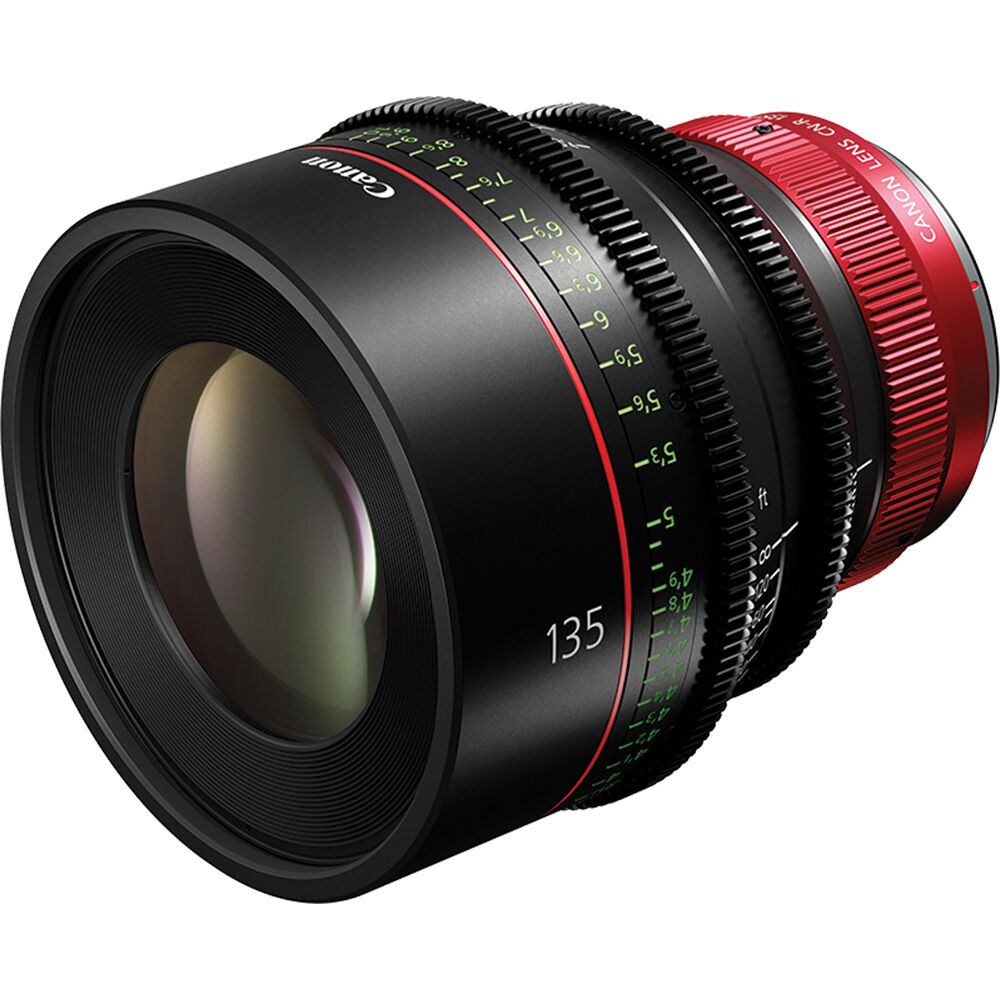
Imagine two lenses, the first a Canon RF 135mm f/1.8L (Amazon, B&H) photography lenses, one of the sharpest lenses available. The second is the Canon CN-R 135mm T2.2L (Amazon, B&H), a cinema version of the lens that costs about twice as much.
Why on earth would anyone pay extra? If you’ve moved past the beginner cinematography stage you already know the answer to this question. A cinema lens should offer a range of features over a photography lens that makes the choice worth it.
If you’re not sure about the distinction, then please read this article:
Step Two: Defining the Aperture
I don’t consider any lens with a maximum f-number greater than 2.8 (f/2.8 or T2.8) a versatile lens for video or filmmaking. Many cinematographers in the past agree with me:
I’m sure there are many who disagree with me. Of course you can use a 18-55mm kit lens with its variable aperture, or the lens on your iPhone, or a hole in the wall.
However, the location and light output available plays a major role in your choice of aperture, but you don’t want it to.
There might a shot where you’re absolutely certain you’ll have enough light to shoot at T5.6, say, but due to unforeseen factors you are forced to wait till dusk to shoot the same scene. If you had brought along a lens with a maximum aperture of T5.6, and at dusk the light you have is way too low, then you’re in trouble.
Similar problems can happen in controlled lighting setups as well. Contrary to popular belief, you can exhaust all your lights in a truck and still have insufficient light for the exposure you want. I’ve been there.
Ever heard the phrase: Failing to plan is planning to fail?
I can understand cash-starved filmmakers making such compromises. I’ve done it, too. But a professional cinematographer can never afford to make such a compromise. Imagine a doctor arriving at the operating table with toy scissors!
A cinematographer has to take into consideration any contingency. What do you think Gregg Toland would have done if he hadn’t been able to achieve deep focus in Citizen Kane? Would he have abandoned the film? Of course not, he would have shot at a larger aperture with shallow DOF.
Film production is too expensive to subject it to whims and ‘lucky breaks’. Directors and cinematographers don’t have that kind of luxury.
This doesn’t mean all lenses should be a T1, because that introduces a whole new set of problems. You’ll see many people extolling the virtues of a T2 lens – woo hoo – how many of these people actually have to pull focus with these beauties?
It’s good to have, mind you, because you can also stop down a lens, but it is not necessary until it is. Professionalism also means knowing when to stop – you don’t bring a jack hammer to hammer in a nail.
So do what all great cinematographers have done. Define the maximum aperture you’re going to get, find a backup plan for when that ever backfires, and pick a lens set that matches your needs.
Let me show you one way to do it.
Step Three: List your shots
List all the shots you are likely to take or need. This is mandatory on most productions anyway. For each setup or shot, I list the focal length and the f-stop or T-stop. If you can’t decide, write down more than one (the second column in the chart below).
This is what it might look like:

I use Google Spreadsheets for all my spreadsheet work, but you can use a pen and paper too.
You need to call on your experience, the aesthetic demands of the film, the location scouting photographs and notes, and your general knowledge of cinematography to arrive at the right focal lengths.
The first consideration should always be aesthetics, mainly skin tones, lens draw, depth of field and bokeh.
The advantage of spreadsheets is that the next step becomes easier.
Step Four: Sort your shots
Sort your columns according to focal lengths, and then do a second sort of f-stops within each focal length. It should look something like the table on the left:

You can quickly see how many times a given focal length is required, and what the maximum f-stop (minimum f-number) is for each focal length.
You could convert that into a graph (on the right), but it’s not necessary.
Side Note: Sometimes film productions happen in schedules with breaks in between. It might be a good idea to limit your lists to the needs of each schedule so you don’t lug everything around unnecessarily.
Step Five: Whittle down your List
From the chart or table, you should be able to tell which focal lengths are critical, i.e., you’ll find your bread and butter focal lengths and apertures.
Here’s a rule of thumb: Invest more in your bread and butter focal lengths and apertures. You will need all your lenses anyway. The point is to find out how to distribute your time, attention and budget for maximum productivity and efficiency.
In the above example, I know the 50mm is the most important focal length, and I need f/2 or T2. Zoom lenses are out, so I will allot a good chunk of my budget for a really good 50mm f/2 or T2 (or better) lens.
This exercise also highlights any lenses or apertures that are used for only one or two shots. Do you really need them? This forces you to streamline your thought process, and to be more objective in your selection.
You try to eliminate the obvious. The list can also tell you whether a zoom lens or a prime lens might be a better investment. We see the 85mm lens is only used for one shot. Can we manage it with an f/2.8? If yes, then we can club the last three focal lengths and just get one 70-200mm f/2.8 zoom lens.
If you have a range of bunched up focal lengths with similar maximum apertures, then think about getting one good zoom lens that covers this range. Nowadays good zoom lenses are readily available, and might meet all your aesthetic criteria as well.
And here’s a corollary: If the focal length you need stands alone, or has a unique aperture requirement, get a prime.
Rinse and Repeat – eliminate every redundant possibility. You can ask all sorts of questions with this method. It is flexible enough to adapt to any film project.
Once you have your ‘final list’ of focal lengths, shots and f-numbers, hunt for lenses that match your requirement. Don’t eliminate anything yet. Make a list of lenses corresponding to each requirement.
If you’d like to support this website, please look for lenses on Amazon or B&H. It won’t cost you anything extra.
Step Six: Question your Choices
Finally, ask these questions of your lens choices (it’s not definitive, but it will give you ideas for your own productions):
- Focus mechanism – do you need a follow focus system?
- Do you need de-clicked apertures for subtle exposure control?
- Do you need weather protection?
- Do you need creamy smooth bokeh, or a special quality of bokeh?
- How much sharpness is good enough for you?
- What kind of contrast do you need?
- What kind of lens flares do you need?
- How do the lenses compare with aberrations and distortions?
- Do you need a macro lens or a diopter?
- Do you need autofocus or a servo zoom?
- What is the size and weight of all these lenses (and the case)? Will it fit your travel limitations?
- Can I get filters to adapt to all these lenses?
- Will the matte box I’m using fit all these lenses effortlessly?
- What about replacement, service or repair? Will the rental house be able to meet these contingencies? What if you are buying the lens, how will you replace them in case of a problem?
- Does everything fit the budget?
Budget is last because it allows you to focus on your art. You will eventually appreciate why the look you want requires an expensive lens.
Sometimes, a lens you’re avoiding or ignoring (possibly due to negative associations you’ve formed) suddenly jumps out as being perfect for your job. You will come to have a clear idea of what compromises you’ll have to make to get a lens within your budget.
This kind of thought process is what separates professionals from amateurs. Problem-solving is a critical skill in any cinematographer’s arsenal.
All said and done, experience will make you better at estimating your needs. My approach will help you get started to know exactly what lenses you need and at what apertures.
At the end of the analysis, you will be blessed with a manageable number of lenses from which to choose. If you know some tricks and ideas from your own experiences, please feel free to share them in the comments below.
And in case you’re wondering: Do I really think and work like this?
Yes! I use this line of reasoning and analysis even on smaller films. Why not? It’s fun, and fast with a spreadsheet. Me and my spreadsheets!
