

Watch the video:

Note: Tarantino used Spherical Primo lenses in Death Proof. John Carpenter used anamorphic lenses.
You could have four or more characters in a car, or less, maybe just one, or maybe none. I’m assuming you have at least two or more characters because that’s when it’s challenging.
Use relationships as your starting point
The relationship between the characters in the scene will tell you where to place the camera, and how many shots you need. If you had an unlimited budget you could shoot for every different angle, but even Tarantino doesn’t have that luxury.
Let’s take the second-or-so car scene from Death Proof (2007), an under-appreciated film, if you ask me. Three friends make their way to a bar, not very far, in a car.
They don’t change their positions during the scene, and it’s interesting to see where Tarantino places the camera for each angle.
Camera angles in Death Proof
Shanna is driving, and Jungle Julia stretches at the back with her feet outside. Arlene is probably the one Tarantino expects most people to identify with, unless you identify with Shanna or Jungle Julia.
Anyway, Arlene is the common friend here, because Shanna and Julia don’t see eye to eye at this point. They’re friends, but in this scene they’re not on their best stretch. Knowing this fact about their relationship, can you use cameras to show us that?
The position and placement of the shots tell us all we need to know. When we frame Arlene, you see Julia in the back:

Even though Arelene is faced away from Julia, both being in the same shot close together gives us the subconscious impression they’re together. Before you get the wrong idea, just because people share the same frame doesn’t make them buddies. It’s the way the shots are combined and edited that tell us how to read them. In this case the characters are physically framed close to each other, they’re not on two ends of the frame.
Shanna is either in a solo shot or paired with Arlene. She’s never sharing space with Julia:

Julia is paired with Arlene or in a solo, but never paired with Shanna:
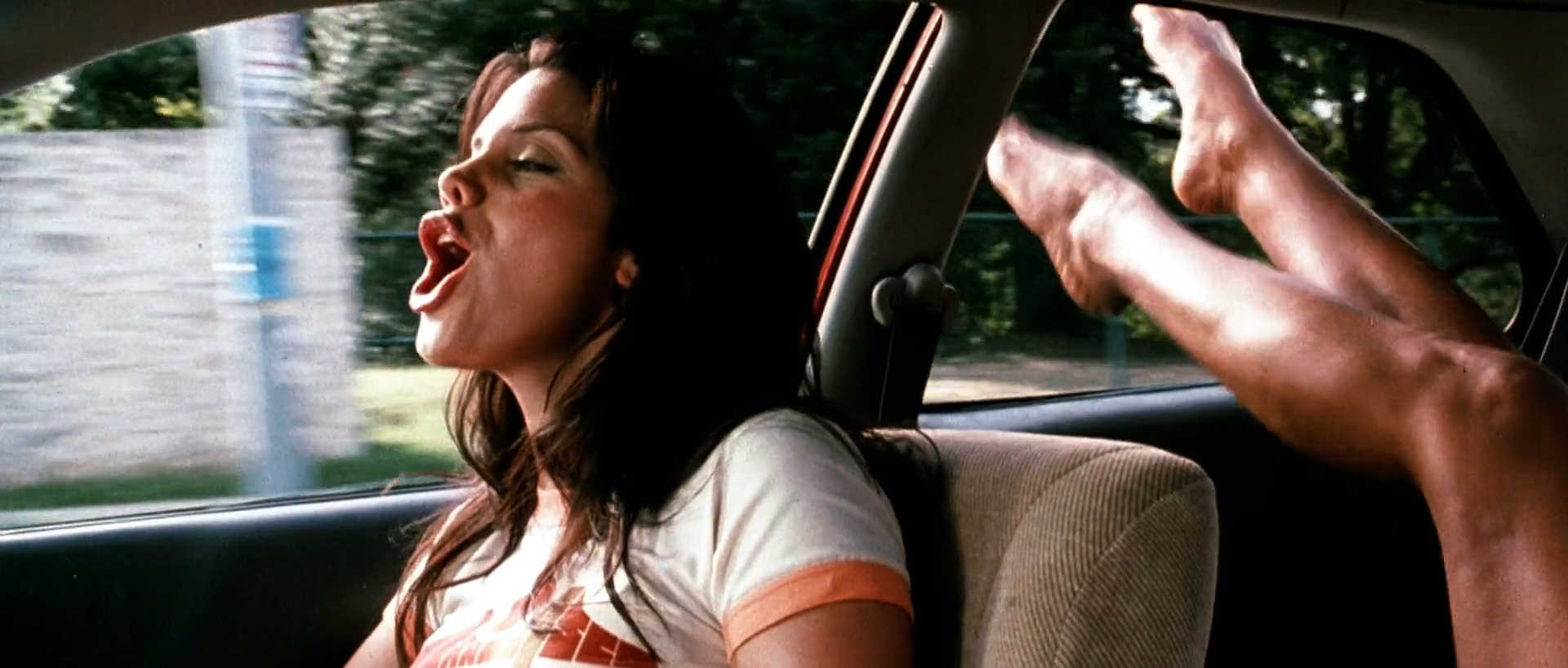
This framing is not due to a practical limitation of the camera. Tarantino could have filmed it any way he wanted to, and he did, in a later scene where we have four new girls.
Kim is driving, Zoe’s in the passenger seat:

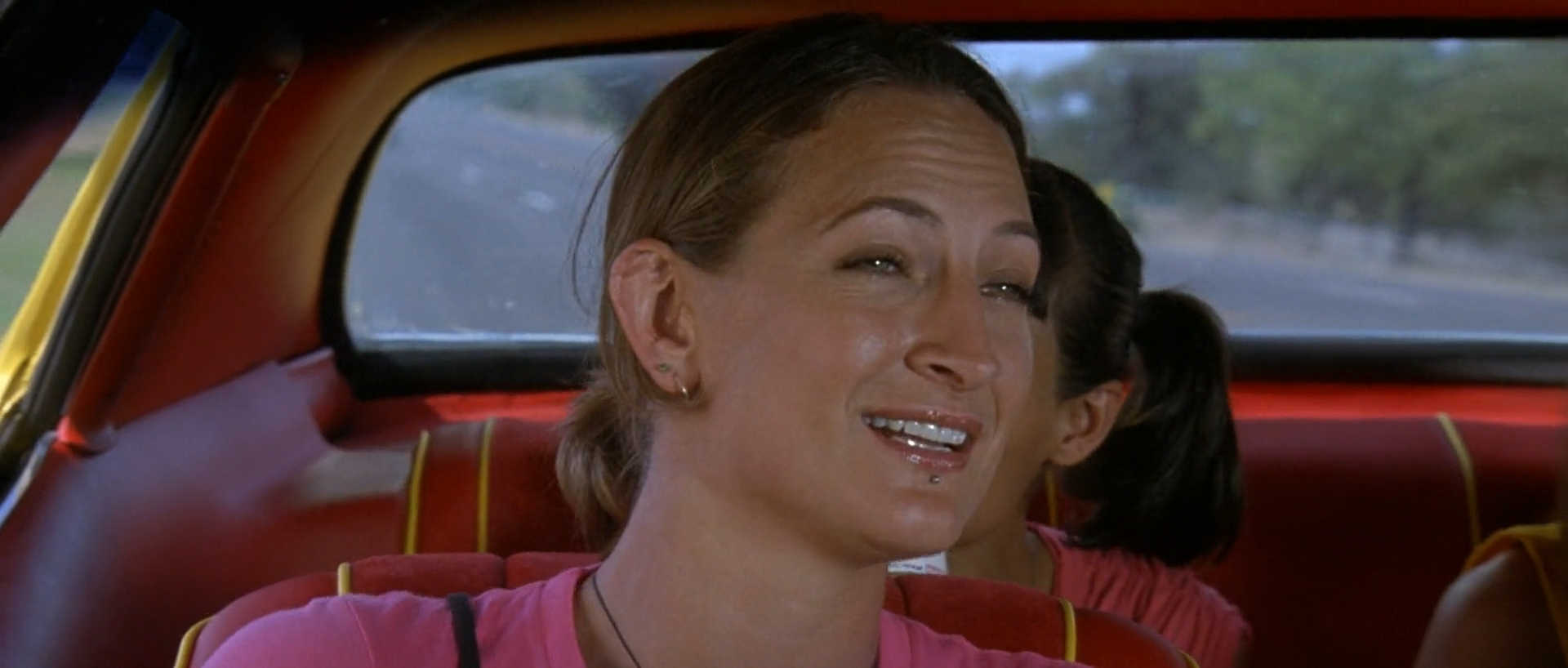
Abernathy and Lee are at the back:

Lee is the odd one out here, but not in the same way Shanna was with Julia. Ultimately, she’s left behind by her friends as collateral for a car. I don’t know about you, but maybe Tarantino found that funny. Anyway, she has close up solos that signal to us she’s the odd one out, just in a different way from the first car scene:

In most of the shots in this car scene, characters share screen space. Everyone shares space with everyone else. You can fit only three characters before running out of room, or you have to pull back wider to fit all four.
Depending on who’s having a conversation with whom we either get a three shot, when the whole group is involved in the dialogue at that point, or a two shot, if it’s just a back and forth between two characters.
All this happens quickly in the editing and we don’t obviously think about it while watching the film. The other three characters do have solo shots, but Lee has four, and are in a tight close up. Without us realizing it, the camera and editing is subtly giving us hints about their relationships.
By deciding how many characters share screen space and when, you can define their relationships by picking the right shots and angles.
In the final chase scene, as the girls catch up with Stuntman Mike, they are mostly in a wide shot – all three together in the same space:

This time it’s not about their individual stories or feelings, but the combined feeling of euphoria as they chase down a psycho.
Now let’s talk about shot sizes.
Shot sizes in a car scene
In a car you can only do medium shots or close ups, no long shots – unless the character is reclining in the back seat. Combining characters in a single frame means using wide angle lenses.
To achieve this level of framing with wide angle lenses you have two options. You could either use a spherical lens or use anamorphic lenses. Tarantino picked spherical lenses for Death Proof. These lenses give you a wide frame but distorts faces. The foreground face is larger than the background face. Anamorphic lenses give you similar sizes and less distortion on the faces.
To know more about anamorphic lenses, check out this video:
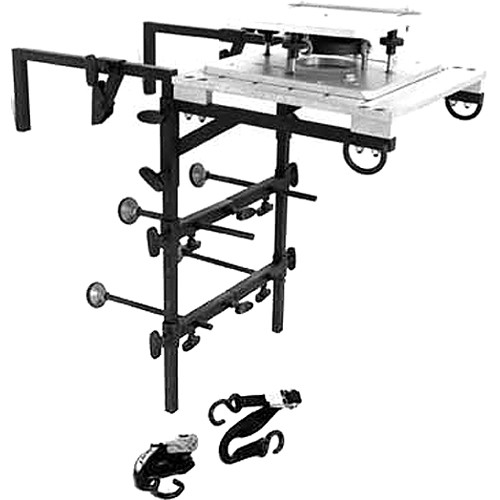
The camera can be placed on a hostess tray (Amazon, B&H) on the side door and still make the foreground character look normal, and not very distorted – which is what you get with spherical lenses if you try to frame everybody together.
This is what a hostess tray looks like:
In a movie like Drive, shot with spherical lenses, the car shots are filmed with a more telephoto focal length, except in some cases where the distortion on the face is not that bad, like this low angle shot:

These shots help in isolating the main character because he’s a loner.
John Carpenter had lovely car frames in his films as well, because it allowed him to show a lot of things in the same frame. Here’s a video essay that explains his process:
Anamorphic gives you room to play with and the widescreen anamorphic frame just makes cars and people look good. One doesn’t look a lot larger than the other, and these things make a big difference to how the story and relationships are perceived by the audience. Neither is better, they are just different. You pick what works for you.
By including multiple characters in each shot, you can also get the benefit of not having to shoot everyone from a different angle. You could get more economical with your camera and time. Car scenes take a lot of time to shoot, because a car has to be carefully rigged with cameras, and safety is an important factor to consider.
I don’t know how Tarantino shot the first scene in Death Proof, but he could have used multiple cameras at the same time if we wanted to. E.g, here are the camera positions and angles for the first car scene in Death Proof:

You have to be careful to avoid one camera appearing in another’s frame. You can divide the camera setups in this way, and the entire scene can be covered in just two or three takes. Then there are the inserts and odd angles. These inserts are only used once, and are shot separately. By listing all the shots beforehand you won’t waste time filming what you don’t need.
For the second scene the camera angles are as follows:

You can shoot the entire scene in about three takes. Two for all the main angles, and then additional angles like this two shot and close up need to be done separately. These shots are easier to do and filmed at the end when the main scene has been covered. The actors run through the scene from beginning to end.
How a Process Trailer is used to film car scenes
Most times car scenes like these are done on what’s called a “process trailer: in Hollywood:

I don’t know why it’s called a “process”, but sometimes terms just stick for no important reason. The car is on a bed and cameras and lights surround it:

This ensures safety and stability. The actor driving actually doesn’t have to drive and act at the same time. It’s too dangerous. Also, to repeat the scene, they just have to drive back and restart, or keep going, depending on the location and whether the continuity works or not.
For Death Proof, Tarantino really wanted to make a true car movie, not done with CGI.
By being on a process trailer in the actual location you get the natural backgrounds without having to resort to green screen and trying to match everything later.
You can light a car scene consistently, because the characters inside don’t get enough light for exposure otherwise. You can flag off the windshield to avoid reflections.
Process trailers are not always practical or possible with low budgets, but when you can make it happen the results feel more real and helps the actors behave more naturally in their surroundings. It’s basically a film studio on wheels!
The Poor Man’s Process
The one major problem with car scenes shot on location is audio. Keeping the window open is a surefire way to kill any audio recordings, and the dialogue needs to be recorded later in a studio. If you try to force it, the wind and car sounds won’t match from character to character, even if you try to hide a microphone somewhere in the shot.
Sometimes audio and money is more important, which is why we have what’s called the Poor Man’s Process. That word comes from the “process” trailer.
In the poor man’s process you are in a dark room, people shake the car and you use a few lights to simulate the world outside. This scene in The Godfather is the first time I was made aware of the poor man’s process:
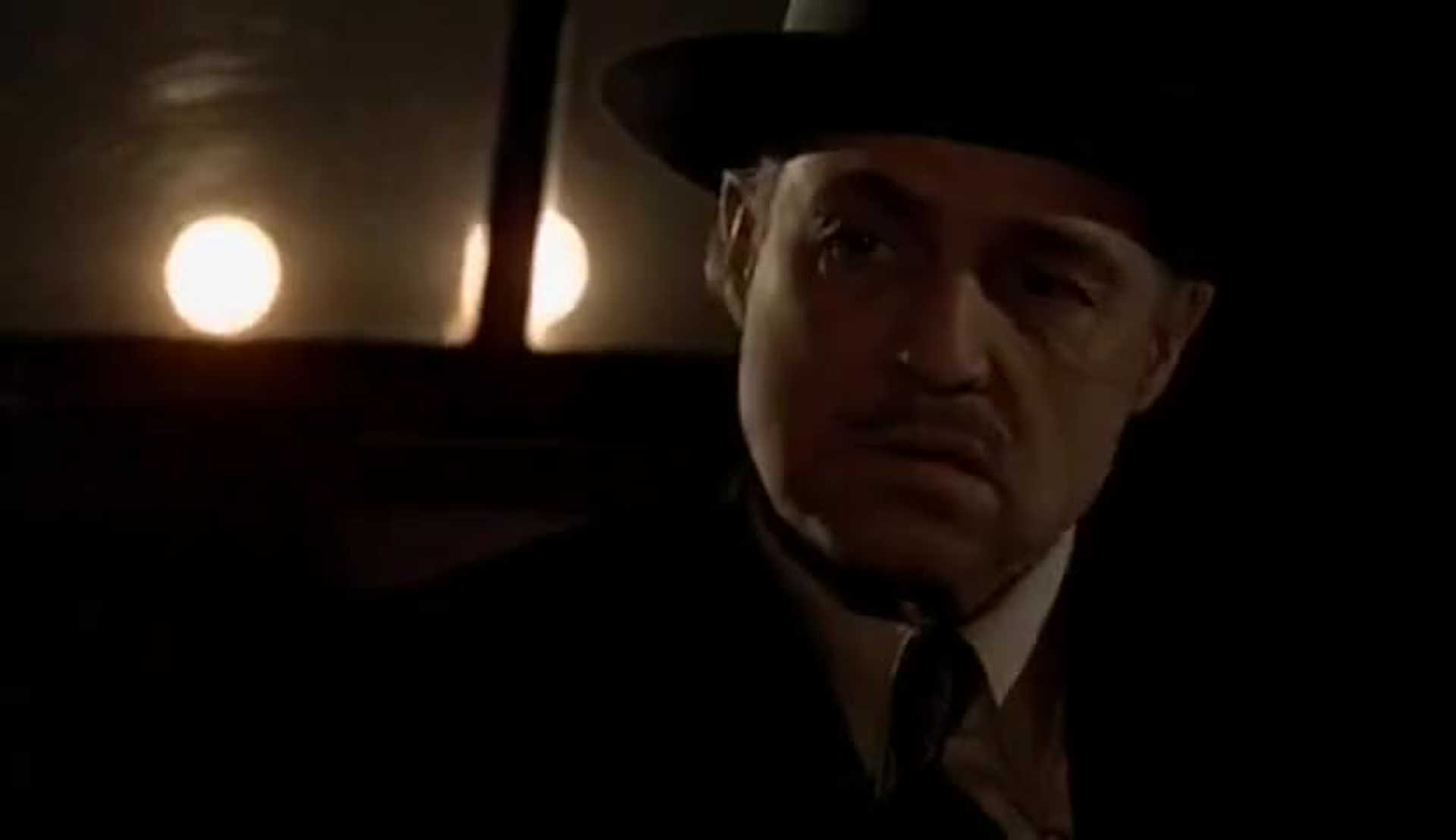
Notice: the lights in the background are just flashlights that crew members are waving around. The car isn’t moving, they’re just shaking it so it seems so.
What if you’re filming a day scene?
When you need day scenes you have to use green screen and then hope the backgrounds match. Many movies do this successfully. Even more fail. But you do what you have to do with the budget and time limitations you have. I’d rather rewrite the scene somewhere else instead of shooting a car scene badly, but your mileage may vary.
And that’s how you film car scenes.
Remember to always start with the characters and their relationships. Everything else flows from there.
I hope you found this useful. If you have any tips of your own please share them in the comments below.

Very informative – as always. It is a pleasure to get your in-sights. Keep the good stuff coming!
Thanks!
Thank you!