
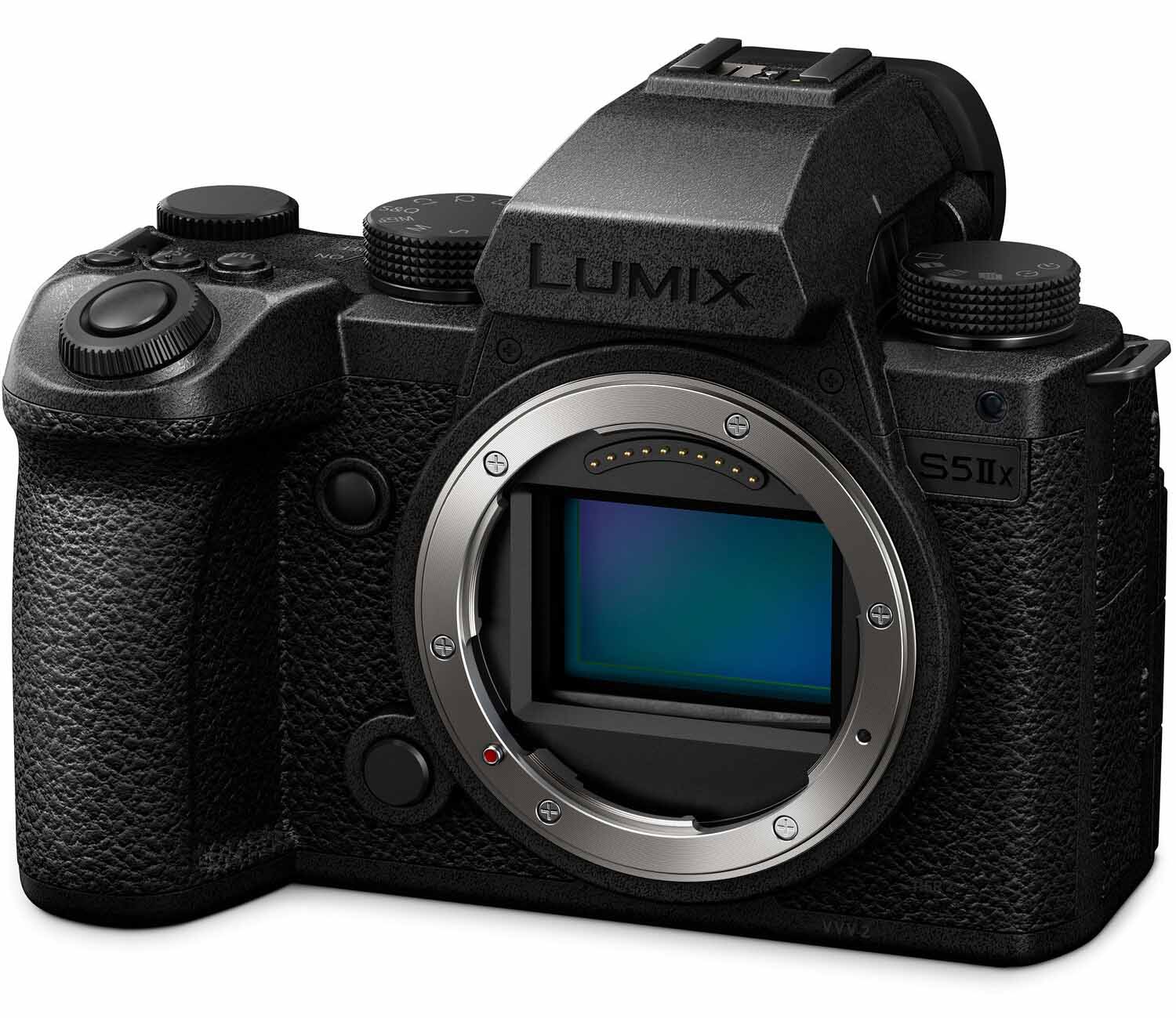
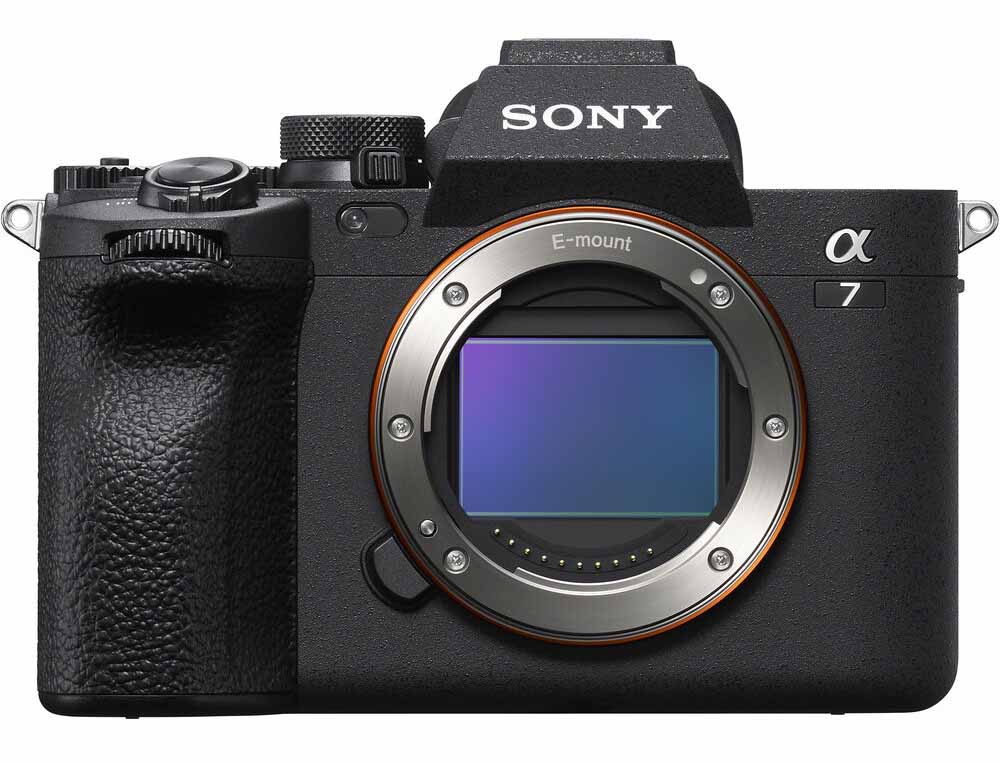
Let’s compare the new ready-to-compete Panasonic S5 IIX (Amazon, B&H) with the Canon R6 Mark II (Amazon, B&H) and the Sony A7 IV (Amazon, B&H).
All three mirrorless cameras in this comparison are within a price range of $2,000 to $2,500. Which one is a better investment for serious filmmakers?
Let’s find out with this fun comparison.
Autofocus comparison
The newly announced Panasonic S5 IIX has phase hybrid autofocus with 779 AF points. The Sony A7 IV has a fast hybrid phase detection autofocus with 759 AF points. The Canon R6 Mark II has Advanced Dual Pixel CMOS II autofocus with 1053 AF points.
Does that mean the Canon is better? In most tests I’ve seen the Canon R6 Mark II (Amazon, B&H) outperforms the Sony A7 IV (Amazon, B&H), while the Panasonic S5 IIX (Amazon, B&H) falls behind.
In real-life situations, especially in low light, all of these cameras fail and are not dependable for serious filmmaking work. You can get by with vlogs, but not actor movement.
Once we get our hands on the Panasonic S5 IIX we’ll be in a better position to judge.
Quick menu
- Comparison of sensors and video features
- Exposure, focus and ergonomics
- The costs of media and batteries
- Which is cheapest to own?
- Verdict. Who wins?
Comparison of sensors and video features
Here’s how the camera sensors compare for video:
| Camera | Resolution | Maximum FPS* | Video ISO Range |
| Panasonic S5 IIX | 5952 × 3968 | 30 fps (60 fps)* | 100-51200 | 640-51200 in V-Log# |
| Sony A7 IV | 3840 x 2160 / 7032 x 3958 | 60p/30p^ | 100-51200 | 800-51200 in S-Log3 |
| Canon R6 Mark II | 3840 x 2160 | 60p^^ | 100-25600 | 800-25600 in C-Log3 |
*Maximum fps in 4K is 60 fps. At 6K the maximum fps is 30 fps.
^7K oversampling is possible when recording in 4K 30p.
^^6K oversampling possible in 4K in Canon R6 Mark II.
#The Panasonic S5 IIX (Amazon, B&H) has dual native ISO at ISO 640 and ISO 4000 in V-Log.
What about 4K frame rates?
| Camera | Max fps at 4K | Dynamic Range | Max fps at 1080p |
| Panasonic S5 IIX | 60 fps* | 14+ stops | 120 fps |
| Sony A7 IV | 60 fps* | 15+ stops | 240 fps |
| Canon R6 Mark II | 60 fps | 14 stops | 180 fps |
*In APS-C/Super35mm mode. You don’t get 60p in full frame mode, unfortunately.
All three cameras have something to brag about. While the Canon R6 Mark II (Amazon, B&H) has 60p in full frame mode the Sony A7 IV (Amazon, B&H) has oversampled video and 240 fps in 1080p. The Panasonic S5 IIX (Amazon, B&H) has 6K video and a lower ISO in log mode.
Next, the codecs and color information:
| Camera | RAW and Code in 4K and Higher | Color Information |
| Canon R6 Mark II | Prores RAW | H.264/H.265 ALL-I | RAW | 10-bit 4:2:2/8-bit 4:2:0 |
| Sony A7 IV | Prores RAW | H.264/H.265 ALL-I, IPB | RAW | 10-bit 4:2:2/8-bit 4:2:0 |
| Panasonic S5 IIX | ProRes RAW | H.264/H.265 ALL-I, IPB | RAW | 10-bit 4:2:2/8-bit 4:2:0* |
*10-bit 4:2:0 in 6K 30p, 10-bit 4:2:2 in 4K 60p.
Nowadays 10-bit 4:2:2 in 4K is a given, and all three cameras give us that.
The Panasonic S5 IIX (Amazon, B&H) and Canon R6 Mark II (Amazon, B&H) have fast USB 3.2 Gen 2 readout speeds if you’re transferring data that way.
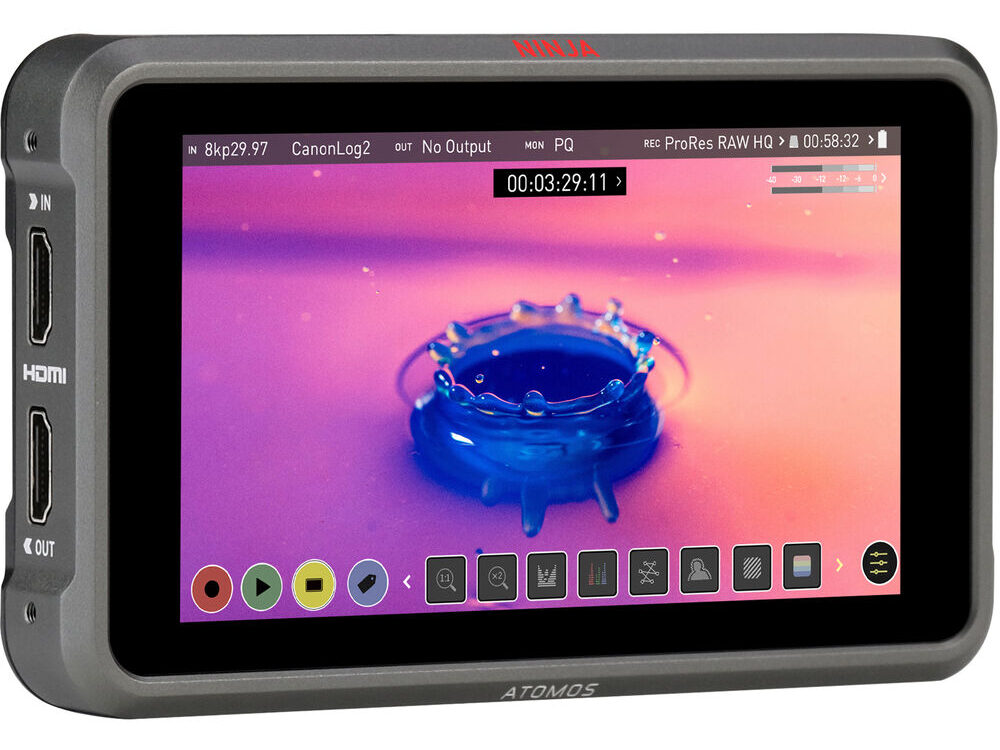
If you want the best Prores RAW output possible you might want to invest in an Atomos Ninja V+ (Amazon, B&H):
Focus and exposure aids and ergonomics
What’s the point of RAW if you can’t expose it correctly? The little things make all the difference:
| Camera | Exposure |
| Panasonic S5 IIX | Waveform, Zebras, Histogram, Meter |
| Canon R6 Mark II | Zebras, Histogram, Meter |
| Sony A7 IV | Zebras, Histogram, Meter |
Here the Panasonic S5 IIX (Amazon, B&H) wins with the waveform monitor. Panasonic has always been ahead of the game in this regard.
All three have similar OLED viewfinders and LCDs and in real-world shoots I don’t think it will matter all that much.
The Panasonic S5 IIX (Amazon, B&H) has a built-in heat dispersion fan system for longer duration recording. The camera will still overheat in modes above 4K. Modes above 4K also have a recording limit of 30 minutes, while in 4K there is no recording limit. This means two things:
- More power draw due to the fan.
- More weight due to the fan.
| Camera | HDMI Port | Weight (with card and battery) |
| Panasonic S5 IIX | Type A | 740g |
| Sony A7 IV | Type A | 658g |
| Canon R6 Mark II | Type D | 670g |
For other details like menu, usability, buttons, etc., I’ll have to get my hands on the Panasonic S5 IIX to learn more. However, all three camera systems have evolved to better menus and operability over the last few years so I think you’ll be okay with either.
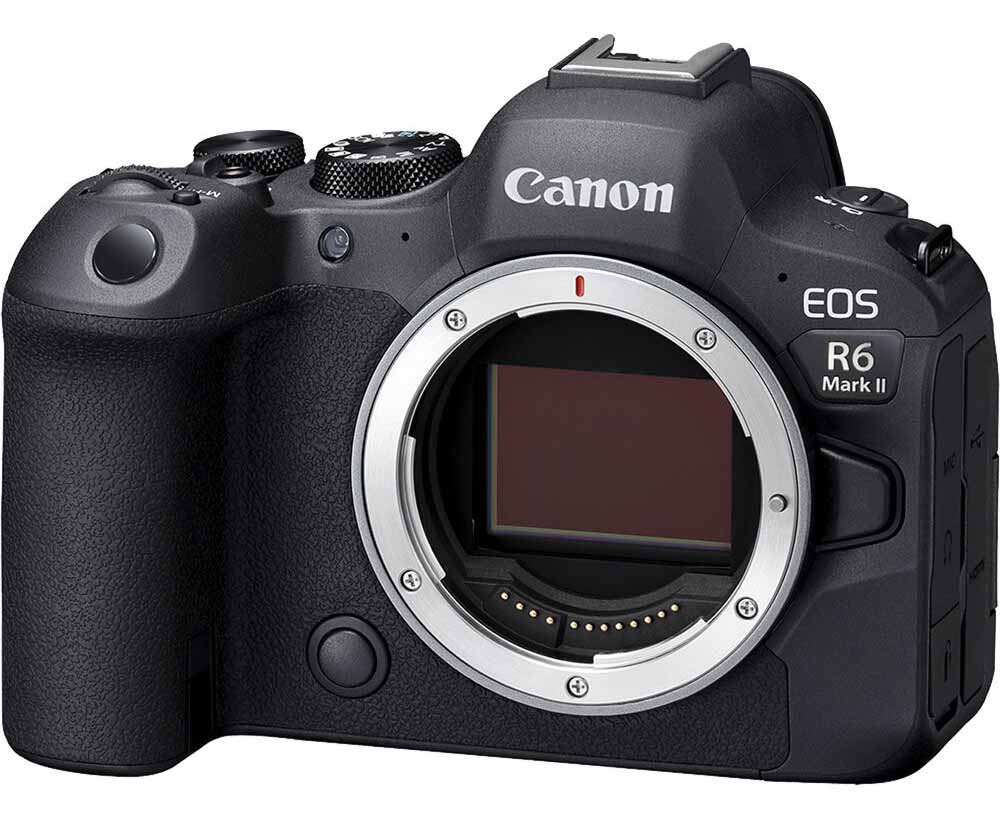
Image Stabilization
All three cameras have 5-axis image stabilization with the best performance coming from native lenses. Without a thorough test it’s hard to say which is better, though from initial reports it seems the Panasonic S5 IIX (Amazon, B&H), being the most modern system, is also the best.
Batteries and media cards
Here’s a look at the media:
| Camera | Dual card slots | Price per GB for 512 GB* |
| Panasonic S5 IIX | Yes, SDHC/SDXC, UHS-II | $0.63/GB |
| Sony A7 IV | Yes, CFexpress Type A or UHS-II SD Card | $2.49/GB and $0.63/GB |
| Canon R6 Mark II | Yes, SDHC/SDXC, UHS-II | $0.63/GB |
| Camera | Data rate in 10-bit 4:2:2 4K 24p | Data rate in 10-bit 4:2:2 4K 60p | Recording Limit* |
| Panasonic S5 IIX | 400 Mbps | 400 Mbps / 800 Mbps | Unlimited |
| Sony A7 IV (XAVC S-I 4K) | 240 Mbps | 600 Mbps | 13 hours |
| Canon R6 Mark II | 170 Mbps | 340 Mbps | 6 hours |
*Overheating and battery limits apply.
CFexpress cards are not cheap (comparing Sandisk Extreme Pro to be fair). For practical shoots, you will need multiple cards. This could really add to your budget. With the Sony a7 IV, you can use CFExpress or UHS-II, which is a huge relief. Even though all three cameras use the same cards, the cost per camera will change because the data rates are different.
Cost per 4 hours of data in 4K 24p:
| Camera | Total Data | Cost for 4 hours |
| Panasonic S5 IIX (H.264) | 703 GB | $443 |
| Sony A7 IV (XAVC S-I 4K) | 422 GB | $266 |
| Canon R6 Mark II (H.265) | 299 GB | $188 |
What about battery life?
| Camera | Battery life | Cost one one battery | Cost of 6 hours of operation |
| Panasonic S5 IIX | 45 minutes | $67.50 | $540 |
| Sony A7 IV | 110 minutes | $78 | $255 |
| Canon R6 II | 120 minutes | $79 | $237 |
The added fan increases power consumption and weight and this affects the Panasonic S5 IIX.
Which is cheaper to own?
Let’s just add up the costs:
| Camera | Sony A7 IV | Panasonic S5 IIX | Canon R6 Mark II |
| Camera body | $2,498 | $2,198 | $2,499 |
| Media and Accessories | $266 | $443 | $188 |
| Batteries | $255 | $540 | $237 |
| Total | $3,019 | $3,181 | $2,924 |
The Panasonic S5 IIX looks cheaper body only, but with added battery and higher cost of data usage the gap is narrower. Now you know why we’re comparing the three.
In any case, price shouldn’t be our main consideration when comparing these cameras.
Recap
Who wins each feature?
| Feature | Winner |
| Sensor and ISO | Sony A7 IV |
| Video features | Sony A7 IV |
| DR and Color | Sony A7 IV |
| Rolling Shutter | TBD |
| Exposure Aids | Panasonic S5 IIX |
| Media | Sony A7 IV* |
| Lenses | Tie |
| Ergonomics | Tie |
| Ports and Monitoring | Panasonic S5 IIX |
| Audio | Tie |
| Autofocus | Canon R6 Mark II |
| Battery life | Canon R6 Mark II |
*Sony gives two kinds of card options, and the codec is better.
Before we take our final decision, we’ll let the cameras tell us what they offer that the others don’t:
| Camera | USP | Major Cons |
| Panasonic SS IIX | Higher data rates should mean cleanest videos, theoretically. | Battery life, weight, crop in 4K 60p |
| Canon R6 Mark II | 4K 60p in Full frame | Overheating |
| Sony A7 IV | 7K oversampled, 240 fps in 1080p, low light performance | Overheating, crop in 4K 60p |
My Verdict
I said I’ll try to provide a balanced overview, even though it’s hard. Here’s what I think:
| Type of Filmmaking | Preferred Camera | Major Reasons |
|---|---|---|
| Documentaries and corporate videos | Sony A7 IV | Low light performance, battery life and 240 fps |
| Short or feature films | Canon R6 Mark II* | Full frame in 4K and 60 fps. If you don’t want that any of the three cameras is okay. You should go for color science over anything else. |
| Music Videos | Sony A7 IV | Low light performance, battery life and 240 fps |
| Journalism | Sony A7 IV | Low light performance, battery life and 240 fps |
| Wildlife | Sony A7 IV | Low light performance, battery life and 240 fps |
| Weddings and Events | Sony A7 IV | Low light performance, battery life and 240 fps |
*Even though the Canon R6 Mark II (Amazon, B&H) leads the Sony A7 IV (Amazon, B&H) in fictional work, the gap is a lot narrower if you don’t care about full frame mode in 60p.
The Panasonic S5 IIX (Amazon, B&H), with all its advancements, falls behind, unfortunately. It’s probably a capable camera, but I can’t recommend it over the other two.
Overall, the Sony A7 IV (Amazon, B&H) wins.
What do you think?

Very good article