
I have already shown the lenses I’ve used in my Panasonic GH5 review. This lesson is just my suggestions based on my experience.
What is a native lens?
A native lens is one specifically designed for the Panasonic GH5 and the Micro Four Thirds (MFT) system. The four major brands are:
- Panasonic
- Olympus
- Sigma
- Tamron
There are others, but only these four make lenses that autofocus for video.
Do you need Autofocus for video?
Both Olympus and Panasonic make lenses for their cameras, though if you need autofocus and the right balance of image stabilization I highly recommend you stick to Panasonic lenses. AF for video is hit and miss at best. Sometimes you’re on a gimbal or shooting a news event and you don’t have a choice. But for most other occasions I would not recommend AF.
If you don’t need autofocus you have the choice of:
- Native lenses from other manufacturers, and
- Non-native lenses used with an adapter. E.g., the Metabones Speed Booster. We’ll cover this in the next part.
Panasonic recommends their native lenses over other brands for continuous video autofocus.
So, for simplicity’s sake, I’ll split this part into the best native lenses for autofocus and for manual focus. Let’s start with primes:
Best prime lenses for autofocus
When should you pick prime lenses with autofocus?
In theory, prime lenses have the best optical performance, and are faster to focus. For general video work though, these advantages are not so obvious, if at all. However, the single greatest advantage prime lenses have in general is they can open wider than zooms. You can go down to f/0.95 if you wanted to! Though with AF you’ll probably get f/1.2 or f/1.4 at best.
This makes it a great option for low light cinematography. And there’s really no excuse for not having at least one prime because they also tend to be cheap without sacrificing quality.
You’ll need to get a 50mm (35mm equivalent) as your first general purpose lens, so you’re looking at something in the 20-25mm range. The GH5 has a crop factor of 2.
If you only had $300 or so for one lens, which would should you get?
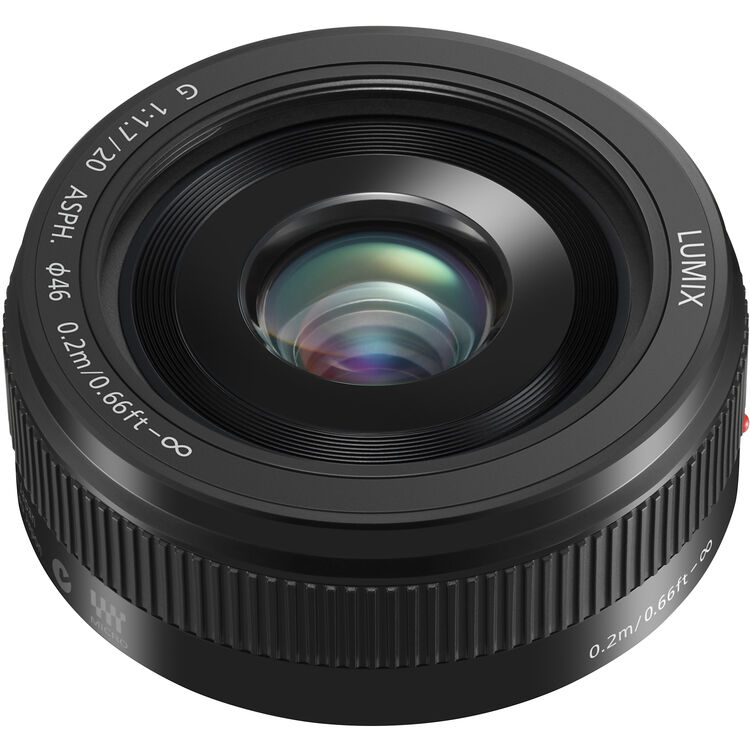
Get the Panasonic 20mm f/1.7 II ASPH (Amazon, B&H). It is small and lightweight, and isn’t too shabby with autofocus.
If you only had $600 or so for one lens, which would should you get?
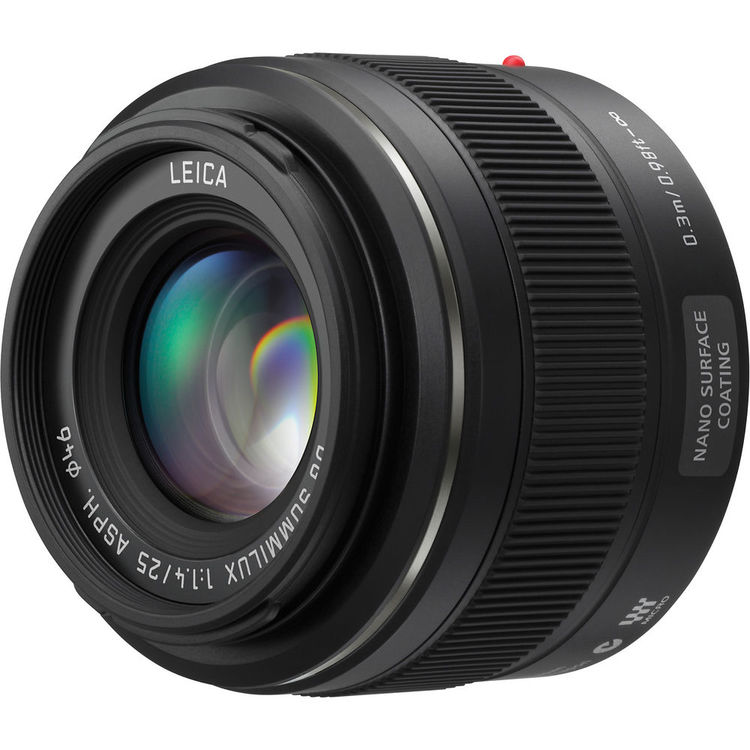
Get the Panasonic Leica DG Summilux 25mm f/1.4 ASPH (Amazon, B&H):
What are the best wide angle lenses for the GH5?
One of the great disadvantages of the MFT format is its sensor size, and because of it you really can’t have ultra-wide lenses that aren’t cost-prohibitive. One way to circumvent this problem is to use a Speed Booster or focal reducer, though you are limited by how wide you can go.
Here are my suggestions, in order of preference:
- Panasonic Leica DG Summilux 12mm f/1.4 ASPH. (Amazon, B&H)
- Panasonic LUMIX G Leica DG Summilux 15mm f/1.7 ASPH. (Amazon, B&H)
- Panasonic LUMIX G 14mm f/2.5 ASPH. II (Amazon, B&H)
So you’re at a 24mm equivalent at best. That’s just wide, not ultra-wide. For ultra-wide options look at zooms.
What are the best normal lenses for the GH5?
We’ve already seen the 50mm equivalent options. A special mention: Olympus M.Zuiko Digital ED 25mm f/1.2 PRO (Amazon, B&H) – You simply can’t ignore an f/1.2!
For a little longer, you have:
- Panasonic LUMIX G Leica DG Nocticron 42.5mm f/1.2 ASPH. Power OIS (Amazon, B&H)
- Panasonic LUMIX G 42.5mm f/1.7 ASPH. Power O.I.S. (Amazon, B&H)
This would give you an 85mm equivalent. By now you’ll have guessed, anything with a Leica on it is definitely preferable, and more expensive.
What are the best telephoto lenses for the GH5?
This is where you say bye-bye to Panasonic and embrace Olympus. Olympus makes a few great lenses for the MFT system, though for autofocus for video it won’t make a big difference. I don’t recommend Olympus because Panasonic has made it quite clear that Olympus lenses (and other third-party lenses like Sigma, etc.) will be slower for video AF tracking.
For telephoto lenses though, you really don’t have any options in Panasonic. These are your picks:
- Olympus M.Zuiko Digital ED 75mm f/1.8 (delivers a 150mm equivalent) (Amazon, B&H)
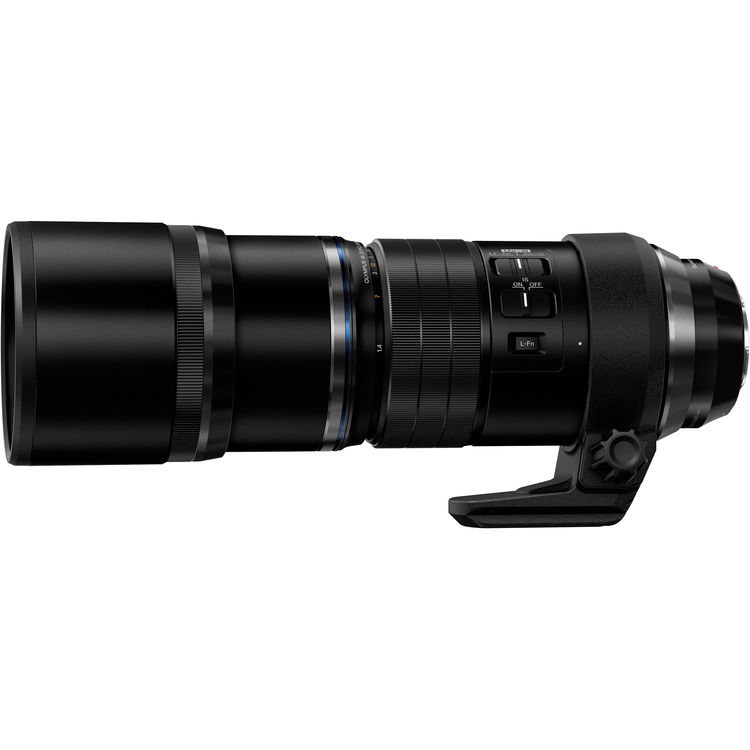
- Olympus M.Zuiko Digital ED 300mm f/4 IS PRO (600mm equivalent) (Amazon, B&H)
What about macro lenses?
In order of preference:
- Panasonic LUMIX G MACRO 30mm f/2.8 ASPH. MEGA O.I.S. (Amazon, B&H) – This is a general purpose macro, for larger objects.
- Panasonic Leica DG Macro-Elmarit 45mm f/2.8 ASPH. MEGA O.I.S. (Amazon, B&H)
Best zoom lenses for autofocus
When should you pick zoom lenses with autofocus?
Zoom lenses are all about convenience. You pick a zoom when you want that flexibility in creating wide shots and close ups. You simply don’t have the time to swap lenses often, or can’t afford more than one or two general lenses.
If you are sticking to zoom lenses, get the most expensive you can afford. You typically get what you pay for.
If you could only get one lens, which would should you get?
Get the Panasonic Lumix G X Vario 12-35mm f/2.8 Asph. (Amazon, B&H). Please note, this is the Mark I version. A newer Mark II version has been released, but it’s $999, so pick the latter if you can afford it.
This lens will give you a 24-70mm 35mm equivalent, more than enough for most general purpose video work.
What are the best wide angle zoom lenses for the GH5?
Luckily the MFT system has two great wide-angle zooms, in order of preference:
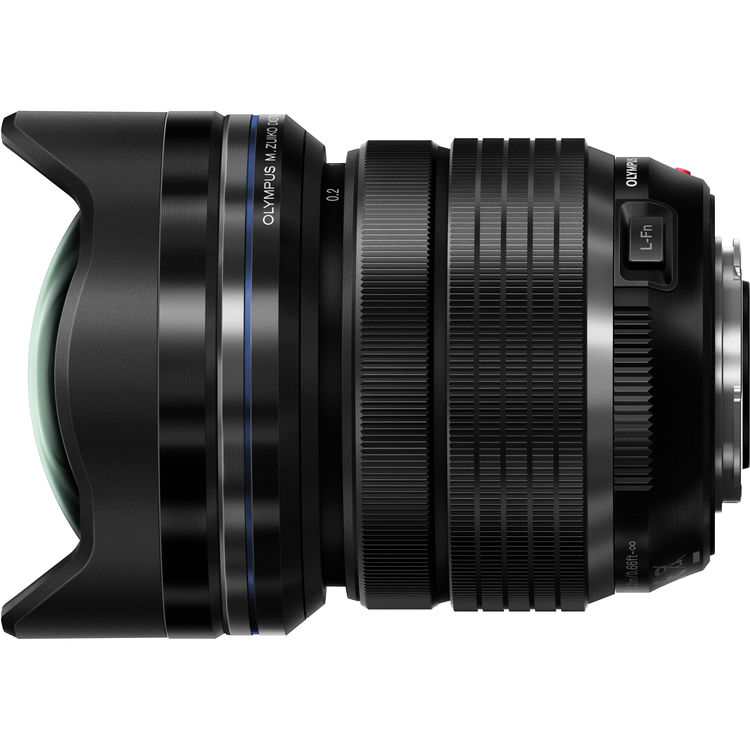
- Olympus M.ZUIKO Digital ED 7-14mm f/2.8 PRO (Amazon, B&H)
- Panasonic Lumix G Vario 7-14mm f/4.0 ASPH. (Amazon, B&H)
This would give you a 14-28mm 35mm equivalent, more than enough for most wide-angle work. Note I’m mentioning the Olympus because it’s more rugged and more suited to outdoor use (it’s also weatherproof), and for ultra-wides AF isn’t that big of a deal. The only major drawback of these zoom lenses are that you can’t put standard screw-in filters on them. You’ll need something like the Formatt Hitech 165mm Lucroit Filter Holder Kit (Amazon, B&H).
What are the best normal zoom lenses for the GH5?
The best standard range zoom is Panasonic Lumix G X Vario 12-35mm f/2.8 II ASPH (Amazon, B&H). This is the Mark II version.
You might be asking, why not a variable aperture zoom (something like an f/4-5.6 or whatever). The problem is once you set exposure and then zoom in, you’ll have to compensate by raising the ISO. In low light situations, you’ll have a cleaner wider shot and a noisier close up. In the editing room side by side, the differences will be more pronounced. Try to avoid variable zooms whenever possible for video.
What are the best telephoto zoom lenses for the GH5?
If wide angles are the bane of MFT, then telephoto lenses are its rockstars. This is a great system for any kind of telephoto work, and now that the GH5 has internal 5-axis IBIS, it works great with Panasonic OIS telephoto lenses.
Get the Panasonic Lumix G X Vario 35-100mm f/2.8 II POWER O.I.S. (Amazon, B&H). This is the Mark II version due out in end of March 2017. It will give you a 70-200mm equivalent, great for any kind of telephoto work. Olympus also has a stellar ED 40-150mm f/2.8 PRO lens, but I’m not sure how well it’ll perform for image stabilization.
Best prime lenses for manual focus
When should you pick prime lenses with manual focus?
When you can and want to control the focus, that’s when. This applies to corporate videos, fictional work of any kind, documentaries, etc.
The key factor is the kind of manual focus you want. The professionals use follow focus systems, but even if that’s overkill for you, you need to ensure the focus ring on the lens is solid, smooth and reliable enough to consistently nail focus. Luckily, the GH5 has focus peaking, and the back LCD is pretty decent, so manual focusing will be a joy.
The one big gotcha is the focus-by-wire mechanism of many of the native lenses. This means you don’t get the same amount of focus for an equivalent amount of turn. You can’t get any kind of muscle memory going, and you’re totally dependent on the lens for the job. What’s worse, each lens will behave a bit differently! For this reason, I only recommend lenses for manual focus where the focus ring is good enough for professional use.
What are the best wide angle lenses for manual focus?
Here are my suggestions, in order of preference:
- Voigtlander Nokton 10.5mm f/0.95 (Amazon, B&H)- It doesn’t get much better than this!
- Samyang 12mm f/2.0 NCS CS (Amazon, B&H)
- Olympus M.Zuiko Digital ED 12mm f/2.0 (Amazon, B&H) – I don’t completely recommend this due to the focus-by-wire problem mentioned above. But it has great image quality.
What are the best normal lenses for manual focus?
Here are my suggestions:
- Voigtlander Nokton 17.5mm f/0.95 (Amazon, B&H)
- Voigtlander Nokton 25mm f/0.95 Type II (Amazon, B&H)
- Voigtlander Nokton 42.5mm f/0.95 (Amazon, B&H)
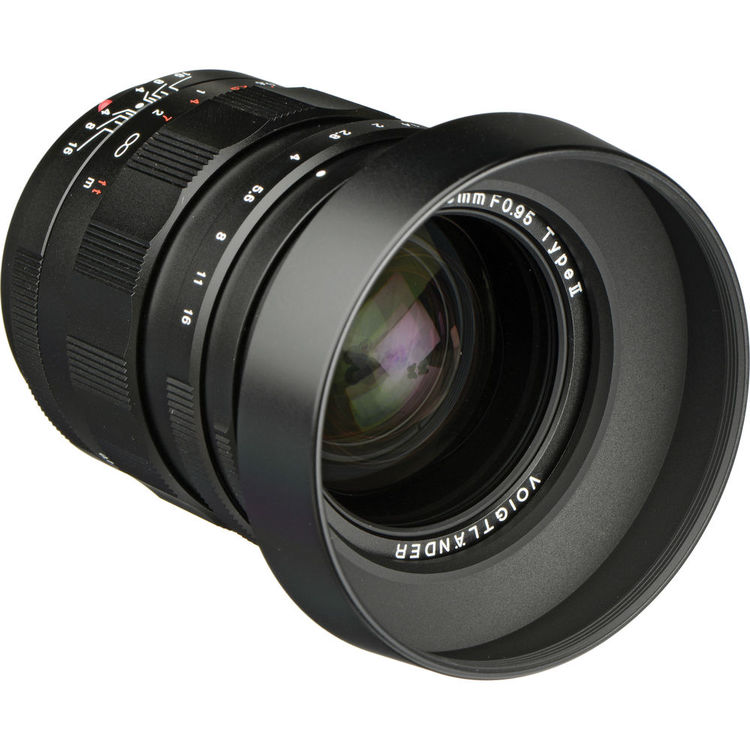
Seriously, you can’t beat this combo. Some complain that the Voigtlander is a bit soft. But a bit soft with 4K doesn’t really matter. In fact, it’ll make skin tones look much creamier. I can’t think of a better system, especially because you need an excellent focusing mechanism at f/0.95.
What are the best telephoto lenses for manual focus?
With telephoto lenses accurate focus is critical. Here are my suggestions:
- Samyang/Rokinon 50mm f/1.2 (Amazon, B&H)
- Samyang/Rokinon 85mm f/1.4 Aspherical IF (Amazon, B&H)
- Samyang/Rokinon 100mm f/2.8 ED UMC Macro (Amazon, B&H)
- Samyang/Rokinon 135mm f/2.0 ED UMC (Amazon, B&H)
Overall though, I’m not too sure about getting telephoto lenses with manual focus unless you’re on a tripod and have a solid focusing strategy. If you’re going to run and gun it choose Panasonic lenses that also offer OIS+IBIS. Remember, every time you change the focal length you’ll have to manually change the IBIS focal length setting in the camera.
What about the Veydra Primes?
The Veydra primes (Amazon, B&H) seem like a great option if you want a set of color-matched cine lenses that have standard front diameters and focus rings. But they have three disadvantages I can’t reconcile:
- They’re slow, at T2.2 for primes (a T2.2 would roughly be an f/2) that cost $1,000 a pop.
- They only go as wide as 12mm and there are no real super telephoto options.
- Lastly, who shoots cinema-level video with the GH5? With those kinds of budgets you can easily afford an a7S II or better. I would really be renting an FS7 Mark II or C300 Mark II and cine primes if I was really serious.
This is just me, I’m not saying these lenses are bad or anything. They could offer great image quality and construction, but still, I don’t see the benefits. I won’t recommend them because I can’t see ever needing them.
Best zoom lenses for manual focus
When should you pick zoom lenses with manual focus?
For pretty much the same reasons as when you pick prime lenses with manual focus, but want to stick to one or two lenses to cover you for most situations. Zoom lenses are all about convenience. The one major gotcha with manual focus on zoom lenses is that most low end zoom lenses are not parfocal.
So to really get the benefit of manual focus and zooms, you’ll find you’re always pining for the most expensive options. There aren’t any native lenses that meet this criterion. In the next part I’ll cover a few great third-party options.
If I could only have three lenses…
What if I could only have three lenses for everything? This is what I would get:
- Panasonic Lumix G Vario 7-14mm f/4.0 ASPH. (Amazon, B&H)
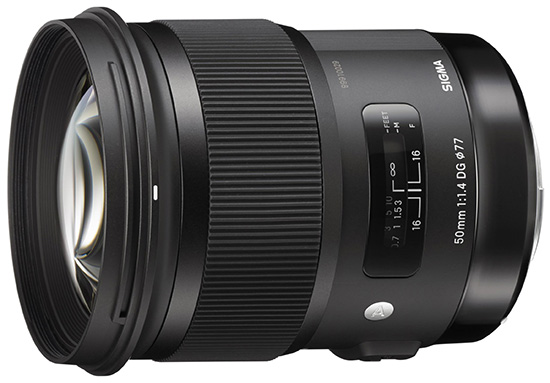
- Voigtlander Nokton 25mm f/0.95 Type II (Amazon, B&H) – Manual focus only (If you need AF replace with the Panasonic Leica DG Summilux 25mm f/1.4 ASPH)
- Panasonic Lumix G X Vario 35-100mm f/2.8 II POWER O.I.S. (Amazon, B&H)
What is a third-party lens?
Third-party lenses (for the purposes of this article) are designed for other camera systems (not Micro Four Thirds, MFT) but can still be used on the Panasonic GH5 via an adapter.
E.g., you can use lenses from Nikon, Canon, etc. on the GH5. However, not all third-party lenses can be used.
How do you know if a lens can be used or not?
First, you need to know what the flange focal distance is.
Here’s information on each mount, in increasing order of the focal flange distance:
| Mount | Focal Flange Distance in mm |
| C C-Mount | 17.526 |
| E Sony E-mount | 18 |
| FZ Sony | 18 |
| MFT Micro Four Thirds mount | 19.25 |
| M Leica M mount | 27.8 |
| FT Four Thirds mount | 38.67 |
| FD Canon Manual FD mount | 42 |
| EF Canon EOS EF mount | 44 |
| EF-S Canon EOS EF-S mount | 44 |
| A Minolta/Sony A-mount | 44.5 |
| K Pentax K-mount | 45.46 |
| F Nikon F-mount | 46.5 |
| R Leica R-mount | 47 |
| PL Arri PL mount | 52 |
I have highlighted the MFT flange focal distance in blue. Any lens designed for a camera system that has a greater flange focal distance can be used on the GH5. From the table above, anything below can be adapted. On the other hand, Sony E lenses cannot be adapted.
So you can use Canon FD, Canon EF, Nikon F, Arri PL, Leica M and R, Pentax K and even older Four Thirds lenses on the GH5. And a lot more.
How do you use third-party lenses on the GH5?
Third-party lenses come in their own lens mounts. So you need some sort of adapter that comes between the lens and the camera. This adapter does two things:
- It connects two mounts that naturally don’t fit together, and
- It makes up for the flange focal distance.
The typical lens adapter does only these two things, so there’s nothing in the adapter, no lens or optics. It’s just hollow inside.
Important information regarding lens adapters:
- Some lenses have protruding elements at the back that might not interface correctly with the adapter. Look for certain wide angle lenses that have this problem.
- Modern lenses don’t have aperture rings. You change the aperture via the camera body. If you take away the camera body and replace it with the GH5, you need some way for the camera to talk to this alien lens. So for lenses without aperture rings you need adapters with gold contacts that allow you to manipulate aperture:
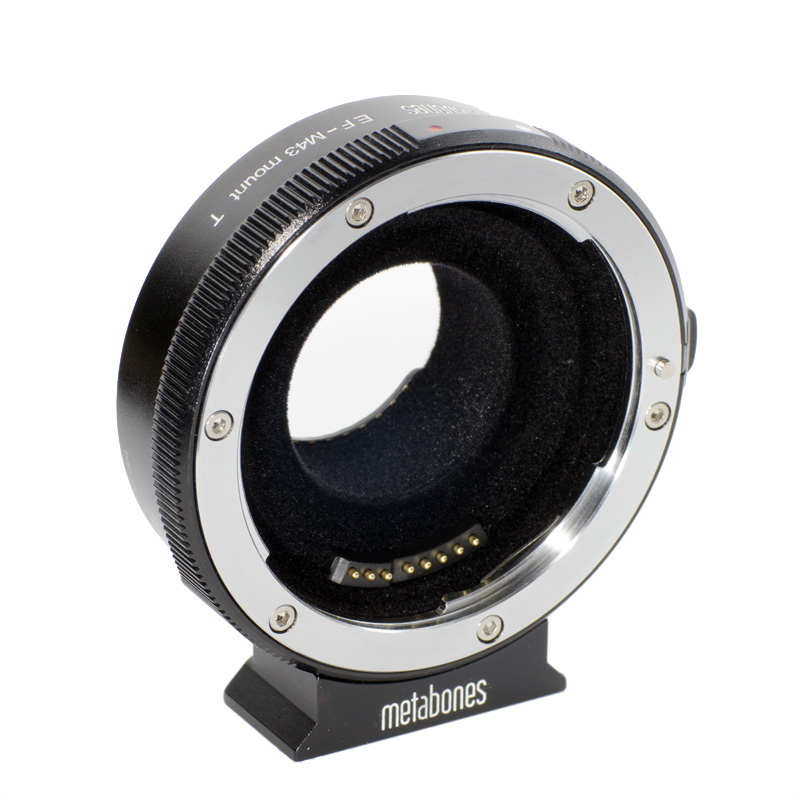
- However, not all adapters let you talk to the lens. E.g., with Nikon G lenses, you get adapters with physical aperture rings that you must adjust manually:

- Some adapters allow you to autofocus with third-party lenses, though they never work as well as using native lenses. For video especially, as I’ve mentioned in the last article, if you need autofocus, then stick to Panasonic lenses.
- You might want to turn off image stabilization in the lens, and sometimes it won’t work as well because it might not be getting the necessary power from the camera body/adapter. Use the internal stabilization of the GH5 with third-party lenses, always.
- Adding an adapter adds one more point of contact for the lens, which is also one more point of failure. If the adapter is not well made the lens might fit too tight or have play, both of which are undesirable.
- Cheap adapters are not machined precisely, so they don’t make up the flange focal distance accurately. E.g., they might be off by a few millimeters, and this will affect infinity focus on the lens. Expensive adapters come with shimming kits that you add between the adapter and camera body to make up for any manufacturing defects. Cheap adapters are a crap shoot.
- Also, cheaply machined adapters don’t have the mechanics to support heavier metal lenses.
- If the internals aren’t done well, beware of light leaks and internal reflections.
- Lastly, adapters add bulk to your camera setup, and need to be supported underneath. Third-party lenses are typically made for large-sensor cameras, so the lenses are heavier and bulkier. Overall, your system will be more front heavy. That’s why you see some adapters with their own ‘bases’ which help support the lens.
Which is the best lens adapter for the Panasonic GH5?
There are a few brands making adapters, and I’ve found one brand that consistently performs well is Metabones (Amazon, B&H). Other brands I’ve heard good things of are Novoflex (Amazon, B&H) and Voigtlander (Amazon, B&H). The consistent thing about these brands are the price. They know they’re good, and they are priced accordingly.
A lot of people think the cheaper brands are good enough, and spending more for one of the top three are a waste of money. I don’t agree. It’s like eating a fat-fueled diet all your life. It feels fine when you’re young, but once the problems start they’ll never go away. Cheap adapters walk and talk like the real thing, but they’re ruining your experience in ways you won’t know until it’s too late.
Having said that, there’s no reason why a cheaper adapter can’t exist. So if you find one that works for you, no problem. More power to you.
What’s this Speed Booster thing everyone keeps raving about?
The Speed Booster is a lens adapter, expect it has an optical element inside it. So if there’s a lens in it it stands to reason it must accomplish something specific.

The name “Speed Booster” is from Metabones. There are other companies making similar designs, and this optical design is called a focal reducer. However, because Metabones was the first one out, and the one with the best pedigree, I recommend only Metabones (Amazon, B&H) – unless you are short of cash. In which case look at other options.
What does a Speed Booster do differently?
The Panasonic GH5 has a crop factor of 2x. So, e.g., if you use a Canon 50mm lens on it, you’ll get an equivalent of 100mm. If you want a wider angle of view, you need wider lenses. The problem is, let’s say you buy a 14mm wide angle lens (which is pretty wide for full frame) and adapt it to the GH5. On this camera, you’ll only get an angle of view equivalent to about 28mm, which is not that wide.
As we’ve seen in the previous chapter, there are wide angle lenses available for the GH5, but not many.
This is where the Speed Booster shines. It does two things, both seemingly miraculous:
- It re-widens a lens (not completely, but not bad either)
- And the miracle part: It increases the light taking ability of the lens! This is possible because it compresses more light into a tiny area. These two things are essentially what a focal reducer does.
What numbers to look for in a Speed Booster or focal reducer
When you look at the specs of a Speed Booster or similar focal reducer, you’ll see some numbers like this:
- 0.64x or 0.7x or similar
- 1-stop or 1.3 stop increase, etc.
The former tells you how much wider your lens will get. E.g., with the same 50mm lens, with the 2x crop factor you get 100mm. Now with a 0.64x focal reducer, say, you get 0.64 x 100 or 64mm. Not as wide as 50mm, but still good.
The latter tells you how much of a light increase you get. This increase happens as an aperture increase. E.g., if the 50mm lens is an f/2, and you get a 1 stop increase, now the lens is effectively an f/1.4. With a 1.3 stop increase it’s effectively an f/1.2.
So does this mean you can widen any lens and increase the aperture to zero?
No to both.
Ultimately, the insides of the adapter will limit the final angle of view. So there are lenses that will vignette on the Speed Booster. Wide angle lenses have this problem, depending on how the focal reducer is designed. You’ll see an example of this in the next section.
Secondly, if you use a lens with an aperture of f/0.95, you’ll get about f/0.7, but that’s about it. If you use a lens with a native aperture of f/0.7, you won’t get f/0.5. They physics has a limit. Each focal reducer has its own aperture limit. Some are f/0.9, some are f/0.7. Know this before you invest.
Lastly, adding an optical element between the lens and the sensor will degrade image quality. It’s not a question of if, but by how much. And more importantly, how much image quality are you willing to sacrifice for the benefits? For most web-based work I don’t think it’s a big problem, but for high-end productions the quality loss might be an issue.
Which Speed Booster should I get for the Panasonic GH5?
There are two Speed Booster versions available for the GH5 (not in all mounts):
- XL (0.64 and +1.33), and
- Ultra (0.71 and +1)
Unfortunately on the Metabones site they haven’t updated the information as regards to the GH5, but both seem to be compatible with the GH4 (Though Metabones recommends XL). The most important reason we can’t extrapolate that to the GH5 is because with the GH4, in 4K, the sensor had a further crop. The GH5 records 4K with the full sensor width, so the area has increased somewhat. Some people have reported vignetting with lenses, but to date the XL is the version to get.
Is the Speed Booster worth it?
Only if you already have Nikon/Canon or other lenses that can be adapted. Here are some ideas for you to ponder over:
- Speed Boosters are not cheap, so if you only have one or two lenses from a third-party it’s better to spend that money on a decent Panasonic native lens.
- Don’t buy Speed Boosters for shallow depth of field alone. You can achieve the same with the Voigtlander lenses I referenced in the last article. Even if you need autofocus, it’s not going to work very well for video.
- Don’t buy Speed Boosters just for the wide angle. There’s a limit to how wide you can go anyway, so the native lenses mentioned in the last article might be a better option overall.
The bottom line is, you only buy the Speed Booster to adapt existing lenses that would otherwise go to waste. With it you get a close angle of view and good aperture performance, so it’s worth it. For the rest, forget focal reducers.

Best third-party lenses for the Panasonic GH5
There’s no such thing. Any lens is good if it meets your purpose. Even the best lenses are crap if it doesn’t get you the image you want. So, if you have to ask this question, then the problem is you. The best advice I can give is, if you don’t know which lens is good for you, then it’s not time to buy any lens yet. Get some experience, shoot a lot and slowly the right lenses will be made evident to you. And guess what? At that time, the money you didn’t spend will still be available. But this time for the right lenses.
Which lenses do I prefer?
Now this is a more valid question. I prefer Nikon lenses (Amazon, B&H), and if you have more money, then definitely Leica R primes.
Nikon F/G is the only mount that ticks all boxes:
- You want aperture ring and image stabilization? No problem.
- You want to use cheaper lenses or more expensive ones? No problem.
- It has a flange focal distance that makes it adaptable to even Canon cameras if the need ever arises in the future.
- Great prime lenses are available for cheap. Thankfully, Nikon has hardly changed their SLR mount, and you’ll never have a shortage of lenses.
- Not only do Nikon primes come in all focal lengths, you have various choices of year (like wine!) and model. Lots of new and used options going back decades.
- Adapters are a dime a dozen, though beware of the cheap ones.
There are three kinds of adapters for the Nikon mount:
- Nikon F to MFT – F lenses have an aperture ring and are mostly manual focus only.
- Nikon G to MFT – G lenses don’t have aperture rings so the adapter has one instead. You’ll need to use that to set aperture.
- Nikon G to MFT Speed Booster XL 0.64x
I recommend the G to MFT adapter. Even if you’re using F lenses, like I am, you can set the adapter aperture to wide open and just use your lens instead. But you have the option of G lenses if you ever need it. The price difference isn’t that great so it’s not an issue.
Recommended Nikon prime lenses for the Panasonic GH5
Here are recommended prime lenses from the Nikon stable:
The lenses marked in bold are my favorites. The ones in green are what I own. Don’t forget, you can buy many of these Nikon lenses used in great condition. I’ve only listed new prices.
