

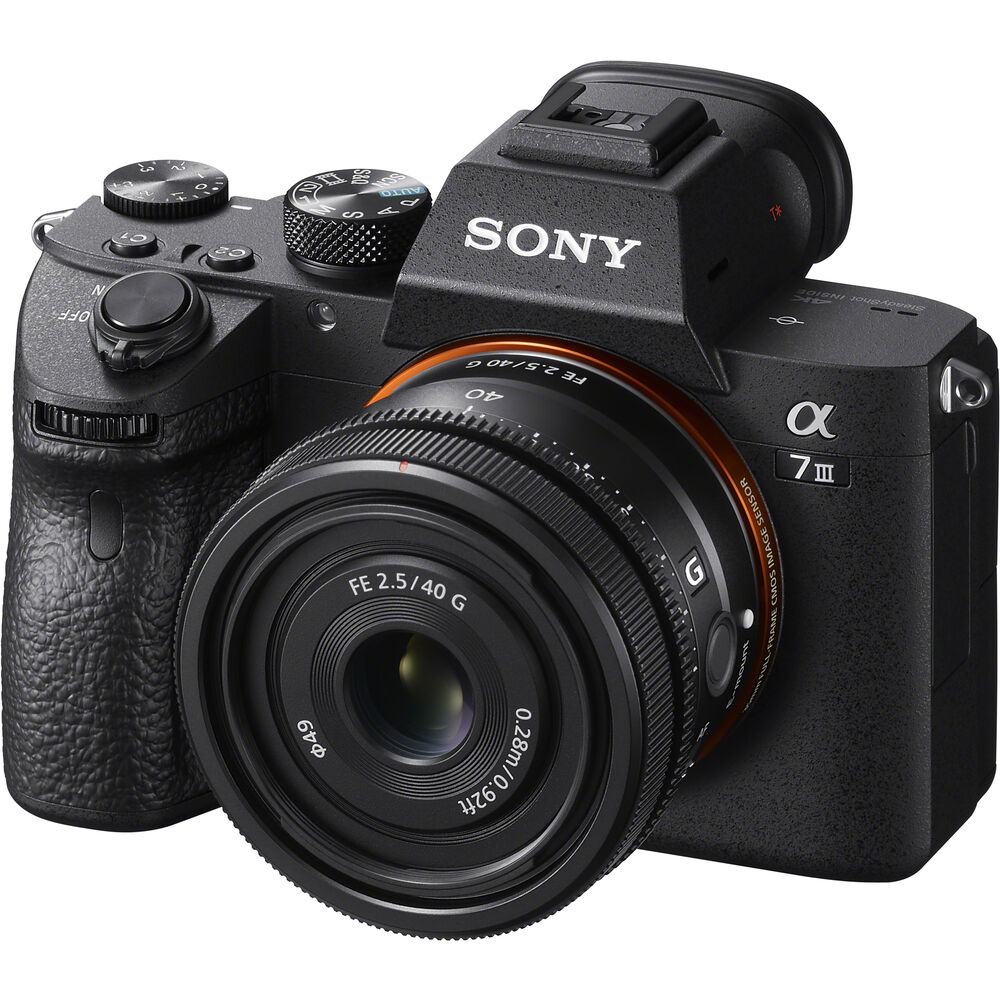
The Sony FE 40mm f/2.5 G (Amazon, B&H) is primarily a photography lens, though it will be used for video.
In this article we’ll take a comprehensive look at the important features and specifications of the Sony FE 40mm f/2.5 and see how good it will perform specifically for video, cinematography and filmmaking.
The aim of this article is to provide you with enough information and perspective so you can decide for yourself whether this lens is right for your film or video.
Important: This article is an overview of the lens with available information; and an analysis based on our experience shooting for almost two decades. It is not a hands-on review. If and when we get hold of the lens we’ll be sure to publish a detailed review. If this is not your cup of tea you can stop reading.
Watch Sony’s official release video:
Click to what you want quickly:
- TLDR;
- Sony FE 40mm f/2.5 G vs ZEISS Batis 2/40 CF
- Features:
- Control:
- Basics:
- Alternatives to the Sony FE 40mm f/2.5 G
TLDR;
What you need to know for video work about the Sony FE 40mm f/2.5 G (Amazon, B&H):
- The Sony FE 40mm f/2.5 G is a great all-round focal length lens. This lens should be sufficient in low light.
- It’s small and lightweight compared to its alternatives, making it a preferred lens for gimbal or drone work.
- Linear focus or fly by wire for manual focus makes this lens preferable for videography.
- “Only” 7 aperture blades.
- Customizable focus hold button for greater ease in videography
- Aperture ring on the lens itself will make it easier to ride the aperture.
- The lens doesn’t have Optical Steady Shot, but you will get some stabilization with a Sony a7S III or the Sony Alpha 1 that has in built stabilization
- It exhibits breathing.
Can be great for the following types of filmmaking:
- Wedding filmmaking
- Documentary filmmaking
- Low budget music videos
- Gimbal use

Sony FE 40mm f/2.5 G vs ZEISS Batis 2/40 CF
| Lens | Sony FE 40mm f/2.5 G | ZEISS Batis 2/40 CF |
| Filter Thread | 49mm | 67mm |
| Size | 68mm x 45mm | 91mm x 93mm |
| Weight | 173g | 361g |
| Closest focusing distance | 0.28m / 0.92ft (AF) 0.25m / 0.82ft (MF) | 0.24m / 0.79ft |
| Max. Aperture | f/2.5 | f/2 |
| Min. Aperture | f/22 | f/22 |
| Aperture Blades | 7 | 9 |
| Angle of View (Diagonal) | 57° | 56° |
| Price | $598 | $1,299 |
The Zeiss Batis 40mm f/2 CF (Amazon, B&H) is bigger and heavier compared to the Sony FE 40mm f/2.5 G (Amazon, B&H).
The Zeiss Batis 40mm opens up to f/2, and gives you better low light ability. That, and the 9 aperture blades should give you a smoother bokeh and creamier out of focus backgrounds. This needs to be tested of course, because numbers aren’t everything.
Sony has released the FE 40mm f/2.5 G as a series of lenses (along with the Sony FE 24mm f/2.8 and the Sony FE 50mm f/2.5). These lenses are of roughly the same size, weight and possess the same qualities.
Being of the same dimensions, the Sony G series might be a preferable lens series to use on gimbals or drones.
Theoretically, you could use the Sony 24-70mm f/2.8 GM (Amazon, B&H). It is of superior optical quality, and one can argue you get a longer reach with just one lens. However, for gimbals, the downsides are: heavier weight, and the lens extends as you zoom, which force you to rebalance the system.
With these new lenses, you can switch the lens and keep shooting. Hopefully, Sony might release more focal lengths but for now it’s a tough call.
Here’s a resolution comparison:
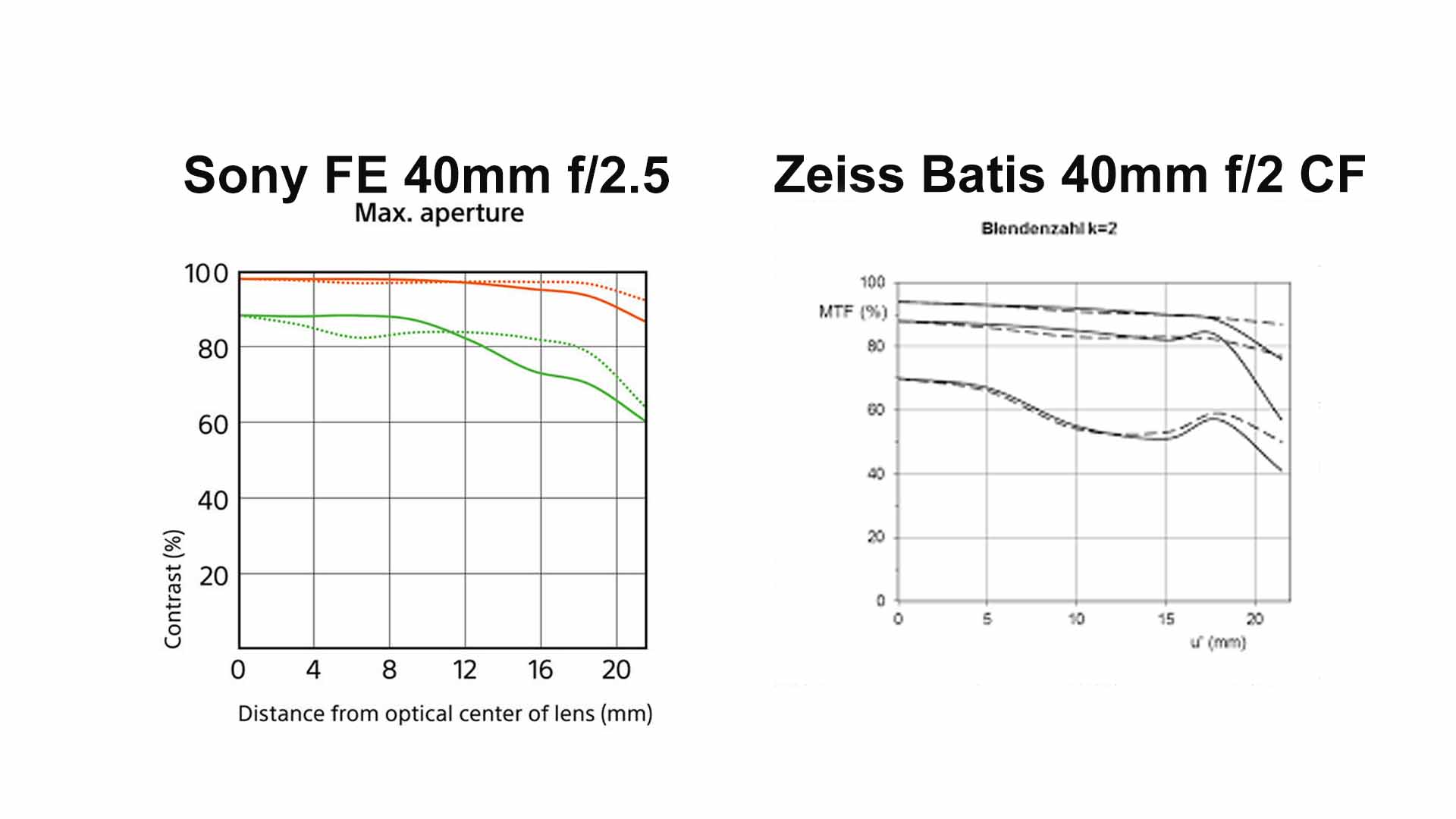
The 40mm f/2.5 G seems to be sharper, but at f/2.5 so will the Zeiss Batis. However, the Batis is an older design, and more preference is given to aesthetics over sharpness.
For those who need f/2 and the extra blades, there is no doubt which is the better lens. You get what you pay for.
Features
Coverage
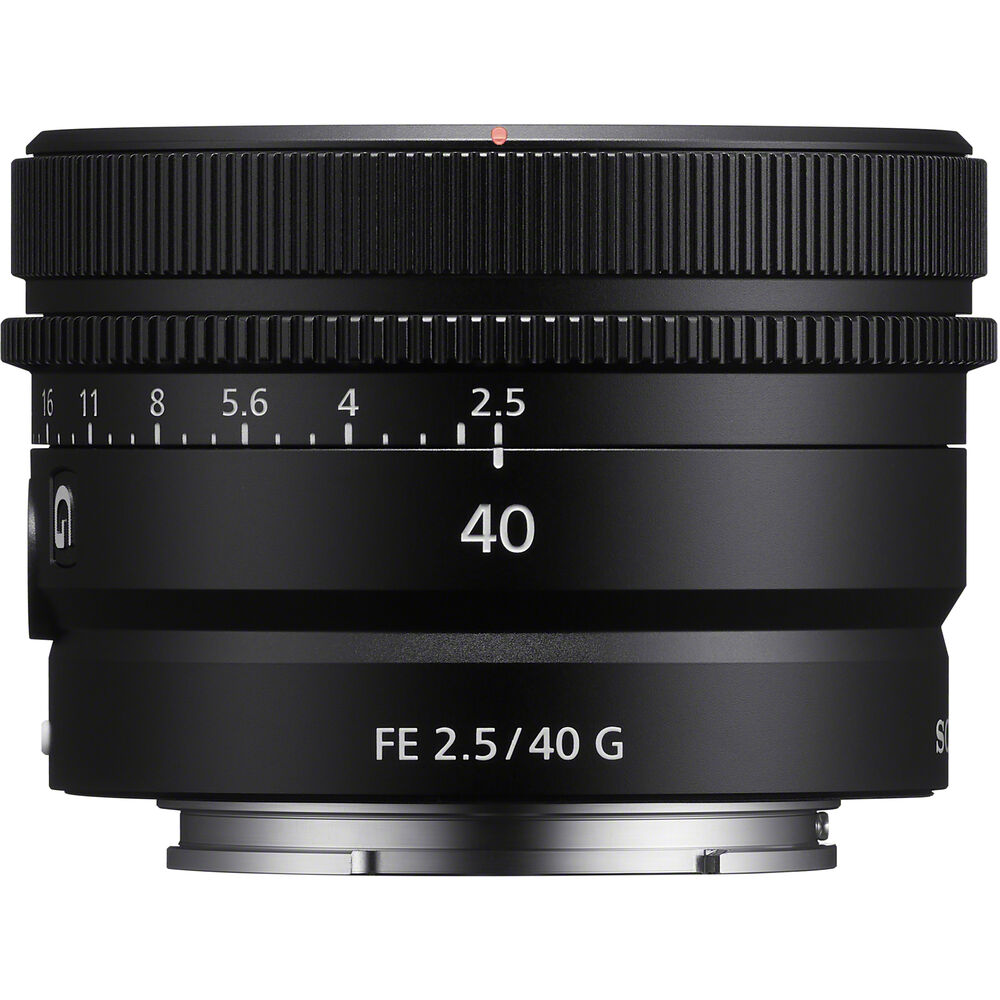
The Sony FE 40mm f/2.5 G (Amazon, B&H) is a full frame lens. It is designed to completely cover a sensor the size of 36mm x 24mm.
If you are considering this lens for an APS-C sensor or other cinema camera, check out this article:
Focal Length
The focal length is 40mm. This is considered normal on a full frame 35mm sensor.
This focal range is very useful for medium shots, medium close ups and close ups.

Aperture
The maximum aperture is f/2.5 and the minimum aperture is f/22.
There is an aperture ring on the lens. The aperture can be de-clicked with the turn of a switch on the lens. This helps you ride the aperture in a smooth manner to control exposure during a shot.
Having f/2.5 is decent enough for low light, especially with Sony’s newer sensors that have great ISO.
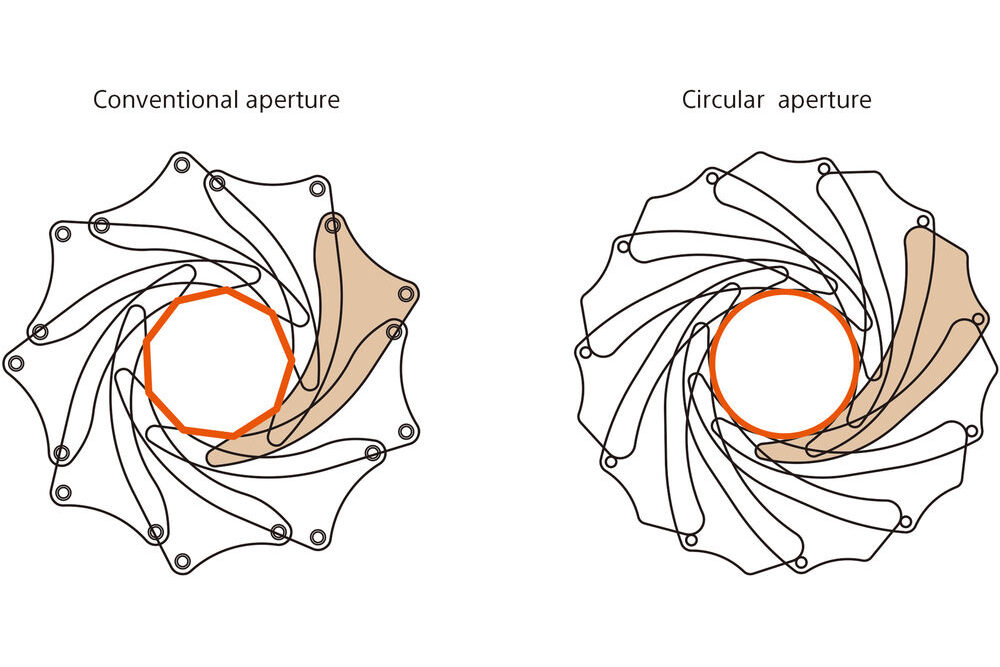
The Sony FE 40mm f/2.5 G (Amazon, B&H) has 7 circular diaphragm blades. One expects a smooth bokeh, but it’s not always a given. To know more about bokeh, read this:
Resolution
From Sony’s official MTF charts:
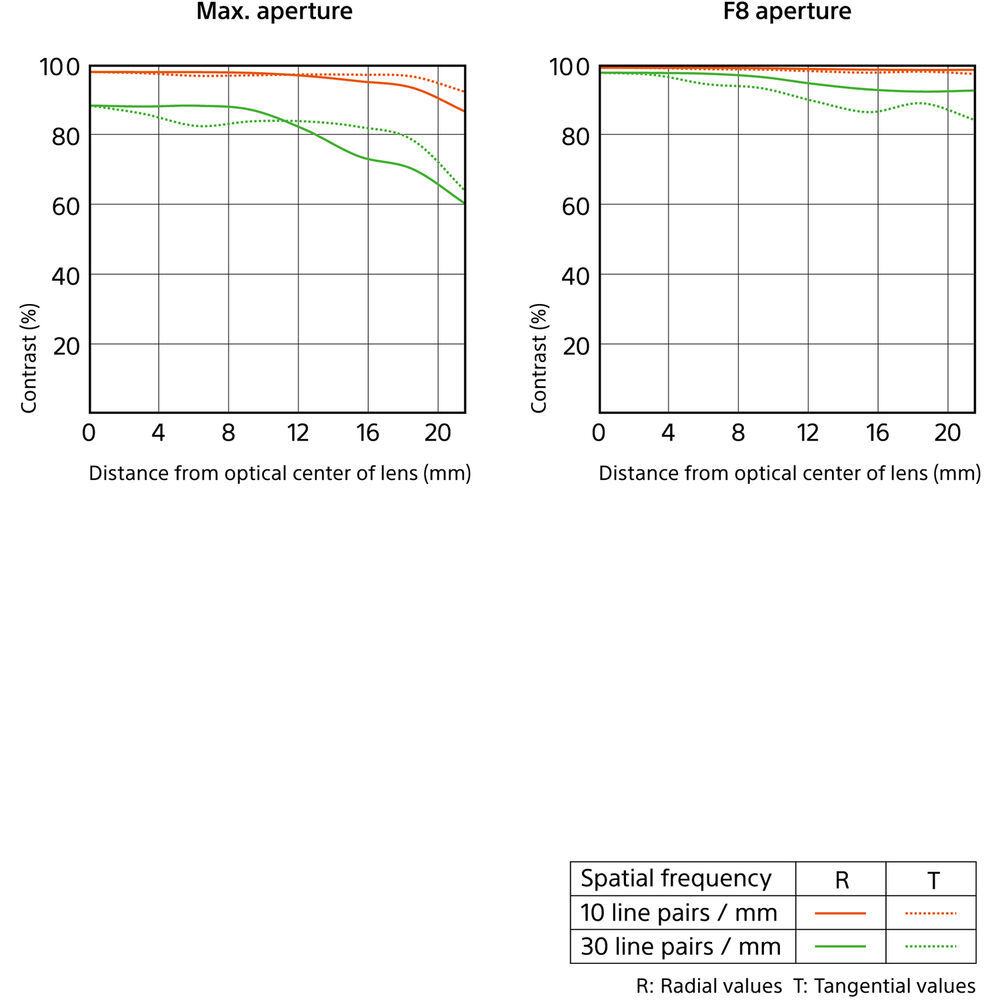
The Sony FE 40mm f/2.5 G (Amazon, B&H) is sharp as a tack in the center but not at the edges.
With the variance in the Sagittal and Tangential lines, you can infer (somewhat) that the bokeh won’t be proportionally smooth as the best prime lenses on the planet. However, it should be acceptable to most people.
If you are curious and want to read the MTF chart for yourself. Here’s a guide on how to read them easily.

Close Focus
The closest focusing distance differs when in autofocus mode and when in manual focus mode. If you choose to use autofocus, then your closest focusing distance will be 28cm or 0.92 feet, but if you use manual focus then your closest focusing distance will be 25cm or 0.82 feet.
This lets you achieve some cool close up shots, but is not a macro lens.
Image Stabilization
The Sony FE 40mm f/2.5 G (Amazon, B&H) lens doesn’t have Optical Steady Shot. This is a disappointment, because that would have made it a lot more useful. Cameras with IBIS, like the Sony Alpha 1 or the a7S III can provide it with decent image stabilization, but an optical-digital hybrid is the best of all worlds.
One should keep in mind that the Active Modes in many new Alpha cameras have a 10% image crop.
Control

Manual focus system
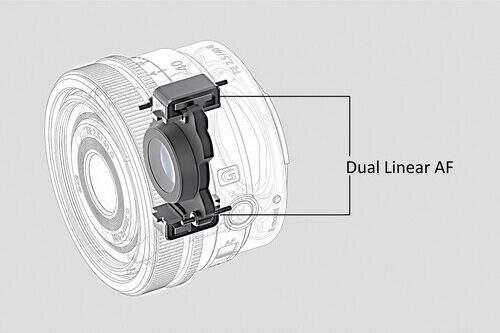
The Sony FE 40mm f/2.5 G (Amazon, B&H) has an infinite turn ring for its focus ring and can turn infinitely one way or the other. Sony’s new releases are some of the first FE lenses to have fly by wire as the default setting.
What is the meaning of focus by wire and fly by wire?
Focus by wire: Let’s say you turn the focus ring to change focus from point A to B. You’d expect the focus to shift accordingly. When you stop point B will be in focus. Now bring the focus point back to A and try again, but at a different speed. Slower or faster, doesn’t matter. Now, even if you precisely rotate to the exact same degree, the focus will not be on point B! The speed of rotation determines which point it is focused on. That’s just completely useless for follow focus work. If an actor or person moves at a different speed, evens lightly, you’ll never get the same focus. Avoid focus by wire lenses like the plague (for video work).
Fly by wire: The distance of focus shifted is directly proportional to the speed at which the ring is turned. This is how a manual focus ring is supposed to operate for video and cinematography.
Linear Response MF provides a direct response to subtle focus ring adjustments when focusing manually. Ring rotation translates linearly to a corresponding change in focus like a mechanical control, directly reflecting the intent of the photographer and allowing delicate focus adjustments.
Sony
This decision to include fly by wire or linear MF by Sony makes this lens a great choice for cinematographers and videographers.
Autofocus system
Sony’s autofocus is, without a doubt, one of the most revered video autofocus systems in the world.
They claim that their Eye AF and the lens’s motors work together to assure precise, quick sharpness. There is a switch on the side of the body to switch from autofocus to manual focus.
Real world testing is needed here, but I’d be surprised if the lens didn’t focus super fast.
Basics
Filter Thread
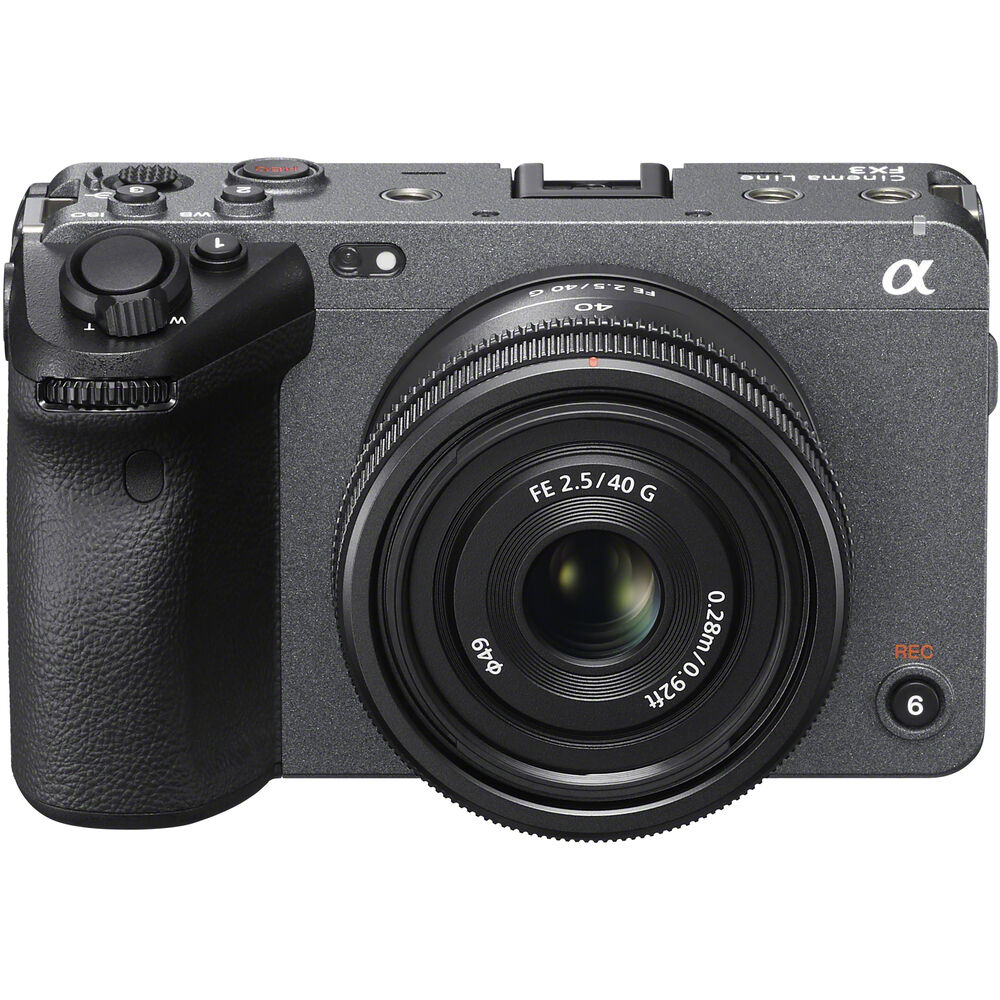
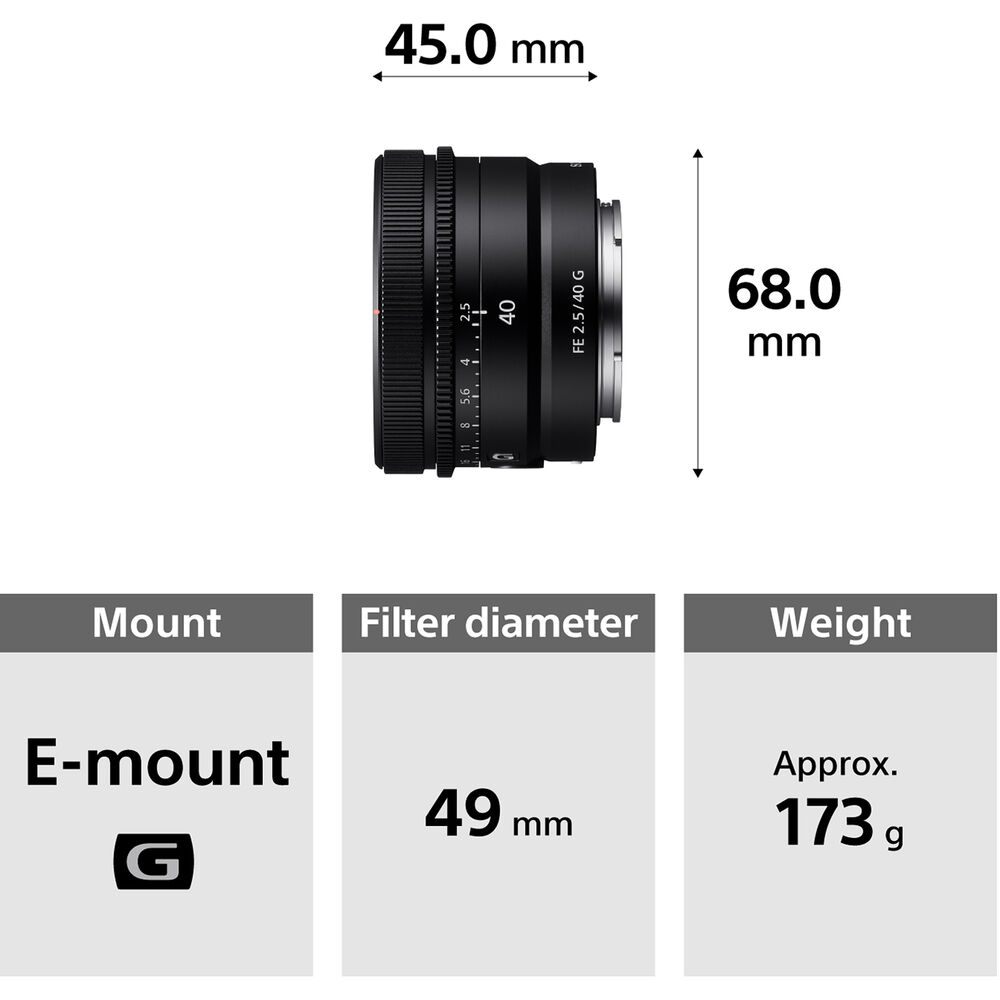
The Sony FE 40mm f/2.5 G (Amazon, B&H) has a filter thread diameter of 49mm. This is an uncommon filter diameter.
Build Quality
The majority of the lens exterior has an aluminum finish and the lens doesn’t feel cheap.
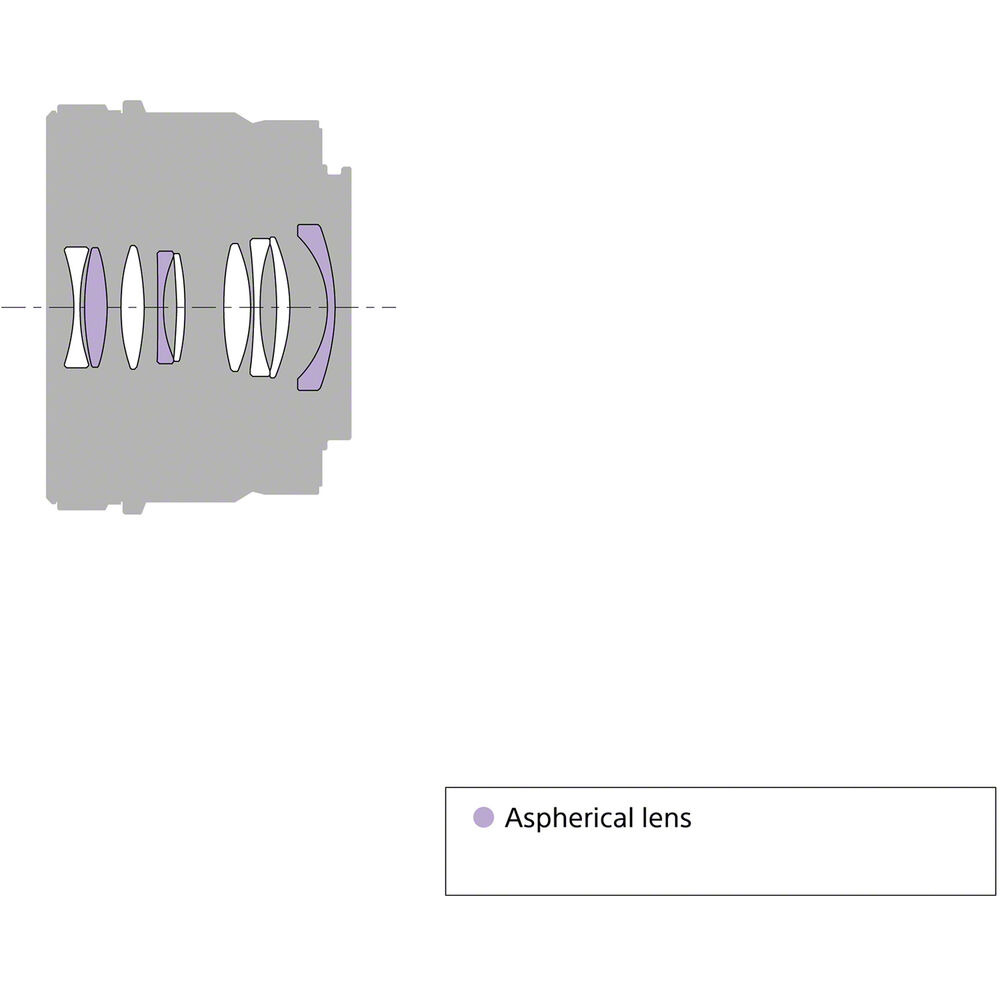
The optical design consists of 9 elements in 9 groups including three aspherical elements.
Size and Weight
The Sony FE 40mm f/2.5 G (Amazon, B&H) has a diameter of 68mm and a length of 45mm. It weighs around 173 grams. It is super light for its class and lens construction.
You might be able to get away with a lighter gimbal with less powerful motors. That makes it easier on the hands.
The size and weight makes it perfect for run and gun shoots.
Weather resistance
Sony claims that this lens is weather resistant. But again this only holds true if the camera body you will be using is also weather sealed. No camera or lens is truly and officially weather sealed, so the best you can hope for is reliable weather resistance.
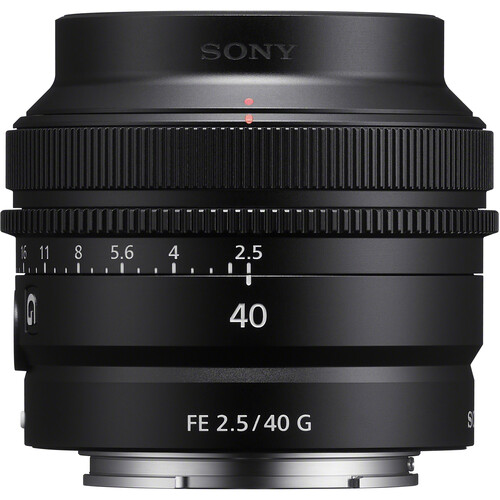
The metal (aluminum) exterior finish of the lens body and hood contributes to reliability through increased strength and durability. The design is also dust- and moisture-resistant, providing reliability in harsh outdoor shooting environments.
Although the design is dust and moisture-resistant, absolute protection from dust and moisture is not guaranteed.
Sony
What’s in the box
This is what you get in the box (other than the lens):
- Hood (model): ALC-SH166
- Lens front cap: ALC-F49S
- Lens rear cap: ALC-R1EM
The hood might be useful for photography, but the shape and design makes it mostly vestigial for video work. Some people like to put it on to protect the front element in case of a fall. The hood takes the impact and shatters, but saves the lens. I’d keep it on unless you have good reason not to.

Alternatives to the Sony FE 40mm f/2.5 G Lens
The Sony FE 40mm f/2.5 G (Amazon, B&H) is a great normal angle lens. The only alternatives are:
- Zeiss Batis 40mm f/2 CF (Amazon, B&H) – Larger aperture, expensive, heavier and bigger, more aperture blades, better bokeh, but not as sharp.
- Sony FE 20mm f/1.8 G Lens (Amazon, B&H) – Larger aperture, expensive, focus by wire only, wider angle of view.
- Sony FE 28mm f/2 (Amazon, B&H) – Larger aperture, cheaper, wider angle of view but focus by wire only.
I hope you found this overview of the Sony FE 40mm f/2.5 G (Amazon, B&H) useful. If we have missed out on something, please let us know in the comments below.
