
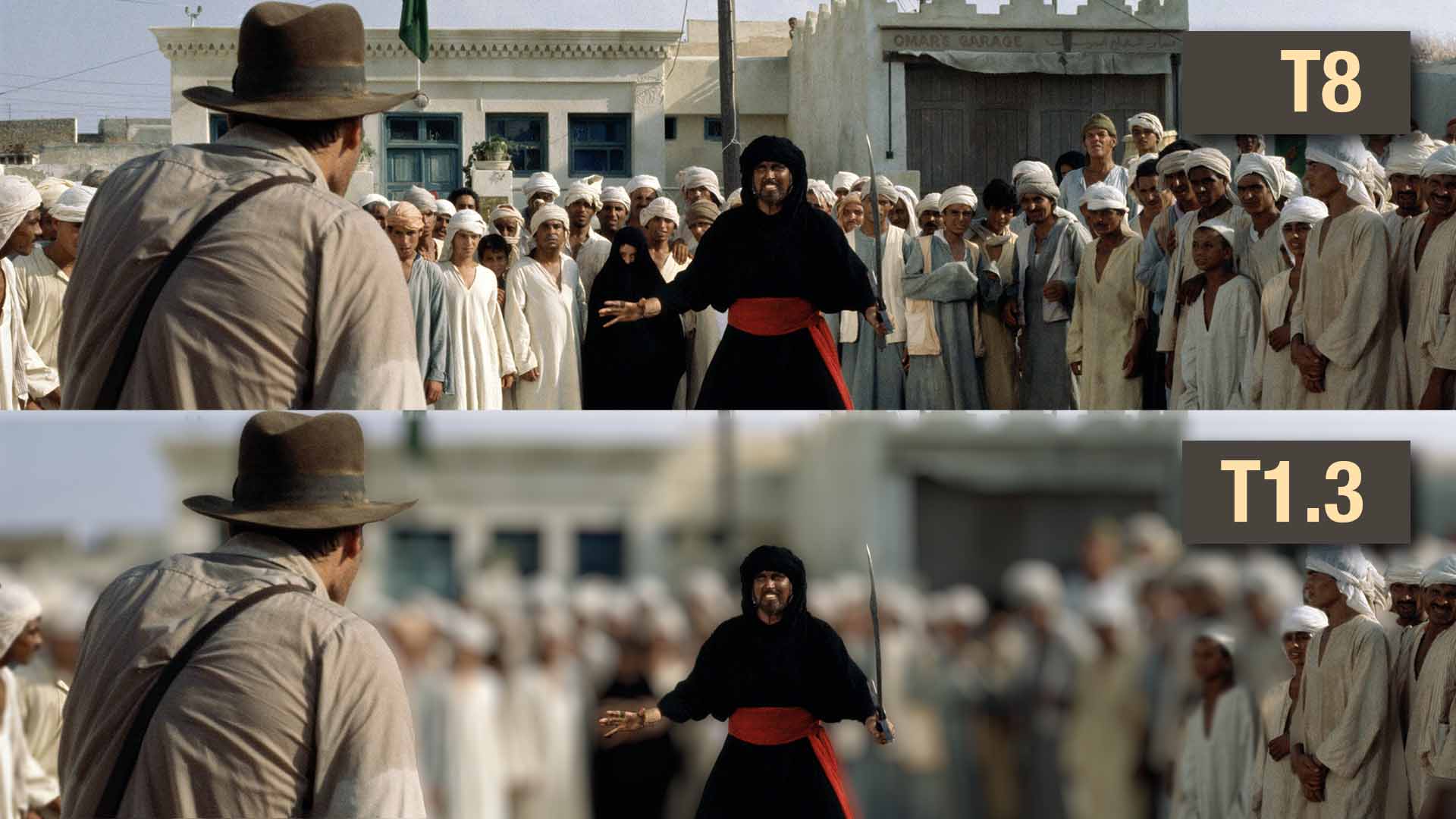
Steven Spielberg is known for his amazing visual style. He always chooses the camera angles and lens settings himself, not the cinematographer.
He’s well-known for planning his shots in advance with detailed drawings called storyboards. Early in his career, he liked to look at these storyboards more than the script when filming on set!
Watch the video:

Spielberg was a prodigy. From his first movie, Duel, he had access to Panavision equipment. He had the best lenses and never looked back. He used Super Speeds for Widescreen and C-Series lenses for anamorphic.
Here’s a detailed table listing the lenses used in Steven Spielberg’s feature films, compiled from reliable sources including IMDb:
| Feature Film | Cinematographer | Primary Lenses Used | Type* |
|---|---|---|---|
| Duel (1971) | Jack A. Marta | Panavision Super Speed MKII | Widescreen 1.85:1 (1.33:1 for TV) |
| The Sugarland Express (1974) | Vilmos Zsigmond | Panavision C-Series | Anamorphic 2.39:1 |
| Jaws (1975) | Bill Butler | Panavision C-Series | Anamorphic 2.39:1 |
| Close Encounters of the Third Kind (1977) | Vilmos Zsigmond | Panavision C-Series | Anamorphic 2.39:1 |
| Raiders of the Lost Ark (1981) | Douglas Slocombe | Panavision C-Series | Anamorphic 2.39:1 |
| E.T. the Extra-Terrestrial (1982) | Allen Daviau | Panavision Super Speed MKII | Widescreen 1.66:1 (1.85:1 frame) |
| Indiana Jones and the Temple of Doom (1984) | Douglas Slocombe | Panavision C-Series | Anamorphic 2.39:1 |
| The Color Purple (1985) | Allen Daviau | Panavision Ultra Speed MKII | Widescreen 1.66:1 (1.85:1 frame) |
| Empire of the Sun (1987) | Allen Daviau | Panavision Primo, Ultra Speed MKII | Widescreen 1.66:1 (1.85:1 frame) |
| Indiana Jones and the Last Crusade (1989) | Douglas Slocombe | Panavision C-Series | Anamorphic 2.39:1 |
| Hook (1991) | Dean Cundey | Panavision E-Series | Anamorphic 2.39:1 |
| Jurassic Park (1993) | Dean Cundey | Panavision Primo | Widescreen 1.85:1 |
| Schindler’s List (1993) | Janusz Kaminski | Zeiss Standard Speed and Super Speed | Widescreen 1.85:1 |
| The Lost World: Jurassic Park (1997) | Janusz Kaminski | Panavision Super Speed Z-Series MKII | Widescreen 1.85:1 |
| Saving Private Ryan (1998) | Janusz Kaminski | Panavision Super Speed MKII and Ultra Speed MKII | Widescreen 1.85:1 |
| A.I. Artificial Intelligence (2001) | Janusz Kaminski | Zeiss Super Speed | Widescreen 1.85:1 |
| Minority Report (2002) | Janusz Kaminski | Panavision Primo | Super 35 1.85:1 |
| Catch Me If You Can (2002) | Janusz Kaminski | Panavision Primo | Widescreen 1.85:1 |
| The Terminal (2004) | Janusz Kaminski | Panavision Primo | Widescreen 1.85:1 |
| War of the Worlds (2005) | Janusz Kaminski | Panavision Primo | Widescreen 1.85:1 |
| Munich (2005) | Janusz Kaminski | Cooke S4 and Cinetal | Super 35 2.39:1 |
| Indiana Jones and the Kingdom of the Crystal Skull (2008) | Janusz Kaminski | Panavision C- and E-Series Lenses | Anamorphic 2.39:1 |
| War Horse (2011) | Janusz Kaminski | Zeiss Master Prime and Angenieux Optimo | Super 35 2.39:1 |
| Lincoln (2012) | Janusz Kaminski | Panavision Primo and Super Speed Z-Series MKII # | Super 35 2.39:1 |
| Bridge of Spies (2015) | Janusz Kaminski | Hawk V-Lite, V-Lite Vintage ’74 and V-Plus | Anamorphic 2.39:1 |
| The BFG (2016) ** | Janusz Kaminski | Panavision Primo | DCP 2K Scope 2.39:1 |
| The Post (2017) | Janusz Kaminski | Panavision Primo, PVintage^^ | Super 35 1.85:1 |
| Ready Player One (2018) ** | Janusz Kaminski | Panavision C-, E-, T- Series | Anamorphic 2.39:1 |
| West Side Story (2021) | Janusz Kaminski | Panavision C- and T-Series | Anamorphic 2.39:1 |
| The Fabelmans (2022)^ | Janusz Kaminski | Panavision Primo and PVintage^^ | Super 35 1.85:1 |
** Shot on an Arri Alexa variant
^ Shot on an Arri Alexa Mini LF and Film
^^ PVintage is based on Panavision Ultra Speeds, with better housing and construction
# The “Z” Series are rehoused Zeiss lenses
Super Speeds open up to T1.3, and C-Series lenses open up to T2.3, but typically T2.8.
Here are the widest and typical apertures of every lens series:
| Lens Series | Typical Aperture | Widest Aperture | Closest to 21mm^ |
|---|---|---|---|
| Panavision C-Series | T2.8 | T2.3 | 40mm** |
| Panavision Super Speed MKII | T1.3 | T1.3 | 25mm |
| Panavision Ultra Speed MKII | T1.3 | T1 | 20mm, 24mm* |
| Panavision Primo | T1.9 | T1.8 | 21mm |
| Panavision E-Series | T2 | T2 | 40mm** |
| Zeiss Standard Speed | T2.1 | T2 | 20mm, 24mm |
| Zeiss Super Speed | T1.3 | T1.3 | 25mm |
| Cooke S4 | T2 | T2 | 21mm |
| Zeiss Master Prime | T1.3 | T1.3 | 21mm |
| Hawk V-Lite | T2.2 | T2.2 | 35mm, 45mm** |
| Panavision T-Series | T2.3 | T2.3 | 40mm** |
| Panavision PVintage | T1.3 and T1.6 | T1 | 24mm |
* 24mm goes to T1.3, while the 20mm goes to T1.9
** These are anamorphic, with different lenses with different angles of view; so it’s hard to get exact equivalent focal lengths.
This table highlights the consistent use of Panavision lenses in Spielberg’s films, often complemented by other high-quality lenses like Cooke S4s and Zeiss Standard Speeds, depending on the specific visual requirements of each project.
Spielberg could have filmed his movies with a wide open aperture. He chose not to.
Why is that?
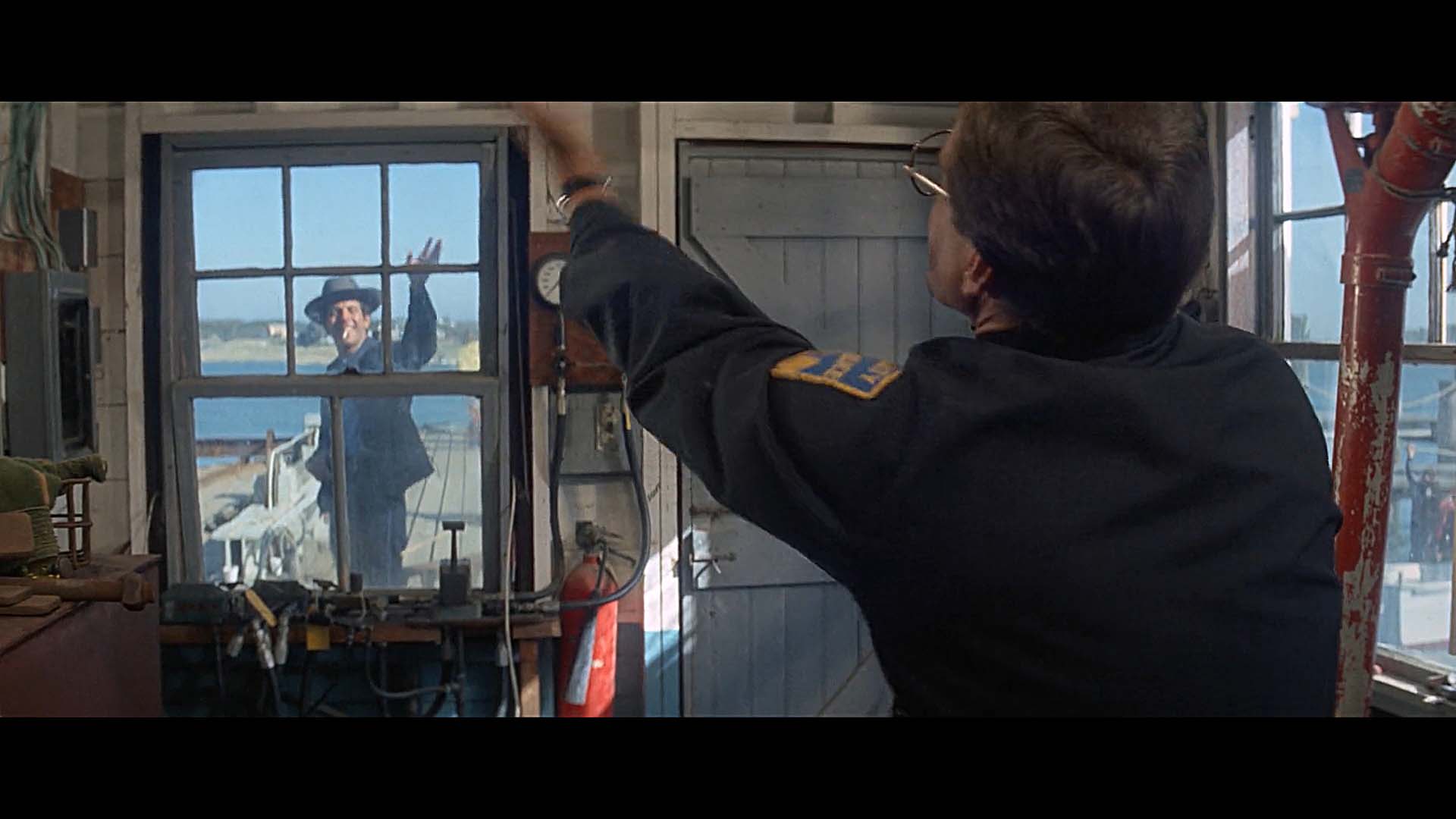
Spielberg’s Use of Wide Angle Lenses
Spielberg prefers to use wide angle lenses. His frames are some of the most dynamic you’ll ever find.
Characters are different sizes in the same frame. They exit and enter the frame in visually stimulating ways. He can take us from a long shot to a tight close-up in one camera move, and the face looms over us like a mountain.
He achieves this by using wide angle lenses. Wide angle lenses distort objects and make everything look more three-dimensional.
When something moves slowly by, it looks faster with a wide angle lens. This trick was used in the mines sequence in The Temple of Doom and many other films.
Many say Spielberg sees the world in 21mm on a Super 35 frame. He uses whatever focal length works, but he is mostly a wide angle lens filmmaker. If you’d like to know more about great film directors and the focal lengths they preferred, watch this video:
Depth of Field
Let’s assume he uses a 21mm focal length on Widescreen 1.85:1.
At T1.3, he would get a depth of field of about a foot at a distance of six feet. For a close-up at about two feet, the depth of field would be less than two inches.
This wouldn’t work for Spielberg. He likes to keep everything in the scene sharp and clear, from front to back.
This is called depth of field. If the background is blurry, that’s a shallow depth of field. But if everything is sharp, that’s a deep depth of field.
Spielberg loves deep focus because he wants every part of the frame to contribute to the story. Even with a 21mm lens, shooting wide open results in a shallow depth of field, meaning you miss out on little details, the impact of the location, or funny background moments.
His films are about the main action and the rich details that make his cinema feel full.
Camera Blocking
Camera Blocking is how a director stages and moves actors around in a scene.
Spielberg wants to keep all the actors in focus, even if they’re moving around. A shallow depth of field would make it hard to keep everything in focus. Spielberg’s careful blocking ensures each character’s movement contributes to the shot.
No one moves randomly.
One of the best examples of blocking is in Schindler’s List:

These shots were too personal to be just crowd scenes. Spielberg makes sure you can see everyone clearly to understand what’s happening. Even in a film without extras, like Duel, the landscape, heat, and road are always present.
Using a smaller aperture allows Spielberg to capture the entire vista in sharp focus.
He does this in his big blockbusters like Jurassic Park, too. Why blur the background when it can enhance the foreground?
Focus Pulling
You might ask, why not rack focus from one point to another? Spielberg maintains focus on multiple planes so our eyes can see everything together.
Given his preference for long takes and dynamic camera movements, shooting at smaller apertures reduces the need for constant focus adjustments. Imagine seeing the focus change multiple times in one shot. It’s too distracting.
Spielberg’s choice to avoid wide open apertures simplifies the focus puller’s job.
Maintaining focus at T1.3 is challenging today, even with focus aids and monitors. Imagine in the 70s or 80s, where there were no monitors for the focus puller. They had to use tape and instinct to pull focus.
You wouldn’t know you made a mistake until you saw the dailies. By then, it might be too late.
Getting Sharp Images
Deep focus also helps with continuity. Spielberg’s movies have tons of action sequences. The dialogue scenes match the action scenes in visual style.
You don’t have to force shallow depth of field on some shots to save time and then change the visual style for wide shots or action scenes.
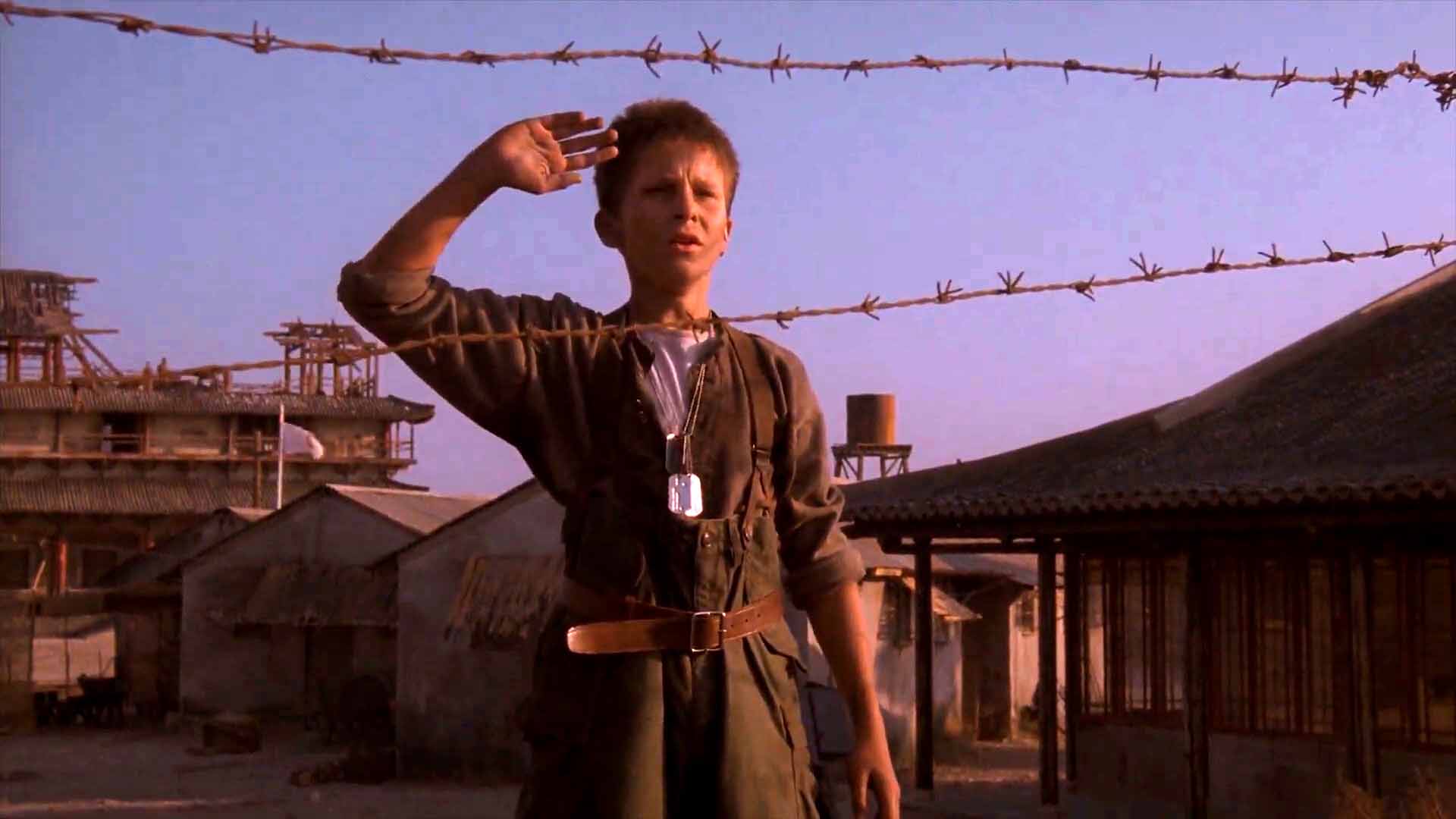
This decision plays into the strengths of a lens. The sweet spot of a lens is about two stops from its widest aperture. If the Panavision or Zeiss Super Speeds opened up to a T1.3, the best performance is at about T2.8.
In many of his Indiana Jones films, the stop was more like f/5.6 or even f/8.
Spielberg’s movies are sharp because the lens is stopped down and not wide open.
How Deep Focus Affects Lighting
Back in the days of film with low ASA ratings, filmmakers wanted to film wide open to save money on lighting. They had tungsten and halogen fixtures, no HMIs or LED lights. It got very hot and drew a lot of power.
Yet, Spielberg went against the grain. He used more lighting to achieve deep focus.
In E.T. The Extra-Terrestrial, they filmed at no wider than T2.5. The lights were just about adequate:
img
How Deep Focus Helps Visual Effects
Early Spielberg films had tons of visual effects and gags.
He filmed in 4-perf Widescreen 1.85:1, which means he used the full area on the film frame. This was crucial for visual effects because the images had to be exposed correctly and be clean.
In E.T. The Extra-Terrestrial, they didn’t change exposure during processing.
Camera Movement
Spielberg is one of the greatest film directors for camera movement.
A smaller aperture adds to the story’s immersion. This is important because Spielberg moves the camera on all three axes. If he used shallow depth of field, the blurriness would move all over the place, distracting from the story.
Watch this video on the Steven Spielberg L-system:
What is Steven Spielberg’s Preferred Film Format?
Spielberg has shot on three major formats:
- Widescreen 1.85:1,
- Anamorphic, and
- Super 35mm.
This is how they compare to full frame 35mm:

For The Fabelmans, Spielberg picked Super 35 1.85:1, with Panavision Primo and PVintage lenses. PVintage is based on older Panavision Ultra Speeds, with better construction.
Therefore, Super 35mm 1.85:1 is his favorite format.
Why not Anamorphic?
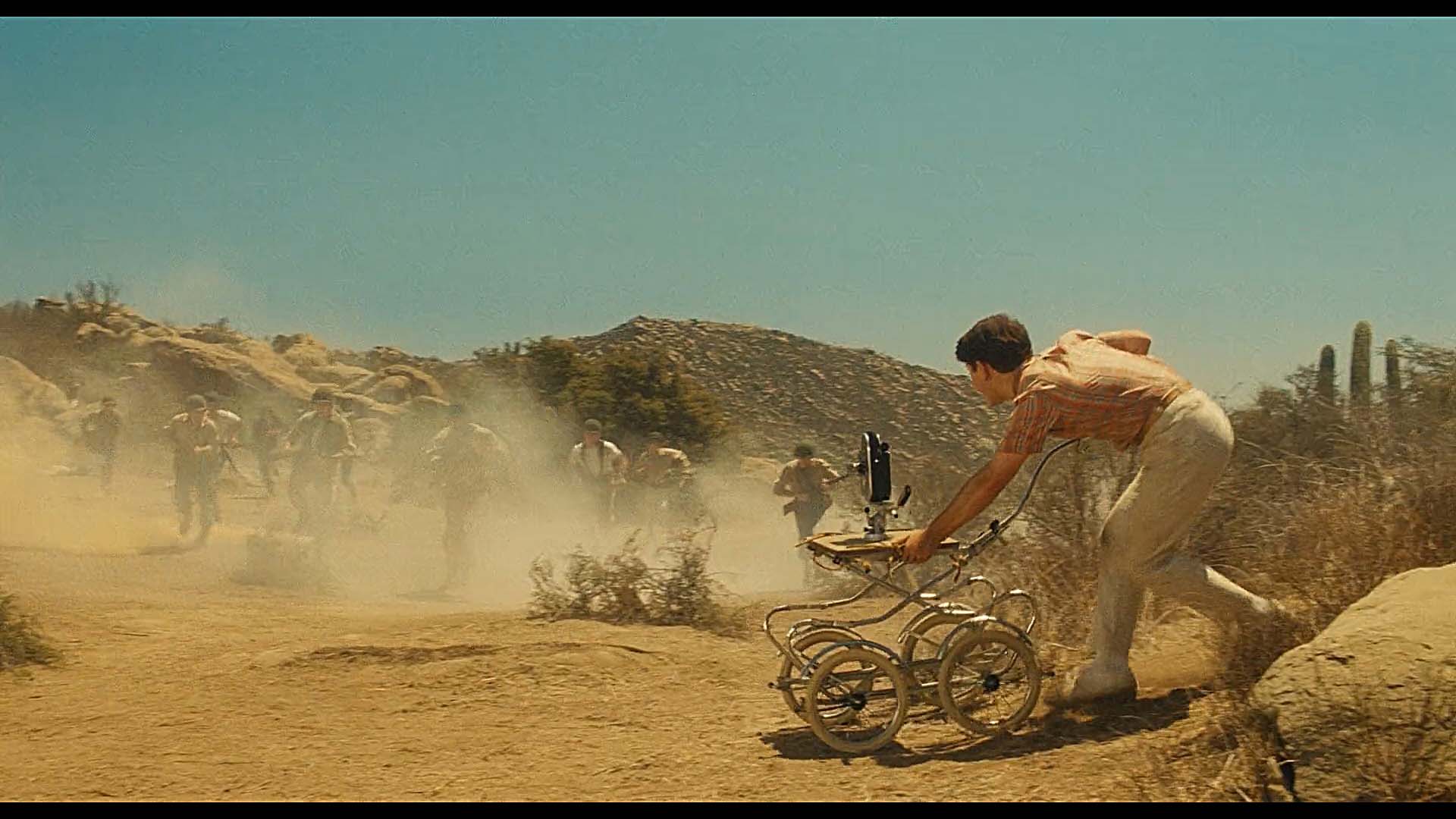
One reason anamorphic isn’t his preferred format is that it causes more shallow depth of field at similar apertures.
In my experimental short Man May Love, I used Arri Master Anamorphics, shot at T8, to get deep focus.
It was hard and stretched my budget. Spielberg has more money and light, but it’s still harder in anamorphic.
He wanted to tell stories as he saw them. He saw it in wide angle 1.85:1 when he started, and that’s how he continues to see the world. This gives his work a unique character.
So, why does Steven Spielberg avoid wide open apertures and shallow depth of field? Because it would ruin everything that makes his films unique and interesting.
It’s that simple.
What do you think? Let me know in the comments below.

Very thoughtful & insightful video. As a photojournalist who often does set lenses to wide open, you made me think!
Shallow DOF is, arguably, a crutch for poor composition. The careful composition and direction of camera and actor movement you describe is often better than shallow DOF. In my own case, I typically am not directing people at all. The goal is the opposite: to be as close to invisible as possible and capture organic moments of their lives and work.
While photojournalistic ethics does allow you to move your camera around, too much movement in someone’s space can be distracting and emphasize the unnaturalness of the photographically mediated moment. Staying unobtrusive can often produce strong and organic moments. In these settings, the crutch of shallow DOF often does help give clarity and strength to images.
No doubt you’re right though, all the Spielberg scenes you show would be diminished if shot wide open.
Thank you!
You’re welcome! When a technique is done right the question should never arise.
Thanks for sharing!
Do you know any good interviews or making of’s where he talks about the topic?
You’re welcome! It’s all over the Internet! Just search for behind the scenes with the movie titles.
Great article Sareesh! How does this translate to full frame DSLR cameras like Sony? Which lenses would give a similar look to Spielberg’s? For a test.
Thanks, you’ll have to multiply the focal lengths with the crop factor. Check this out: https://wolfcrow.com/what-is-the-35mm-equivalent-and-why-is-it-confusing/
Super 35 is nearly interchangeable with APS-C, which has a crop factor of 1.5. So a 21mm S35 lens would be about a 31.5mm Full Frame lens, or more commonly, a 35mm lens. 35mm is just a bit wide. In Full Frame photography 50mm is often called “normal.” I understand normal as the diagonal of the film/sensor, which for Full Frame is 43mm.
Great details here; thanks!
You’re welcome!