
Watch the video:

1. Gregg Toland
For me, no cinematographer generates the same amount of awe as Gregg Toland.
Gregg Toland personifies everything about cinematography. Experimentation, perfection, grace, beauty, craft, innovation, and a unique style that few even dare try copy. It takes such an insane level of dedication and discipline to be at the level he was in. Over a short career spanning 67 movies, he stands tall above anyone else.
Two movies you must watch. I want to give you movies that really showcase their talents. Citizen Kane for sure. It’s textbook material. It would be a sin if i didn’t recommend it.
The second is hard, but I pick The Grapes of Wrath. It shows a different kind of Toland. The realistic style contrasts with Citizen Kane but it reveals what level of master Gregg Toland was.
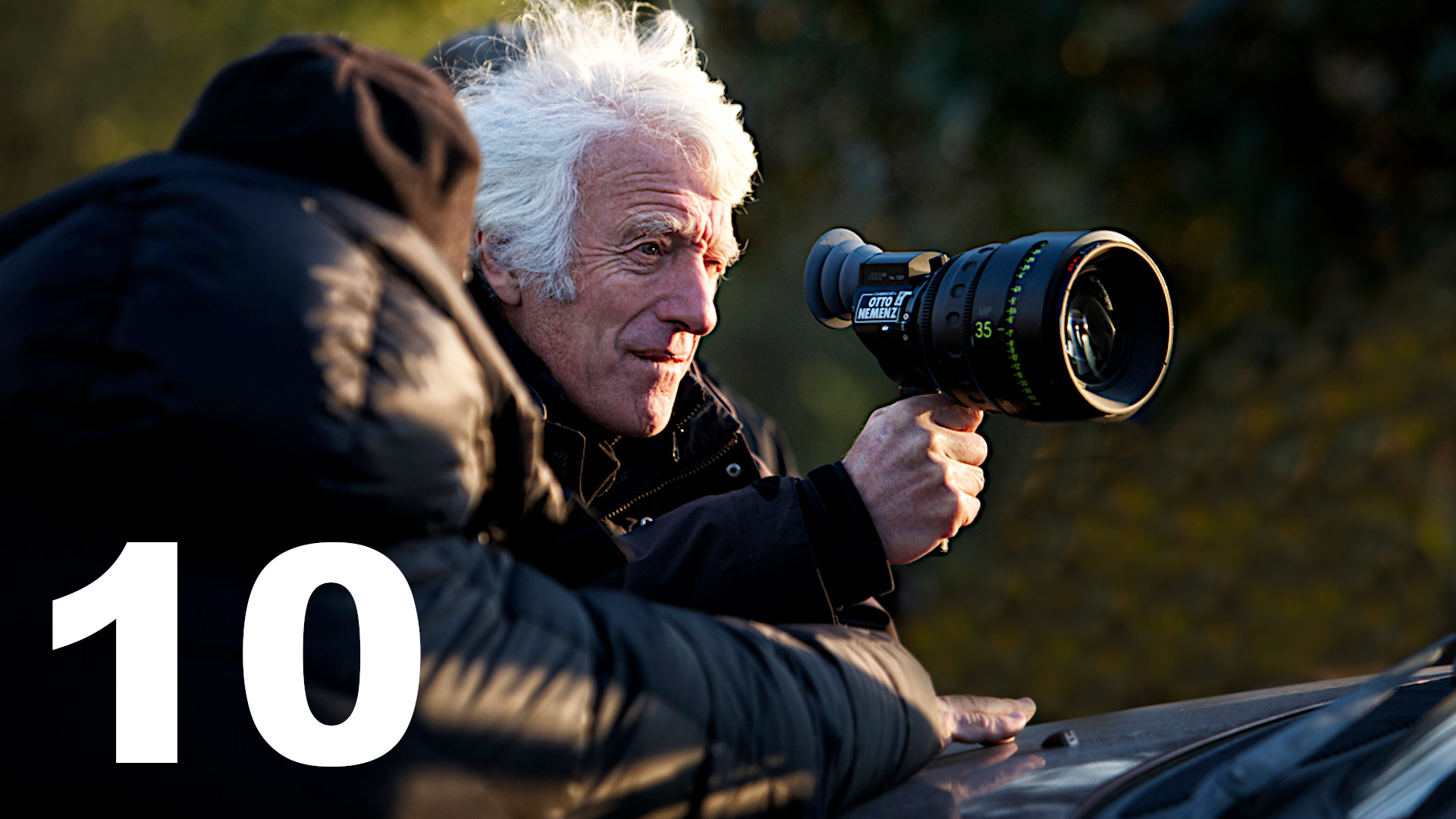
2. Roger Deakins
Among the modern legends, we have a cinematographer who is not only a genius but equally large hearted. Through his website he answers questions and helps budding cinematographers understand his style.
Roger Deakins for me is the personification of elegance. His frames have such a graceful beauty that’s so hard to explain. In fact, his choice of Arri Alexa personifies his own style, the German Bauhaus tradition. Elegant, spartan, functional and relentless.
Two films you have to watch? For seemingly effortless elegance I would pick No Country for Old Men and of course, Blade Runner 2049.
3. Ashok Mehta
Ashok Mehta is the reason I even became aware of cinematography. It was the year 1995 and I was in school. That year had seen two other major releases in India – DDLJ and Rangeela. Both films were better than Trimurti, the one Ashok Mehta shot.
But I still remember being dumbstruck by the visuals, sitting in the theater. Later, when I made a video on Ashok Mehta, I finally understood how brilliant he really was. And, he is probably one of the greatest inspirational rag to riches stories you’ll come across anywhere, among filmmakers.
He had an incredible eye for lighting, and is easily by miles my favorite Indian cinematographer.
Two films to see. Trimurti for sure, and for a different take, Susman, if you can find a copy somewhere. If not, watch any art movie he shot.
4. Asakazu Nakai
Kurosawa was number one on my director’s list, so this was bound to happen. Nakai had to execute whatever Kurosawa wanted. He had to contend with multiple camera setups under extreme weather conditions, lighting for insane depth of field, long lenses without camera shake, all of that in post-war Japanese budgets.
It saddens me I can’t find any documentary on him. If you know any material on his work and techniques, please let me know. Even the ASC has neglected his work. I’ve gone through the archives.
What should you watch? Seven Samurai. For a completely different take, Dersu Uzala.
5. Stanley Cortez
Wow, he might be the most underrated cinematographer ever. He is well known, but not enough, in my opinion. He only shot about 86 movies, according to IMDb.
His extreme use of contrast and shadows outdoes both Toland and Gordon Willis. He is the true master of low key lighting. The Night of the Hunter is one you shouldn’t miss. The second, The Magnificent Ambersons. Guess who directed that?
6. Conrad Hall
Amongst all the cinematographers whose work I’ve analyzed, after Gregg Toland, Conrad Hall’s work hits home the closest. His sense of lighting and cinematography is very close to what I lean towards. As I gain more experience my ideas about cinematography have changed over the years. My creation of the understanding cinematography series helped a great deal with that.
One common factor among Conrad Hall and all the cinematographers I’ve talked about so far, is all of them worked for some of the best directors. Not only did they have the skill to execute gorgeous visuals that are forever part of great cinema, but they were able to manage the egos and the politics of filmmaking. That’s an equally important lesson.
What should you see? The first, The Road to Perdition. Second, Cool Hand Luke, why not?
7. John Toll
Among the modern lot, after Deakins, is John Toll. Again, this is purely from a personal perspective, as Toll’s work speaks to me, and is close to what I want to achieve as far as cinematography is concerned.
You know he’s a big deal when some heavy hitter directors want to work with him. Watch The Thin Red Line. And the pilot episode of Breaking Bad.
8. John Alcott
Stanley Kubrick’s partner in crime. Just like Kurosawa, Kubrick was a perfectionist, so you could bet he had the perfect cinematographer who could execute the sheer variety of films Kubrick worked on.
Imagine being asked to handle the jaw dropping Barry Lyndon, and then have hidden artificial lighting everywhere on The Shining? Imagine the discussions! He’s so lucky to have played around so much, and to have got the time to reinvent himself with every film.
Watch Barry Lyndon and A Clockwork Orange.
9. Gordon Willis
Gordon Willis had such a distinctive style, and he stuck to it. That’s so hard to do as a cinematographer when you’re working with different directors and genres. But somehow he pulled it off.
His use of underexposure and shadows is so refreshing, especially when you compare it to what’s being done today with all the low light abilities of modern cameras. You really can’t substitute camera for taste. Write that down.
Watch The Godfather, and Manhattan.
10. Vittorio Storaro
Storaro is like Roger Deakins or Conrad Hall – elegance that just comes naturally. And he’s still going strong today. Secretly I’m always hoping he’ll pull a rabbit out of the cinematography bag and come up with something special every time he’s involved in a film.
The Conformist was really an incredible achievement in cinematography – a grand statement if there ever was one. They don’t make them like that anymore. So it is mandatory watching. Then watch Apocalypse Now for a totally different Storaro.
This is a personal list, so I hope it was helpful in some way.
Write down your list of favorite cinematographers and why in the comments below. It’ll be a great list for everyone to study.

Janusz kaminski, vilmos zsigmond, Bruno Delbonnel, Sean Bobbitt, Vladimir Smutny, Dante Spinotti, Philippe Rousselot, Michael Chapman, Dion bebe, phedon papa Michael, mattew, Russell p carpenter, vk Murty subratho Mithra, Markus Bartley, kazo miyagawa. List is endless. I love your list of people they are masters, TNX alot for your valuable video. Hundreds of masters. Thank you sarish…. Keep educate us .
A lot to learn from them…Artists….