

Warning: Information and prices provided in this guide might be inaccurate or wrong, even if I have tried to be as accurate as possible without losing sanity. You are responsible for your own actions. Refer to manufacturers’ manuals and data for accurate information and prices.
What lenses are available for the Sony E-mount?
Sony lenses for the E-mount are some of the best lenses in the world, optically-speaking. For video and cinematography though, depending on what features are important, some might make more sense than others.
Here’s a quick chart of lens families for the E-mount, and their main differences and features (I’m ignoring APS-C lenses):
| Lens Family | Focus | Stabilization | Advantages |
| Sony-Zeiss (FE) | AF/ Manual | IBIS | Compact, some are world-class optically, especially the GM series. |
| Zeiss Batis | AF/ Manual | OIS | Optically great lenses, with AF, and weather sealed. |
| Zeiss Loxia | Manual | No | Great optical performers, can be declicked easily, transfer of EXIF data. |
| Sigma | AF/ Manual | OIS | World-class optical performance and great value for money. |
| Nikon D lenses | Manual | No | Amazing optical performance. Lenses that work on multiple cameras. |
| Samyang/Rokinon | Manual | No | Cheap lenses but better than average quality overall. |
| Others | Manual | No | You can adapt thousands of lenses with adapters. |
I’ll be honest, if you are looking for a serious investment in optics and need lenses that deliver, then I’d completely avoid the “Others”. The lack of support is my primary concern. It’s not easy to replace or service them. Many of them don’t have full sets that complete a kit.
I know, it’s tempting. If you have the money and want to play around, why not? If you’re on a budget, you can do a lot better. You’re spoilt for choice, really.
Rokinon/Samyang have been around for ages, though I have reservations about their service as well. E.g., they have service centers in some countries, but not in India, where I live. So your mileage may vary. E.g., I do own the 14mm Cine, and I’m totally happy with it. However, I’ve cracked the lens hood, I can’t replace it without spending more than the lens itself. Caveat emptor.
That leaves Sony, Zeiss and Sigma. Of this, if your preference is zooms, then Sony is the only one that offers the full range.
Is autofocus important?
Sony cameras are making great strides in the autofocus space, and are almost as good as Canon’s dual pixel AF technology. The Sony Alpha 1 (Amazon, B&H) has touch AF and Eye AF. There are claims that this is the best autofocus performance, ever, in any camera.
If video autofocus is a priority, you owe it to yourself to pick Sony lenses, period.
When it comes to primes, it’s a mixed bag. If you want autofocus, then you could either opt for Sony FE (B&H, Amazon) or Zeiss Batis (B&H, Amazon). The latter has limited focal lengths, and it’s purely a matter of taste.

The best prime lenses for the Sony Alpha 1
Let me make it easy for you.
Want a full set of lenses and don’t have a lot of money?
Pick a Samyang/Rokinon Cine DS prime set (Amazon, B&H).
I would start with a four lens set: 24mm, 35mm, 50mm and 85mm T1.5. It costs about $1,650 for the set. And you can augment it with the stellar 14mm T3.1 Cine DS (Amazon, B&H).

Is autofocus for video a must-have?
Then instead of the Rokinon, pick Sony lenses. I would start with a similar kit:
- Sony FE 20mm f/1.8 G Lens (Amazon, B&H)
- Optional: Sony FE 28mm f/2 (Amazon, B&H)
- Sony FE 35mm f/1.8 (Amazon, B&H)
- Sony FE 50mm f/1.8 (Amazon, B&H)
- Sony FE 85mm f/1.8 (Amazon, B&H)
The best prime lenses for the Sony Alpha 1, period.
If price is no bar, you can’t do worse than the GM line for the Sony Alpha 1 (Amazon, B&H):
- Sony FE 24mm f/1.4 GM (Amazon, B&H)
- Sony Distagon T* FE 35mm f/1.4 ZA (Amazon, B&H)
- Sony Planar T* FE 50mm f/1.4 ZA (Amazon, B&H)
- Sony FE 85mm f/1.4 GM (Amazon, B&H)
- Sony FE 100mm f/2.8 STF GM OSS (Amazon, B&H)
- Sony FE 135mm f/1.8 GM (Amazon, B&H)
- Sony FE 400mm f/2.8 GM OSS (Amazon, B&H)
- Sony 90mm f/2.8 Macro (B&H, Amazon)
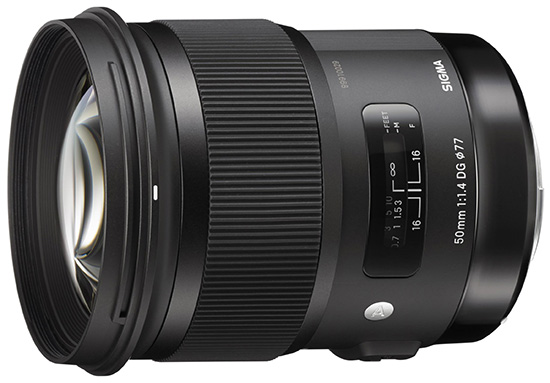
I would definitely recommend the Sony GM over the Sigma Art or Zeiss Batis. Sigma has some cool focal lengths, but the lenses are primarily designed for DSLR flange focal distances and not the E-mount, even though it comes in the E-mount. Sony lenses are designed for the Alpha series of cameras. The combination cannot be beat.
The best zoom lenses for the Sony Alpha 1
When it comes to zoom lenses this is what I suggest:
- Sony FE 12-24mm f/2.8 GM (Amazon, B&H)
- Sony FE 16-35mm f/2.8 GM (Amazon, B&H)
- Sony FE 24-70mm f/2.8 GM (Amazon, B&H)
- Sony FE 70-200mm f/2.8 GM OSS (Amazon, B&H)
Sony has the entire range covered, and the zooms and AF combine perfectly for the Sony Alpha 1 (Amazon, B&H).
If you are budget conscious, you can start with the Sony FE 24-105mm f/4 G OSS (Amazon, B&H). It’s a great general purpose lens.
What about the 28-135mm PZ cine zoom?
Ask yourself: Will you buy the 28-135mm cine zoom (B&H, Amazon) if there were other options available? If yes, then this one is for you. Key advantages:
- Powered but silent zoom (SSM).
- Declicked aperture.
- Constant aperture at f/4, which is not bad for the Alpha 1, because both have great low light performance.
- Full auto and full manual control.
- Is parfocal.
- Low breathing.
- Tripod collar.
Now here are the key disadvantages:
- Expensive for what you’re getting. Is it really value for money?
- Not stellar image quality for the price.
- Not really that wide at 28mm, and not really that telephoto at 135mm.
- Crappy lens hood.
- Some parts can be repaired or replaced.
- Zoom performance not as advertised.
- 95mm filter thread.
- Heavy, at 1.2 kg
For run-and-gun work and if you don’t have any options this zoom is a great all-rounder. It is for the video shooter for whom convenience of a single zoom outweighs all the negatives.

My favorite third-party manual prime lens series
I use and recommend Nikon F lenses. Here are some recommended prime lenses from the Nikon stable for each focal length:
| Lens | Purchase links |
| Sigma 8mm f/3.5 | (B&H, Amazon) |
| Sigma 15mm f/2.8 | (B&H, Amazon) |
| Nikon 16mm f/2.8D | (B&H, Amazon) |
| Nikon 14mm f/2.8D | (B&H, Amazon) |
| Zeiss Distagon T* 15mm f/2.8 | (B&H, Amazon) |
| Zeiss Distagon T* 18mm F/3.5 | (B&H, Amazon) |
| Sigma 20mm f/1.4 Art | (B&H, Amazon) |
| Zeiss Milvus 21mm F/2.8 | (B&H, Amazon) |
| Nikon 24mm f/1.4G | (B&H, Amazon) |
| Sigma 24mm f/1.4 Art | (B&H, Amazon) |
| Zeiss Distagon T* 25mm f/2 | (B&H, Amazon) |
| Nikon 28mm f/1.8G | (B&H, Amazon) |
| Zeiss Distagon T* 28mm f/2.0 | (B&H, Amazon) |
| Sigma 35mm f/1.4 Art | (B&H, Amazon) |
| Zeiss Milvus 35mm f/2 | (B&H, Amazon) |
| Nikon 50mm f/1.2 AIS | (B&H, Amazon) |
| Sigma 50mm f/1.4 Art | (B&H, Amazon) |
| Zeiss Milvus 50mm f/1.4 | (B&H, Amazon) |
| Zeiss Milvus 50mm f/2M Macro | (B&H, Amazon) |
| Zeiss 55mm f/1.4 Otus | (B&H, Amazon) |
| Nikon Micro-Nikkor 60mm f/2.8D | (B&H, Amazon) |
| Sigma 70mm f/2.8 Macro | (B&H, Amazon) |
| Nikon 85mm f/1.4G | (B&H, Amazon) |
| Zeiss Milvus 85mm f/1.4 | (B&H, Amazon) |
| Zeiss 85mm f/1.4 Otus | (B&H, Amazon) |
| Tamron 90mm f/2.8 SP Macro | (B&H, Amazon) |
| Tokina 100mm f/2.8 AT-X | (B&H, Amazon) |
| Zeiss Milvus 100mm f/2 | (B&H, Amazon) |
| Nikon 105mm f/2.0D | (B&H, Amazon) |
| Nikon 135mm f/2.0D | (B&H, Amazon) |
| Sigma 150mm f/2.8 | (B&H, Amazon) |
| Nikon 200mm f/4.0D | (B&H, Amazon) |
| Nikon 300mm f/4D | (B&H, Amazon) |
| Nikon 500mm f/4G | (B&H, Amazon) |
| Nikon 600mm f/4G | (B&H, Amazon) |
| Sigma 800mm f/5.6 | (B&H, Amazon) |
Don’t forget, you can buy many of these Nikon lenses used in great condition. I’ve only listed new prices.

Third-party zoom lenses
For the sake of simplicity we can classify zoom ranges into the following:
- Everything, like a 24-240mm or something.
- Super wide, like the 14-24mm f/2.8, etc.
- Wide, like the 16-35mm f/4, etc.
- Standard range, the most used focal lengths, 24-70mm.
- Telephoto, probably the second most used zoom range, 70-200mm, sometimes 70-300mm.
- Super telephoto, like the 150-600mm, or 100-400mm, etc.
If you already own zoom lenses stick with the brand you own and get adapters. If you’re starting from scratch, here are my picks (I’m going to stick to Nikon F mount-compatible zooms unless I have better options).
Important: You might not need IS/VR/VC (image stabilized lenses) because both the Sony Alpha 1 (Amazon, B&H) does a great job. It also has a new “Active Mode” for wide angle lenses (albeit with a small crop).
You will have to dial in the focal length every time you zoom in or out. If that’s a problem, then you need lenses with IS/VR/VC. Some of these can’t be turned off so will fight with SteadyShot if that’s turned on.
El cheapo (below $1,000, somewhat)
The best zoom lenses cost a lot of money. At the other end of the spectrum, here are my choices that don’t sacrifice too much image quality:
| Type | Lens | Filter thread | Purchase links |
| Super wide | Sigma 12-24mm f/4.5-5.6 DG HSM II | None | (B&H, Amazon) |
| Wide | Tokina 17-35mm f/4 Pro FX | 82 | (B&H, Amazon) |
| Tokina AT-X 16-28mm f/2.8 Pro FX | None | (B&H, Amazon) | |
| Standard range | Sigma 24-70mm f/2.8 IF EX DG HSM | 82 | (B&H, Amazon) |
| Canon EF 24-70mm f/4L IS USM | 77 | (B&H, Amazon) | |
| Tamron SP 24-70mm f/2.8 DI VC USD | 82 | (B&H, Amazon) | |
| Telephoto | Nikon AF Zoom-NIKKOR 80-200mm f/2.8D ED | 77 | (B&H, Amazon) |
| Nikon AF-S VR Zoom-NIKKOR 70-300mm f/4.5-5.6G | 67 | (B&H, Amazon) | |
| Super telephoto | Sigma 150-600mm f/5-6.3 DG OS HSM | 95 | (B&H, Amazon) |
The autofocus performance will vary greatly with adapters, this is if you want a general walk-around lens, it’s better to stick to what Sony has. You get full Phase Detection AF as well as automatic stabilization control.
What about Sony A mount lenses?
Sony has sort of given up on the A-mount, but the lenses are still great.
Differences between the LAEA3 and LAEA4 (from Sony officially):

The LA-EA4 has internal electronics that does the focusing, and it supports more lenses than the LA-EA3.
| Function/Operation | LA-EA3 | LA-EA4 |
| Auto focus (AF) | Only available with SAM/SSM lenses for still images. | Available for all lenses |
| AF does not operate during movie recording. | ||
| AF system | Contrast AF | Phase-detection AF |
| Format | Supports 35mm Full-frame sensor | Supports 35mm Full-frame sensor |
| AF/MF Select | Switchable on the Lens | SAM Lens: Switchable on the lens |
| SSM Lens: Switchable on the lens and in the menu when the switch on the lens is on AF | ||
| Available AF Mode | Single-shot AF | Single-shot AF/ Continuous AF/ Lock-on AF/ Center Lock-on AF |
| Weight | 110g | 160g |
| Purchase Links | (B&H, Amazon) | (B&H, Amazon) |
The EA3 is cheaper and lighter, but the EA4 is more useful, and worth the extra price. The EA3 does better on some lenses with AF, because the EA4 always uses its internal motor. If you compare the price of these adapters to those in the market that don’t offer any electronics or benefits, you’ll see how good a deal it is.
My advice? Go for the LAEA4* (B&H, Amazon) (useful for video, adapts most lenses). If still performance and phase detection AF for 399 points is important, then stick to FE lenses!
*Important things to remember:
- There is some light loss, but it’s only about a third of a stop. The EA3 doesn’t have a mirror and there’s no loss.
- 15-point TTL phase detection system with 3 cross sensors, but still better than nothing.
- Performance with Sony/Minolta lenses might not be the same compared to Sigma/Tamron/Tokina, etc.
- Teleconverters and Minolta XI lenses are not compatible.
- For video, aperture is fixed at the maximum f/stop of the lens or at f/3.5, whichever is lower.
- Configured with a tripod mount for supporting large, heavy lenses.
Here are my choices (all are confirmed to work with the LA-EA4):
| Type | Lens | Filter thread | Purchase links |
| Everything | Sigma 24-105mm f/4 DG HSM Art Lens for Sony | 82 | (B&H, Amazon) |
| Super wide | Sigma 12-24mm f/4.5-5.6 DG HSM II | None | (B&H, Amazon) |
| Wide | Sony 16-35mm f/2.8 ZA SSM II Vario-Sonnar T* Lens | 77 | (B&H, Amazon) |
| Standard range | Sony 24-70mm f/2.8 ZA SSM II Vario-Sonnar | 77 | (B&H, Amazon) |
| Telephoto | Sony 70-200mm f/2.8 G SSM II Lens | 77 | (B&H, Amazon) |
| Super telephoto | Tamron SP 150-600mm f/5-6.3 Di USD Lens for Sony | 95 | (B&H, Amazon) |
Autofocus: You will need the Sony LAEA3 or LAEA4 adapter
The best cine lenses for the Sony Alpha 1
If you need help in deciding on a cine lens as opposed to a still camera lens, read what is a cine lens and how is it different from photo lenses?
There are some ‘problems’ with using cine lenses on the Sony Alpha 1 (Amazon, B&H):
- Cine lenses will make handholding unwieldy, if not impossible.
- It will be harder to turn the focus ring because you’ll have to turn it a lot more, and it’s bigger.
- You will need larger filters or matte boxes.
- There are only two manufacturers that make full frame cine lenses for the Sony E mount.
- There are no cheap options for the full range of focal lengths.
There is nothing that can be done for the first option, except to use a proper rig and follow focus system. No free lunch here.
Which mount should you pick – E or PL?
This is an important consideration. Should you stick to the Sony E mount, or should you opt for a better mount?
Given a choice, cine lenses are better off with the PL mount. However, all PL-mount lenses must interface with an adapter, so the adapter must be strong, stable and must provide good support so the E mount is not strained. The E mount isn’t really designed to hold heavy cine lenses, especially zooms. Primes are okay, but not for handholding.
All things considered, I prefer the PL mount. Assuming you have an excellent adapter that has been shimmed for focus accuracy, it also allows you these benefits:
- An additional support for heavy lenses so the E-mount isn’t taxed.
- Lock-on ring to keep the lens secure.
- Four different orientations, so the focus puller can work more freely.
Recommended cine prime lenses
For the budget-conscious
Pick a Samyang/Rokinon Cine DS prime set (Amazon, B&H).
I would start with a four lens set: 24mm, 35mm, 50mm and 85mm T1.5. It costs about $1,650 for the set. And you can augment it with the stellar 14mm T3.1 Cine DS (Amazon, B&H).
Rokinon Cine DS or Samyang Cine VDSLR II?
If you’re on a budget, I recommend the Rokinon DS line. Here are its advantages over the Samyang cine lenses:
- Color matched
- Same position for aperture and focus wheels
- Dual focusing scales on both sides
I would avoid all the earlier versions.
For those who don’t know, DS lenses are rehoused Rokinon primes with the focus and iris rings all at the exact same distance, so you don’t have to change follow focus or iris gears with every lens change. That saves a lot of time on set.
However, where these fall short are they are not all the same length, size or weight, which cine lenses are supposed to be. If lenses are the same length, you don’t have to reposition the matte box with every lens change. If lenses are at different lengths and weights, it takes time to reposition your rig and adjust rod lengths. Finally, if the outer diameter isn’t the same size, you will need different matte box adapters for each lens change. All this eats up precious time on set.
Let’s not be under the impression that Rokinons/Samyangs can replace real cine lenses, but for bang for buck – they are unmatched. I absolutely recommend them, as long as you know what you’re getting into.
What about XEEN?
I don’t think it’s good value for money. When you buy a full set, you want world-class service, great rental options, easy replacements and good resale value. If you need to compromise on any of these, then it must be offset by better image quality than those listed below.
The XEEN falls last on all these fronts.

My choice
For an excellent comparison of cine lenses for the full frame sensor, click here.
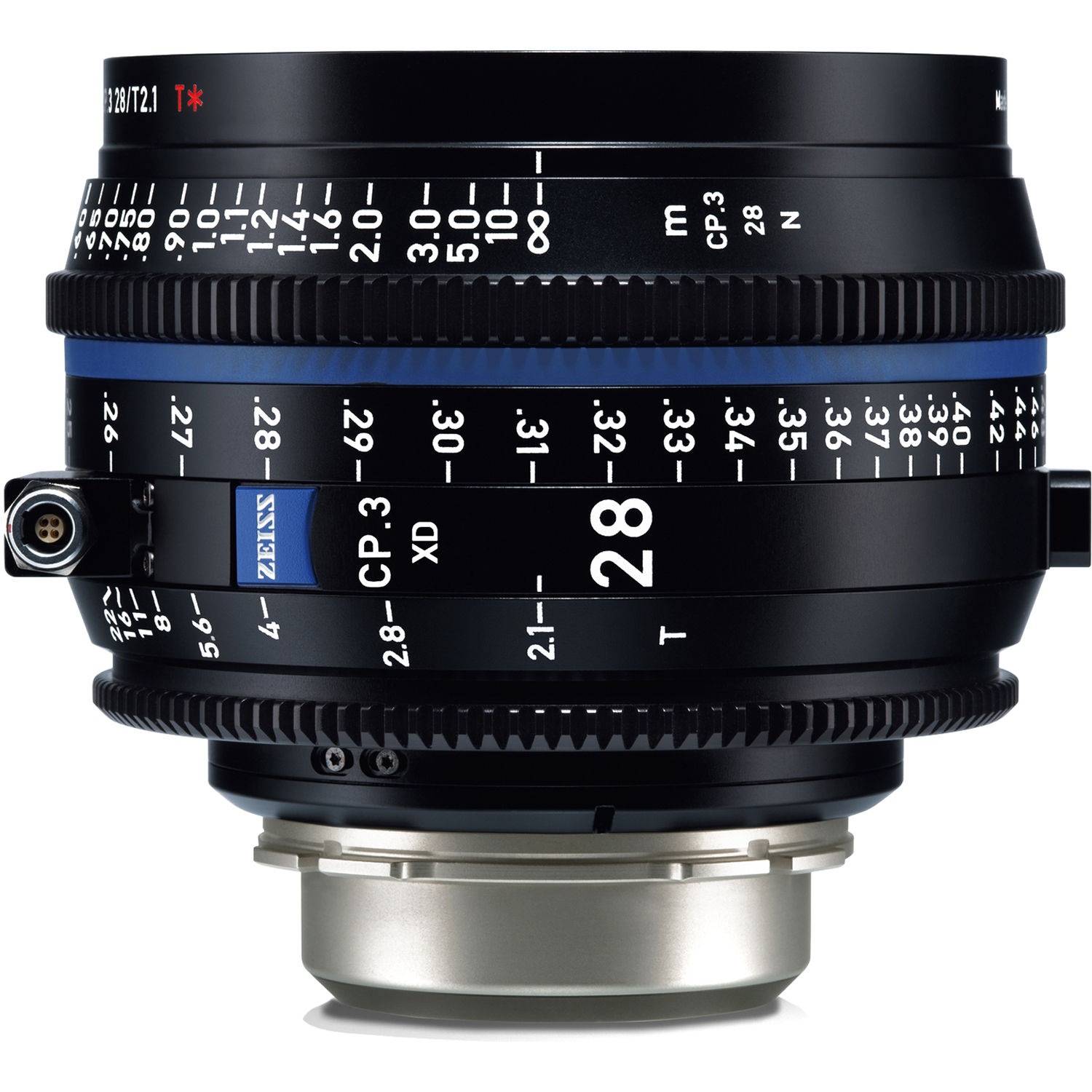
My pick definitely goes to the Zeiss CP.3 (Amazon, B&H) line.
For the serious professional, the Zeiss CP.3 (Amazon, B&H) line offers the most focal lengths, if you want the entire range, that is.
Based on current information, if I had to pick, I would go with the Zeiss CP.3 (Amazon, B&H) line, no doubt. Not only is it versatile, but it has been field tested by rental houses over many years, and have worldwide sales and service. Lastly, it also color matches with its zoom cousins (below).
What about cine-mods?
Yes, and no. It seems unlikely that any manufacturer will make great cine lenses in the sub-$1,000 price range, so the next best option is to modify a still lens for cinema work. These companies that have been doing this for a while and have sufficient track records are:
- Duclos Lenses – $250 for a full cine-mod, and $409 for a cine-mod plus mount change (you need to contact them for Sony E-mount at present)
- GL Optics – they also provide casing modifications, and the prices run greater than $3,000 per lens. For primes, the charges are too high. For zooms, they might be a bargain (considering the prices of cine zooms)!
These services don’t have a worldwide presence, so you must be aware that replacements and service will be slow; and if you want a quick replacement in an emergency you likely won’t find the exact same lens.
Cine zoom lenses
This is where cine-mods make sense. Zoom lenses for full frame sensors are as rare as UFO sightings:
| Lens | Approx Price | Mount (Filter thread) |
| Sony FE C 16-35mm T/3.1 | $10,000 | E (114) |
| Sony FE PZ 28-135mm f/4 | $2,498 | E (95) |
| Tokina Cinema Vista 16-28mm II T3 | $3,999 | EF/PL (114) |
| Sigma 24-35mm T2.2 | $4,999 | E/PL (95) |
| Zeiss LWZ.2 15.5-45mm T2.6 | $19,900 | EF/PL (114) |
| Zeiss 15-30mm CZ.2 T2.9 | $23,900 | E (114) |
| Zeiss 28-80mm T2.9 CZ.2 | $19,900 | E (95) |
| Zeiss 70-200mm T2.9 CZ.2 | $19,900 | E (95) |
| Angenieux Optimo Ultra 12x | $91,000 | PL (162) |
| Angenieux Full Frame EZ-1 & EZ-2 | $28,700 | PL (114) |
| Fujinon Premista 28-100mm T2.9 | $38,800 | PL (114) |
| Fujinon Premista 80-250mm T2.9-3.5 | $39,800 | PL (114) |
| Leitz Cine Zoom 25-75mm T2.8 | $75,000 | LPL (114) |
It would be the rare individual who will buy a $20K zoom for a $3K camera. If I had to pick a favorite, I would either pick the Zeiss CZ.2 line or Fujinon Premista line.

That’s it! I hope you’ve found my suggestions for the Sony Alpha 1 (Amazon, B&H) useful.
