
Paul Verhoeven’s RoboCop (1987) remains a masterclass in technical filmmaking. From its cinematography and editing to its practical effects and sound design, the film showcases a meticulous approach to craft, giving it a timeless quality.
Let’s explore the technical choices that continue to captivate audiences today.
Start by watching the video:

Cinematography and Camera Techniques
Jost Vacano, the film’s cinematographer, shot RoboCop on the Super 35 format to give the production flexibility with framing and cropping. This approach allowed for sharp detail and controlled depth of field.
The aspect ratio was 1.85:1 so they could frame RoboCop better and make him look more imposing.
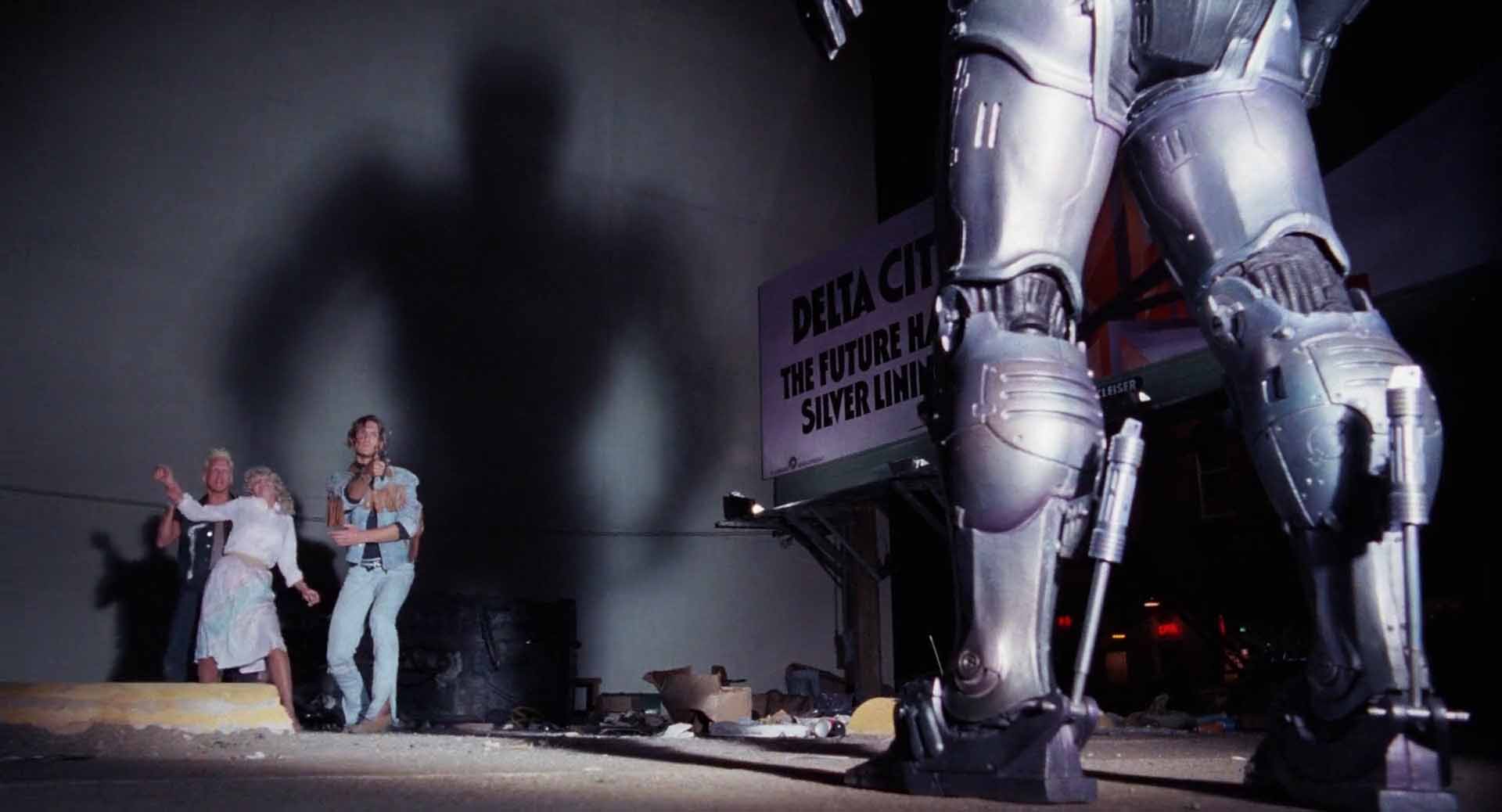
Corporate offices gleam with a warm, soft lighting, giving a deceptive sense of safety. In contrast, the streets of future Detroit are harshly lit and filled with shadow, creating a gritty, crime-ridden atmosphere.

RoboCop is frequently filmed from a low angle, making him appear larger than life, reinforcing his unstoppable presence.
Vacano’s team utilized both dynamic camera movement and still compositions to support the film’s pacing. High-energy action sequences feature rapid camera movements, while quieter, emotional moments rely on still shots to emphasize Murphy’s internal struggle.
Point-of-view shots add further emotional depth and humor.
Production Design and World-building
The production design skillfully balances realism with subtle sci-fi touches. The sets include boxy cars, worn-down offices, and imposing steel structures. Everything feels grounded in a near-future world that is both familiar and unsettling.
The film avoids flashy futuristic gimmicks in favor of practical, lived-in environments. Even though they seem rooted in the 80s, it sort of has a timeless feel to it.
The contrast between environments is deliberate. OCP’s headquarters are warm and pristine, designed to reflect corporate control and arrogance. In comparison, the world outside is decaying and hostile, reinforcing the divide between the privileged elite and the everyday people.

The Iconic Robots
Peter Weller’s performance as RoboCop relied heavily on the design and functionality of his suit, created by legendary special effects artist Rob Bottin. The suit took six months to build and was constructed from latex, plastic, and fiberglass. It weighed over 40 pounds, severely limiting Weller’s range of movement.
To adapt to the suit’s limitations, Weller trained with a mime coach to develop precise, mechanical movements. His slow, deliberate gestures and imposing walk added to the character’s robotic presence. Weller later described the experience as one of the hardest shoots of his career, but his struggle gave the character an undeniable authenticity.
It could have turned out so tacky!
The antagonist ED-209 was brought to life through a combination of stop-motion animation and full-scale models. Phil Tippett’s team, specifically Craig Davies, built detailed miniature models that were animated frame by frame.
This stop-motion technique gave ED-209 a jerky, intimidating presence. The staircase malfunction scene humorously contrasts ED-209’s clumsy design with RoboCop’s graceful walk.
Matching the lighting and angles of the stop-motion with the live-action footage was key to creating seamless integration. When ED-209 didn’t have to move much, a full-scale, 7-foot-tall model was used.
Editing and Pacing
The editing in RoboCop maintains a tight, fast-paced rhythm. Scenes never linger longer than necessary. The film often shifts abruptly between brutal action and satirical interjections, such as commercials and news breaks.
This technique reinforces the theme of media manipulation, keeping the audience off-balance and engaged. The first first scene is an extended newsreel and a medical commercial – a big risk, but it paid off.
The risk of such abrupt editing shifts works big time. We get both social commentary and high-impact pacing expected from an action film. You really have to marvel at the editing structure – not a single moment feels out of place. Every scene helps us appreciate the world of RoboCop better.

Sound Design and Music
The sound design in RoboCop is incredible. The film was nominated for best sound (and editing), and you can see why.
RoboCop’s stomping footsteps and the distinct mechanical whirring of his movements are unforgettable. The gunshots are loud and visceral, designed to make you flinch. The Cobra Assault Cannon, used in key action scenes, delivers an auditory punch that raises the stakes. I believe it’s the same weapon RoboCop uses to take out ED-209 in the climactic scene.
Composer Basil Poledouris’s score combines heroic brass with somber undertones. Like most Hollywood productions of that decade, the synthesizer plays a huge role. The triumphant RoboCop theme sticks with you, but there’s always a sense of underlying tragedy.
This emotional duality makes RoboCop both an awe-inspiring figure and a deeply sympathetic character. What is particularly instructive is how the score doesn’t negate any of the humor in the film.

One of RoboCop’s greatest strengths is its reliance on practical effects over digital gimmicks. The film uses stop-motion animation, in-camera explosions, and real stunts to create a tangible sense of weight and presence. The imperfections inherent in practical effects give the film an authentic texture that CGI has a hard time replicating.
To me, RoboCop continues to look as fresh and engaging as the first time I saw it a little boy.
Whether you’re studying camera techniques, production design, or sound editing, don’t take RoboCop for granted. It offers a masterclass in how to build a world that feels both futuristic and timeless.
Such films simply refuse to age. That’s why RoboCop still stands tall as a low-tech film icon in a world of digital excess.

