

If you’re a fan of low-budget ingenuity, cinematic history, or just love killer robots, you won’t want to miss this breakdown. Hit play and find out why The Terminator still looks like it came from the future:

In the grand scheme of sci-fi and action films, The Terminator stands as an unshakeable giant. Despite its modest budget, it became one of the most iconic movies of all time.
But if you take a closer look, there’s a raw, scrappy energy to it that feels a lot like something straight out of the Roger Corman school of filmmaking.
Roger Corman, the king of B-movies, was known for churning out low-budget, high-concept films at breakneck speed. His work ethic and approach to filmmaking have influenced countless directors, and James Cameron himself got his start working for Corman.
So, it’s no wonder that The Terminator, with its resourcefulness and creativity despite its limitations, feels like a Corman graduate project. Let’s break it down.
1. The Scrappy Budget and Resourcefulness
Let’s start with the obvious: The Terminator was made on a modest budget of just $6.4 million. By Hollywood standards, especially for a sci-fi action film, that’s pocket change.
But in true Corman fashion, James Cameron and his team made every dollar count. Like Corman’s movies, where necessity breeds creativity, The Terminator managed to create something far beyond what its budget would suggest.
Corman’s productions often relied on quick thinking and stretching resources to the limit, and that same spirit is alive in The Terminator. From guerrilla-style filming without permits to using miniatures and animatronics instead of expensive CGI, the film’s practical effects are a testament to what can be achieved when money is tight but ideas are big.

2. Practical Effects Over CGI
One of the hallmarks of Roger Corman’s films was the reliance on practical effects, mainly because CGI was either non-existent or too expensive. While The Terminator did have the benefit of a few more advanced tools by the 1980s, it still leaned heavily into practical effects – animatronics, miniatures, and stop-motion – just like Corman’s low-budget films.
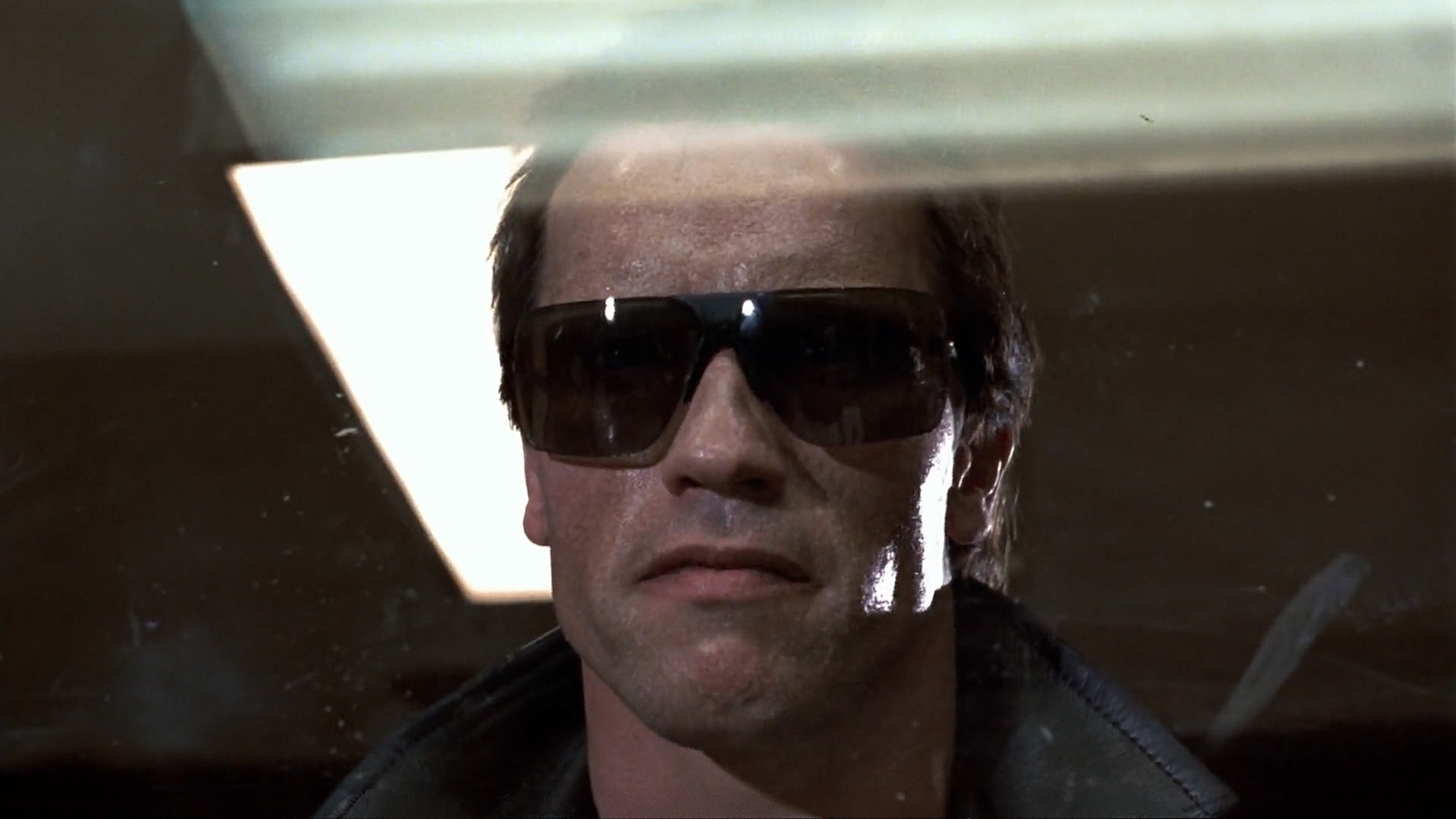
Stan Winston’s incredible design for the T-800 (Model 101) endoskeleton, combined with the use of miniatures and stop-motion animation, gave the movie its gritty, tangible feel.
When the Terminator’s metal skeleton emerges from the flames or chases Sarah Connor through the factory, there’s a physicality to it that modern CGI often struggles to replicate. This tactile quality is something Corman’s movies always aimed for, albeit with far less sophistication.
The trick to making these effects work, especially on a low budget, is lighting and clever cinematography—something Corman’s films did to hide flaws, and Cameron did to amplify suspense. The result? The Terminator never feels cheap, even though, by Hollywood standards, it very much was.
3. Fast-Paced, Minimalistic Storytelling
Roger Corman’s movies never wasted time on unnecessary plot exposition. They were lean, fast-paced, and got straight to the point.
The Terminator adopts a similar approach. From the moment the film begins, it’s a relentless chase. There’s no excessive world-building, no drawn-out exposition about how Skynet came to be. Instead, we get the essential information as we need it, keeping the plot moving at breakneck speed.
In true Corman fashion, Cameron doesn’t waste time on backstory until it’s absolutely necessary. Instead, the film thrusts us into the action right away, with Kyle Reese and the Terminator arriving from the future in the opening scenes. We’re immediately drawn into the chase, and the tension never lets up.
This minimalistic approach to storytelling is a hallmark of Corman’s films, where every scene serves the plot and nothing is wasted. Cameron learned this well during his time working for Corman, and it’s evident in the efficiency of The Terminator’s script.
4. Guerrilla Filmmaking Tactics
Corman was famous for shooting fast and dirty, often without permits and with minimal crew. And while The Terminator wasn’t quite that chaotic, Cameron employed some of the same guerrilla tactics during production.
For example, the scene where Kyle Reese carjacks a vehicle was shot without a permit. The production was always on the clock, racing against time to capture the necessary shots before the sun came up or the authorities caught wind of what they were doing.
This on-the-fly shooting style, born out of necessity, gave the film a certain raw energy—one that’s not polished or overly staged. It feels gritty and real, which fits perfectly with the dystopian tone of the movie.
Cameron knew how to embrace these Corman-like constraints and turn them into strengths, making the film feel grounded despite its sci-fi premise.
5. Uncompromising Vision Despite the Budget
If there’s one thing Roger Corman was known for, it was getting films made under tight financial and time constraints. But despite that, he often gave his directors the creative freedom to explore their ideas, something Cameron took full advantage of.
The Terminator was Cameron’s vision from start to finish, and he wasn’t going to let budget limitations compromise that vision.
Even when Orion Pictures, the studio behind The Terminator, treated the film as a low-budget action flick, Cameron pushed ahead, confident in what he was creating. It’s this uncompromising dedication to the story, no matter the cost, that gives The Terminator its sense of scale and ambition far beyond what its budget should have allowed.
Cameron’s ability to take a limited budget and turn it into something grand and cinematic is very much in line with Corman’s philosophy of making the most out of what you’ve got.
That drive to push boundaries, even with limited resources, is something Cameron carried with him from his days working on Corman’s sets.
6. DIY Filmmaking Spirit
Corman’s films often had a DIY spirit, where crew members did whatever was necessary to get the job done.
If you were a director, you might also be handling props, costumes, and editing. Cameron took that hands-on approach with The Terminator as well. Not only did he direct, but he was heavily involved in the film’s special effects, sometimes even stepping in to demonstrate how certain stunts should be performed.
This DIY attitude was something Cameron picked up during his time working with Corman. He knew that if you want something done right, sometimes you have to do it yourself. That DIY spirit is all over The Terminator, from the gritty special effects to the down-and-dirty action sequences.
7. Relentless Villains, Just Like in Corman’s B-Movies
One of the defining features of Roger Corman’s movies was the relentless pursuit by some unstoppable force, whether it was a monster, a killer, or an alien invader. The Terminator takes that idea and cranks it up to 11 with the T-800, a machine that will not stop, no matter what.
Sound familiar? It’s like Corman’s relentless B-movie creatures but with an upgrade in both the body count and the stakes. James Cameron was also heavily inspired by Halloween.
The idea of a villain that just keeps coming, no matter how much damage it takes, is pure B-movie material. It’s the same fear-inducing concept Corman used in movies like The Wasp Woman or Attack of the Crab Monsters. But instead of giant bugs, we’ve got a steel robot with an Austrian accent and a mission to kill.
8. Iconic One-Liners: Corman’s Influence on Dialogue
Corman’s movies were famous for their zippy one-liners and snappy dialogue, often delivered by B-movie heroes with a smirk. The Terminator gives us one of the most iconic one-liners in film history: “I’ll be back.”
It’s the kind of line that perfectly encapsulates the character, simple, direct, and delivered with stone-cold seriousness.
This ability to distill a character down to a single, memorable line is something Cameron likely absorbed from his time working with Corman, where the dialogue had to do a lot of heavy lifting in between the action.
In The Terminator, it’s not just the action sequences that stay with us, but the way those lines are delivered – minimal, powerful, and unforgettable.
9. Where’s the respect?
Like many of Corman’s films, The Terminator didn’t initially get the respect it deserved. Orion Pictures didn’t think it would be a big hit and didn’t give it the marketing push they gave to other films.
But just like many of Corman’s movies, The Terminator became a cult classic, gaining momentum through word-of-mouth and its undeniable quality.
Corman’s influence can be seen in how The Terminator built its reputation after its release. It wasn’t a guaranteed blockbuster, but it struck a chord with audiences in a way that few films of its time did. It found its audience and cemented itself as a staple of genre cinema.
In many ways, The Terminator feels like a film made by a Roger Corman student—because it was.
James Cameron took the lessons he learned working for Corman and applied them to this sci-fi action masterpiece. The film’s low-budget resourcefulness, practical effects, relentless pace, and DIY spirit all speak to the influence Corman had on Cameron’s career.
But while The Terminator may have the scrappy DNA of a Corman film, it also transcends those origins, becoming a timeless piece of cinema that still looks like it came from tomorrow.
