

The Zoom, Dolly and Dolly Zoom are shots that filmmakers use to enhance their storytelling and to convey emotions.
These shots offer different ways of engaging the audience through the manipulation of space and depth between the subject and their surroundings.
The problem is, they all seem to do the exact same thing, so how are they different?
And when should you use which? Let’s take a look in this article.

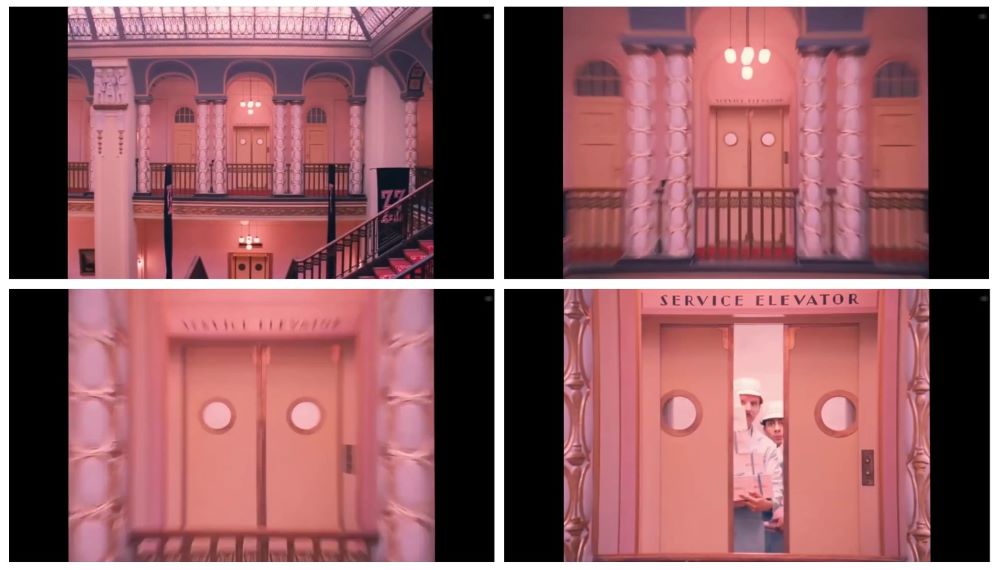
Directors like Martin Scorsese and Quentin Tarantino have used zooms in such distinctive ways in their films that they have become part of the popular cinematic language. For example, a simple crash zoom might be known today as the Django zoom.
In this article we’ll stick to the original or most well-known versions of these names.
The Zoom Shot
In filmmaking, a zoom in or zoom out refers to getting closer or further away from the subject by changing the focal length without moving the camera.
The subject gets bigger or smaller in the frame while zooming and this can be used for various creative purposes.
A zoom in is used for the following reasons:
- to create a sense of connection with the characters.
- to emphasize details or emotions on character’s face.
- to cast a clearer view of an object.
- for dramatic effect to create a feeling of intensity or tension.
A zoom out can be used to :
- reveal a larger context where the director wants the audience to focus on the background as well as the foreground or the subject.
- establish the frame and explore the relationship between different elements in a scene.

To know how to create cinematic poetry with a zoom lens, watch this video:
The two type of zoom shots
Zooms can be achieved in two ways. During filming as well as in post. Let’s have a look at these two methods of zooming as well as their pros and cons.
The Optical Zoom
An optical zoom is a feature of the lens which works by adjusting the focal length. With a zoom lens, you maintain image quality and resolution (assuming the lens is good enough).
The Digital Zoom
A digital zoom is achieved by enlarging the frame to make it look bigger (or smaller). This type of zoom can also be achieved within the some cameras. Typically, though, you want maximum control so you might want to leave the digital zooming until the editing stage.
Using software, you can expand or shrink the image to your exact needs. You have far more control this way.
The biggest disadvantage with a digital zoom is the loss in resolution. If you’re filming in 4K and want to deliver 4K, digital zooming in will reduce the resolution of your final video. This will look especially wrong if you intercut this footage with 4K footage.
The solution to this problem is to film in higher resolutions like 6K or even 8K, where if you zoom in digitally, you can still go all the way to 4K and maintain perfectly acceptable resolution and image fidelity.
When to use a zoom shot
A zoom is typically used to get closer or further away from your subject without changing the perspective.
To might want to do this to explore the background before getting deep into the subject; or vice versa. The idea is, you don’t want to create an emotional response with the shot, it’s purely functional.

The Dolly shot
A dolly shot is when the camera moves towards or away from the subject.
When the Dolly shot is composed by moving in the same axis, the shot might look like a zoom, but look again.
Unlike the zoom, a dolly shot will change the perspective of the image. You feel as if you’re physically moving closer or further away, just as in real life. This gives the dolly shot an emotional component that’s missing from the zoom shot.
Types of dolly shots
The Tracking shot
Sometimes a dolly shot is defined as a shot that moves towards or away from the subject, and a tracking shot is defined as a shot that moves sideways along with the subject.
However, both shots are typically achieved with a camera dolly, so theoretically a tracking shot is just a type of dolly shot.
To know what a camera dolly is, read this detailed article:
The tracking shot typically ‘tracks’ the subject. This can be a person walking or a car, but the camera moves in parallel to the subject, matching its speed.
When the tracking or dolly shot is filmed from the back of your character or subject, we call it:
The Follow shot
A follow shot is used to follow the characters using the camera dolly mounted on a track. This shot is from an audience point of view for situations like stalking the characters from behind, or to build suspense, or basically just to see the world as the character does.
Follow shots can also be achieved with a Steadicam or camera gimbal.
The Arc shot
An arc shot is achieved by moving the camera in a circular motion around the subject in the shape of an arc.
It can be a semi-circle or less, or a full circle. This shot gives an audience a three-dimensional perspective of the subject.
Arc shots are filmed with a camera dolly on a circular track. Here’s an example:
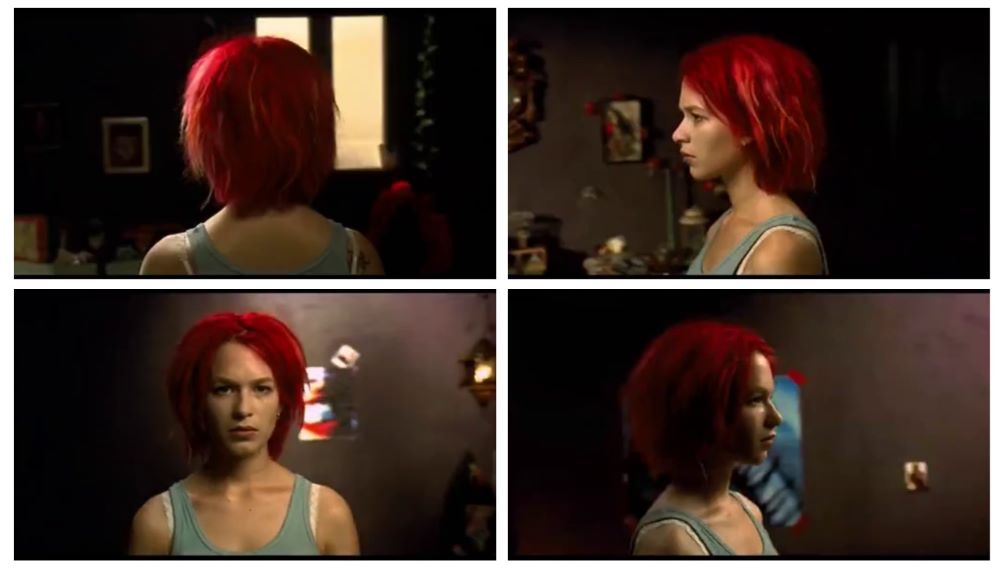
When the arc is a full circle we also call it a 360-degree shot.
You don’t have to limit yourself to circling the subject once! It can be done as many times as needed for impact.
In a 360-degree shot the audience gets to see the whole environment in a single shot. This shot can also be used to convey the characters are in a trap at that moment.

The Double Dolly shot
A Double Dolly shot (also known in the US as the Spike Lee shot) demands the actor be carried along in the same dolly where the camera has been mounted (or in a different platform one the same track).
You’ll get the background moving while the subject appears static. This shot has become popular after Spike Lee championed it in many of his films.
When to use a dolly shot
A dolly shot is used when:
- There’s a need for the perspective to change between the subject and the background when expanding or shrinking the image.
- When you want movements in frame for pacing or energy or as a matter of style.
The Dolly Zoom shot
A dolly zoom is a special kind of effect you get when you dolly in one direction but zoom in the opposite direction while maintaining the same frame and focus.

While the dolly refers to moving the camera and the zoom is a movement in the lens, a dolly zoom means that both are moving simultaneously. The focus must also be racked so the subject stays in focus.
Dolly zooms are used to let the audience have a feeling of an unusual illusion or space the character has gotten into. Often times this can distract the audience from the story, so it must be used with taste.
Alfred Hitchcock pioneered the dolly zoom in his film Vertigo. In Vertigo, the shot has a strong purpose to it. Hitchcock wanted to simulate the effect of vertigo that we might normally have looking down from a great height.
Scorsese used the dolly zoom shot in Goodfellas precisely and slowly so it doesn’t grab attention. You still feel there’s something wrong about the conversation in the diner against the window where the world just gets bigger and bigger!

When to use a dolly zoom shot
A dolly zoom shot is used when:
- You want the shot to be unusual and powerful, while risking the effect to be noticeable by a large portion of the audience.
- There is a need for the subject and environment to attach or detach in perspective and space, by keep the subject size the same.
If you enjoyed this article check out the 100 must-know angles, shots and movements in filmmaking:
If you know of any other uses of the dolly, zoom or dolly zoom please let me know in the comments below.
