
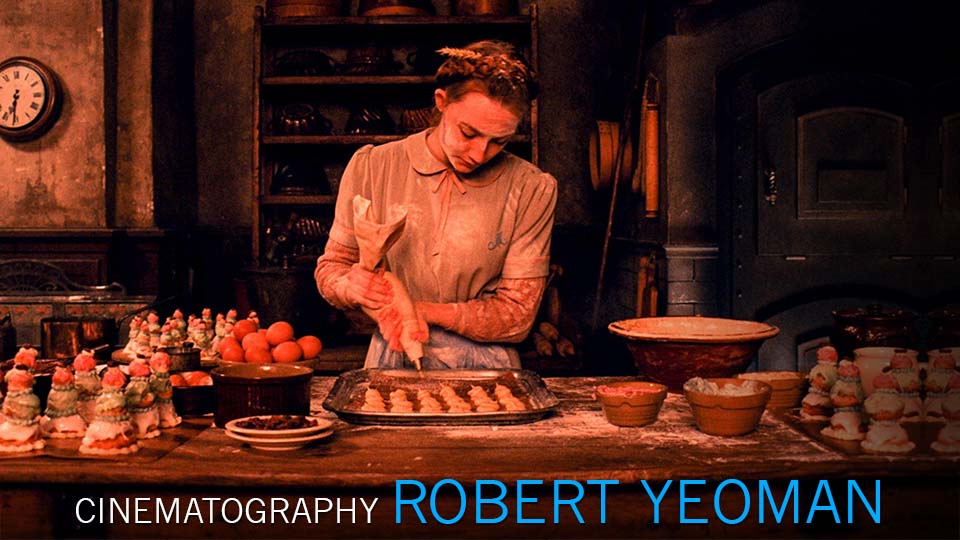
Robert Yeoman is one of the most simple and unassuming DPs around. Together with Wes Anderson, he has created some of the most interesting visuals in cinema, ever. I go through some of his cinematography lighting and camera techniques to help you understand his unique style.
Just to be clear: Robert Yeoman changes his style to suit the movies he shoots. The goal of this video and article is to drum up enthusiasm and a yearning to learn more.
Warning: I do not claim this knowledge is 100% accurate. Just think of it as an endorsement of his work. If you want accuracy, look someplace else.

How he lights faces
Robert Yeoman prefers a single soft source (or many sources acting like a single source) from the side. He achieves this by bouncing off muslin or bounce cards, and maybe further diffusing them (a Book Light) with Silks/Light Grid, either quarter, half or full.
He typically, but not often, tends to hair light from the opposite side, and it tends to have a specular nature. It’s subtle and not intended to call attention to itself.
He also uses Kino flos or Chinese lanterns (China Balls) to fill in the actors’ faces.
