
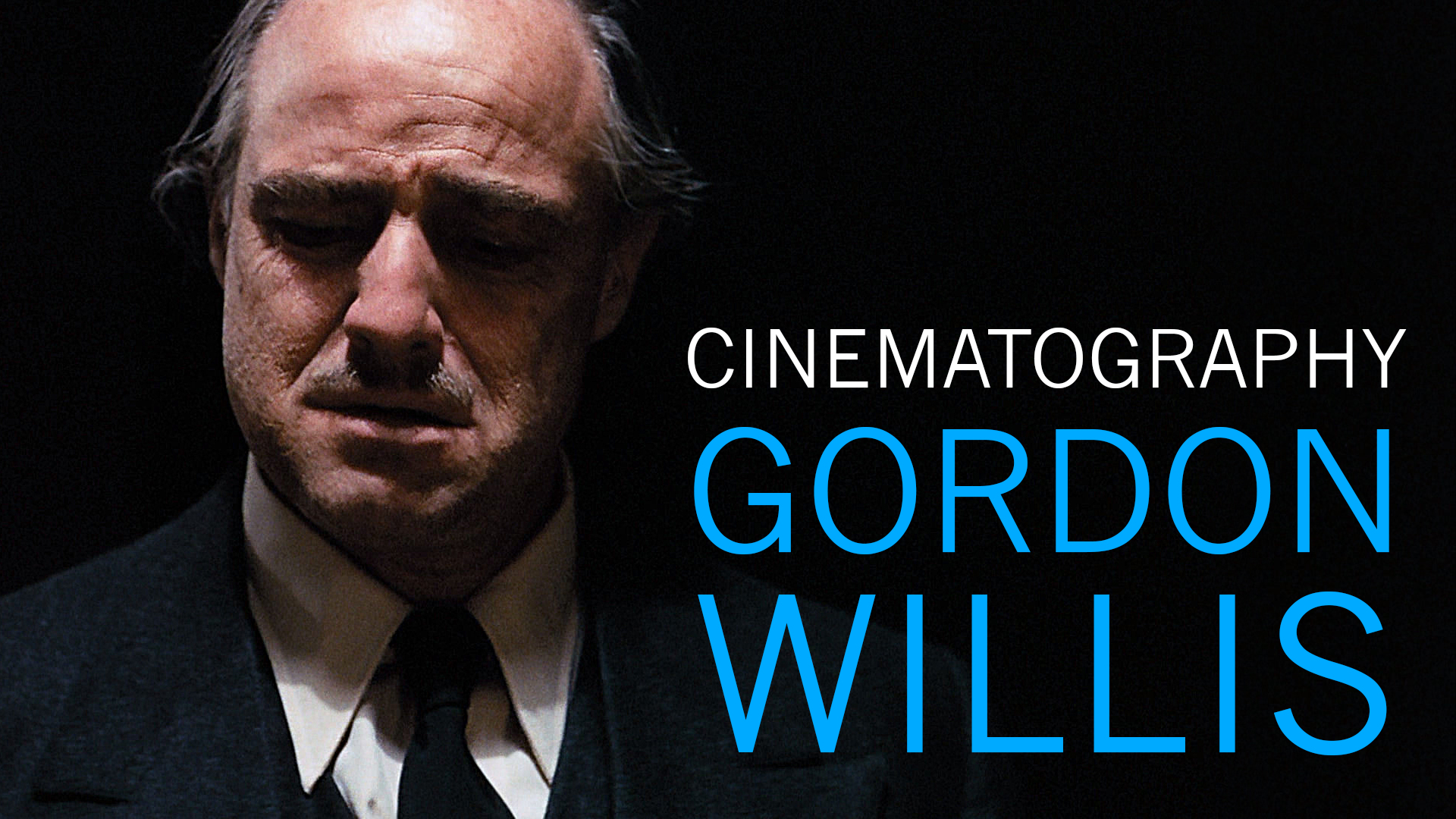
Conrad Hall paid Gordon Willis the ultimate compliment – he was the prince of darkness, the master of shadows.
In this video and article, I go through some of his cinematography lighting and camera techniques to help you understand his unique style. Just to be clear: Gordon Willis changed his style to suit the movies he shot. The goal of this video and article is to drum up enthusiasm and a yearning to learn more.
Warning: I do not claim this knowledge is 100% accurate. Just think of it as an endorsement of his work. If you want accuracy, look someplace else. One interview I would definitely watch is at the bottom of this article.

The top light
His primary weapon of choice was the top light. He has two versions, the extremely soft version almost flat without any contrast; and the hard version which acts as a ‘butterfly’ light.
In the Godfather, he takes it to its most extreme, but only because he felt it was the right thing to do.
Diffusion
It isn’t mentioned in the video, but Gordon Willis sometimes did use diffusion on his lenses. Since this is a complicated subject, and the exact diffusion he used is no longer available, I’ll let you research that on your own.
Contrast Ratio
Typically falls between 4-5 stops, and he uses the entire latitude of film. He did this so the labs and studios couldn’t process it any other way.
