

Learning cinematography takes dedication. And practice.
In this guide, we’ll cover the first steps in your path. I’ll share tips I’ve learned from fifteen years of experience. It will help you improve your skills, as it did mine.
Watch the video to get started:

What’s the best way to learn cinematography?
To learn cinematography well you will need to go down two paths: theory and practice.
You need both.
If you had to choose (which is not really possible) practice should take precedence. No amount of watching somebody swim will teach you swimming.
A combination of practice and watching will accelerate your learning.
There are tons of free content online about learning cinematography. The question is not where to find information, but whom to learn from? And, whether or not that person can help you improve.
Picking up a camera doesn’t make you a cinematographer, just as holding a pen doesn’t make you Tolstoy.
Cinematography is such a touchy subject. You might have formed your own opinions on it. So, let’s talk about something else…
Like an animal. How about a Fossa?
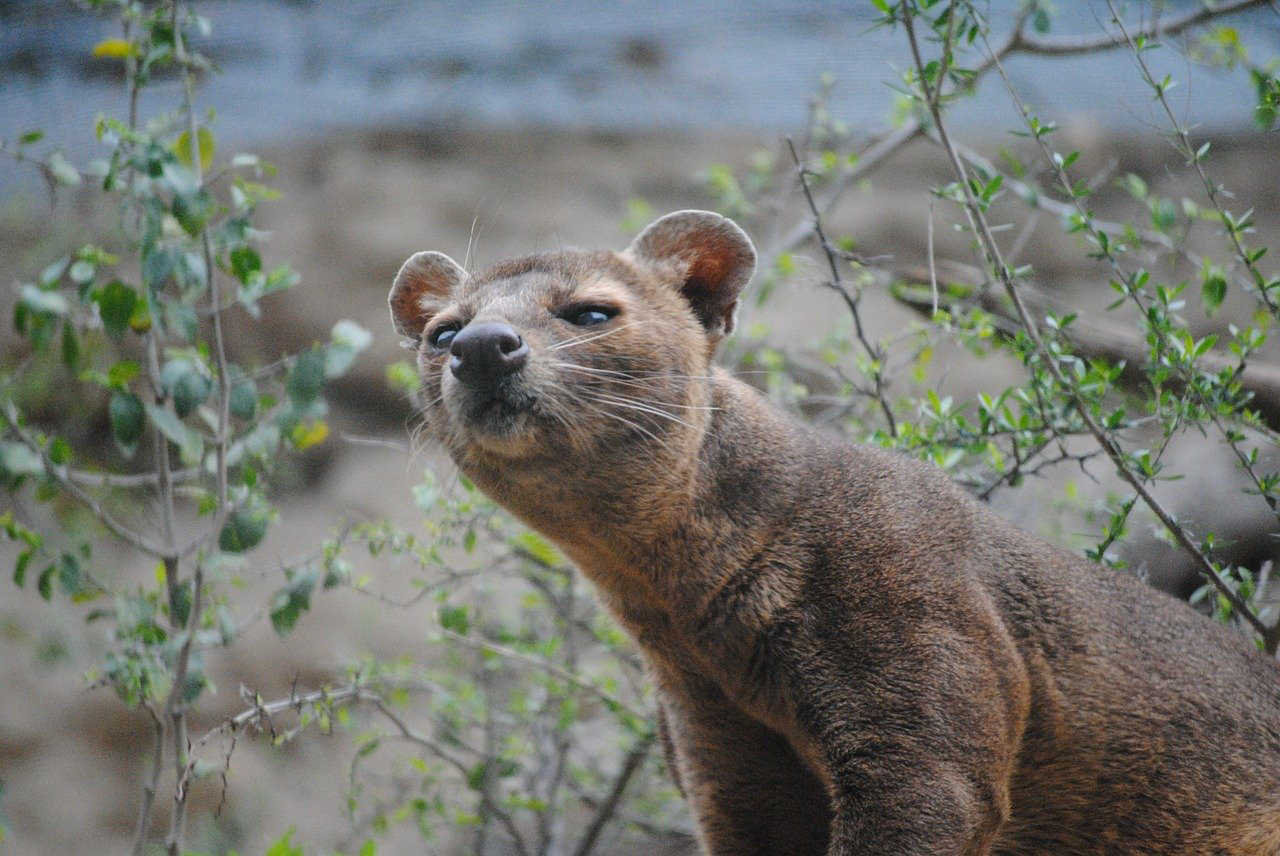
Learning about Fossas
You’ve probably seen the Fossa in Madagascar but never bothered to understand what it is. Ever asked yourself why the Fossa is the only animal that doesn’t talk?
You can google Fossas. You’d probably start with Wikipedia.
You’re fascinated. Fossas are actually from Madagascar! Who would have thought?
You scroll past the Wikipedia link to dive deeper. You might even stumble across a few websites from people who might or might not be experts. One says Fossas love f/2.8 and the other says f/4. Whom do you believe?
You realize the only way to know for sure is to buy a ticket to Madagascar and see one for yourself, maybe stroke it a bit.
You do that. You’ve touched your first Fossa.
Would you consider yourself an expert on Fossas at this point? Only as much as any kid who has visited a zoo and fed a giraffe carrots.
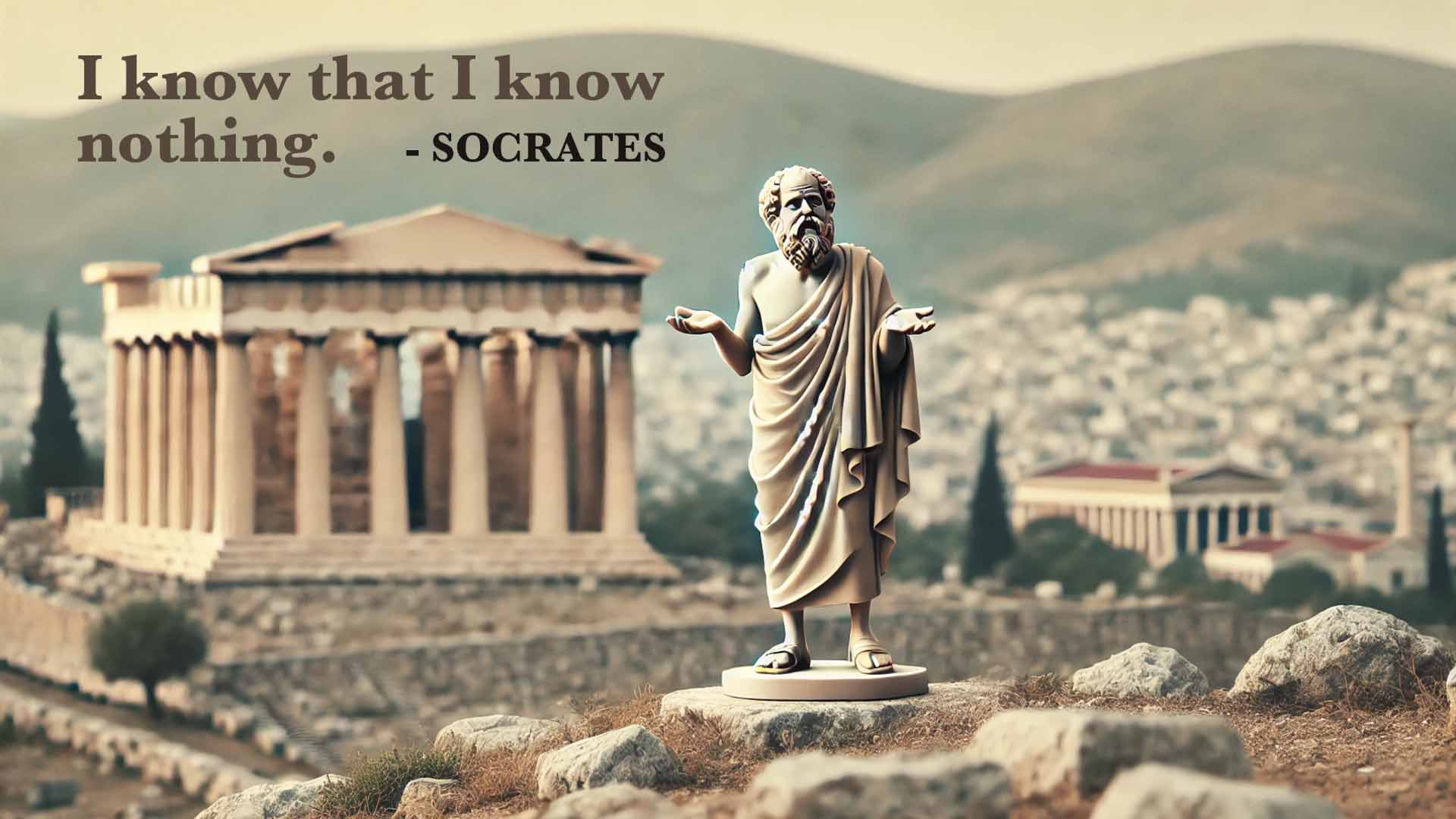
Like Socrates, you realize you know very little about Fossas. You are determined to go further. So, you build your own Fossa farm.
Your passion knows no bounds. Who would have thought Fossas shot in both f/2.8 and f/4? Some even shoot at f/8… all the time!
“Screw shallow depth of field”, they say.
You are in love.
So you apply to vet school. You become a doctor of Fossas. But now, you’re just a new cub in the club. You’ll have to spend the rest of your life with Fossas and Fossa lovers.
But that’s not enough. How can you top that? Yes, there’s one more step.
Transform yourself into a Fossa!
But, no. Wait.
You’ll never be a real Fossa, and that enrages you no end. But, you’re a brother from another mother. You can share a few beers with your Fossa. You might even get bitten a few times.
In the words of the immortal King Julian, what’s a nibble among friends? Your relationship is far beyond Wikipedia or PETA.
You, my dedicated friend, have earned the right to bite him back.
What’s the first step to learning cinematography?
Learning any subject has no bounds. Has no end. Even when you know a subject thoroughly you might still not apply it well. Or, you might forget. Or just get too tired and make mistakes.
You will make mistakes, whether you’re a beginner or an award winner. That much is a certainty.
Instead of Fossas let’s return to cinematography.
First step? You google cinematography. You read the Wikipedia article:
Cinematography (from ancient Greek kìnema “movement” and gràphein “to write”) is the art of motion-picture photography and filming either electronically by means of an image sensor, or chemically by means of a light-sensitive material such as film stock. Cinematographers use a lens to focus reflected light from objects into a real image that is transferred to some image sensor or light-sensitive material inside a movie camera. These exposures are created sequentially and preserved for later processing and viewing as a motion picture. Capturing images with an electronic image sensor produces an electrical charge for each pixel in the image, which is electronically processed and stored in a video file for subsequent processing or display. Images captured with photographic emulsion result in a series of invisible latent images on the film stock, which are chemically “developed” into a visible image. The images on the film stock are projected for viewing the motion picture.
The first paragraph of the Wikipedia article on 16th May 2021.
Yes, there are no breaks in that paragraph. I wonder who wrote it.
You read the first paragraph in awe – but you don’t understand a thing.
You might get lucky and stumble across a Wolfcrow video, like this one:
It’s like somebody left a baby Fossa on your doorstep, wrapped in an information manual.
You’re in luck!
The first step to learning cinematography is to be on the same page as the person you’re learning it from.
What kind of cinematography do you want to learn?
Not all cinematography is the same. Let me give you an example.
Let’s take two well-known cinematographers.
Both Emmanuel Lubezki and Casey Neistat have a cinematography style that uses:
- Handheld cameras
- Wide-angle lenses
- Natural lighting style
Casey Neistat uses a camera on autofocus. Attached to a Gorillapod. He tries to find unusual angles that make his videos interesting. He also makes short videos.
Emmanuel Lubezki is an Academy award winning cinematographer. He uses different cameras. He lights his scenes to look naturalistic. And, he makes films.
He has a totally different style:
The medium dictates the style.
If Lubezki tries Casey’s style he’ll probably be able to do it, like the iPhone commercial shows.
But, if Casey tries Lubezki’s style he’ll have a harder time – because learning those tools in real life takes time. Who knows? He might not even enjoy it!
Who can say that one is better than the other? Both individuals are great cinematographers for the medium they cater to.
Once you know what kind of cinematography you want to learn, it’s time to find the right person.
The importance of learning from the right person
What happens at the beginning of your journey is important. A bad teacher with no passion or experience can ruin your interest.
If you’ve ever attended a day of school you’ll know what I mean. We’ve all seen at least one uninspired, incompetent teacher.
What if you came across content that show no passion or expertise? You might abandon cinematography because nobody showed you how much fun it can be!
The teacher you meet at the beginning is important. Because, he will know what lies ahead. And where not to waste time.
Wasting time on cameras is a good example. It’s not as important as you think!
Wasting time is the worst danger.
Focus on what’s important, and double down on it.
What is it like to learn cinematography?
The best way to understand the world cinematography is to think of it as a theme park!
There are many entrances. If you enter through the one gate, you might not have sufficient time to see the rides at the other end, especially if you’re having too much fun at the rides near the entrance you came in from.
Somebody else might use another entrance and have a totally different experience of the park.
Everyone has fun, but not on the same rides, and not in the same order.
You don’t need to be a YouTube star or an Academy Award winner to be good in cinematography. You can be better than both and still not win anything. That’s the nature of art in general.
I take great pride in the quality and breadth of filmmaking education on this site. But the second side of the coin is practice.
No amount of reading about exposure will prepare you for the real thing.
It’s like riding a bike. You can watch somebody else do it for decades, but you won’t be able to balance yourself the first time.
You must commit to practice.
That’s what learning cinematography is like. Not just reading or watching videos.
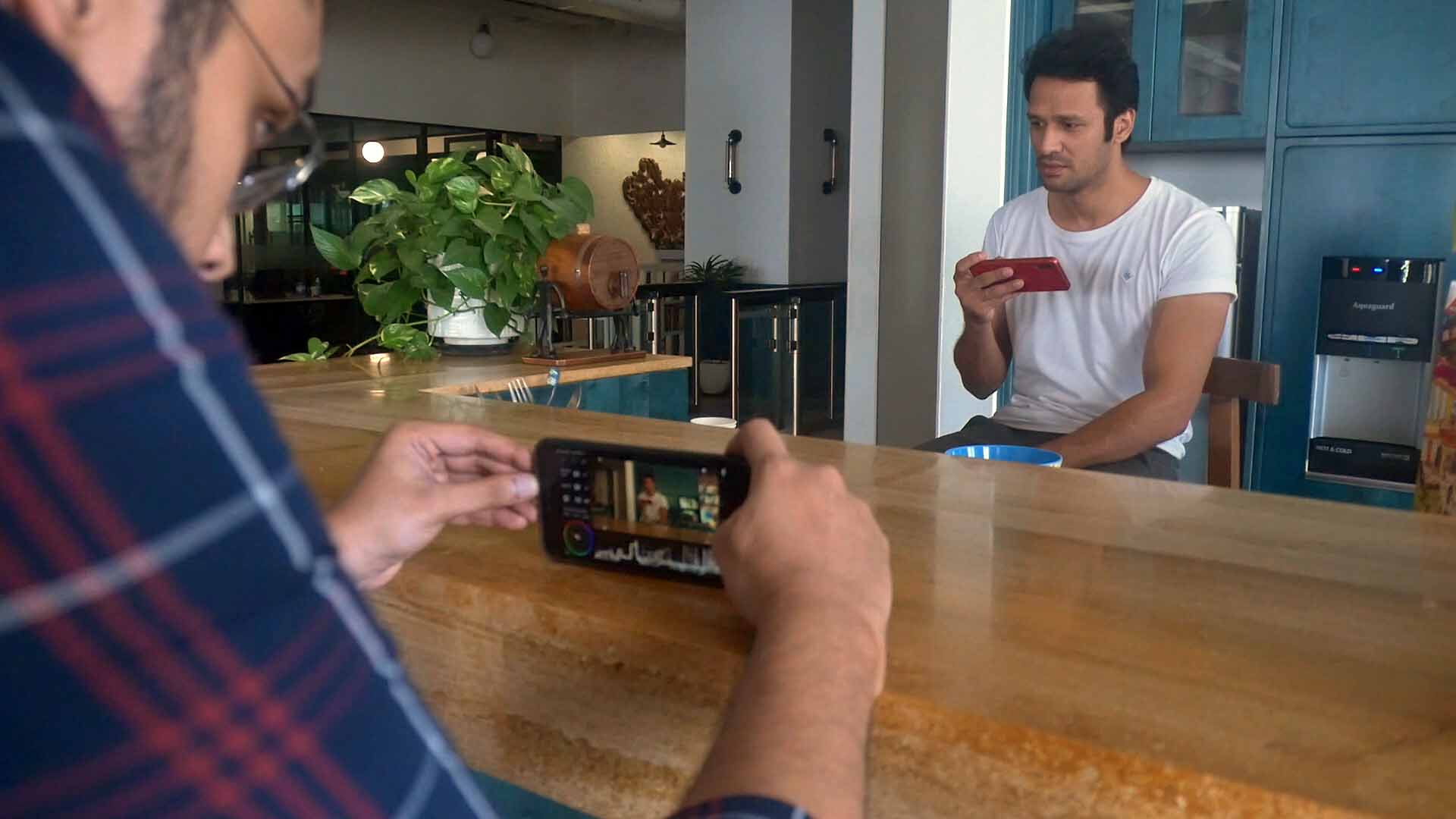
How do you practice cinematography?
The simplest way to practice is to use your mobile phone.
Everyone has one these days. Even the kids who like to brag about being broke on social media have a phone or computer.
They don’t know what being poor really means. Being poor means not having clean water to drink, not being able to eat a full meal every day, and have society look down on you every time you step out of that tent you call home (which is most likely illegal).
You, with the phone and education, yeah YOU! You’re not poor or broke to learn cinematography. You’re just lazy.
Get out there and practice with whatever you do have. You’re privileged because you don’t have to fight to survive every day.
You’re privileged because you have the luxury of choice – to learn cinematography of all things!
And here you are complaining you don’t have the right camera or opportunity. Or, you blame the teacher.
Like everything in life, you must earn your camera, your opportunity and your good teacher.
Go film something. Find passion and keep growing.
The rules are simple:
- Unless you’re in a war-torn country, spend your days filming something.
- If you’re stuck at home, then film something at home.
- If you are a champion at making excuses, film yourself making excuses!
Understood? Nothing stops you from practicing on your mobile phone.
If you have better cameras and gear, use that. But, no excuses either way.
Once you’ve agreed with to commit to learning cinematography, we can talk about the next steps.
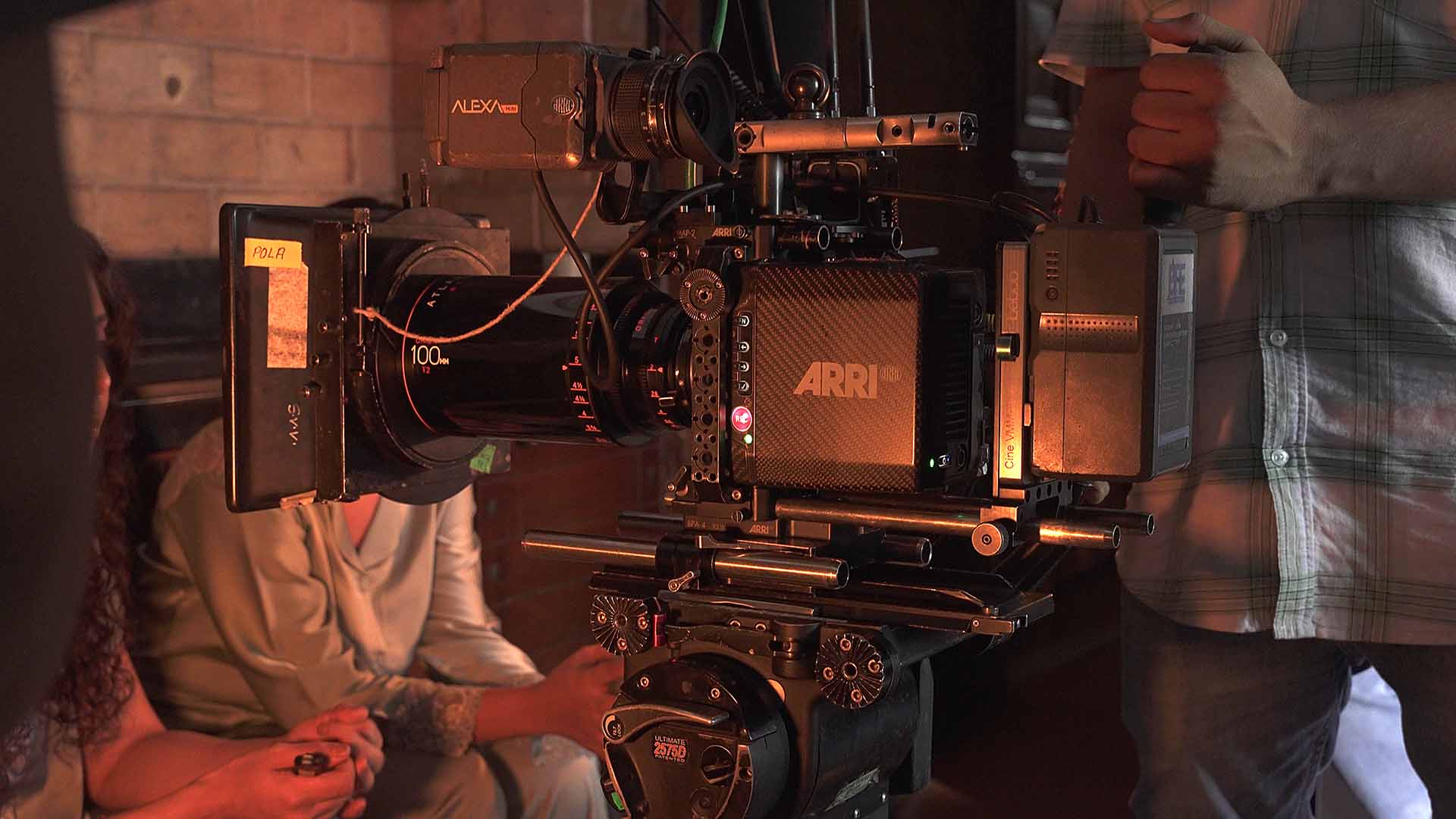
Guide to Learning Cinematography
Let’s take this one at a time.
Learn to operate your camera
The first step is to understand the relationship between aperture, shutter and ISO. If this is news to you, watch this video:
Practice exposing with manual settings. If you don’t have access to a dedicated camera you can use an app. I use the MAVIS – Pro Camera on my iPhone, and it gives me total control over the camera.
Learn to manipulate the aperture, shutter and ISO until it is second nature to you. Take lots of photographs as you walk around.
While you’re at it, you will also learn to improve in the second pillar of cinematography, composition.
Learn to compose decent frames
There are a few rules of composition you can start with. Watch my video to find out:
Composition and exposure go hand in hand. As you take lots of photographs you will also learn to compose.
I always recommend doing things as naturally as possible. Only use rules if you feel stuck. I’m not a fan of forcing rules when you already have a natural point of view.
It might not make others happy. You’ll always find people who say your composition is wrong. You could listen to them, but you don’t have to agree with them.
The difference between being a cinematographer and a “person who just records the scene” is you impose your point of view on the frame. You must assert yourself, and not be afraid of being wrong.
When you’ve spent months or a year consistently practicing composition and exposure, and you feel your images are getting a lot better, it’s time to start with lighting.
Experiment with Lighting
Lighting is a critical aspect of cinematography. It is one of the strongest ways a cinematographer can impose his or her vision on the story.
Lighting also allows you to paint the frame to serve the story and scene.
It can set the mood, create depth, and guide the viewer’s attention. To become proficient in lighting, you must experiment with different setups and equipment. This takes years and decades, so don’t try to rush yourself.
Follow these steps:
- Start with Natural Light:
- Observe how natural light changes throughout the day.
- Shoot during different times (golden hour, midday, twilight) to see the effects.
- Use reflectors (even DIY ones like white sheets) to manipulate natural light.
- DIY Lighting Equipment
- Use household items like lamps, LED strips, candles and flashlights.
- Create soft light using diffusers made from tracing paper or shower curtains.
- Experiment with colors by placing gels or colored plastics over lights.
- Understanding Shadows
- Practice creating and controlling shadows to add dimension to your shots.
- Use flags (pieces of black cloth or cardboard) to block light and shape shadows.
These are baby steps, but what you’re trying to achieve is to create a frame that doesn’t exist naturally.
If you want to learn film lighting through baby steps, then check out the Wolfcrow Online Film School. It’s got everything you need.
The three fundamentals of cinematography – exposure, composition and lighting – are a great place to start.
Watch this video to know about the most powerful elements in cinematography:
Watch and Analyze Films
Watching films for enjoyment is great. But it won’t make you a cinematographer, let alone a better cinematographer.
Analyze the cinematography techniques to understand how great cinematographers achieve their effects. I’ve published tons of cinematography and lighting essays over the last decade. This site is your playground!
Here are some tips you can use:
- Break Down Scenes:
- Pause and study scenes; frame by frame if you have to!
- Note the lighting, camera angles, and movements.
- Consider how these elements contribute to the story.
- Keep a Journal:
- Write down your observations about lighting, composition, and color.
- Sketch lighting diagrams based on your analysis. Where do you think the main light (key light) is coming from? Why?
- Reflect on how you can apply these techniques to your videos.
- Learn from different Genres:
- Different genres use cinematography uniquely. Study the genres you are interested in. A good cinematographer is expected to work in all genres, at least in the beginning.
- Study a wide range of films to understand genre-specific techniques. The most widely used is film-noir. Soft high-key lighting is another technique used in romantic comedies, sitcoms and beauty advertisements.
Watching and analyzing films should be a lifelong pursuit. Remember our Fossa? You’re deep into it now!
What else can be done?
Join Film Communities
Being part of a film community can provide valuable feedback, inspiration, and support.
Join platforms like Reddit, Facebook groups, or specialized forums like cinematography.com or rogerdeakins.com. Participate in discussions. Share your work. Ask for feedback.
Attend local film club meetings. Or workshops. Network with other filmmakers and try to collaborate with them. It’s a lot less lonely to be filming with other like-minded souls!
Follow your favorite cinematographers on Instagram and X (Twitter). Engage with them. Learn from them.
How to Practice Cinematography
Practice is the key to mastering cinematography. The more you shoot, the better you’ll become.
Film Something Regularly
Film something daily if possible. Even if it’s just a simple object or scene, or yourself! Experiment. You are doing this for yourself. Don’t hold back.
Make small short films. They just have to be a few minutes long. Maybe just one scene. While you design the film, pay attention to all aspects.
It’s okay to blow it and make a mess. That’s how you learn faster.
You could enter competitions, though I’m not a fan of those. In today’s content crazy world, there are aggregators who are just looking for free or easy content. These “competitions” typically tend to be schemes to get free films so they can pad up their content library.
On the other hand, I’d definitely shoot personal projects for film festivals. Use the feedback and experience to improve.
You might even gain some recognition!
Master Camera Movements
Camera movement can add dynamism and emotion to your scenes. It’s way easier to practice on a mobile phone over an Arri Alexa and Panther dolly, I can assure you!
Practice the basic dolly, trucking, pan, tilt and handheld moves. You can achieve a lot when your mobile phone is lightweight.
Learn Color Theory and Grading
Color can significantly impact the mood and feel of your film. Watch this video to understand how:
Learn some color theory. Understand how color impacts emotions. Then use that knowledge in your films.
Try to get the colors right in camera!
For when you can’t, resort to color grading. Use software like DaVinci Resolve or Adobe Premiere Pro. The former is free, so you should be using it to edit your films anyway.
Practice matching your shots. Learn to set a specific look or mood.
Stay Updated with Trends
Cinematography is an ever-evolving field. To stay ahead, you must continuously learn and adapt.
Watching new movies is a great way to stay updated on what’s in vogue, style-wise. I would also subscribe to industry publications like American Cinematographer, etc. YouTube is also a great place to stay updated.
Just don’t focus your energy on gear. It’s not that important.
As with Fossas, learning cinematography is a continuous journey of discovery and improvement.
I’ve tried to help you learn – at what cost? A mobile phone, a free editing and grading application, and DIY lights. It really doesn’t take fancy equipment, I can tell you that.
If you really have the itch to try those cool toys out, join a film crew, assist a cinematographer or volunteer your services on a project that can at least pay for that gear.
If you like my work, learn from me! This is the best online film school, period.
We teach how to light with cheap and DIY equipment, and the cost of our online film school is just a fraction of what a physical film school costs.
With the money you save, go make movies!
Read this article next:
