
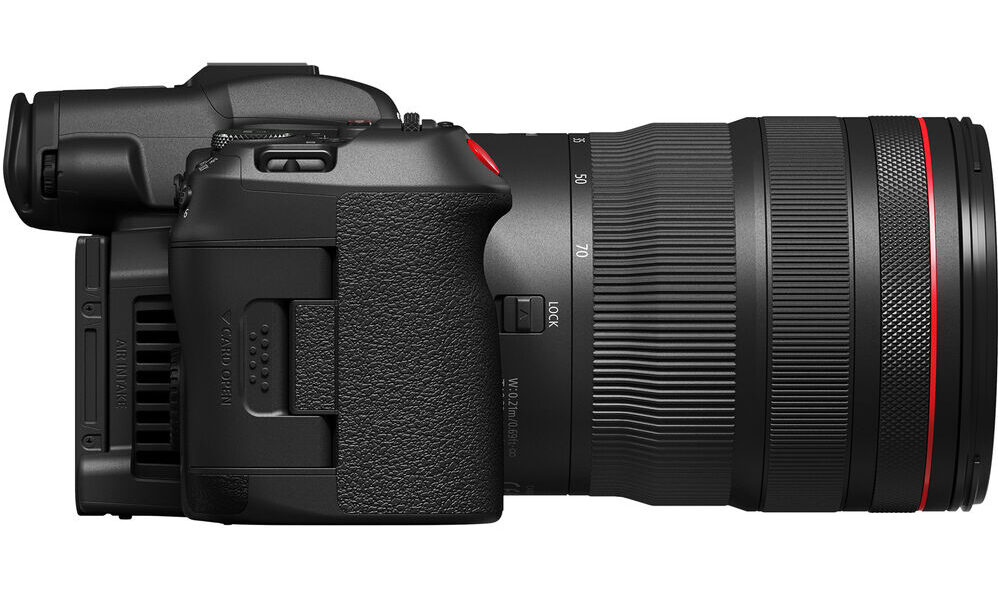
The Canon EOS R5 C (Amazon, B&H) is the latest addition to Canon’s range of hybrid mirrorless cameras.
In this article, let’s go over the most useful lenses for the Canon EOS R5 C, specifically for video and cinematography. The Canon EOS R5 C has an RF mount. Let’s look at that in detail.

What is a “native” RF lens?
A “native” lens is one specifically designed for the Canon RF-mount system and allow the following:
- Full control of autofocus, image stabilization, iris, zoom and focus control.
- Electronic metadata like iris, focal length, distortion, fall-off, focus, etc.
- Continuous auto focus for video.
- An additional “Control Ring” on the lens that’s customizable.
The biggest advantage of owning native lenses is that it’s designed specifically for the new sensor and camera design. If you want the best autofocus performance, you need RF lenses.
You can still use EF lenses with a Canon EF to RF adapter. And we all know EF lenses are legendary. Canon RF lenses are better than Canon EF lenses across the board for their optical performance, low weight and new features. However, there are three reasons why the choice is still a tough one:
- Canon RF lenses are expensive.
- The entire range of lenses isn’t out yet, so you still need EF lenses to complement your kit.
- EF lenses still work great, even with autofocus!
In this tough economic environment it’s a hard choice for any professional.
Which leads us to the next section.
Are Canon RF lenses good for video?
It depends on what type of video you’re into. Currently, the biggest issue is the limited range available as far as focal lengths are concerned.
There aren’t any super wide options, and some of the primes might be too expensive for many shooters.
The great advantage of RF lenses is that you get dual pixel AF at its best. So, for new users, the two most important questions to ask are:
- Do you really need the best AF for video? EF lenses also deliver good AF performance, but RF is definitely better across the board.
- Do you have existing Canon EF lenses that you would like to continue using? This could be either due to financial necessity or because you’ve already invested in EF lenses, or if that’s all that’s available to you to rent.
There are two other ‘advantages’ specific to RF lenses:
First, the manual focus ring can be customizable. For photography, the ring can be set to focus by wire.
RF lenses allow users to change the rotation direction (clockwise or anti-clockwise) of the focus ring and control ring to match their preferences. Besides, the focus ring rotational sensitivity during manual focusing can also be customized. By default, it is set to “Varies with rotation speed”. Sensitivity of the focus ring will depend on the speed at which the ring is turned, the focus will change by a greater degree when the ring is turned faster; while slower rotation allows fine focus adjustments. Another option “Linked to rotation degree” is also available in which the focusing distance will be directly proportional to the rotation degree, regardless of the rotation speed. This option can provide the same control characteristic and sensation similar to cinema lenses.
Source: Canon
Second, each RF lens has a Control Ring at the front of the lens for customizable aperture, ISO, or other adjustments.
It’s going to be sometime before Canon fills in the gaps in focal lengths, so for now, you’ll have to complement them Canon’s own stellar range of EF-mount lenses.
To do that you need a lens adapter between the camera and lens. Let’s talk about that first.
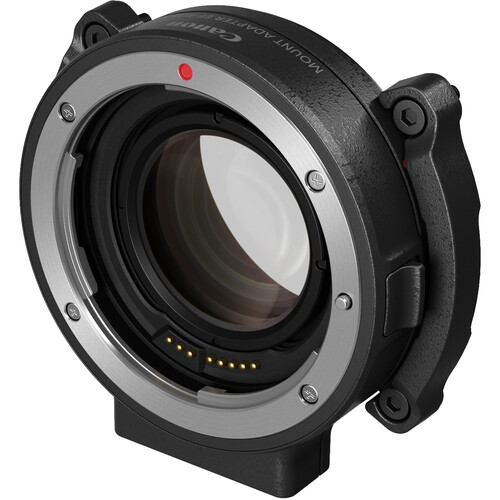
The EF-EOS R adapters
Canon has released adapters for its RF bodies, and I highly recommend you stick to it for best performance and compatibility. Here’s the full list of Canon lens adapters:
| No. | Type | Key Info | Buy |
| 1 | Focal Reducer Adapter | Reduces Crop factor, Gives an added stop of light | (Amazon, B&H) |
| 2 | “Basic” Adapter | Has full control, cheapest option | (Amazon, B&H) |
| 3 | Control Ring Adapter | Adds a control ring to control ISO, Aperture, Exposure Compensation, etc. | (Amazon, B&H) |
| 4 | Drop-in Filter Adapter with Variable ND filter | Has a slot in the adapter to use rear filters. In this case a variable ND filter. | (Amazon, B&H) |
| 5 | Drop-in Filter Adapter with Circular Polarizer filter | Has a slot in the adapter to use rear filters. In this case a circular polarizing filter. | (Amazon, B&H) |
The Canon Mount Adapter EF–EOS R 0.71x adapter (Amazon, B&H) is a focal reducer.
The crop factor is 0.71x.
You also get a full stop of extra light with this adapter. In simple terms, that EF 24-105mm f/4 L becomes a 24-105mm f/2.8 lens.
The Canon Mount Adapter EF–EOS R 0.71x adapter (Amazon, B&H). comes with its own set of screws and has a special placement on Canon EOS R5 C (Amazon, B&H):

I think it’s a must-have accessory for the Canon EOS R5 C (Amazon, B&H) to open up a wide array of lens options.
All Canon adapters offer full control over Canon EF lenses:
- They retain Canon in-lens IS (image stabilization), autofocus control, sharpness, color rendition, and contrast.
- Each is weather sealed to prevent dust and moisture from entering (assuming the lens is also weather sealed)
- Full compatibility with Canon EF and EF-S lenses as well as most 3rd party lenses. Sigma offers full compatibility; Tamron offers limited compatibility but growing.
Which is the best EF-EOS R adapter for video?
This is tricky because it depends on what your needs are. And for video, there are hidden costs you should be aware of.
Let’s start with drop-in filters.
The hidden costs of drop-in filters
I would not pick the circular polarizer (though it is useful sometimes) because for video work the subject is always moving, and you’ll only be able to get the benefit of the polarizer at a particular angle in relation to the sun.
Can you use the drop-in filter without the variable ND filter? No, you can’t. You’ll leave a large gaping hole in your filter. You need to purchase the Drop-In Clear Filter A (Amazon, B&H), and that is an additional expense.
The Canon EOS R5 C (Amazon, B&H) does not have built-in ND filters, so the drop-in ND filter adapter will come in handy.
The hidden cost of the control ring adapter
Next we have the control ring adapter. There’s an important feature you need to know about video.
Control Ring clicks are audible and can be picked up when recording video. Canon offers a Control Ring Modification Service to make the rings adjust silently for an additional fee:
The control ring on RF lenses and the Control Ring Mount Adapter EF-EOS R includes a “clicking” action when used. While this can be helpful to confirm changing settings, it can also impede video recordings as the “clicking” sound may be captured as audio. EOS R series camera owners can choose to have this function removed, and even re-applied if needed later on, with Canon’s control ring modification service.*
Canon
RF Lenses $79.99
Control Ring Mount Adapter EF-EOS R $59.99
Tax and freight fee are NOT included. * All pricing is subject to change.
| Price of Control Ring Mount Adapter | $199 |
| Cost of Modification Service | $59.99 |
| Total | $259 |
This is a good option if you ride the aperture often. But in my opinion, the combination of EF lenses in cinema use is rare. Most times you don’t need to change the aperture or ISO, so you really don’t need the control ring adapter.
It’s only useful in run and gun situations, where you are using the camera in a handheld situation with one hand on the lens to ride the aperture or ISO. I would seriously consider investing in RF lenses for this feature, and not really consider it for EF lenses – specifically for video work.
The EOS R5 C has similar ergonomics to the Canon EOS R5 so an EF lens with an adapter should be well-balanced. This kind of operation should be easily manageable.
If you need a de-clicked lens, you can get a cine-mod service done, or better yet, just use cine lenses.
And then there’s the risk of moving the control ring by mistake during operation. This is rare, but the issue is, unlike a aperture ring or focus ring on a cine lens, when you shift this, there’s no visual aid to tell you it has shifted.
Which leaves us with two options:
| Focus Reducer Speedbooster | If you like tons of shallow DOF and want that extra stop of light. |
| Basic adapter | Best filter if you just want to adapt a lens with nothing extra. |
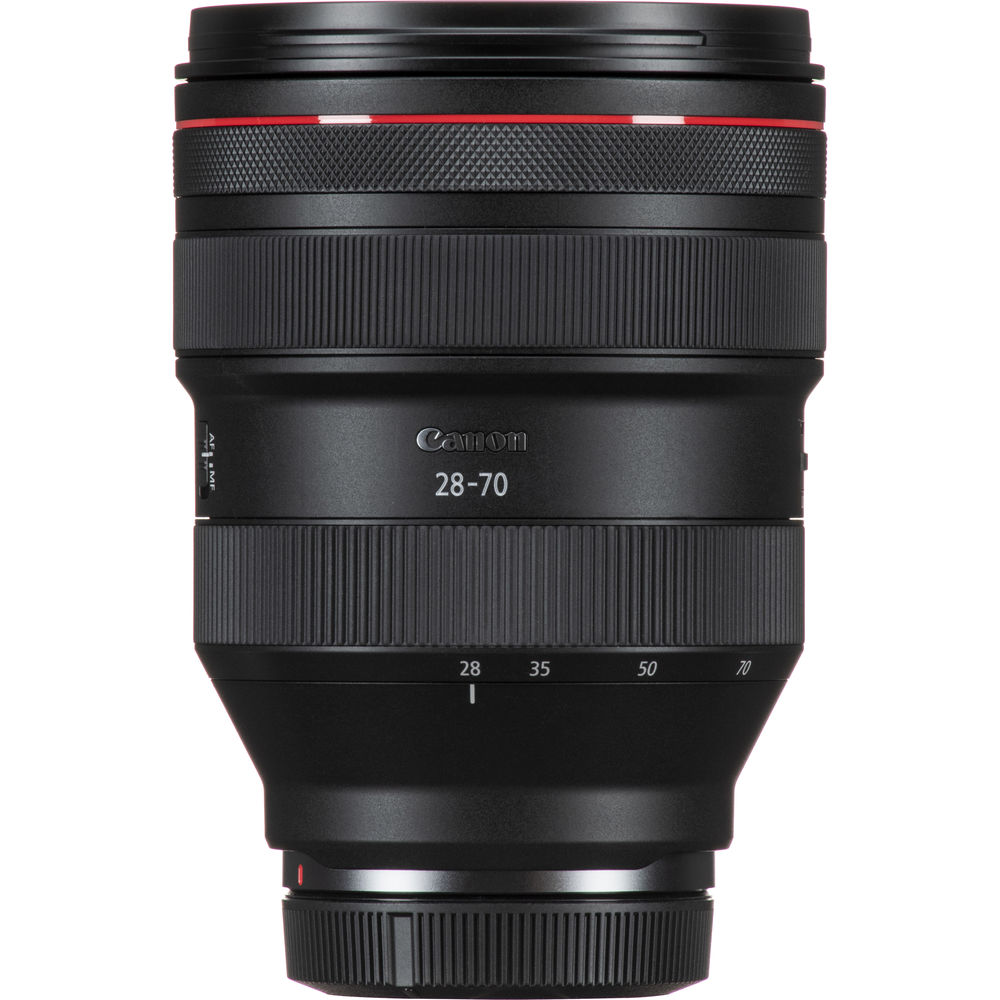
What are the best lenses for the Canon EOS R5 C for Video?
Prime lenses
The single greatest advantage prime lenses have in general is they can open wider than zooms. You can go down to f/0.95 if you wanted to!
This makes it a great option for low light cinematography. And there’s really no excuse for not having at least one prime because they also tend to be cheap without sacrificing quality. Another advantage of prime lenses is they are usually lighter than zoom lenses (comparing the same price range).
The third advantage of prime lenses are they have lower breathing, while the zoom lenses (photo) breathe and are not parfocal.
Please note, these are for 8K and 4K for the full frame sensor:
Best image quality for 6K and 8K
- Super wide angle: Canon EF 14mm f/2.8L II USM Lens + Adapter (Amazon, B&H). If you absolutely must have RF lenses, you can use the Canon RF 16mm f/2.8 STM lens (Amazon, B&H) instead.
- Wide angle: Canon EF 24mm f/1.4L II USM Lens + Adapter (Amazon, B&H)
- Normal: Canon RF 50mm f/1.2L USM Lens (Amazon, B&H)
- Telephoto: Canon RF 85mm f/1.2L USM Lens (Amazon, B&H)
- Super telephoto: Canon EF 200mm f/2L IS USM Lens + Adapter (Amazon, B&H)
Low budget, value for money
- Super wide angle: Canon RF 16mm f/2.8 STM lens (Amazon, B&H)
- Wide angle: Canon RF 35mm f/1.8 IS Macro STM Lens (Amazon, B&H)
- Normal: Canon RF 50mm f/1.8 STM (Amazon, B&H)
- Telephoto: Canon RF 85mm f/2 Macro IS STM (Amazon, B&H)
Canon has you covered in this price segment.
Zoom lenses
Please note, these are for the full frame sensor:
- Widest: Canon EF 11-24mm f/4L USM Lens (Amazon, B&H) with adapter
- Mid-range: Canon RF 15–35mm F2.8 L IS USM (Amazon, B&H). If budget is an issue there’s the new Canon RF 14-35mm f/4L IS USM (Amazon, B&H)
- Normal:
- Telephoto: Canon RF 70-200mm f/2.8L IS USM (Amazon, B&H)
- Super telephoto: Canon RF 100-500mm f/4.5-7.1L IS USM (Amazon, B&H)
- Great all-round low-budget option: Canon RF 24-105mm f/4L IS USM (Amazon, B&H)
Extenders
Canon has launched two new extenders for the RF mount:
I recommend the 1.4x for the extra reach. The 2x is really a compromise.

Adapters and third-party lenses
How do you know if a lens can be used or not? First, you need to know what the flange focal distance is.
Here’s information on each mount, in increasing order of the focal flange distance:
| Mount | Focal Flange Distance in mm |
| Z Nikon Z-mount | 16 |
| C C-Mount | 17.526 |
| EF-M Canon EF-M mount | 18 |
| E Sony E-mount | 18 |
| FZ Sony | 18 |
| MFT Micro Four Thirds mount | 19.25 |
| RF Canon RF-mount | 20 |
| L Leica L-mount | 20 |
| M Leica M mount | 27.8 |
| FT Four Thirds mount | 38.67 |
| FD Canon Manual FD mount | 42 |
| EF Canon EOS EF mount | 44 |
| EF-S Canon EOS EF-S mount | 44 |
| LPL Arri LPL-mount | 44 |
| A Minolta/Sony A-mount | 44.5 |
| K Pentax K-mount | 45.46 |
| F Nikon F-mount | 46.5 |
| R Leica R-mount | 47 |
| PL Arri PL mount | 52 |
Third-party lenses come in their own lens mounts. So you need some sort of adapter that comes between the lens and the camera. This adapter does three things:
- It connects two mounts that naturally don’t fit together, and
- It makes up for the flange focal distance.
- Optional: Provides contacts that allow you to control aperture, zoom, focus, etc., from the camera itself, like the EF-EOS R adapter (Amazon, B&H).
There’s no glass in the adapter, no lens or optics. It’s just hollow inside.
The Canon RF mount has a flange focal distance of 20mm, so any lens that has a higher flange focal distance than this in the above table can be adapted. This is why you can adapt EF lenses, because the Canon EF mount has a flange focal distance of 44mm.
You can also adapt older Canon FD lenses, Leica M lenses, PL-mount lenses and of course Nikon F-mount lenses and others. I’m pretty sure there are all kinds of adapters for every lens combination.
All this makes it really hard to give a recommendation because people pick lenses for a multitude of reasons. Personal taste and aesthetics factor big time in any decision.
However, it is hard to argue against this next list in terms of performance and value for money. The package is unbeatable in my opinion.
The best third-party lenses for the Canon EOS R5 C
Prime lenses
What do I prefer? I like Leica R primes, but they are hard to find or recommend for everybody, and the price is high. You need to find a good copy, and maintenance is a problem as well. This applies to most older or esoteric lenses. If I’m recommending a lens, it should be available to purchase for most people worldwide, must be serviceable, and must offer tremendous value for money without sacrificing quality.
Right now, only one series meets all of these requirements: The Sigma Art series with a Canon EF mount (or RF mount if it becomes available):
- Sigma 14mm f/1.8 Art (Amazon, B&H)
- Sigma 24 f/1.4 Art (Amazon, B&H)
- Sigma 35mm f/1.4 Art (Amazon, B&H)
- Sigma 50mm f/1.4 Art (Amazon, B&H)
- Sigma 85mm f/1.4 Art (Amazon, B&H)
- Sigma 135mm f/1.8 Art (Amazon, B&H)
For super-telephoto, nothing beats Canon’s own line.
When should you pick prime lenses with manual focus?
When you can and want to control the focus, that’s when.
Professionals use follow focus systems, but even if that’s overkill for you, you need to ensure the focus ring on the lens is solid, smooth and reliable enough to consistently nail focus. The Canon EOS R5 C (Amazon, B&H) has focus peaking as well as a zoom-in feature, so you can nail focus by looking at the back LCD.
Recommended cine prime lenses for the Canon EOS R5 C
There are really great full frame lenses, like the Arri Signature Primes or the Leica Thalia, but these are rental items, hardly available for purchase for us “regular folk”.
More practically, you could either go with Zeiss CP.3 primes or better yet, with Sigma Cine lenses in the EF mount. I prefer the latter, the range is just too much value for money, and it goes up to T1.5!
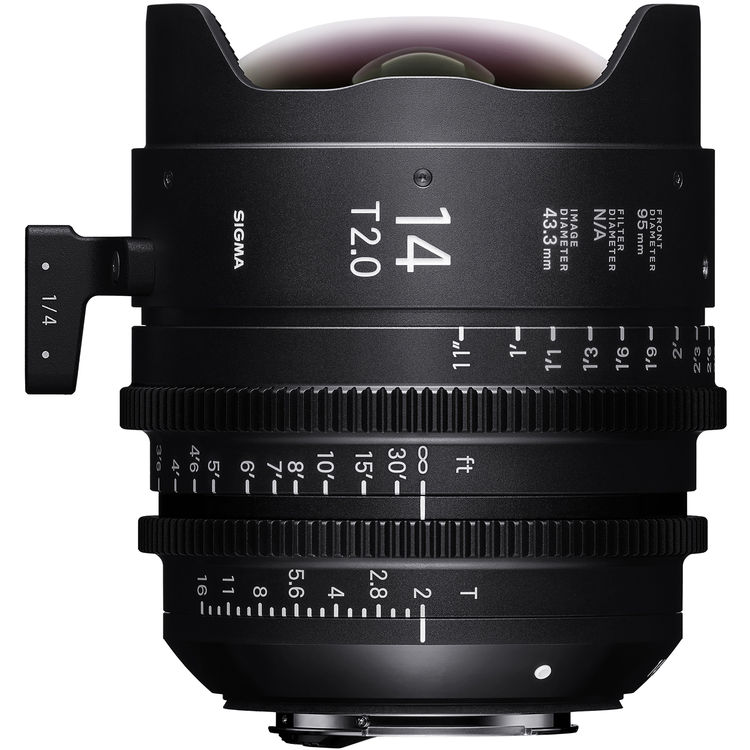
- Sigma 14mm T2 (Amazon, B&H)
- Sigma 24mm T1.5 (or 20mm, 28mm) (Amazon, B&H)
- Sigma 35mm T1.5 (Amazon, B&H)
- Sigma 50mm T1.5 (Amazon, B&H)
- Sigma 85mm T1.5 (Amazon, B&H)
- Sigma 135mm T2 (Amazon, B&H)
With a focal reducer these lenses will be insane. A T1.5 will become a T1.2!!
There are many other lenses that cover full frame. For more names, check out my comparison of cine primes for full frame.

Recommended cine zoom lenses for the Canon EOS R5 C
Full frame zoom lenses are hard to find. Right now, my favorite top of the line cine zoom would be Arri Signature Zooms:
The other options are:
- Zeiss CZ.2 zooms (Excellent in my opinion)
- Angenieux EZ series (Budget)
- Tokina zooms
To be honest, these are not lenses a Canon EOS R5 C owner is likely to purchase, as they are way too expensive. Unless of course, you are using the EOS R5 C as a B-cam with a Canon cinema camera.

Cheaper cine zoom lenses for the Canon EOS R5 C
These zoom lenses are rehoused still glass, but have really proven the test of time and are well-loved by many filmmakers:
If you need cine zoom lenses, but don’t have the budget, it might be better to just purchase Canon zoom lenses as listed above, or get them cine-modified by Duclos Lenses. I’m not a big fan of re-housing; waste of money, if you ask me. Just get them de-clicked with focus gears.
That’s it for my list! If you have any suggestions or recommendations please let me know in the comments below.
