

The 180-degree rule is a concept rooted in classical filmmaking, a grammar that dictates that an imaginary line, or axis, is drawn between characters within a scene. Cameras are then positioned on one side of this axis to capture their interactions.
By maintaining this setup, the viewer’s perspective remains consistent, allowing them to comprehend the characters’ positions and movements in relation to each other and the environment.
Whether you’re working with one character, two characters, three or even more, understanding and maintaining this rule is essential for crafting a visually engaging and coherent narrative.

The 180-degree rule ensures consistent spatial orientation and prevents disorienting jumps in perspective. Breaking this rule can distract viewers and disrupt the flow of the narrative and it can lead to visual confusion, disorientation and a disjointed viewing experience.
Understanding the 180-degree rule in filmmaking can be likened to playing a game of chess.
Just as chess players must carefully plan their moves to control the board and outmaneuver their opponents, filmmakers employ the 180-degree rule to control the visual narrative and guide the audience’s perception of character interactions.

180-degree rule with one character
At first glance, it might appear that the 180-degree rule is irrelevant when there’s only one character on screen. However, even in solitary scenes, adhering to this rule enhances visual coherence and maintains a sense of spatial continuity.
Here’s how the 180-degree rule is applied with one character:
Implied Off-Screen Space
Even with only one character, their body orientation and eye line can create an implied off-screen space. This space sets up the potential for interactions or off-screen elements, ensuring continuity if other characters or objects enter the scene later.
For instance, if a character is looking off-screen to the right, the viewer instinctively envisions what might be in that direction.
Varying Camera Angles
Experiment with different camera angles to establish emotional connections between the character and their surroundings.
Wide shots can showcase the character’s presence within the environment, while close-ups can emphasize their facial expressions and emotions.
Over-the-shoulder shots can provide a glimpse of what the character is looking at, reinforcing the implied off-screen space.
Character Movement
Consistency in the character’s movement within the frame is crucial. Sudden shifts in the character’s position or orientation can confuse viewers.
If the character moves from one side of the frame to the other, ensure that their movement follows a logical path that maintains viewer understanding.
Example for the above three points:
Imagine a scene with a single character sitting at a park bench, looking at a distant sunset.
To maintain the 180-degree rule:
Implied Off-Screen Space
- The character’s gaze towards the sunset creates an implied off-screen space, allowing viewers to visualize the scenic view that the character is enjoying.
Varying Camera Angles
- Start with a wide shot to establish the character’s presence at the park bench. Transition to a medium shot to focus on the character’s facial expressions as they gaze at the sunset.
- Finally, use an over-the-shoulder shot to provide a glimpse of the sunset, emphasizing the character’s perspective.
Character Movement
- If the character stands up to leave, ensure their movement is consistent.
- They could walk towards the left side of the frame, maintaining the viewer’s established understanding of their orientation.
Even with just one character on screen, the 180-degree rule remains a powerful tool for maintaining visual coherence and enhancing storytelling.
By incorporating implied off-screen space, varying camera angles and character movement, filmmakers can engage the audience, create a sense of depth and ensure a seamless viewing experience. It plays a vital role in maintaining visual coherence and spatial continuity.
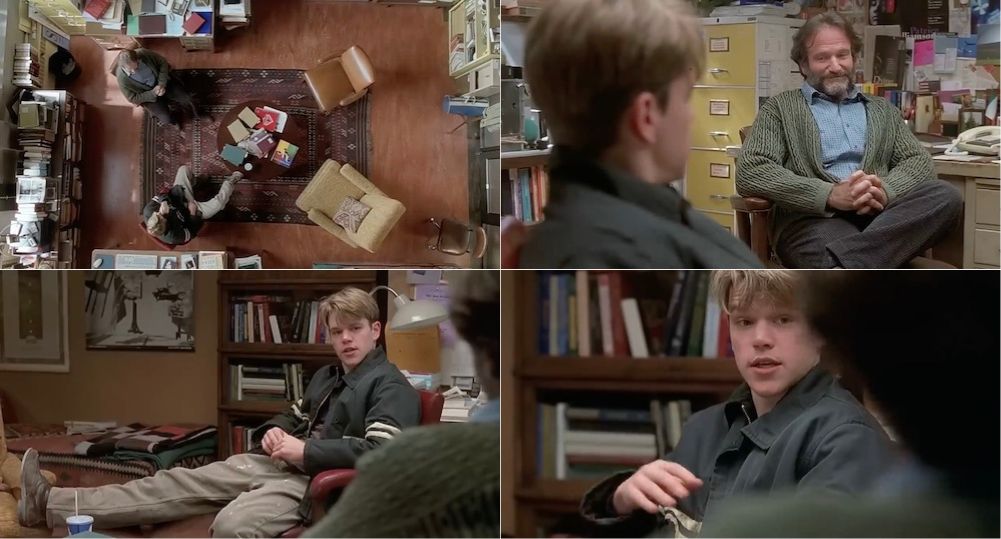
180-degree rule with two characters
When two characters share a scene, the 180-degree rule becomes paramount in maintaining visual coherence. By adhering to the rule, filmmakers can establish a clear spatial relationship between characters, allowing viewers to easily comprehend their positions and movements.
When characters interact, the rule prevents sudden shifts in perspective that might confuse or disorient the audience. Proper execution of the 180-degree rule enhances the dynamic between characters, enabling the audience to engage more deeply with their interactions and emotional arcs.
To know how to break the 180-degree rule to make the visual interesting, check this link out:
When working with two characters, the 180-degree rule becomes even more critical to prevent visual disruptions.
Here’s how to ensure smooth character interactions:
Establishing the Axis
Identify the axis of interaction between the two characters. Place the camera on one side of this axis and maintain consistent shot angles as characters engage with each other.
The 180-degree rule establishes an imaginary line, known as the axis of action, between the characters involved in a scene. This axis creates a reference point that dictates where the camera should be placed to maintain a consistent visual relationship between the characters.
To explain this concept further, let’s visualize it:
Imagine two characters, Character A and Character B, engaged in a conversation. The axis of action runs directly between them, creating a line that divides their interaction space into two equal halves.
When shooting a scene with two characters following the 180-degree rule, the camera should always remain on one side of this axis. This means that the camera can be positioned anywhere within a 180-degree arc around the characters.
The area on the other side of the axis is considered a “no-fly zone” for the camera to ensure that characters maintain their spatial consistency.
Shot/Reverse Shot
One of the most common techniques used to apply the 180-degree rule with two characters is the shot/reverse shot sequence.
Utilize shot/reverse shot techniques to capture each character’s perspective during a dialogue exchange. This maintains viewer understanding of the characters’ spatial relationship and emotional dynamic.
This technique alternates between showing each character’s perspective as they interact.
Here’s how it works:
- Character A’s shot: The camera is placed on one side of the axis, capturing Character A as they deliver their lines or perform an action. The audience sees Character A facing toward the center of the frame.
- Character B’s shot (Reverse Shot): To maintain the 180-degree rule, the camera is then placed on the opposite side of the axis, capturing Character B’s reaction or response. This shot shows Character B facing toward the center of the frame.
The shot/reverse shot sequence preserves the visual continuity and spatial relationship between the characters. It allows the audience to perceive the interaction naturally, as if they were standing on one side of the axis and then the other.
Maintaining Eye Lines
Maintaining eye lines is a crucial aspect of filmmaking that contributes to visual coherence and helps the audience understand the spatial relationships between characters within a scene.
Pay careful attention to the characters’ eye lines to ensure that they are looking in the correct direction, maintaining spatial continuity.
It involves ensuring that characters’ gaze and focus align correctly within the frame, preserving a consistent visual connection and enhancing the overall storytelling.
For example, if Character A is looking to their right while talking to Character B, in the reverse shot (Character B’s perspective), Character B should also be looking toward the center of the frame to maintain eye contact with Character A.
This prevents a jarring shift in visual perspective and helps the audience understand the characters’ positions and interactions.
During the editing process, continuity in eye lines is crucial to create seamless transitions between shots. Editors must ensure that characters’ eye lines match correctly, enhancing the visual flow of the scene.

180-degree rule with three characters and more
Handling three or more characters within the confines of the 180-degree rule requires careful consideration of blocking, camera placement and character movement.
Filmmakers must strike a delicate balance between character interactions and camera angles to ensure the rule’s integrity.
Creative shot compositions and variations can emphasize different characters’ perspectives, highlighting their relationships and contributions to the narrative.
Adhering to the rule remains essential in avoiding confusion and preserving spatial continuity, especially in scenes with complex character dynamics.
Maintaining the 180-degree rule with three or more characters involves careful planning, coordination, and an understanding of spatial relationships. This fundamental principle ensures that the audience can follow character interactions seamlessly and maintain a clear sense of direction within the scene.
Here’s a step-by-step guide on how to apply the 180-degree rule with three characters or more:
Establish the Axis of Interaction
- Identify the main characters involved in the scene. Let’s say we have characters A, B and C.
- Imagine an imaginary line (the axis) connecting characters A and B. This line represents the 180-degree boundary within which the camera should remain.
- Place the camera on one side of the axis, ensuring that it does not cross to the other side during the scene.
Character Placement and Movement
- Position characters A, B and C on the same side of the axis where the camera is placed. For instance, if the camera is on the side of characters A and B, then characters A, B and C should all be on that same side.
- Plan their movements and interactions within this side of the axis. Make sure their eyelines, body orientations, and positions are consistent as they engage with each other.
- Avoid having characters cross the axis during the same scene, as this can lead to visual confusion and disrupt the spatial continuity.
Shot Compositions
- Utilize shot compositions that emphasize the characters’ interactions while adhering to the 180-degree rule.
- Shot/reverse shot techniques are effective for showcasing dialogue and reactions. Use over-the-shoulder shots to establish each character’s perspective.
- Consider the characters’ emotional states and the dynamics of the conversation when choosing shot compositions.
Group Dynamics
- If the characters form a group or are engaged in a collective activity, maintain their positions within the established axis.
- Use the 180-degree rule to visually highlight power dynamics, alliances, and conflicts among the characters.
Camera Movement
- You can move the camera along the side of the axis to capture different angles and perspectives.
- Avoid crossing the axis during camera movement, as this can cause disorientation and violate the rule.
Blocking and Staging
- Plan the blocking of characters’ movements to ensure they do not obstruct the established axis.
- Clearly define where each character will be positioned at different points in the scene to maintain consistency.
Sequential Interaction
- If the characters interact sequentially (not all at once), ensure that the camera and character positions adhere to the 180-degree rule during each interaction.
- Transition smoothly between characters while maintaining the rule’s integrity.
Visual Storytelling
- Leverage the 180-degree rule to convey character relationships, emotions, and conflicts visually.
- Use the rule to enhance the storytelling by guiding the audience’s attention and understanding of character dynamics.
Practice and Rehearsal
- Rehearse the scene with the actors to ensure they are aware of the established axis and their positions.
- Fine-tune movements and interactions to ensure adherence to the 180-degree rule while maintaining a natural flow.
By following these steps and maintaining consistent adherence to the 180-degree rule, filmmakers can effectively manage scenes with three characters or more, ensuring spatial continuity, enhancing character dynamics and creating visually engaging narratives that resonate with the audience.
The 180-degree rule is an indispensable tool for filmmakers seeking to create visually coherent and engaging narratives. Whether working with one character, two, three or more, understanding the rule’s principles and employing the strategies discussed in this guide will help maintain spatial consistency, enhance character interactions and ensure a seamless viewing experience.
By embracing the 180-degree rule, filmmakers can elevate their storytelling and captivate audiences with visually compelling narratives.
While the 180-degree rule provides a solid foundation, creative departures can also be explored to enhance storytelling and evoke specific emotions. Balancing adherence to the 180-degree rule with creative innovation allows filmmakers to master the art of visual storytelling.
Hope you found the given tips to make 180-degree rule interesting and helpful for you to apply them in your next work. If there’s anything more to it, let me know in the comments.
