

This article represents my thoughts on the new Blackmagic Design URSA Cine 17K 65mm camera. It’s kind of a big deal.
If you don’t know why 65mm is different, then please read this first:

There are “medium format” or “65mm” cameras available today that shoot professional level video:
- Arri Alexa 65. Read my thoughts on this camera here.
- Blackmagic Design URSA Cine 17K
- Fujifilm GFX 100II (the 100S only records in H.264/5)
- 65mm film cameras exist, and some filmmakers still like to shoot on this format.
It’s a small list. Before we look at the differences and some gotchas, let’s understand what the Blackmagic Design URSA Cine 17K is in the first place.

What is the Blackmagic Design URSA Cine 17K?
The Blackmagic Design URSA Cine 17K is a new camera in many ways. It is scheduled to be available by the end of 2024, and as of now we have limited information.
Here are the official specifications available so far:
| Features | |
|---|---|
| Camera type | “65 mm format” digital cinema camera |
| Sensor size | 50.808 mm x 23.316 mm |
| Maximum resolution | 17520 x 8040 |
| Frame rates | Rolling shutter |
| Lens mounts | ARRI LPL and Hasselblad |
| Image Circle | 56mm |
| Dynamic range | 16 stops |
| ISO Range | Unavailable |
| Recording file format | 12-bit BRAW |
| Storage | M.2 Module |
| Connectors | 12G SDI, 10G Ethernet |
| Built-in ND Filters | None |
Blackmagic Design has claimed the URSA Cine 12K has the highest dynamic range of any Blackmagic camera, and the 17K has a similar RGBW sensor and similar dynamic range of 16 stops.
If this is even remotely true, it’s going to be a very exciting camera. The most important aspect of the sensor Blackmagic Design haven’t talked about yet is the base ISO and ISO range. I don’t expect this to be a low-light camera.
Comparing the sensor sizes with other cameras
How big is the sensor of the Arri Alexa 65 and how does it compare to its ‘competition’? Here’s a look:

If we’re really looking to emulate 65mm film, the Blackmagic Design URSA Cine 17K and the Arri Alexa 65 are close enough. The GFX 100 II is slightly better than full frame.
Here’s a comparison of the crop factors of these cameras
| Format | H. Crop Factor | Aspect Ratio |
| Super 35mm | 1.40 | 1.85:1, 2.39:1 |
| FF 35mm | 1.00 | 1.50 |
| 65mm | 0.67 | 2.28 |
| Fuji GFX 100 II | 0.82 | 1.33* |
| Arri Alexa 65 | 0.69 | 2.11 |
| URSA Cine 17K | 0.71 | 2.18 |
| IMAX | 0.51 | 1.34 |
What does a large sensor imply? Here are some ‘issues’:
- The lens image circle is big. In the case of the URSA Cine 17K you have an image circle of 55.9mm, or 56mm rounded out. You need lenses specially designed for 645 medium format and higher, or 65mm cine lenses.
- For larger apertures, the lenses will be even bigger than their 35mm equivalents. We’re talking bucket-size lenses here. Zooms? Careful what you wish for!
- The center and corner performances of the lenses must be stellar. Any imperfections will be blown up at 17K. If you’ve seen IMAX in a large dome screen you’ll understand. Poor makeup will be instantly visible. In fact, shooting skin without filtration might end careers.
- DOF will be shallower, and pulling focus will be a nightmare. Any focus errors will be magnified at higher resolutions.
- The Alexa 65 has two fans. I don’t know how the URSA Cine 17K is cooled, and what will happen when the sensor heats up.
What lenses are available for 65mm?
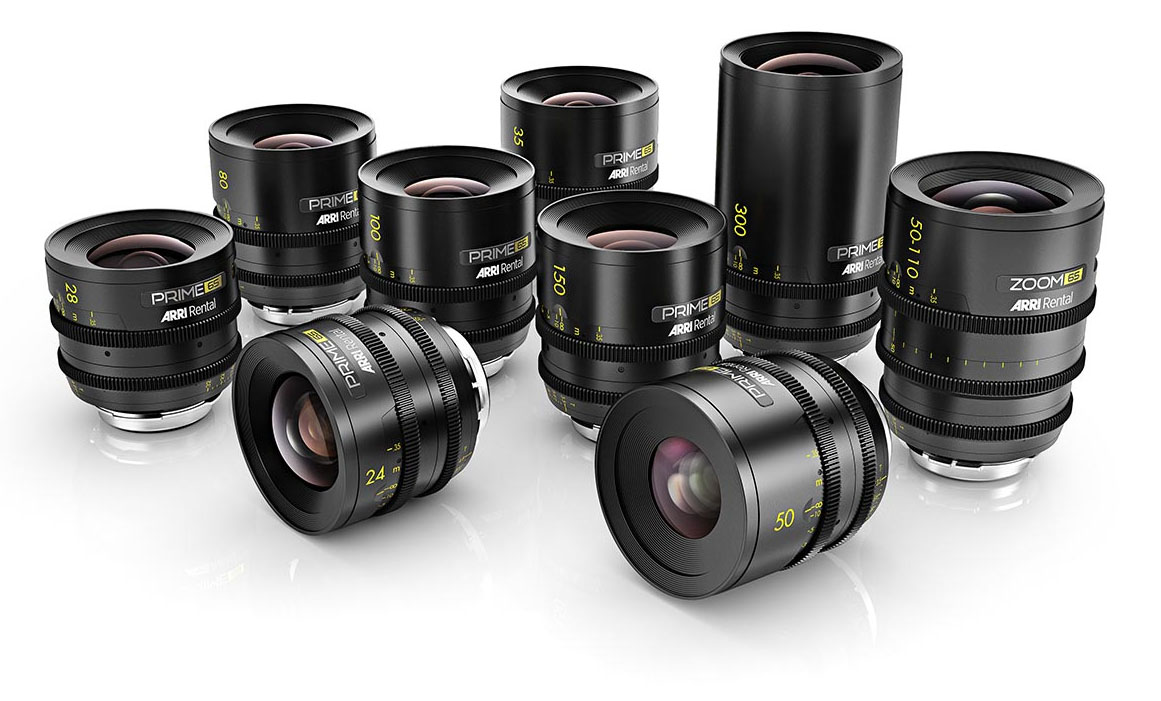
Arri has a few lenses available for the Alexa 65, like Prime DNA, Prime 65, Prime 65 S and Vintage 765. What about in the free market?
There are rehoused Hasselblad and Mamiya lenses. However, you won’t find a single one on B&H or regular stores. Some full frame cine lenses might cover the 65mm sensor, but only at certain focal lengths. Also, just because they cover the sensor doesn’t mean they’ll deliver the best quality. You’ll find issues at the edges, as those lenses were never designed to operate perfectly beyond their designed image circle.
This is the first big problem any buyer is going to face. The other major problem is that only LPL and Hasselblad mounts (H, XCD or V?) are available. You’ll be needing the LPL mount or be restricted to Hasselblad glass. I don’t think the mount can be XCD, because those lenses don’t cover the full 65mm sensor. It has to be Hasselblad H, right?
What about the flange focal distance? Here’s how the flange focal distance compares to other formats:
| Mount | Flange Focal Distance |
| Hasselblad XCD | 18.14 |
| Arri LPL | 44 |
| Arri PL | 52 |
| Leica S | 53 |
| Panavision PV | 57.15 |
| Mamiya 7/7II | 60 |
| Mitchell BNCR | 61.47 |
| Hasselblad H | 61.63 |
| Mamiya 645 | 63.3 |
| Bronica 645 ETRS | 69 |
| Pentax 645 | 70.87 |
| Rolleiflex SLX | 74 |
| Kiev 60 | 74.1 |
| Hasselblad 500 | 74.9 |
| Kowa Six/Super 66 | 79 |
| Hasselblad/Kiev88 | 82.1 |
| Pentax 6×7 | 84.95 |
| Zeiss Ikon Panflex | 99.35 |
| Bronica S2A | 101.7 |
| Mamiya RZ | 105 |
| Mamiya RB | 112 |
Due to the smaller flange focal distance of the LPL mount most lenses can be adapted. The Mamiya 645 lenses should give the best value for money. You’d need an LPL to Mamiya 645 adapter.
There is another issue with these lenses, and that’s not because of the size, but the resolution of the URSA Cine 17K. The Arri Alexa 65 is only 6K, but at 17K, you have to ask yourself: Which lenses can even resolve this resolution? I’m not sure the Mamiya 645 lenses can.
You’ll definitely need one of these two:
- Hasselblad H
- Phase One
Both these manufacturers offer still lenses designed for 100 Megapixels. 17K is 140 Megapixels. As you can see in the format comparison above, the lenses should cover the 65mm frame.
You are looking at the most expensive lenses on the planet for commercial photography. Add in the rehousing costs (which are going to be huge in some cases), and you’re pricing yourself out of the market.
This is going to be a serious limitation for most filmmakers until better options are available.
Other features and issues
The Blackmagic Design URSA Cine 17K has a start time of 10 seconds, as you can see from the video.
If Blackmagic Design have solved the overheating issue of such a large sensor in such a tiny (URSA Cine) body, then the other big issue is that this camera doesn’t have ND filters.
This by itself isn’t a big deal, but you’ll have to understand you’re going to be using a 6×6 matte box and filters (the most expensive, largest and heaviest possible). This is going to substantially increase cost and weight of the entire system.
Also let’s not forget the data rates that you might have to face. If the URSA 12K is anything to go by, you’ll be looking at about 1.5 or more GB/s! That’s 5.4 TB per hour!!
Then you have to add a couple or three graphic cards or more (the most expensive kind) like the Nvidia RTX 4090 to even playback and grade 17K on your workstation. And of course, there’s no monitor that can play back or even accept 17K via any SDI or HDMI protocol, so I have no clue how you’re going to realistically study your footage at 17K. I believe the output is designed to be 8K, so why the hell didn’t Blackmagic Design just downsample the footage in-camera and give us 8K instead?
They said they have designed this camera ground up. It doesn’t look like that. It looks like they found a sensor along with the 12K and then tried to cram it into the URSA Cine body without really understanding the practicalities of cinema production and post workflows.
Good luck trying to fit all this into a decent budget and workflow. The Alexa 65 comes with a full ecosystem of support, and it being rental only ensures that quality and standards are maintained.
Who is the Blackmagic Design URSA Cine 17K for?
I’m excited for a 65mm camera, and this is a true 65mm sensor. If it can improve on the current Blackmagic Design cameras in terms of color and dynamic range, it’s an exciting camera that needs to be tried out.
The single most exclusive use-case for this camera is the VFX, Sports and Wildlife industries, as you get 17K plates that you can crop into. But from a cinema perspective, most people would just rent the Alexa 65 instead.
Why? Even if I could get my hands on the camera, where are the lens options? How am I going to grade this behemoth of a footage? It’s obviously for someone who can pay for an Alexa 65. So why wouldn’t they go with a camera that already is a proven ecosystem? The costs are going to be similar or negligible anyway for budgets of this size.
Some “hopefuls” from Blackmagic Design
I would love to see these changes that would make the Blackmagic Design URSA Cine 17K more indie-friendly:
- A full frame 8K downsampled mode in BRAW, processed internally and written to the M.2 cards.
- Tie up with a lens manufacturer to produce a set of 65mm lenses in the LPL mount upon camera availability. Their cameras are manufactured in Singapore or China, as far as I’m aware, so this is not a stretch.
- An LPL to PL mount with drop-in filters. I believe Blackmagic can tie up with someone for this as well.
- Improvements in Davinci Resolve to handle an Optimized version of this codec written as a sidecar, so no proxies need to be made. If this process is automatic, editing and grading can be such a breeze, and you only need to reconnect on final grading and export.
Anyway, maybe Blackmagic Design will iron out some of these issues by the time the camera is released. I’m sure if it is a powerhouse camera the lenses and workflow will eventually sort itself out. After all, an 8K or 4K finish from a 17K master is going to look great.
What do you think?

You don’t have to shoot 17k, you can also shoot 8k or 4k open gate (using the whole sensor)
Like you said, focusing will be a nightmare, where ever you are on whatever job you do. I am a big fan of autofocusing when it works!