

Let’s go over the most useful lenses for the Panasonic S1II (Amazon, B&H), specifically for video and cinematography.
The lens mount of the Panasonic S1II is an L-mount. Let’s talk about that first.

Who makes L-mount cameras and lenses?
The L-mount system is standardized and adopted by these companies:
- Panasonic
- Leica
- Sigma
- Sirui (as of 2025)
All of them have committed to making cameras and/or lenses using the L-mount, so they have interchangeability and interoperability between each other.
In addition to these manufacturers, many others have also made lenses in the L-mount. However, many of these lenses are generic and only adapted to the mount. They are not specifically designed for sensors utilizing the L-mount flange focal distance.
The L-mount has a flange focal distance of 20mm. This means you can also adapt a range of third-party lenses to the L-mount. We’ll talk more about that later.

What is a “native” lens?
A “native” lens is one specifically designed for the L-mount system, and which allow the following:
- Full control of autofocus, image stabilization, iris, zoom and focus control.
- Electronic metadata like iris, focal length, distortion, fall-off, focus, etc.
- Continuous auto focus for video.
The biggest advantage of owning native lenses is that it’s designed specifically for the new sensor and camera design. If you want the best autofocus and image stabilization performance, you need L-mount lenses.
According to Panasonic:
Phase Hybrid AF and Advanced AI technology take the S1II’s autofocus to the next level, focusing on eyes and faces even when they’re tilted or partially obscured. Urban Sports recognition maintains precise focus even in dynamic performance scenes. Motorcycle mode has evolved into Motorcycle/Bike mode.
8.0-stop 5-axis I.S. Technology with Active I.S.
Enjoy steady framing for both photos and videos, even when shooting handheld. When recording video, it reduces the significant shake and perspective distortion that often comes with walking shots. There’s also a cropless mode that works well for wide-angle shots.
As far as I can tell the autofocus and I.S. features are similar to the S1 RII, but we’ll need to test to know for sure how well the S1II performs.
Primes or zooms?
The single greatest advantage prime lenses have in general is they can open wider than zooms. You can go down to f/0.95 if you wanted to. This makes it a great option for low light cinematography.
There’s really no excuse for not having at least one prime because they also tend to be cheap without sacrificing quality. Another advantage of prime lenses is they are usually lighter than zoom lenses (comparing the same price range).
The third advantage of prime lenses are they have lower breathing, while the zoom lenses (photo) breathe and are not parfocal.
When should you pick prime lenses with manual focus?
When you can and want to control the focus, that’s when.
Professionals use follow focus systems, but even if that’s overkill for you, you need to ensure the focus ring on the lens is solid, smooth and reliable enough to consistently nail focus. The Panasonic S1II (Amazon, B&H) has focus peaking as well as a zoom-in feature, so you can nail focus by looking at the back LCD.
What are the best native lenses available?
Since four companies make native L-mount lenses, let’s divide them so its simpler to understand what’s on offer. The biggest differentiation factor is the budget.
Panasonic
As of this writing, these are the lenses I recommend:
Prime lenses
- Panasonic Lumix S 18mm f/1.8 (Amazon, B&H)
- Panasonic Lumix S 24mm f/1.8 (Amazon, B&H)
- Panasonic Lumix S 35mm f/1.8 (Amazon, B&H)
- Panasonic Lumix S 50mm f/1.8 (Amazon, B&H)
- Panasonic Lumix S 85mm f/1.8 (Amazon, B&H)
- Panasonic Lumix S 100mm f/2.8 Macro (Amazon, B&H)
- Panasonic Lumix S 50mm F/1.4 PRO (Amazon, B&H)
Panasonic never added to the 50mm F/1.4 PRO (Amazon, B&H) prime so I won’t recommend it. However, the f/1.8 series lenses have a lot going for them:
- They are cheap!
- They are designed for 4K.
- They have a linear focus mechanism for follow focus systems.
- They have minimal focus breathing.
- Nine-blade apertures for consistent bokeh.
- Dust, moisture, and freeze-resistant.
Zoom lenses
- Panasonic Lumix S PRO 16-35mm f/4 (Amazon, B&H)
- Panasonic Lumix S PRO 24-70mm f/2.8 (Amazon, B&H)
- Panasonic Lumix S PRO 70-200mm f/2.8 O.I.S. (Amazon, B&H)
To be honest, I’m a little confused by the lack of an f/2.8 wide angle lens, and lack of O.I.S. (Optical Image Stabilization – the good kind). However, the zoom lenses do have the same advantages as the primes – maybe more so because of the PRO label.
Sadly, the alternatives are not that plentiful.
Leica
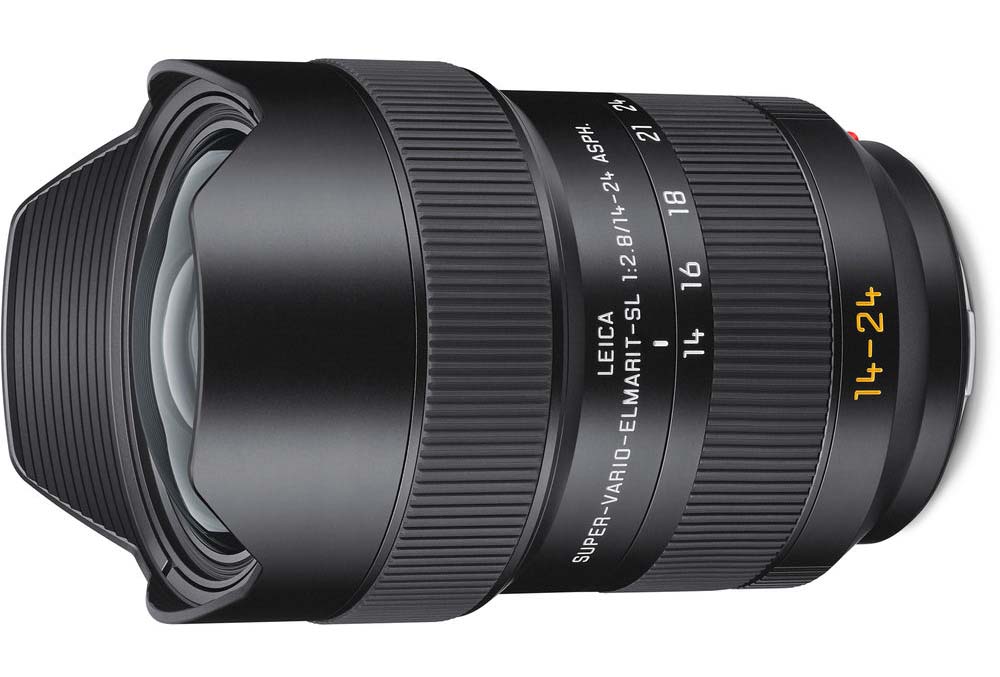
Leica has some great prime lenses, but they’re too expensive for most filmmakers and I won’t recommend them. The zoom lenses are a different matter, though:
Zoom lenses
- Leica Super-Vario-Elmarit-SL 14-24mm f/2.8 ASPH.
- Leica Vario-Elmarit-SL 24-70mm f/2.8 ASPH.
- Leica Vario-Elmarit-SL 70-200mm f/2.8 ASPH.
- Leica APO-Vario-Elmarit-SL 90-280mm f/2.8-4
Due to the linear focus motors on the Panasonic lenses, and the price, I would recommend them over the Leicas.
Sigma
The majority of the Sigma Art (Amazon, B&H) prime range is available for the L-mount:
- Sigma 35mm f/1.2 DG DN Art (Amazon, B&H)
- Sigma 45mm f/2.8 DG DN Contemporary (Amazon, B&H)
- Sigma 14-24mm F2.8 DG DN Art (Amazon, B&H)
- Sigma 85mm f/1.4 DG HSM Art (Amazon, B&H)
- Sigma 50mm f/1.4 DG HSM Art (Amazon, B&H)
- Sigma 35mm f/1.4 DG HSM Art (Amazon, B&H)
- Sigma 20mm f/1.4 DG HSM Art (Amazon, B&H)
- Sigma 24mm f/1.4 DG HSM Art (Amazon, B&H)
- Sigma 135mm f/1.8 DG HSM Art (Amazon, B&H)
- Sigma 28mm f/1.4 DG HSM Art (Amazon, B&H)
- Sigma 40mm f/1.4 DG HSM Art (Amazon, B&H)
- Sigma 105mm f/1.4 DG HSM Art (Amazon, B&H)
Sigma has some decent zoom lenses, too, though I’d take the Panasonic zoom lenses for the weather performance, focus and autofocus properties.
Sirui
Sirui have cinema lenses available for the L-mount, and I’ll talk about them below in the cine lenses section.

Lens adapters
How do you know if a lens can be used or not? Here’s information on each mount, in increasing order of the focal flange distance:
| Mount | Focal Flange Distance in mm |
| Z Nikon Z-mount | 16 |
| C C-Mount | 17.526 |
| EF-M Canon EF-M mount | 18 |
| E Sony E-mount | 18 |
| FZ Sony | 18 |
| MFT Micro Four Thirds mount | 19.25 |
| RF Canon RF-mount | 20 |
| L Leica L-mount | 20 |
| M Leica M mount | 27.8 |
| FT Four Thirds mount | 38.67 |
| FD Canon Manual FD mount | 42 |
| EF Canon EOS EF mount | 44 |
| EF-S Canon EOS EF-S mount | 44 |
| LPL Arri LPL-mount | 44 |
| A Minolta/Sony A-mount | 44.5 |
| K Pentax K-mount | 45.46 |
| F Nikon F-mount | 46.5 |
| R Leica R-mount | 47 |
| PL Arri PL mount | 52 |
Third-party lenses come in their own lens mounts. So you need some sort of adapter that comes between the lens and the camera. This adapter does three things:
- It connects two mounts that naturally don’t fit together, and
- It makes up for the flange focal distance.
- Optional: Provides contacts that allow you to control aperture, zoom, focus, etc., from the camera itself. Not all features are supported.
There’s no glass in the adapter, no lens or optics. It’s just hollow inside.
The L-mount has a flange focal distance of 20mm, so any lens that has a higher flange focal distance than this in the above table can be adapted. This is why you can adapt EF lenses, because the Canon EF mount has a flange focal distance of 44mm.
You can also adapt older Canon FD lenses, Leica M lenses, PL-mount lenses and of course Nikon F-mount lenses and others.
Both Leica and Sigma have released lens adapters and given the choice, I think you should stick with them if your lens falls into that category.
Very important: None of the adapters support continuous autofocus for video. You need native lenses for that.
Which is the best lens adapter for the S1II?
Here’s the list of adapters I recommend for the Panasonic S1II (Amazon, B&H):
| Lens mount | Adapter | Buy |
| Canon EF | Sigma MC-21 | (Amazon, B&H) |
| Leica M | Leica M-Adapter L | (Amazon, B&H) |
| Leica R | Leica R-Adapter L | (Amazon, B&H) |
| Leica S | Leica S-Adapter L | (Amazon, B&H) |
| Nikon F | Novoflex Nikon F to SL Manual | (Amazon, B&H) |
| PL | Wooden Camera PL to L | (Amazon, B&H) |
| For Medium Format | Kipon Baveyes | (Amazon, B&H) |
| Others | Kipon | (Amazon, B&H) |
Native adapters are a bit more expensive, but they give you the best functionality, and will maintain weather-sealing where appropriate.

Recommended cine prime lenses for the Panasonic S1II
There are really great full frame lenses, like the Arri Signature Primes or the Leica Thalia, but these are rental items, hardly available for purchase for us “regular folk”.
More practically, you could either go with Zeiss CP.3 primes or better yet, with Sigma Cine lenses in the PL mount. I prefer the latter, the range is just too much value for money, and it goes up to T1.5!
- Sigma 14mm T2 (Amazon, B&H)
- Sigma 24mm T1.5 (or 20mm, 28mm) (Amazon, B&H)
- Sigma 35mm T1.5 (Amazon, B&H)
- Sigma 50mm T1.5 (Amazon, B&H)
- Sigma 85mm T1.5 (Amazon, B&H)
- Sigma 135mm T2 (Amazon, B&H)
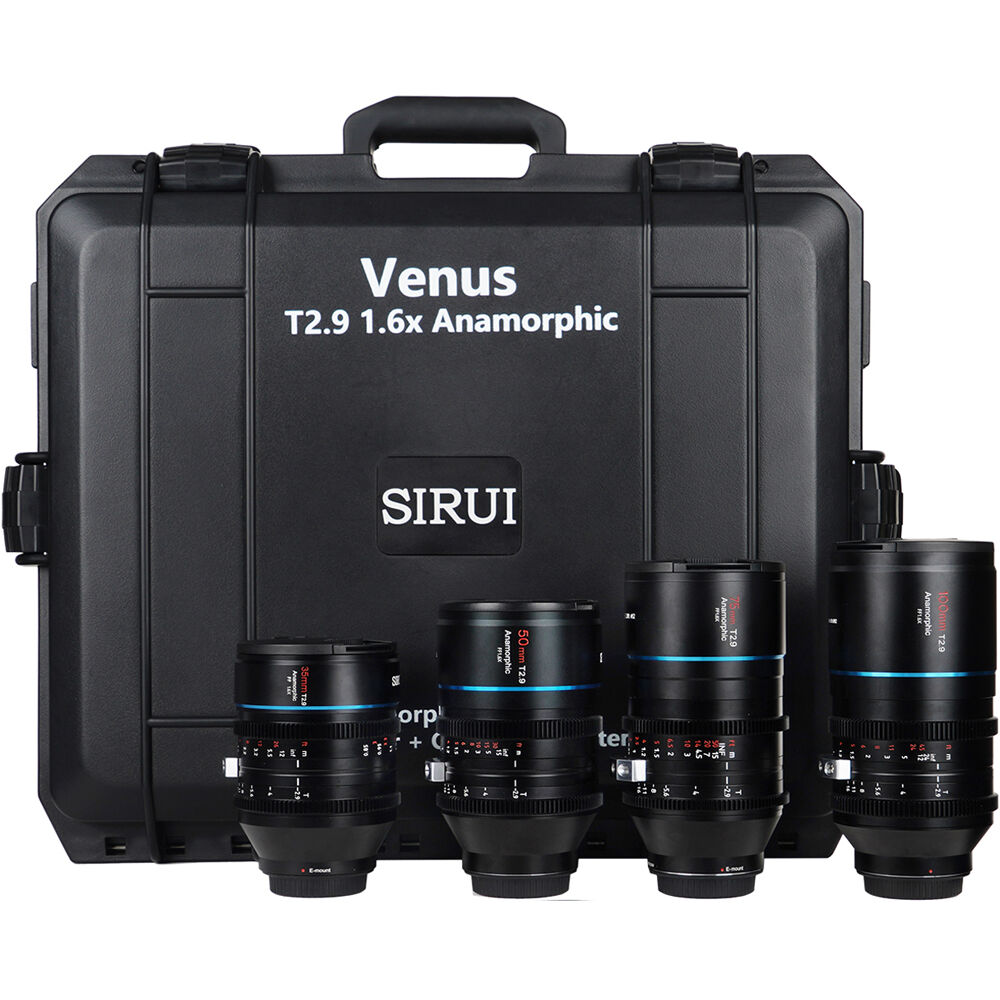
Even though Sirui has cine prime lenses available, I don’t recommend them because they are definitely not better optically and mechanically than Sigma cine lenses. You get what you pay for.
However, if you like to film in anamorphic, you should check out their range of anamorphic prime lenses.
Recommended cine zoom lenses for the Panasonic S1II
Good Full frame zoom lenses are hard to find. These are some good options:
- Mid-range:
- Expensive cinema lenses:
- Low budget options:
That’s it for my list! If you have any suggestions or recommendations please let me know in the comments below.
