

The Blackmagic Design URSA Cine 12K has one feature no other current cinema camera has: a 12K resolution.
However, most productions don’t even want 8K workflows (even if you gave it to them for free), let alone 12K workflows. 12K does have some benefits for sure, and we’ll be going over them later in this article.
The question is, if 12K is ahead of its time, then does the Sony Burano offer the better value proposition today, given Sony’s stranglehold on broadcast and television work?
Let’s pit both these cameras head to head in terms of specifications and see which one offers the better value for filmmakers in the middle tier.

Who are these cinema cameras for, anyway?
In their own words:
Introducing the World’s Most Advanced Digital Film Camera!
Blackmagic Design
The Burano… takes VENICE’s superior image quality and usability but re-imagines it for solo and small team productions…. in many ways it’s our most technically advanced. Expect uncompromising image quality wherever you are, whatever the size of your crew.
Sony
The URSA Cine 12K is an aspirational camera for those who might want to experiment or push the boundaries. 12K can be very useful in a few situations:
- Visual Effects work, where the 12K plates can offer lots of possibilities
- High-quality stills from video, large enough for posters and magazines
- Higher resolution in crop modes. The resolution you get in Super 35mm is 9K
- The ability to zoom into the image more for a 4K finish
- You get at least a third of a stop of DR (at the bottom end) when you go down from 12K for 8K.
I would not say these are non-negligible considerations. The older 12K URSA was a disaster in the market, but the new URSA Cine 12K offers a few important upgrades that can change the outcome this time around.
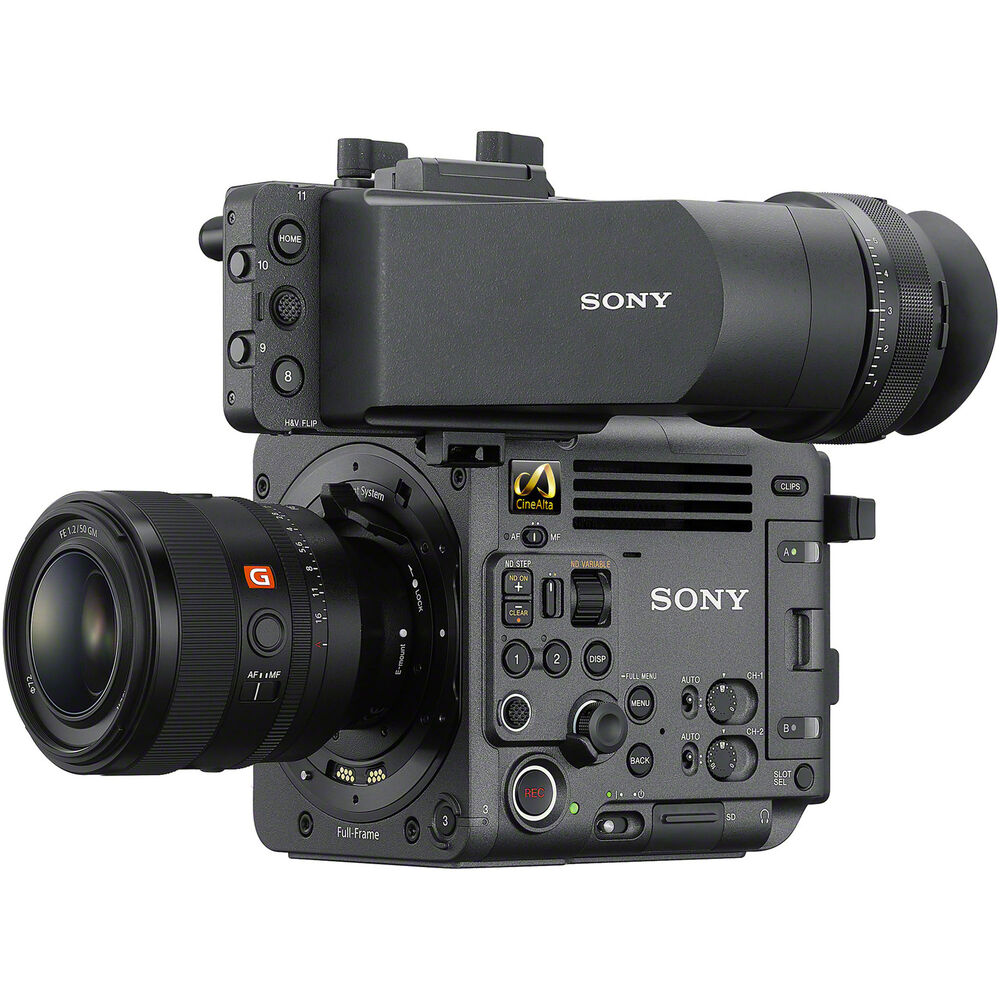
On the other hand, the Sony Burano is no slouch in certain matters. It is the first camera with a PL mount to have IBIS (in-body image stabilization).
The target markets overlap but also have enough differences. That’s what we’re here to find out. What are the differences, and how much do they matter?
Treat this as a fun comparison with currently available information. There will only be one winner. Let’s go.
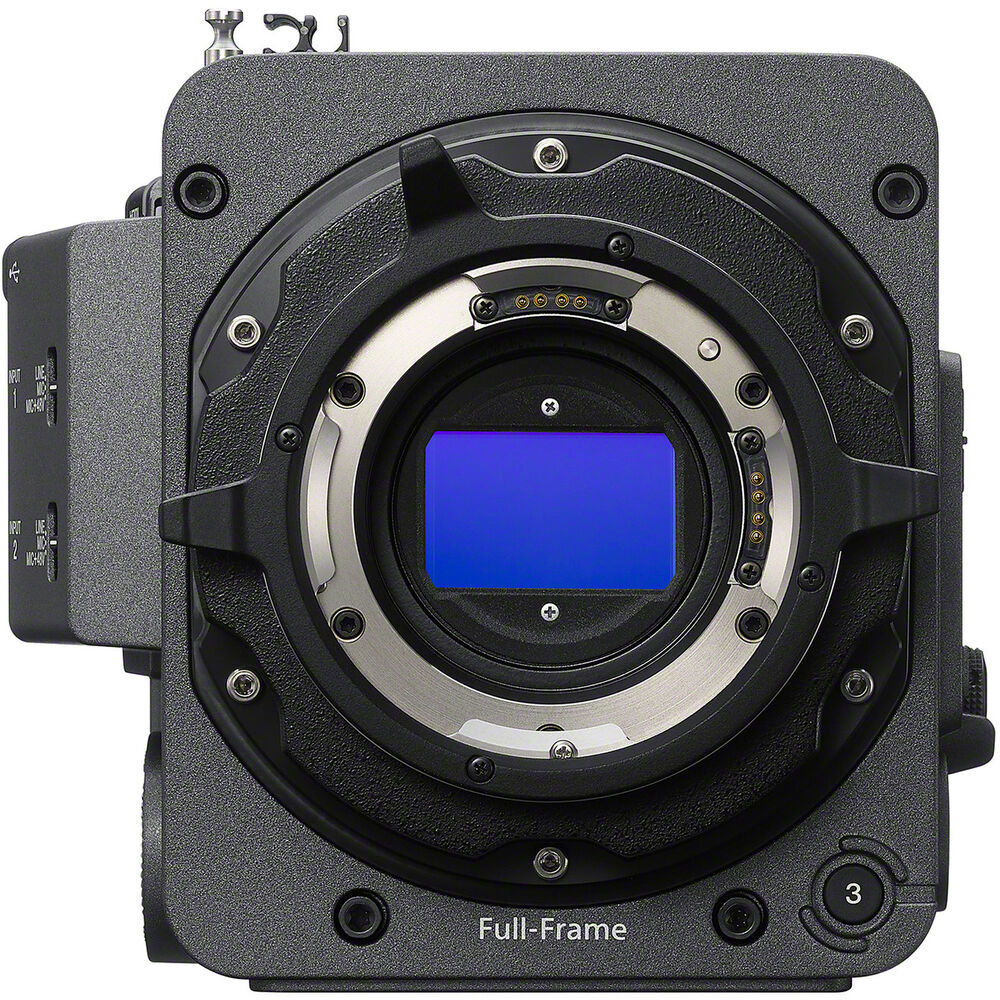
The differences in sensor tech
We’ll start with the price and sensor sizes:
| Camera | Price (body only)* | Sensor Size | Color Filter |
|---|---|---|---|
| URSA Cine 12K | $14,995 | 35.64 x 23.32mm | RGBW |
| Sony Burano | $25,000 | 35.9 x 24.0 mm | Bayer |
Both cameras are full frame cameras. The sensor sizes don’t differ, but the color filter tech does.
What is the RGBW color filter array?
The RGBW color filter array, compared to the traditional Bayer array, features a new pixel layout that includes white pixels (The “W” in RGBW). The inclusion of White filters allow the photodiode to respond to all colors of light.
These white pixels are also more sensitive to light and can increase the sensor’s sensitivity by 1.7 times more than the typical bayer color filter. In theory it preserves the original colors without distortion and enhances the camera’s brightness.
Without getting our hands on both cameras it’s impossible to know for sure how this translates into the real world. On paper, though, the Blackmagic Design URSA Cine 12K does have 16 stops of dynamic range.
Let’s get to comparing resolution, frame rates and low light performance.
Comparison of resolution, dynamic range and rolling shutter
Here’s how the camera sensors compare:
| Camera | Resolution | Rolling Shutter | Dynamic Range | Dual Native ISO |
| URSA Cine 12K | 12,288 x 8040 | 12ms in 12K | 16 | Not mentioned |
| Sony Burano | 8632 x 4856 | 3ms in 8.6K | 16 | 800 | 3200 |
The native ISO for the Burano is ISO 800 and 3200. The URSA Cine 12K doesn’t have an official ISO spec listed on their website, and I would consider this a red flag.
The dynamic range is similar on paper. The sensor of the Sony Venice is tried and tested, and has a beautiful look on its own. Even though Blackmagic Design’s color science is good to look at, this new RGBW sensor isn’t tested in the real world. One doesn’t know whether it will be plagued with the issues typically common with Blackmagic Design sensors.
The other major issue is Rolling Shutter performance. This is where the price difference starts to make sense. The sensor of the Sony Venice has an insane rolling shutter performance. To compare, the Arri Alexa LF is about 7ms.
The rolling shutter performance improves as the resolution drops, but then you’re in windowed mode and not taking advantage of the full sensor.
Clearly the Sony Burano is ahead in this department.
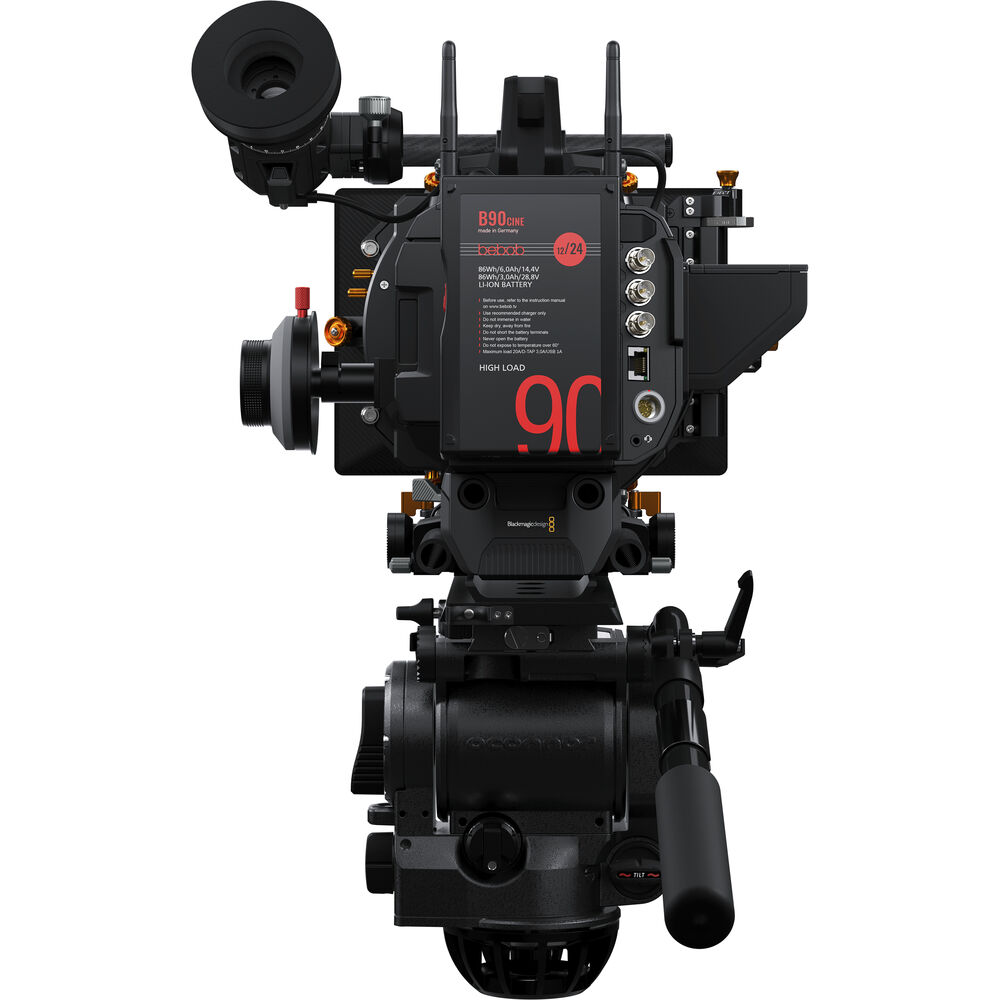
What about frame rates?
| Max Frame Rate | URSA Cine 12K | Crop Factor^ | Sony Burano | Crop Factor |
| 12K | 80 fps (120 fps @ 2.40:1) | 1.0 | N/A | |
| 9K/8.6K | 100 fps | 1.3 | 30 fps | 1.0 |
| 8K | 144 fps (224 fps @ 2.40:1) | 1.5 | N/A | N/A |
| 6K | N/A | N/A | 60 fps | 1.07 |
| 5.8K | N/A | N/A | 60 fps | 1.5 |
| 4K | Information not provided | 3.0 | 120 fps | 2.1 |
It’s quite clear. The Blackmagic Design URSA Cine 12K wipes the floor with the Burano when it comes to frame rates.
When you go to lower resolutions, the Sony Burano does offer 6K in full frame, but that’s small consolation.
The important distinction here is the added reach of a 12K sensor. E.g., if you’re filming wildlife with a 600mm lens, this is how it translates in practical situations:
| Camera | Focal length in 8K | Focal length in 12K |
| URSA Cine 12K | 900mm | 600mm |
| Sony Burano | 600mm | N/A |
On paper, the URSA Cine 12K has the upper hand for wildlife and sports filmmakers. But, the question is: Will the camera body and ergonomics be good enough for the job? We’ll see.
What about image quality?
I haven’t tested both cameras (I’ve tested the Sony Venice), so we’ll make do with the official videos for both cameras.
First, the URSA Cine 12K:
Now, the Burano:
The URSA Cine 12K shows typical safe Blackmagic Design footage, and the skin tones and colors don’t look like a high-end cinema camera. This is especially true when you compare it to the footage from the Burano. The skin tones, highlight detail and overall detail (this last one is not easy to judge from the videos provided) is just clearly better.
It is important to test the cameras to know for sure about image quality. However, if I were to shoot a movie, I’d pick the Sony Burano based on these videos. The Venice sensor is in a different league, with better low light performance and details.
Now let’s look at the other features of each camera.
Lens mounts
Here are the available lens mounts:
| Camera | Lens mounts |
| URSA Cine 12K | Arri LPL, Arri PL, Canon EF |
| Sony Burano | Arri PL, Sony E |
The URSA Cine 12K has better options, unless you need autofocus. More on that below.
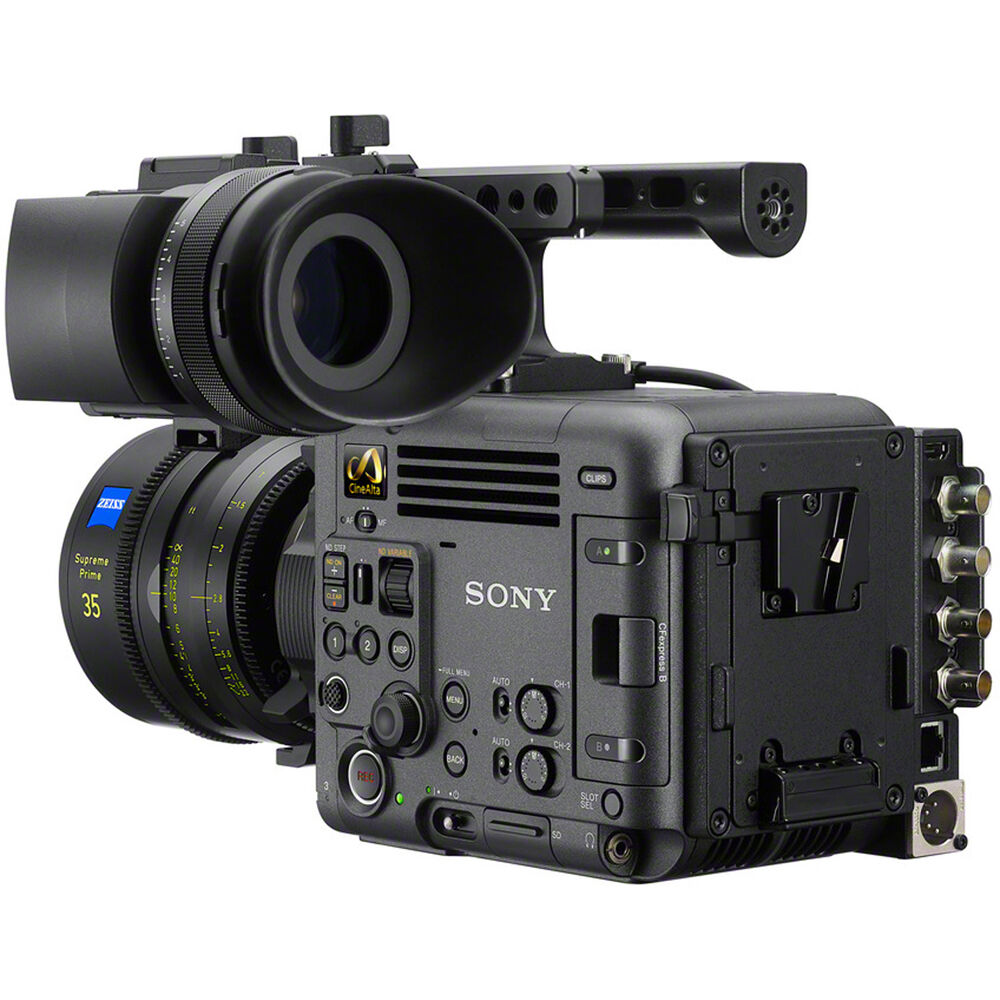
What you get externally
| Camera | Video Ports |
| URSA Cine 12K | 2x 12G-SDI |
| Sony Burano | 1x 12G-SDI | 1x 3G-SDI | HDMI Type A |
It would be odd for anyone to be recording externally with these cameras in greater than 4K resolution. For monitoring options, even though the Burano has HDMI, I’d say it’s a wash in this price bracket.
ND Filters and Autofocus
A look at the various filters and features these cameras have:
| Camera | Filters | Autofocus* |
| URSA Cine 12K | IR ND filter: 0.6, 1.2, 1.8 (2, 4, 6) | Yes |
| Sony Burano | Electronic ND filter: 0.6 to 2.1 (2 to 7) | Contrast and Phase Detection |
Here the Burano pulls ahead big time. Not only does it have a bigger range of ND filter (and a continuous range at that), the autofocus must be a world first in this price bracket. In Sony’s own words:
Our onboard AI processing unit recognises not only eye position but also accurately senses human torso and head positions. Subject Recognition AF automatically draws a frame around people’s faces when they are detected. Human pose estimation technology recognises body and head position, so you can even track a subject facing away from the camera or wearing a mask.
Sony
I’ve played around with the Burano last year and the autofocus is definitely functional. One wouldn’t (and shouldn’t) completely rely on autofocus for critical tasks yet, but it is one of the USPs of this camera, especially for broadcast, sports and wildlife work.
Audio
Let’s have a look at their audio specs:
| Camera | Connection | Specs | Sync |
| URSA Cine 12K | 2x XLR | 24-bit 48 kHz | Timecode |
| Sony Burano | 2x XLR | 24-bit 48 kHz | Genlock |
The Sony Burano has Genlock. The URSA Cine 12K doesn’t. As far as preamps are concerned, going by experience, I’d depend on the Sony’s over Blackmagic Design’s. However, I’ll ignore preamps because I haven’t tested it yet.
Ergonomics and Monitoring
I’m not sure about the weather-sealing abilities of both bodies. They’re both composite material with no water or dust proofing.
The Burano does have a fan internally that is sealed from external elements.
Here are the weight and size details:
| Camera | Weight (Body Only) | Volume (In cubic inches) |
| URSA Cine 12K | 3.96 kg | 396 |
| Sony Burano | 2.4 kg | 279 |
The Blackmagic Design URSA Cine 12K is larger and heavier by a considerable margin. You’ll need a bigger drone and gimbal.
If anybody’s into serious aerial cinematography, I doubt the size will be a deterrent considering the 12K resolution!
Now let’s look at the main interfaces these cameras have:
| Port | URSA Cine 12K | Sony Burano |
| Touchscreen | 5″ LCD, 1500 nits | 3.5″ LCD |
| EVF | Blackmagic URSA Cine EVF ($1,695) via USB-C | Viewfinder Loupe provided |
| Wi-Fi and Ethernet | 10G Ethernet, Wi-Fi | 1G Ethernet, Wi-Fi (ac) |
| Control | 7-pin LEMO and 3-pin Fischer | 2.5 mm, 3-pole sub-mini type |
| USB | 2x USB-C | 1x USB-C |
This isn’t an extensive list, though both cameras cover all the important features well. You could use cheaper EVFs with the URSA Cine 12K, or a better EVF via SDI for the Burano.
I’d give a slight edge here to the URSA Cine 12K, for its larger LCD that is better in low light (The Burano LCD is not great, I’ve seen it) and better Ethernet.
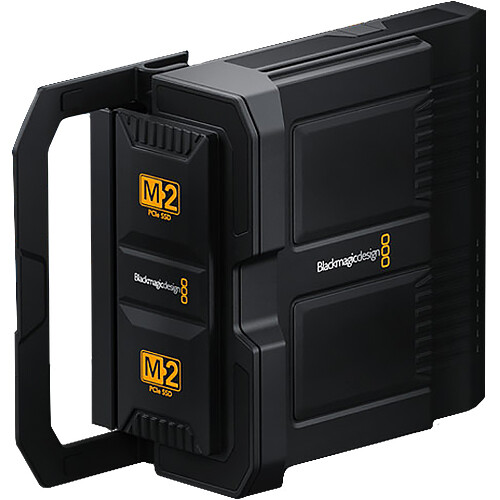
Codecs, Media and Batteries
Codecs are one of the great differentiating factors. Here are the codecs you can record to:
| Camera | Internal RAW | Bit depth | Max. RAW Data Rate 24p | Max. RAW Data Rate in 8K 24p |
| URSA Cine 12K | BRAW | 12-bit | 1,194 MB/s | 533 MB/s** |
| Sony Burano | X-OCN LT* | 16-bit | 195 MB/s | 195 MB/s |
**At 8:1 you get 200 MB/s, which is comparable to the Burano’s data rate.
What is X-OCN LT?
X-OCN stands for Extended Tonal Range – Original Camera Negative. It is Sony’s original compressed RAW format, Constant Bit Rate, designed for 16-bit RAW.
It comes in three variants, XT, ST (good enough for features) and LT. According to Sony, the X-OCN LT codec is made for the following projects:
- Indie features
- Episodic television
- Commercials
- Documentaries
- Live Events
Even though there is a caveat, and nothing stops you from using the Burano on a feature film, the intention is pretty clear. This is how Sony differentiates the Burano from the Venice. I kind of think it’s a low blow.
Let’s look at the other codec options available:
| Camera | Internal Proxy | Other Codecs |
| URSA Cine 12K | H.264 1080p, 8-bit 4:2:0 | None |
| Sony Burano | XAVC | 10-bit XAVC H/I HQ/SQ |
Going by codecs alone, I’d say the Blackmagic Design URSA Cine 12K definitely has better RAW and compression options, though the Burano has XAVC-H and XAVC-I for those who don’t want RAW. It’s strange that option doesn’t exist with the URSA Cine 12K. It’s BRAW or nothing.
Also, the X-OCN format is supported by more software than BRAW.
What about the price of media cards?
| Camera | Media Type | Price | Capacity | Price per GB | Price for 4 hours of 8K** |
| URSA Cine 12K | Blackmagic Media Module (M.2) | $1,695 | 8 TB | $0.20 | $563 |
| Sony Burano | CFexpress Type B VPG400 only | $370 | 512 GB* | $0.72 | $1,975 |
**8:1 BRAW to make it fair.
The price of the Blackmagic Media Module is insanely low, and I hope it works perfectly in the field. The module does have heatsinks and seems to be designed well, though this is something we’ll only know after a year or two of real-world use.
What about batteries and power?
| Camera | Mount | Power Draw (Body only) |
| URSA Cine 12K | B-Mount | Not revealed |
| Sony Burano | V-mount | 50W-66W |
We can’t calculate battery life without knowing the power draw. However, I think the URSA Cine 12K will be a more power hungry camera for sure. Blackmagic Design cameras have always been power hungry.
Also, B-mount batteries are bound to be more expensive, while V-mount batteries are cheap.
| Camera | Battery cost* | Watt hours | Cost of 4 batteries |
| URSA Cine 12K | $489 | 98 | $1,956 |
| Sony Burano | $225 | 98 | $900 |
Both cameras have DC input, but the Burano does not have any power outputs. The URSA Cine 12K has one 7-pin Lemo, one 3-pin Fischer and the B-Mount battery plate has a 2-pin Lemo +12V regulated output from camera.
Even though B-mount batteries are more expensive, I expect the prices to drop year-on-year, and the external power output options are really useful.
Which is cheaper to own?
Let’s add up the costs:
| Item | URSA Cine 12K | Sony Burano |
|---|---|---|
| Body | $14,995 | $25,000 |
| Media | $5,288 | $17,014 |
| Blackmagic Design Media Dock | $1,995 | $50* |
| Batteries | $1,956 | $900 |
| Total Cost | $24,234 | $42,964 |
The cost is about 1.77 times more for the Burano, but is it enough value?
Let’s recap:
| Feature | Winner |
| Sensor, color and low light | Sony Burano |
| Dynamic Range | Sony Burano |
| ISO Range | Sony Burano |
| Rolling Shutter | Sony Burano |
| Built-in ND filters | Sony Burano |
| Frame Rates | URSA Cine 12K |
| Autofocus | Sony Burano |
| Stabilization | Sony Burano |
| Codecs | Sony Burano |
| Genlock/Timecode | Sony Burano |
| SDI/HDMI ports | Tie |
| Lenses and Mounts | URSA Cine 12K |
| Media | Sony Burano |
| Ergonomics | Tie |
| Weather Sealing | Tie |
| Batteries | Tie |
| Power Outputs | URSA Cine 12K |
Now we’ll let the cameras present their case for themselves:
| Camera | Major Pros | Major Cons |
| URSA Cine 12K | 12K, HFR, multiple lens mounts, power outputs, additional lens mounts in the kit, Davinci Resolve Studio, 1500 nits LCD, more compression rates | Weight and size, Media ingest options, low light performance (estimated) |
| Sony Burano | Dynamic Range, worldwide service, repairs, availability and support, Smaller media and file sizes, more codecs, IBIS, Autofocus, Genlock | Price, no X-OCN ST, frame rates |
I think I’ve made my decision.

Verdict
I’d pick the following two cameras in this way:
| Project | Camera | Major Reasons |
| Feature films | Sony Burano | The Venice colors and dynamic range and the lower data rates are more than enough for feature films. |
| Documentaries | Sony Burano | Better codecs and broadcast features make this a no-brainer. |
| Music Videos | URSA Cine 12K | High Frame rates. Cheaper post production at lower compression settings. |
| Wildlife | Tie | 12K gives you more telephoto throw, but 8K isn’t bad either, and the Burano has IBIS and AF. I don’t think either camera is made for tough environments. |
On the whole, the Sony Burano wins. Yes, the cost is about twice more, but any professional can do more projects with this camera and earn a lot more over a 3-5 year period.
And 12K? It’s not something most normal projects require. I don’t think the higher resolution balances a poorer dynamic range (based on the early videos), low light ability and highlight roll-off.
What do you think?

The first problem with this article is the rolling shutter “problem” mentioned above. The Burano rolling shutter is huge, almost 19ms. The second problem is that you mention a crop factor when using smaller resolution and one of the greatest things announced about the URSA Cine 12k is that you can record full frame even at 4K.
Phah! Completly false readout speed of the burano. Are you kidding me? It’s main drawback is the slow readout speed of 17+ms so it gets completely obliterated by the blackmagic 12k cine.
I had based the readout speed on the Venice 2, which is what I was told at Broadcast India. Unfortunately, the readout speeds, and hence rolling shutter, is not good.
Still, that wouldn’t make it worse in this comparison.