

Think about the most visually cinematic moments of film, excluding stunts and visual effects. When I say ‘cinematic’, I mean something I would prefer to watch in cinemas.
Chances are, you’ve seen at least one film by Alfred Hitchcock, Tim Burton, Ridley Scott, David Fincher, Steven Spielberg, Christopher Nolan, Orson Welles, etc., to name a few. What they all have in common is, they have been inspired by a film movement called German Expressionism.
German Expressionism impacted many art forms, but film was the one that it impacted the most and continues to do so even today.

But what exactly was German Expressionism? How did it come into existence and is it really relevant today? That’s what I wanted to find out for myself.
So, what did I find? I’ve found German Expressionism is still widely in use today. I believe knowing its origins and intricacies will help me become a better filmmaker.
I share my findings with you hoping it might help you, too.
What is an art movement?
An art movement is a tendency or style in art with a specific common philosophy or goal, followed by a group of artists during a specific period of time, (usually a few months, years or decades) or, at least, with the heyday of the movement defined within a number of years.
Art movements were especially important in modern art, when each consecutive movement was considered a new avant-garde movement.
Examples of prominent art movements are Renaissance, Romanticism, Impressionism and Cubism among others.
Wikipedia
What is German Expressionism?
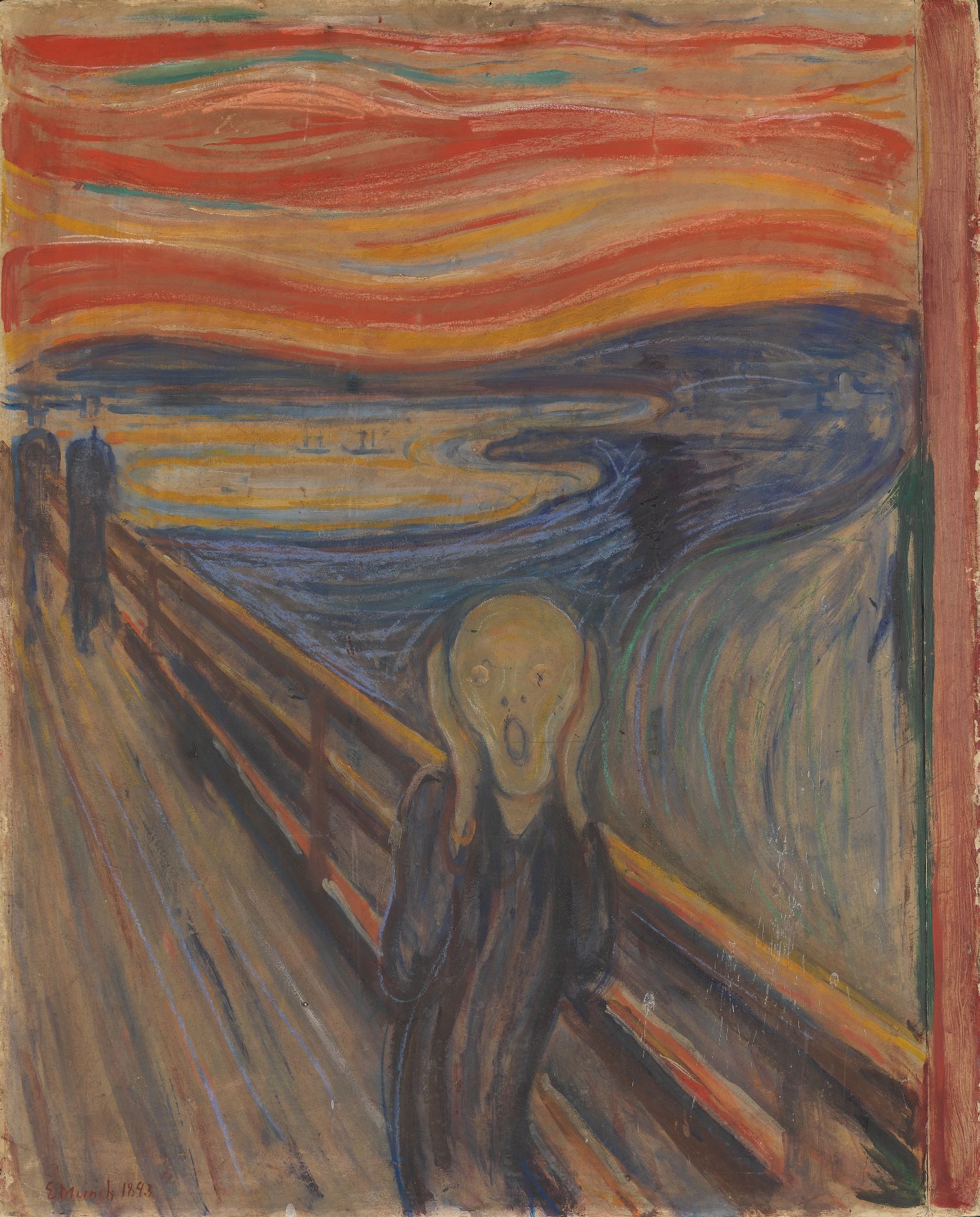
Expressionism as an art movement originated in Germany around the beginning of the 20th century. It began with paintings, something that looked like this:

Every major art movement originated as a reaction to what was happening in the world. At the very least, art movements sought to break from the trends of that period.
Expressionism can be traced back to be born out as a reaction against Positivism, Naturalism and Impressionism. All was not hunky dory in Weimar Germany at that time, and Expressionism was just a way to address that harsh reality.
How do you define German Expressionism?
A German Expressionist painting can be loosely defined as a subjective interpretation of the artist’s societal and mental condition (with maybe a certain level of ‘angst’).
German Expressionists tended to distort shapes radically for emotional effect in an attempt to evoke moods and ideas. The ‘self’ and how it is affected by reality, came to the forefront as subjects in art.
Importance was not given to reproduce an aesthetically pleasing impression of the subject but to represent vivid emotional reactions through powerful colors and dynamic compositions.
German Expressionism influenced other art forms – music, theater, sculpture, and of course, cinema.
German Expressionist Cinema
German Expressionist Cinema is characterized by the use of visual distortions and twisted shapes in the set design, hyper expressive performances along with jarring and contrasting lighting to represent the inner complex psychological state of the individuals and their emotions.
It rejected (though not fully or as extremely as the paintings) realism and aesthetic surface appearances.

What is a Film Movement?
Just like any art form, film is a constantly evolving medium. A film movement is a period where a group of filmmakers try and do new and exciting things with their craft, which is usually different from what was happening around the globe at that time, under a relatively unified creative vision and aesthetic similarities and which left a lasting impact on upcoming filmmakers and audiences.
Some examples of popular film movements are German Expressionism, French New Wave, Dogme 95, Italian Neo Realism and the Soviet Montage.
The context of German Expressionist Cinema
Any movement in art is a reaction to the state of a given set of people at that specific time. Artists are people first, who feel things that the society is feeling as a whole and then go on to express their own thoughts about it in the medium of their choosing.
So, what was the condition in Germany during these times that led to a movement which was as engulfed in darkness and the feeling of disillusionment as the German Expressionist Cinema?
To know about the origins of this movement, we have to travel back in time to Germany in 1916. The government decided to ban all the foreign films to be showcased in the country. This led to an influx of domestic films being made and the filmmakers there had the freedom to experiment with the medium as there was no competition to their films from any other market.
Germany was getting isolated from the rest of the world due to World War I and the country was subjected a major economic downfall. The country was going through a horrible crisis, as they were deemed responsible for all the fatalities of war and were under a contract to provide the United Kingdom and other winners of the war with provisions and supplies.
This led to a condition called hyperinflation in the newly formed Weimar Republic. A loaf of bread which costed around 250 marks in January 1922 had increased to cost around 200, 000 million marks in November 1922.

The nightmarish economic and social life had begun to take its toll on people. There was this idea of an invisible ‘demon’ that was sucking the life out of people and which refused to let them live a peaceful life. This led the artists of the time to react and revolt in their own ways, leading to Expressionism.
As the value of money was dipping sharply and the number of films getting made were on the rise due to the ban on international cinema, people started flocking to the movie theaters. There was no security for anyone regarding their food and homes, so they were spending freely on movies and the idea of Expressionism, which was showcasing the actual blighted condition of the society at that time was finding resonance with the audience. All these conditions led to the rise of German Expressionist Cinema.
To get a detailed insight on this movement and other aspects of Film History, you can refer to the following book –
Characteristics of German Expressionist Cinema
Any film movement is characterized by certain conventions that the filmmakers collectively follow which signifies their unified creative vision.
These are a few remarkable and unique characteristics of the German Expressionist Movement:

Distorted Set Design
“The film image must become graphic art.”
– Hermann Warm
Set Designer of Dr. Caligari and other Expressionistic films.
The set design or the mis-en-scene was one of the primary distinguishing factors of the German Expressionist Cinema. The directors and designers played around with their sets and made visually distorted shapes a hallmark of films produced during this movement, which were inspired by Expressionist Architecture. They had no connection to reality but were instead supposed to portray the emotional reality of what the place represents and how it makes one feel.

Uncanny Compositions
The German Expressionistic films gave a lot of value to the power of individual shots. The films were not about pushing the narrative forward but the narrative was interspersed with unique, emotionally affecting and eye-catching compositions, which formed the crux of the story.
The Dutch Angle, a type of camera camera shot which involves setting the camera at an angle so that the shot is composed with vertical lines at an angle to the side of the frame, or so that the horizon line of the shot is not parallel with the bottom of the frame, was also used extensively in this era. It’s primary use is to create a sense of uneasiness and disorientation in the viewers, which the Expressionists wanted to achieve.

Exaggerated Performances
The acting and performances in these films was not supposed to be realistic but rather in coherence with the sets and compositions. Also, to portray a specific feeling as explicitly as possible, the actors would work in tandem with the mis-en-scene to create a dance like movement which puts the point of the scene forward.

Use of Hard Lights and Shadows
Probably the one thing that left the most impact on the films of today, the harsh lights and the shadows that it produced were also a gift of the German Expressionist movement. It could define certain moods and emotions, while also helping to hide parts of set which don’t necessarily have to be in frame, thus cutting the overall costs.
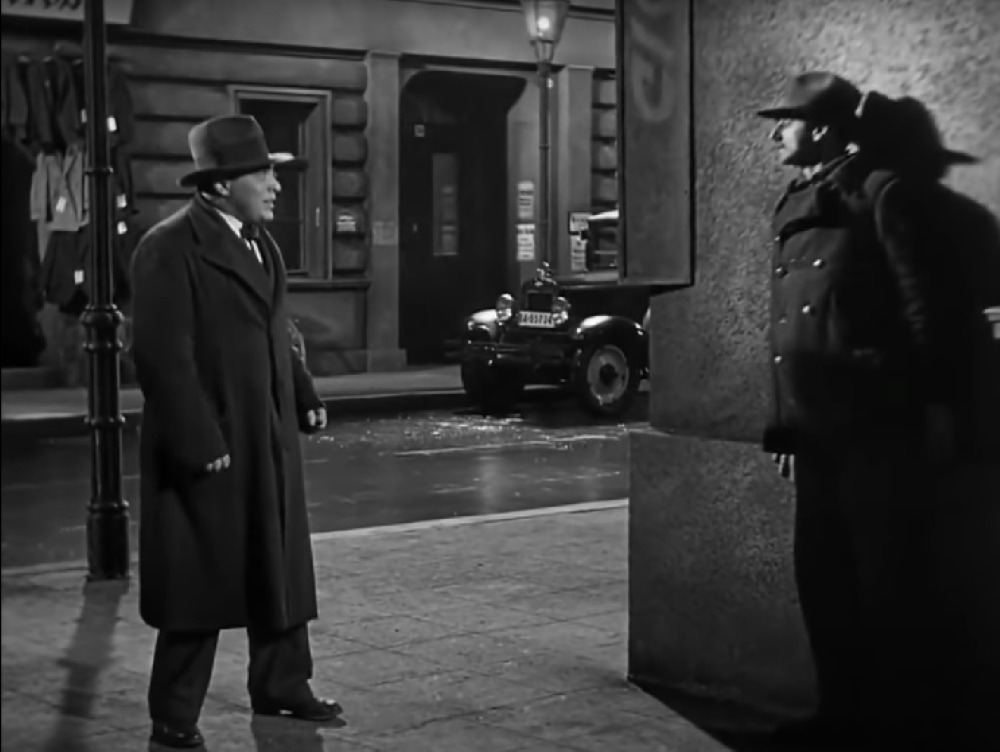
This type of lighting is also called chiaroscuro lighting.
Chiaroscuro Lighting
Chiaroscuro comes from two words, ‘Chiaro’ meaning light and ‘Oscuro’ meaning dark. It refers to the interplay of light and shadow by the use of strong, bold contrasts which usually affect the whole composition. It was popularized among painters by Leonardo DaVinci, Caravaggio and Rembrandt.
In films, it refers to the low and high-contrast lighting, creating light and dark areas in shots. It gives a three-dimensional quality to the images and is used to create suspense as well as create dramatic, shadowy mood. It is the staple lighting for the film noir and the horror genre.
Some films that use this effect are M (Fritz Lang), Citizen Kane (Orson Welles), The Godfather (Francis Ford Coppola) and Barry Lyndon (Stanley Kubrick).

Editing
As the main feature of German Expressionist films was the mis-en-scene, the camerawork and editing was fairly simple. Juxtaposition and superimposition were used extensively and the pacing of the films was also slower than other films of that time. It was for the audience to have the time to reflect on the distinctive visual compositions of the Expressionist style.
Camera angles were also relatively normal, expect when they were used to create even more striking images in juxtaposition with the decor and the actors.
Narrative
As the worlds of these Expressionistic films were absurd and extremely dynamic, they mostly used a narrative tool to justify it like it being a story of the past. Like The Cabinet Of Dr. Caligari is told through the perspective of a madman, Metropolis is set in the future and Nosferatu is told as tale.
Popular Films of German Expressionistic Cinema

The Cabinet of Dr. Caligari
Film by Robert Wiene (1920)
The first major film to be completely in the Expressionistic style, this is the Bible for this style of filmmaking. Robert Wiene in his story about an insane hypnotist who uses a somnambulist (Person with a kind of sleeping disorder, where there is a combined state of sleeping and wakefulness) to commit murders presents to us the quintessential work of German Expressionist cinema.
The film features a dark and twisted visual style, with sharp-pointed forms, oblique and curving lines, structures and landscapes that lean and twist in unusual angles, and shadows and streaks of light painted directly onto the sets.

Metropolis
Directed by Fritz Lang (1927)
Another film which is a hallmark of this period and is also included in most of the lists which concern the greatest films of all time. This pioneering science fiction film is by the master director Fritz Lang, who in his later years moved to America and gave Hollywood all the knowledge about Expressionist cinematic techniques, which influences the film noir and horror genre till date.
Metropolis is set in a futuristic urban dystopia and follows the attempts of Freder, the wealthy son of the city master, and Maria, a saintly figure to the workers, to overcome the vast gulf separating the classes in their city and bring the workers together with Joh Fredersen, the city master.

Nosferatu: The Symphony of Horror
Directed by F.W. Murnau (1922)
A classic horror film, something which can still give you chills till this date, this is a great example of German Expressionist techniques being used to its most optimum level, to create an air of horror and terror. Something which these techniques are still used for.
It is a reimagining of the tale of Dracula, where Count Orlok, a vampire who preys on the wife of his estate agent, brings the plague to their town.

The Golem: How He Came into the World
Directed by Paul Wegener and Carl Boese (1920).
Another leading example of the early German Expressionist Cinema, this film was the part of a trilogy that Paul Wegener made featuring the golem.
It tells a story of Jewish mysticism and folklore about the golem, which is a creature made from earth or clay to protect Jews from persecution.
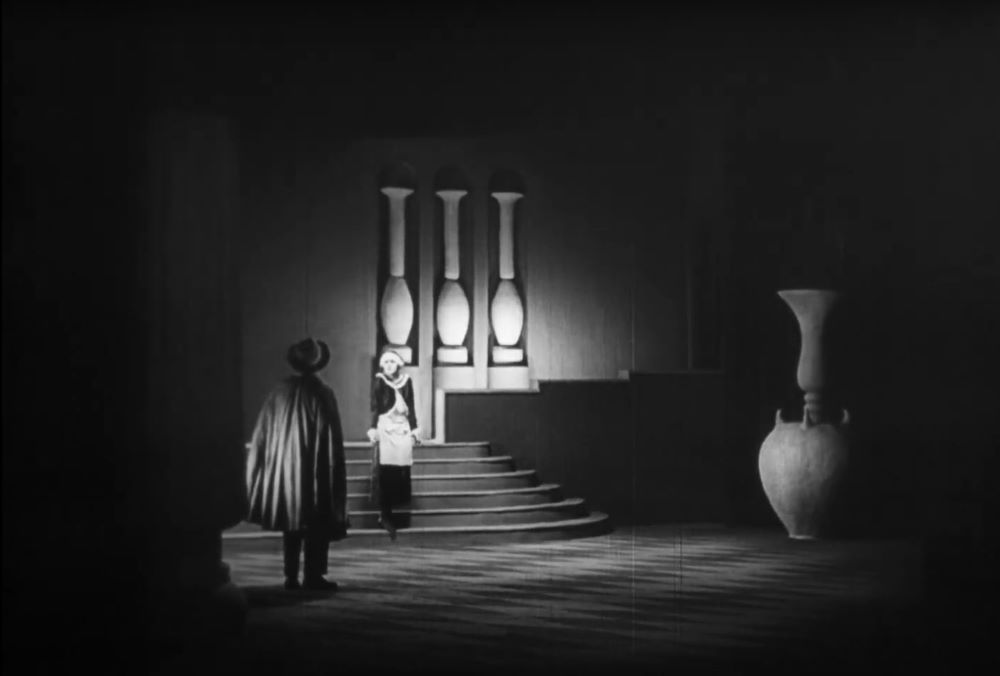
The Hands of Orlac
Directed by Robert Wiene (1924).
Robert Wiene was a master in using Expressionistic techniques optimally, so as to make every genre work for him in this style, a feat few have achieved. This film has elements of both horror and science fiction.
It is a silent body horror film based on the book Les Mains d’Orlac by Maurice Renard. It tells the story of a concert pianist whose hands are brutally severed in an accident, but then transplanted to another man’s body.
Influence and Legacy
All these developments and fresh thoughts placed German cinema far ahead than Hollywood and other major film industries of that time. But in Nazi occupied Germany, all these filmmakers like Fritz Lang and his contemporaries were deemed ‘degenerate’. This prompted the whole lot of them to flea to America and they started making films there. That was the starting point for the widespread reach of German Expressionism in films.

The genre called ‘Film Noir’, of stylish Hollywood crime dramas, was one of the most popular genres of films in the 1940’s and 1950’s. The low-key black and white visual style and aesthetic of these films were a direct descendant of German Expressionistic cinema.

Another genre which was deeply affected and still works on the principle of German Expressionism is horror. When we study Expressionism now there’s a feeling that all its main characteristics like the absurd sets, the hard lighting and shadow play, the makeup, costumes and performances of actors; everything was built for this genre. So, German Expressionism was responsible for giving one of the most profitable genres of cinema its grammar, which is more or less still being followed today.
Recent Impact of German Expressionism
A lot of acclaimed directors in recent years have made films which are a homage to the Expressionistic style or follow their conventions to some degree. One can also say that almost all films nowadays have some form of Expressionistic style or themes associated with them, in the sense that the idea of using your mis-en-scene to express a feeling would not sound really new to anyone now.
But some films which have actually been very Expressionistic in their treatment and style are as follows –
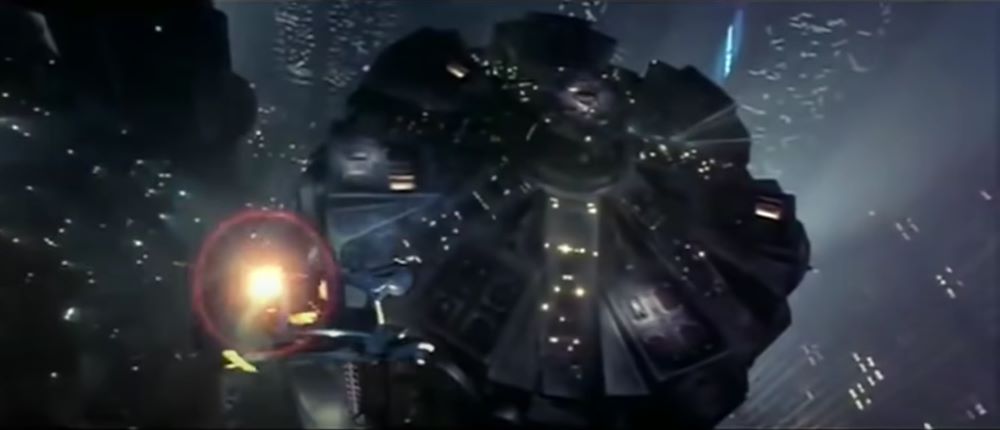
This mega blockbuster film by Ridley Scott is inspired by Metropolis and is a homage to the film and to Expressionism. The film had almost all the elements of German Expressionistic cinema including chiaroscuro lighting and distorted sets.
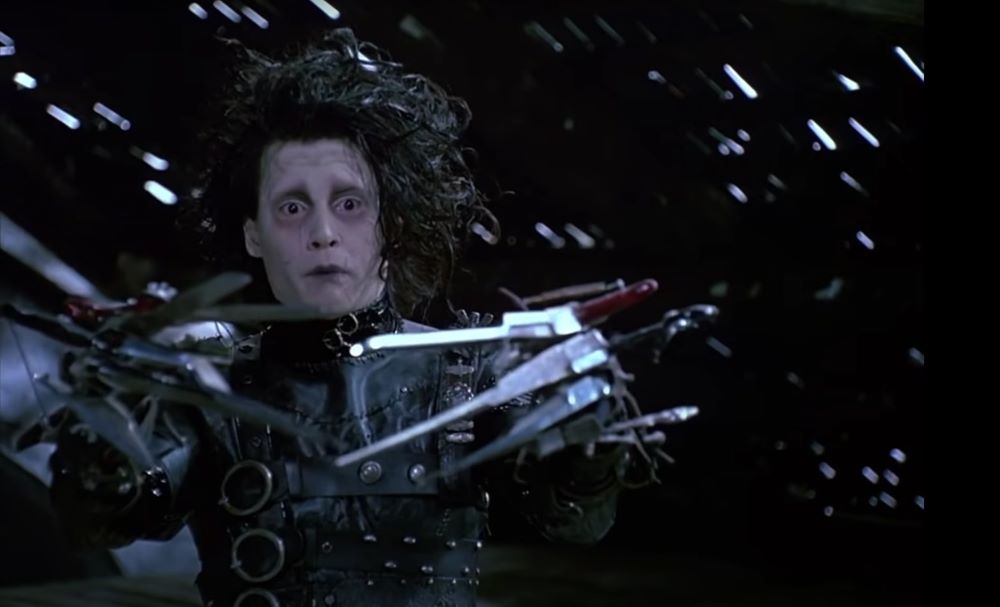
We all know that Tim Burton has a style of his own. But after going through this article we can be very sure that German Expressionism is one of his major influences. Edward Scissorhands, Sweeny Todd, Batman Returns or the very recent Wednesday all borrow elements from German Expressionism.
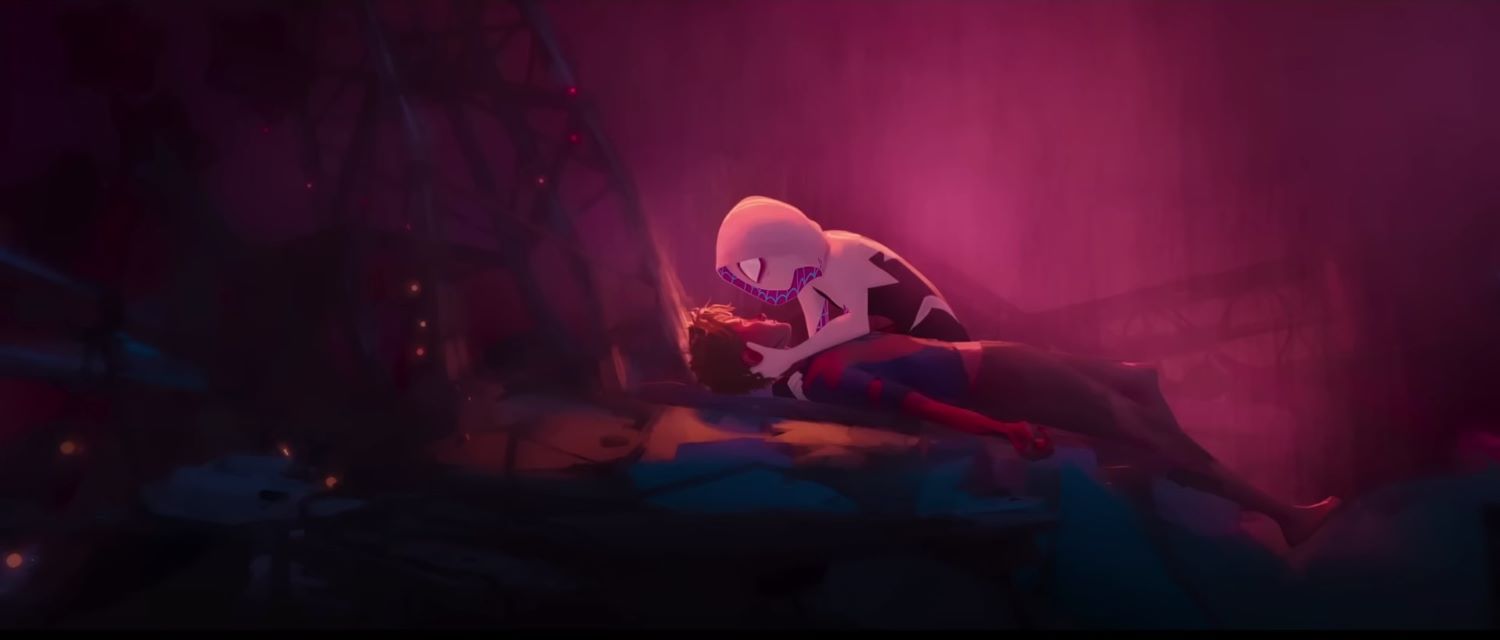
Although animation has always been an Expressionistic genre, the new Spider Man movie, Across the Spiderverse took it a step ahead while changing the whole lighting around the character Gwen whenever her mood shifted. It was a true example of Expressionistic technique been used. Japanese anime also uses a lot of Expressionistic techniques to better emote their fantastical stories.
Thus, we can now come back from Germany. Or, you can stay there if you love it. Hope you had a slight bump in your film knowledge through this article and that you will apply some of these techniques to your work as and when required.
Do check this space for out for more information on your favorite film subjects and keep making films. Until next time!
