
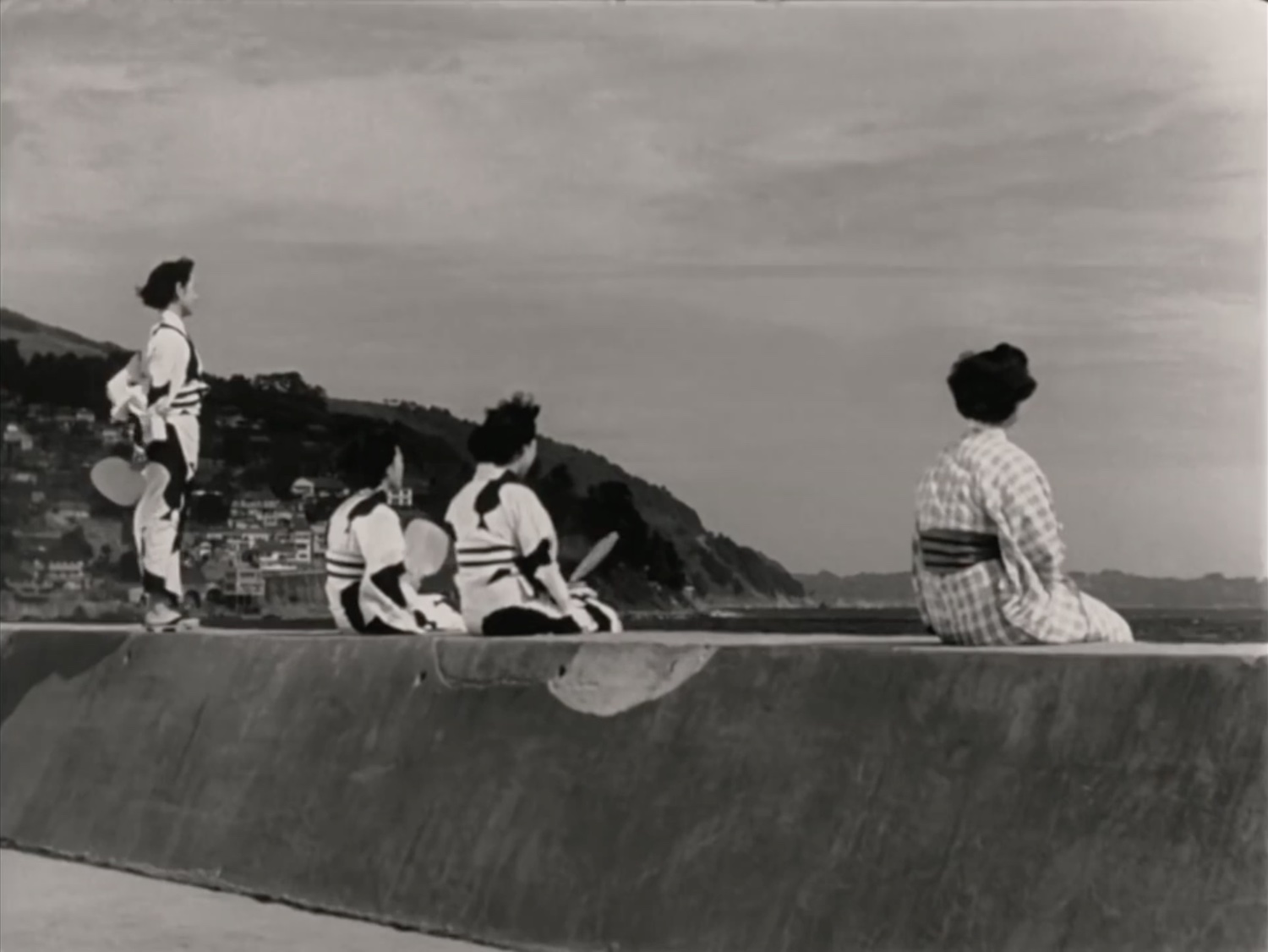
Movement and Stillness are the two contrasting elements that play significant roles in the language of cinema.
They are used by filmmakers to convey emotions, tell stories, create atmosphere and engage the audience with the narration. Whether it’s the adrenaline-pumping excitement of a chase scene or the thoughtful silence of a character’s introspection, the delicate balance between movement and stillness adds depth and richness in this art form of storytelling.

Through the controlled use of camera techniques, character movement, editing or the strategic placement of static shots, filmmakers can create an interplay between motion and tranquility on the screen.
The juxtaposition of movement and stillness is a powerful cinematic tool.
To know in detail about how movements are used in filmmaking, check this link:
A sudden shift from chaotic action to a still, silent moment can evoke a sense of tension or highlight the significance of a scene. Conversely, a slow, deliberate camera movement or extended static shot can convey tranquility or emphasize the importance of that particular moment.
Their careful interweaving allows filmmakers to shape narratives, pace of the film, convey emotions and transport viewers to new realms.
Here’s a breakdown of how stillness are employed in films:
Stillness
While movement commands attention, stillness holds a unique power of its own. It provides breathing space within a film, allowing for an emotional resonance and deepening the audience’s connection with the story unfolding before their eyes.
The intentional use of silence or pauses within a film can evoke a profound sense of stillness, fostering introspection, building suspense or amplifying the impact of a moment.
Overall, stillness in filmmaking allows for a moment of reflection, emphasizes specific details and can heighten the emotional impact of a scene.
Lets have a look at the types of stillness and how they’ve been used in filmmaking:
Static Shot
Static shot refer to the technique, where the camera remains fixed, allow for contemplation, drawing the audience’s gaze to the composition, framing and significant details within the frame without any significant movement or changes in framing.
To know the three important composition and framing conventions in cinematography, click this link below:
This technique is often used to emphasize the subject or the environment within the frame, allowing the audience to focus on specific details or absorb the atmosphere of the scene.
Here’s a further explanation of static shots:
Static shot is used:

- for emphasizing the subject. By using a static shot, filmmakers can direct the audience’s attention to the subject of the scene.
- Whether it’s a character, an object or a particular moment, the lack of camera movement ensures that nothing distracts the viewer from the intended focus.
- This technique is commonly used in dialogue scenes, where the interaction between characters becomes the primary point of interest.
- An example is the film 12 Angry Men, directed by Sidney Lumet. The film primarily takes place in a single room and the static shots allow the audience to closely observe the characters’ expressions and body language, heightening the tension and drama.
- to establish a sense of place and the setting or environment in a film. By keeping the camera fixed and using a Deep focus cinematography technique filmmakers can provide a wide, uninterrupted view of the location, allowing the audience to absorb the details and ambiance.
- For example: in the film The Grand Budapest Hotel, static shots are employed to showcase the meticulously designed sets and capture the symmetry and visual beauty of the surroundings.
- Before a sequence with movement or action begins, a filmmaker may use an establishing shot to set the scene and create a sense of place.
- These shots are typically static or slow-moving, allowing the audience to absorb the environment and prepare for the upcoming action.
- This technique is often used in films with picturesque or iconic locations.
- to create a sense of stillness and contemplation through the absence of camera movement. When a scene remains visually unchanged for an extended period, it encourages the audience to reflect on what they are seeing, deepening their engagement with the story or the emotions portrayed.
- Yasujiro Ozu is known for his static shots, which contribute to the meditative and immersive nature of his films.
Static shots can vary in duration, from brief moments to entire scenes and their effectiveness depends on the context and purpose of the filmmaker.
By using static shots, filmmakers can carefully compose the elements within the frame. They can consider the placement of characters, objects and the overall visual balance to create a meaningful composition.
The composition itself can communicate information, evoke emotions and highlight specific details within the scene.
Slow Pan / Tilt
In this technique, the camera moves very slowly, often barely noticeable, capturing a wider view of the scene. It can be used to explore the environment or emphasize details while maintaining a sense of stillness.
A slow pan or tilt refers to a camera movement where the camera slowly rotates horizontally (pan) or vertically (tilt) while maintaining a relatively stationary position.
It is a subtle and controlled movement that can be used within a stillness framework to add a touch of dynamism or to draw attention to specific elements within a scene.
Here’s how it’s used in films:
A slow pan or a slow tilt shot is used:
- to create visual interest to an otherwise static shot. By introducing a gentle camera movement, it prevents the frame from feeling too stagnant while still maintaining a sense of calm and stillness.
- In the film There Will Be Blood, slow pans and tilts are used to capture the grandeur of the landscapes, isolation and industrial nature of the oil fields.
- There are scenes where the camera performs slow tilts to showcase the towering oil derricks or the intricate machinery within the oil wells.
- to reveal or explore the environment surrounding the characters. It allows the audience to take in the details of the setting without disrupting the overall stillness of the scene. This technique can be useful when introducing a new location or setting the mood by showcasing the atmosphere.
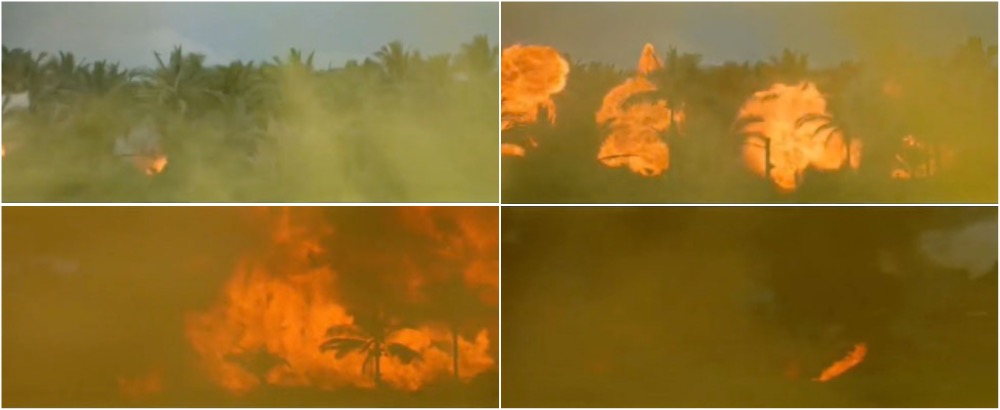
- The film Apocalypse Now begins with a slow and majestic vertical tilt of the camera, revealing the burning of vast and lush jungle landscape of Vietnam.
- This slow pan not only establishes the setting but also creates a sense of anticipation and immersion for the audience. It captures the mystery of the environment while maintaining a stillness that sets the stage for the intense and chaotic events that unfold throughout the film.
- for emphasizing details. By using a slow pan or tilt, filmmakers allows the audience to focus on particular elements and can be used to convey their significance or foreshadow events.
- This technique allows for a deliberate focus on specific objects, textures or actions by highlighting their significance or symbolic value in the scene.
- Whether it’s capturing the subtle expressions on a character’s face, showcasing the minute intricacies of a prop or drawing attention to a crucial element in the frame, the slow pan or tilt method ensures that these details are not overlooked, enriching the viewer’s understanding and immersion in the story world.
- The deliberate movement guides the viewer’s attention while maintaining a sense of tranquility.
- to create a sense of continuity. Slow pans or tilts can be utilized to create a seamless transition between shots or scenes. By smoothly moving from one composition to another, it helps to maintain a coherent visual flow and connection.
- This technique is often used to maintain a sense of stillness while providing a dynamic perspective change.
- The slow pan or tilts works as a bridge to introduce a new location or reveal a different perspective without abruptly shifting the frame
- In the film The Revenant, a particular scene, the camera slowly pans across a snowy landscape, capturing the harsh and unforgiving wilderness of the snowy terrain and the protagonist’s arduous journey through the wilderness.
- The stillness of the scene is preserved, yet the subtle camera movement adds a layer of dynamism and continuity.
In summary, the slow pan or tilt is a camera movement technique that introduces subtle motion within a still frame, while maintaining an overall sense of stillness. It is used to explore the environment, reveal details, enhance mood and create transitions.
Through the examples mentioned above, we can observe how this technique is employed to evoke emotions, deepen characterization, and enhance the visual storytelling in films.
Long take
A long take is a continuous or extended shot that lasts for an extended period without any cuts in between. It can be used to convey realism, immerse the audience in a continuous sequence, or create a sense of anticipation by delaying the expected cut.
The continuous nature of the shot heightens the suspense and keeps the viewers engaged, awaiting the next development in the scene and the uninterrupted nature of the shot allows for a more profound exploration of these elements, enriching the storytelling and deepening the audience’s understanding and engagement.
Here’s a closer look at the purpose of long takes in stillness filmmaking:
Long take is used:
- for realism and immersion as long takes can create a heightened sense of realism and immerse the audience in the unfolding action.
- By presenting a continuous shot without cuts, it can mimic the experience of being present in the moment, allowing viewers to feel more connected to the characters and the story.
- “Birdman” directed by Alejandro González Iñárritu is known for its extensive use of long takes, presenting the story as if it were shot in a single continuous shot. This technique immerses the audience in the hectic and behind-the-scenes world of theater, providing a heightened sense of realism.
- for capturing detail and atmosphere, Long takes provide an opportunity to capture intricate details to the audience in the atmosphere of a scene.
- By keeping the camera still or moving subtly, the audience can observe the surroundings, gaze at the production design or take in the nuances of the actors’ performances.
- The opening scene of Spectre is the best example where the long take follows Bond on the Day of the dead.
- These uninterrupted shots allow the audience to fully appreciate the beauty and harshness of the environment.
- to heighten the tension or suspense by delaying the expected cut that allows the audience to finally breathe. By prolonging a shot without any cuts, the audience becomes increasingly aware that something significant may happen at any moment.
- This technique can be particularly effective in suspenseful or dramatic scenes.
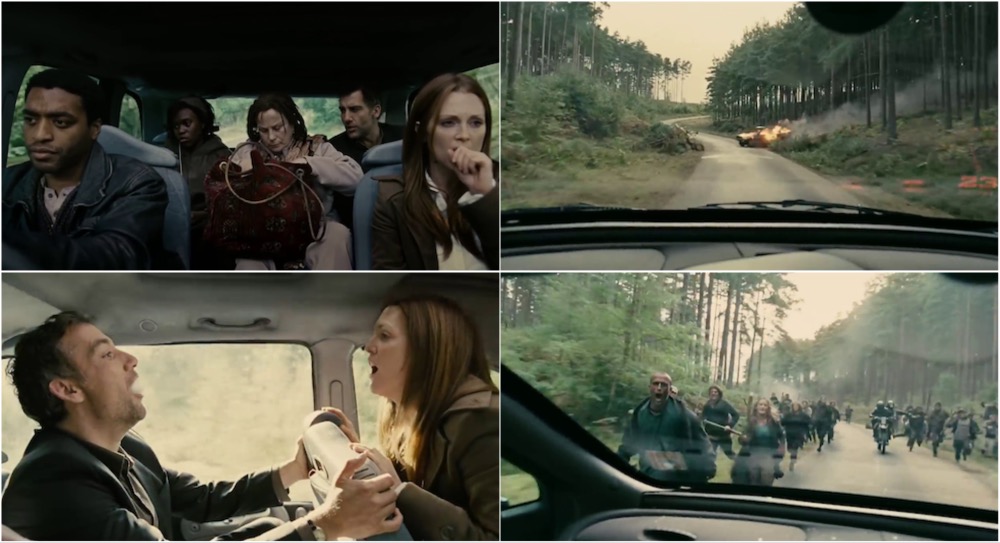
- In Children of Men, the film features a notable long take known as the “car ambush” scene. It follows the main characters through a chaotic and intense battle, creating a sense of urgency and suspense as the camera moves seamlessly within the action.
- in choreography and complex movements within a scene. Whether it’s a carefully choreographed fight sequence or a meticulously orchestrated dance performance, a long take allows the audience to fully appreciate the skill and coordination involved.
- In Oldboy, the film includes a famous long take fight scene in a narrow corridor. The continuous shot showcases the protagonist’s intense struggle against multiple attackers, highlighting the intricate choreography and visceral nature of the fight.
- Another example is the opening dance sequence in La La Land, the continuous long choreographed dance performance in a still traffic location grabbed the attention from the audience.
- to enhance Directorial vision as long takes require precise planning and coordination, often involving intricate camera movements, actor blocking and technical considerations.
- Their use in stillness filmmaking can showcase the director’s skill and unique vision, as well as provide a distinct stylistic signature for the film.
- In Gravity, the film employs long takes to create a seamless and immersive experience in space. The continuous shots contribute to the film’s technical achievement, showcasing the director’s vision and allowing the audience to feel as though they are floating alongside the characters.
Long takes require careful planning and execution, but when used effectively, they can be a powerful cinematic tool that captivates and engages the audience.
Overall, long takes in stillness filmmaking contribute to the deliberate pacing and contemplative nature of a scene. By maintaining a continuous shot without cuts, they can evoke a sense of stillness and draw the audience’s attention to specific details, emotions or themes.
Minimalist Cinematography
Some filmmakers use a minimalist approach with limited camera movement throughout the entire film. This deliberate choice creates a specific aesthetic and focuses the viewer’s attention on the characters and their emotions rather than other distracting visuals elements.
It is closely related to the concept of stillness filmmaking, as it often incorporates static shots and limited motion to convey meaning and emotions.
Here’s a closer look at the purpose and characteristics of minimalist cinematography in stillness filmmaking:
Minimalist cinematography is used:

- for simplicity and elegance. They aims to simplify the visual composition by removing unnecessary distractions. It strips down the visual elements to their essential components, creating an elegant and uncluttered frame.
- By reducing visual noise, the audience’s attention is drawn to the core elements of the scene, such as the characters, their expressions or the narrative details.
- In the film Her, directed by Spike Jonze, the simplicity of the visuals allows the audience to focus on the character’s connection with an artificial intelligence system and the complex emotions that arise from their relationship.
- for intimacy and emotion, by minimizing camera movement and focusing on the characters, minimalist cinematography enhances the emotional impact of a scene.
- The stillness allows the audience to connect more intimately with the characters, emphasizing their facial expressions, body language, and subtle nuances. This approach often fosters a deeper emotional engagement and encourages viewers to empathize with the characters’ experiences.
- For example: in Manchester by the Sea, the film employs a minimalist cinematography approach that utilizes static shots and restrained camera movement to create a sense of stillness and intimacy.
- Through these techniques, the cinematography allows the audience to closely observe the characters’ face and body language, emphasizing their emotions and inner struggles.
- for contemplation and reflection. Minimalist cinematography often includes longer takes and static shots, providing the audience with time to contemplate and reflect on what is happening in the scene.
- By allowing moments to breathe and unfold at a slower pace, it encourages viewers to immerse themselves in the atmosphere, absorb the details, and ponder the deeper layers of the story.
- In The Tree of Life, Terrence Malick employed minimalist cinematography to evoke contemplation and reflection. The use of static shots and longer takes encourages viewers to immerse themselves in the imagery and symbolism, inviting personal interpretation and introspection.
- for silence and subtlety: Just as stillness can convey meaning, silence can be a powerful tool in minimalist cinematography.
- By reducing dialogue or background noise, the absence of sound emphasizes the visual elements and encourages viewers to pay closer attention to the subtleties within the frame. It may be used to highlight a character’s internal struggle, a pivotal decision or a significant turning point in the story.
- This creates a space for quiet contemplation and allows the audience to interpret and engage with the story on a more personal level.
- Film example is from Roma, directed by Alfonso Cuarón. The film features long, static shots and limited camera movement, capturing the everyday life of Cleo in 1970s Mexico City. The deliberate use of silence, subtle sounds and restrained visuals allows the audience to engage deeply with the characters and their emotional journeys, emphasizing the film’s themes of personal resilience, love and societal changes.
- This example showcases how the use of stillness, minimal dialogue and subtle visuals can enhance the audience’s connection with the characters and create a reflective atmosphere within the film.
To conclude, Minimalism, often characterized by long takes and subtle movements, can create a meditative atmosphere, inviting viewers to reflect and engage with the nuances of a scene or performance.
Overall, minimalist cinematography in stillness filmmaking aims to evoke emotions, create a contemplative atmosphere and engage the audience through simplicity and focus. By utilizing static shots, limited camera movement and visual restraint, filmmakers can craft a unique visual language that invites viewers to participate actively in the storytelling process.
Conclusion
Stillness in filmmaking technique creates moments of calmness, tranquility or minimal movement within a scene. It is a deliberate choice made by filmmakers to enhance the emotional impact, visual beauty or evoke tension in a particular moment.
By utilizing static shots, long takes, minimal camera movement, sound design and visual composition, directors can effectively introduce stillness in their films. Whether used to emphasize a particular moment, create contrast or explore themes through visual language, stillness in filmmaking serves as a powerful artistic tool to captivate and resonate with audiences.
That’s it, if you know any other elements that captivates stillness in the natural form, let me know in the comments.
