

Ah, the dreaded “night scene”.
Here’s the move that almost never works: cranking up the ISO. In real darkness, all you’re doing is amplifying noise – and it gets ugly fast.
Worse, if you’ve got pockets of bright light – like street lamps, torches, windows, or headlights – boosting the ISO just blows those highlights out and makes the image fall apart even more.
So no, “just raise the ISO” is not one of my seven tips. It’s overrated. Then what?
The good news is, when you don’t have lights, you’re not out of options. There are a few smart, practical ways to get footage that actually looks intentional.
Let me show you how.

Tip 1: Keep your ISO Low!
What??
I’ll tell you what. I’ve shot with all kinds of cameras and systems. Nowadays, I have all the power of high ISO in my hands if I want it. But guess what? I rarely ever use high ISOs.
Every time you raise the ISO, you lose two critical things:
- Dynamic range, and
- Color information and accuracy
This is why it’s in your best interest to keep the ISO as low as possible, and find other ways to shoot at night. This is the single most important tip I can give you.
If you’re new to ISO, and want a quick primer, check out this video I made:
Tip 2: Keep your ISO Constant
If you’ve watched the above video, you’ll understand shifting ISOs for different shots in the same scene will guarantee one thing: The shots will not match!
So when you approach a scene, think for a minute and ask yourself: “What’s the ISO I can use here (remember to keep it as low as possible)?”
Then stick to that ISO for all your shots in that scene – long shots, mid shots, close ups, everything! Sure, you can move your ISO by a bit (a third or half a stop is okay) without losing too much, but don’t go beyond that, because it’ll be hard to match these shots in post. Sometimes, the dynamic range falls drastically with just a stop difference if it’s outside the sweet spot of the sensor and processing algorithm.
Tip 3: Use a Wide Aperture
There’s only so much you can do with ISO. The easiest tip for shooting in low light is to use a wider aperture. Open up the lens to as far as it can go, because – that’s what professional cinematographers do.
That’s what all the great cinematographers have done:

It helps to have a lens with a wide aperture of T1.4 for night scenes, especially if you need details in the sky – and in the shadows.
Tip 4: Use a Longer Lens
A longer lens compresses space so you have less of the background showing in the shot. Also, you can shoot in mid-shots or close-ups to make the area even smaller:

This gives you more control over a smaller area, and you can position the actors near a lamp or shop window to get a good look.
If you have lamps in the background, you can also use a silver reflector (Amazon, B&H) to bounce some light on to their faces.
Tip 5: Shoot in Well-lit Streets
Don’t look at the lamps, look at the streets! If the streets have sufficient illumination you don’t have to worry too much about low light. It will allow you to keep your ISO low and constant.
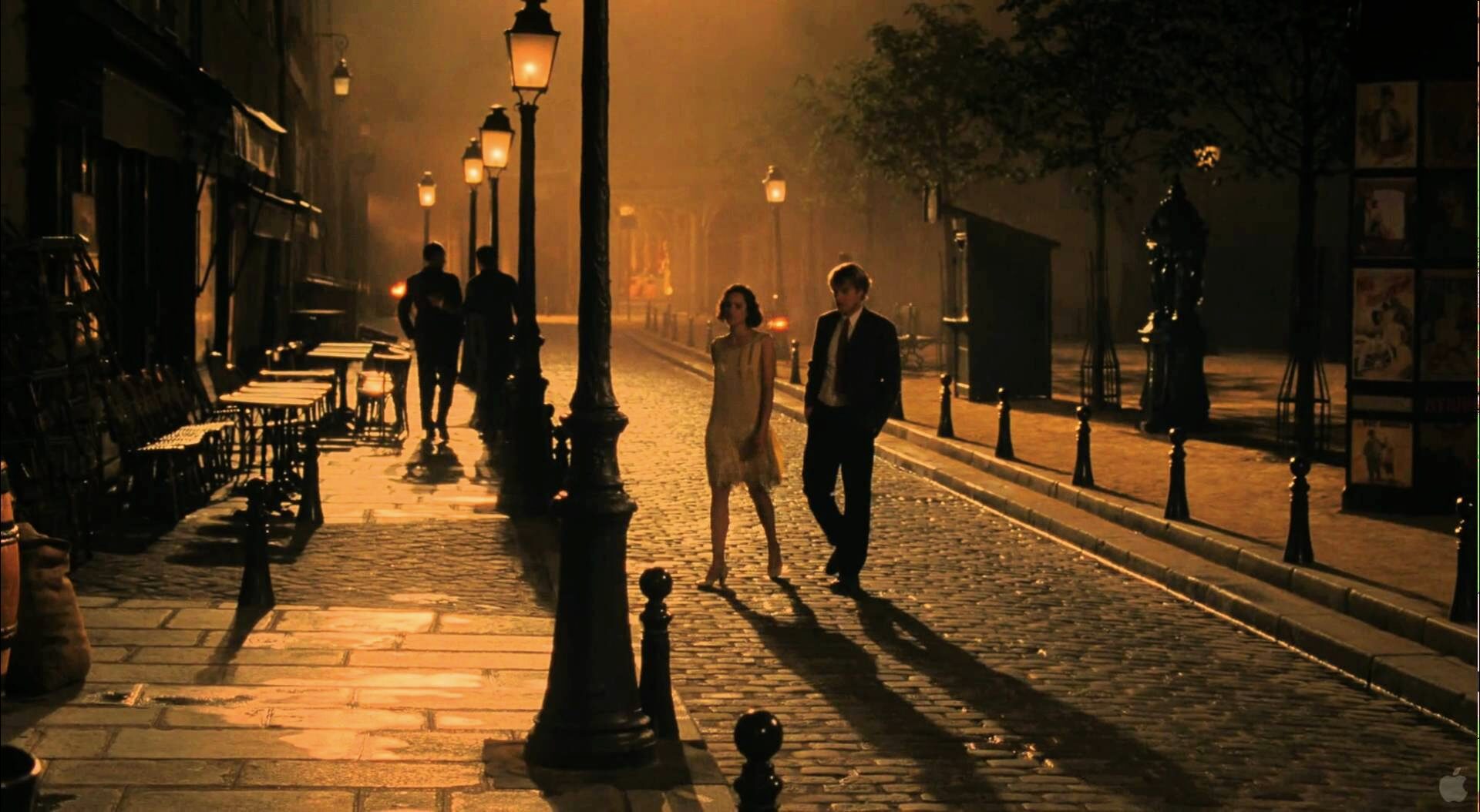
Also, light will reflect off the road or ground and fill in the actors’ faces. It also pays to have them backlit:

Tip 6: Use “Blue Hour”
You’ve heard of golden hour. Blue hour is the time just before sunrise and just after sunset. This is when the sky is not black, and is a dark blue color:

The idea is, you still have ambient light to shoot with, and you can later reduce exposure a bit in post to make it darker – but you won’t have to make it brighter!
You also have the advantage of the dying light bouncing off buildings or the roads or land to fill in faces.

However, this tip comes with a catch – blue hour only lasts for about a half-hour, so you might want to get your long shots and masters at this time and then use tip 4 for the mid shots and close ups. Be smart!
Tip 7: When All Else Fails
Night is killer scenario. When in doubt, shoot day for night:

Day for night is the art of shooting in daytime and making it look like night. It’s not easy, but there are some things you can do to cheat:
- Have a hard light (moonlight is hard light) if you want to simulate moonlight.
- Have a soft light if you want a dark night (no moonlight).
- Shoot in color and don’t use any filters (color grading in post production is more powerful than any filter you can use).
- Keep the actors backlit, and fill in faces with a white bounce card.
- Don’t show the sky, because a bright sky is a dead giveaway (you can darken the skies a bit in post if it’s a rich blue)
- Avoid specular reflections and highlights. Moonlight is strong and hard, but nowhere close to the burning power of the sun.
- Don’t blow out highlights. No white or bright clothes in the open sun.
- Spend time in color correction.
That’s it. Now go film something at night!
