

When it comes to choosing the best camera for low budget films, the numbers sometimes matter – especially if you are putting your hard earned money down for one.
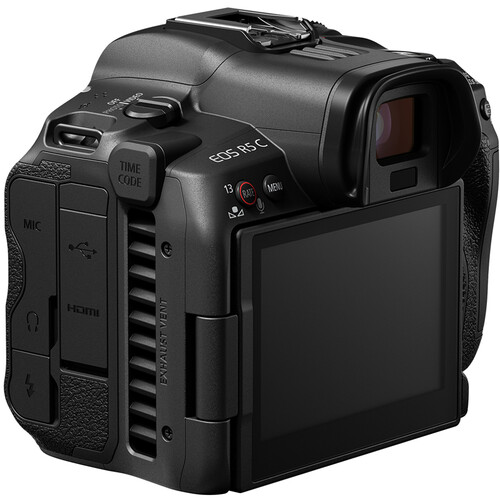
In this article, we compare the Sony FX3 (Amazon, B&H), Blackmagic Design PYXIS 6K (Amazon, B&H), Panasonic S1R II (Amazon, B&H), and Canon R5C (Amazon, B&H) purely on their technical specifications. All four cameras are good enough “on paper” for cinematic short or feature films on a low budget.
You’ll be surprised by what you can learn by putting aside subjective criteria like image quality or color science, temporarily, at least!
The goal is to find the camera that is the best investment for you. And since this is a fun comparison, there will only be one winner!

Comparison of sensors and lens mounts
All the four cameras have full frame sensors with a size close enough to 36mm x 24mm that doesn’t matter practically.
Here are their sensitivity ratings:
| Camera | Video ISO Range | Native ISO |
| FX3 | 80-102,400 | 800, 12800 |
| PYXIS 6K | 100-25,600 | 400, 3200 |
| S1R II | 80-51,200 | 400, 2000* |
| R5C | 100-25,600 | 800 |
The FX3 is still probably the best bang for your buck in low light situations. However, practically speaking, if you’re shooting a film and can stay within 400-1600 ISO, any of these cameras should be good enough.
I tend to prefer ISO 800 as the native ISO because it gives you cleaner images in low light and night situations. ISO 400 might not be enough often. In any case you’ll need ND filters in bright outdoor conditions.
Here’s what you get with lens mounts:
| Camera | Lens Mounts |
| FX3 | Sony E |
| PYXIS 6K | Leica L, Canon EF, Arri PL |
| S1R II | Leica L |
| R5C | Canon RF |
Obviously the PYXIS 6K (Amazon, B&H) has the best options, but you’ll be purchasing the mounts separately. That’s as good as getting an adapter – which works out to be cheaper and faster in real-world situations.
Comparison of resolution, dynamic range and frame rates
Here’s how the cameras compare in terms of absolute resolution:
| Camera | Best Possible Resolution | Max FPS^ | Max FPS^ in 4K |
| FX3 | 3840 x 2160 (4264 x 2408 externally) | 120 fps | 120 fps |
| PYXIS 6K | 6048 x 4032 | 36 fps | 60 fps |
| S1R II | 7680 x 4320 | 30 fps | 120 fps |
| R5C | 8192 x 4320 | 60 fps* | 120 fps |
^ Rounding out the frame rates.
The Sony FX3 (Amazon, B&H) can only shoot up to 4K UHD, whereas the others go further.
However, with both the PYXIS 6K and the S1R II, the frame rates top out at 30 fps. That should be okay, but isn’t the same value proposition as getting 60 fps.
Purely by resolution and frame rates, the Canon R5C (Amazon, B&H) is way better. You’re practically getting a 2x zoom lens free if you’re finishing for 4K.
Which is better: Higher resolution or higher fps?
For the low budget filmmaker, a higher fps will help you get more shots. Lots of films demand slow motion. In scenes where you need to move the camera around quickly, having the option eliminates ugly jitter-artifacts caused by the rolling shutters on these inexpensive cameras.
A higher resolution gives you two advantages – a zoom crop if you needed to, and a better resolved downsampling when delivering in 4K. However, handling these files and grading them are much more expensive and time-consuming.
If you have to pick – pick higher fps every time. In today’s bleak market, nobody’s asking for 8K content.
Going by this, the PYXIS 6K falls behind with only 60 fps at 4K.
Here are the official dynamic range numbers:
| Camera | Dynamic Range |
| FX3 | 15+ stops |
| PYXIS 6K | 13 stops |
| S1R II | 14 stops* |
| R5C | 14 stops |
Sony claims to have better dynamic range than the rest, though in my review of the a7S III as tested I’m not so sure it makes a practical difference.
To be honest, I would pick any of these cameras for image quality. They’re all good enough for a theatrical DCP and get the job done. They might not pass Netflix specs but that’s a joke. If your film is good and does well in festivals it has a good chance of being picked up no matter what it was shot on.
Your low budget production will be the limitation here – no camera can hide poor lighting, cheap sets or locations, whatever. The days when mirrorless cameras were not good enough are over.
What you could base your decision on is the color science and skin tones. My order of preference (and I’ve shot with all brands over many years):
- Canon and Panasonic (a tie)
- Blackmagic Design (a close second)
- Sony (a distant third)
This is me. You do you.

Codecs and external RAW recording
The codec options are all over the place:
| Camera | RAW | Internal Codecs | External RAW Recording |
| FX3 | No | XAVC S-I, XAVC HS | HDMI – 16-bit RAW, Prores RAW |
| PYXIS 6K | 12-bit RAW | Prores HQ | 12G-SDI |
| S1R II | No | Prores HQ, H.264, H.265 | HDMI – RAW with a future firmware update |
| R5C | 12-bit RAW | H.264, H.265 | No |
For the FX3, RAW isn’t truly 16-bit, and neither is the sensor.
You need an external recorder like the Atomos Ninja V for recording any RAW via HDMI. But I’ll be honest. I wouldn’t do it that way. That RAW is nothing like the real RAW you get when recording internally.
Most codecs come with 10-bit 4:2:2, 8-bit 4:2:0 and the crazy 10-bit 4:2:0 subsampling versions. The PYXIS 6K (Amazon, B&H), is the clear winner here, with the best RAW and non-RAW codecs, as well as a great 12G-SDI output for monitoring and recording.

Focus and exposure aids, and ergonomics
A cinema camera needs the right exposure aids. The little things make all the difference:
| Camera | Exposure |
| FX3 | Zebras, histogram and in-camera meter |
| PYXIS 6K | False Color, Zebras |
| S1R II | Waveform, False Color, Zebras, Histogram, Meter |
| R5C | Waveform, False Color, Zebras, Histogram, Meter |
The Sony FX3 (Amazon, B&H) falls behind the others here. The PYXIS 6K is perfectly okay, but the Panasonic S1R II (Amazon, B&H) and Canon R5C (Amazon, B&H) takes the cake here.
As far as size and weight are concerned:

| Camera | Ergonomics | Weight |
| FX3 | Swivel monitor, tally lights, XLR grip with mounting threads | 640g |
| PYXIS 6K | Tilt and swivel LCD monitor | 1500g |
| S1R II | Tilt and swivel LCD monitor | 795g |
| R5C | Tilt and swivel LCD monitor | 770g |
You get an XLR module, tally lights and mounting points extra with the FX3. The mounting points are not always in a place that you’ll find useful.
All the cameras have fans. The fan on the older Panasonic S1H was too loud for me on launch but I guess they have ironed out that problem since then.
Weather sealing is not guaranteed on any of the cameras. Sony claims they have tried to make the cameras good enough to handle tough conditions. I don’t expect these cameras to be pushovers, and this is par for the course for this budget range.
The only camera I would doubt in a downpour is the Blackmagic.
ND Filters
None of these cameras have built-in ND Filters, which is a shame.
Audio Features
| Camera | Audio |
| FX3 | 2 x XLR/TRS 1 x 3.5mm jack |
| PYXIS 6K | 2 x mini XLR 1 x 3.5mm jack |
| S1R II | 1 x 3.5mm jack |
| R5C | 1 x 3.5mm jack |
The Sony FX3 (Amazon, B&H) comes with an XLR grip which can be attached to the top of the camera and be used as a top handle. The 2 XLR/TRS inputs with 4 channel 16-bit Linear PCM easily outclasses S1H’s single stereo minijack.
With the PYXIS 6K (Amazon, B&H) you will have to get mini XLR to XLR adapters.
You get 32-bit float with the DMW-XLR2 on the S1R II, an additional purchase. But in that case you could just get a Zoom for any camera with better versatility and functionality.
The audio on all of these is meh.
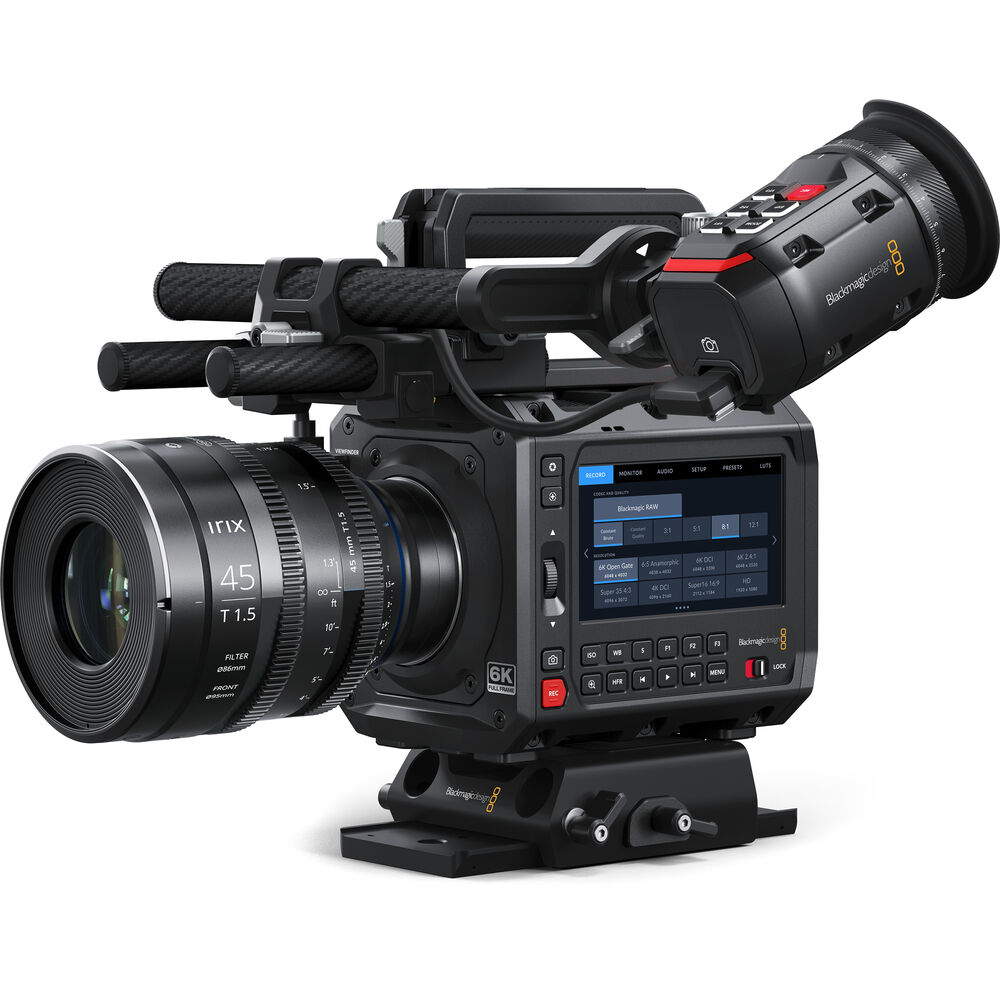
Image Stabilization
The PYXIS 6K does not have IBIS, the others do.
Now Panasonic claims that the S1R II (Amazon, B&H) has 8 stops of stabilization whereas Sony claims that the FX3 has 5.5 stops of IBIS. All companies use their own standards of testing IBIS so you cannot be absolutely sure unless you test it out for yourself. In practice, I would be surprised if any of the others was inadequate when paired with the right lenses.
The Sony FX3 also has gyro information, but to stabilize the footage you will have to use the Sony Catalyst software.
Timecode
The Blackmagic PYXIS 6K (Amazon, B&H) has Tri-Sync/Black Burst and Timecode. In their own words:
Simply plug in an external timecode generator to the BNC timecode input and the camera will automatically detect timecode and lock the internal generator. Now each camera can start and stop recording and all the shots from all cameras will have the same matched timecode. Imagine shooting a music festival with multiple roving cameras! Best of all, DaVinci Resolve will automatically find and sync the shots from all cameras so you don’t need to waste time sorting through thousands of shots!
Blackmagic Design
I’m not sure it has the same accurate timecode clock as the Pocket 6K Pro. The latter has less than a 1 frame drift every 8 seconds.
My thoughts? Even though this feature is useful, you do need to purchase a timecode generator and follow that workflow. On the flip side,
The others don’t have built-in timecode features. If you’re recording audio separately, as you should, the best option is to number and label the files accurately so syncing is easier later.

Batteries and media cards
Here’s a look at the media:
| Camera | Slot 1 | Slot 2 | Other |
| FX3 | CFexpress Type A or UHS-II SD card | CFexpress Type A or UHS-II SD card | None |
| PYXIS 6K | CFexpress Type B | CFexpress Type B | USB-C 3.1 Gen 1 |
| S1R II | CFexpress Type B | UHS-II SD card | None |
| R5C | CFexpress Type B | UHS-II SD Card | None |
You can get the job done with any of these cameras, but in a head to head comparison the FX3 wins for its dual card feature.
What about batteries?
The Sony FX3 (Amazon, B&H) outshines the rest without much effort when it comes to battery life and cost of 6 hours of operation.
Which is cheaper to own?
Let’s just add up the costs:
| Camera | PYXIS 6K | S1R II | FX3 | R5C |
| Camera body | $2,995 | $3,298 | $3,898 | $3,999 |
| XLR adapter | $0 | $497 | $0 | $399 |
| Total | $2,995 | $3,795 | $3,898 | $4,398 |
The PYXIS 6K (Amazon, B&H) is your cheapest option here. You do lose out on IBIS and Continuous Autofocus but you get 6K RAW internally. The Canon R5C (Amazon, B&H) is the pricey one, but it also stands apart delivering 8K RAW.
So, what do you really get?

Let’s see who wins in what:
| Feature | Winner |
| Resolution | Canon R5C |
| 4K 120fps | Sony FX3, Canon R5C |
| DR and Color | Tie |
| RAW and Codecs | PYXIS 6K |
| Internal ND filters | None |
| Low Light Performance | Sony FX3 |
| Exposure Aids | Panasonic S1R II, Canon R5C |
| Media | Sony FX3, PYXIS 6K |
| Lenses | Tie |
| Ergonomics | Sony FX3, PYXIS 6K |
| IBIS | Tie |
| Ports and Monitoring | PYXIS 6K |
| Audio | Tie |
| Autofocus and Manual Focus | Sony FX3, Canon R5C |
| Battery life | Sony FX3 |
| Rolling Shutter | Sony FX3 |
Before we take our final decision, we’ll let the cameras tell us what they offer that the other doesn’t:
| Camera | USP | Major Cons |
| FX3 | Lightweight, tally lights, IBIS, 120p in 4K, Low light, world-class AF | Overheating in 120p? Only 4K UHD internally |
| PYXIS 6K | 6K RAW, Prores | Poor battery life, No IBIS, No continuous AF |
| S1R II | 5.9K, Prores, IBIS | No Internal RAW, unknown AF |
| R5C | 8K RAW, IBIS, world-class AF | Large file sizes, no 4K RAW |

My Verdict
For cinematic short films, features and web series I’d recommend the Sony FX3 (Amazon, B&H), as long as you like Sony colors.
It is still the low budget filmmaker’s champion camera. Let’s see what NAB will bring this year.
What do you think?
